





 Portuguese
  English
  Spanish
  4 min of reading
  13 comments


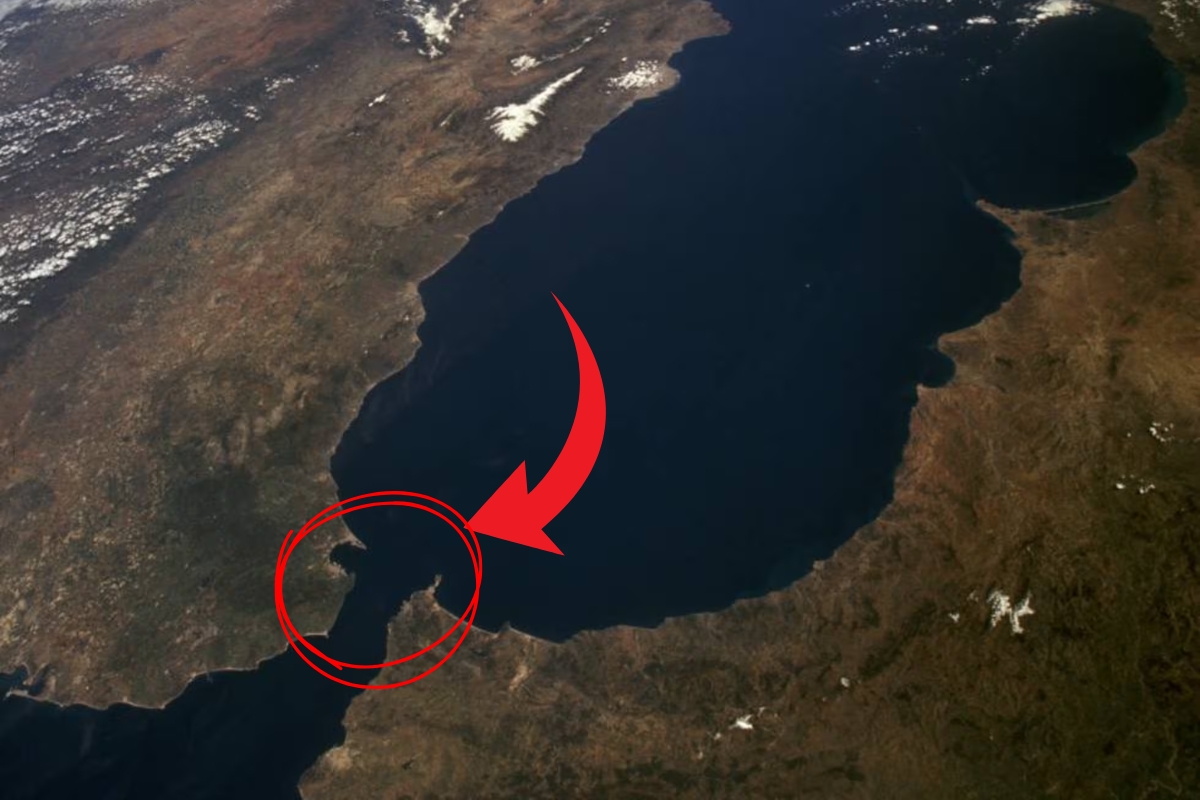


A 3D Model Indicates That The Region Is Experiencing An Active Tectonic Process And That Closure Could Occur In 20 Million Years
The possibility of the Strait of Gibraltar disappearing has come back to the forefront due to a tectonic scenario that changes the understanding of what is happening beneath those waters.
The corridor that separates Spain and Morocco, connecting the Mediterranean to the Atlantic, appears as an area in continuous transformation, with a direct impact on how the geological evolution of the region is understood.
The projection is long-term but sends a clear message: the plate dynamics there are not at rest and continue to adjust, with signs associated with seismic activity.
-
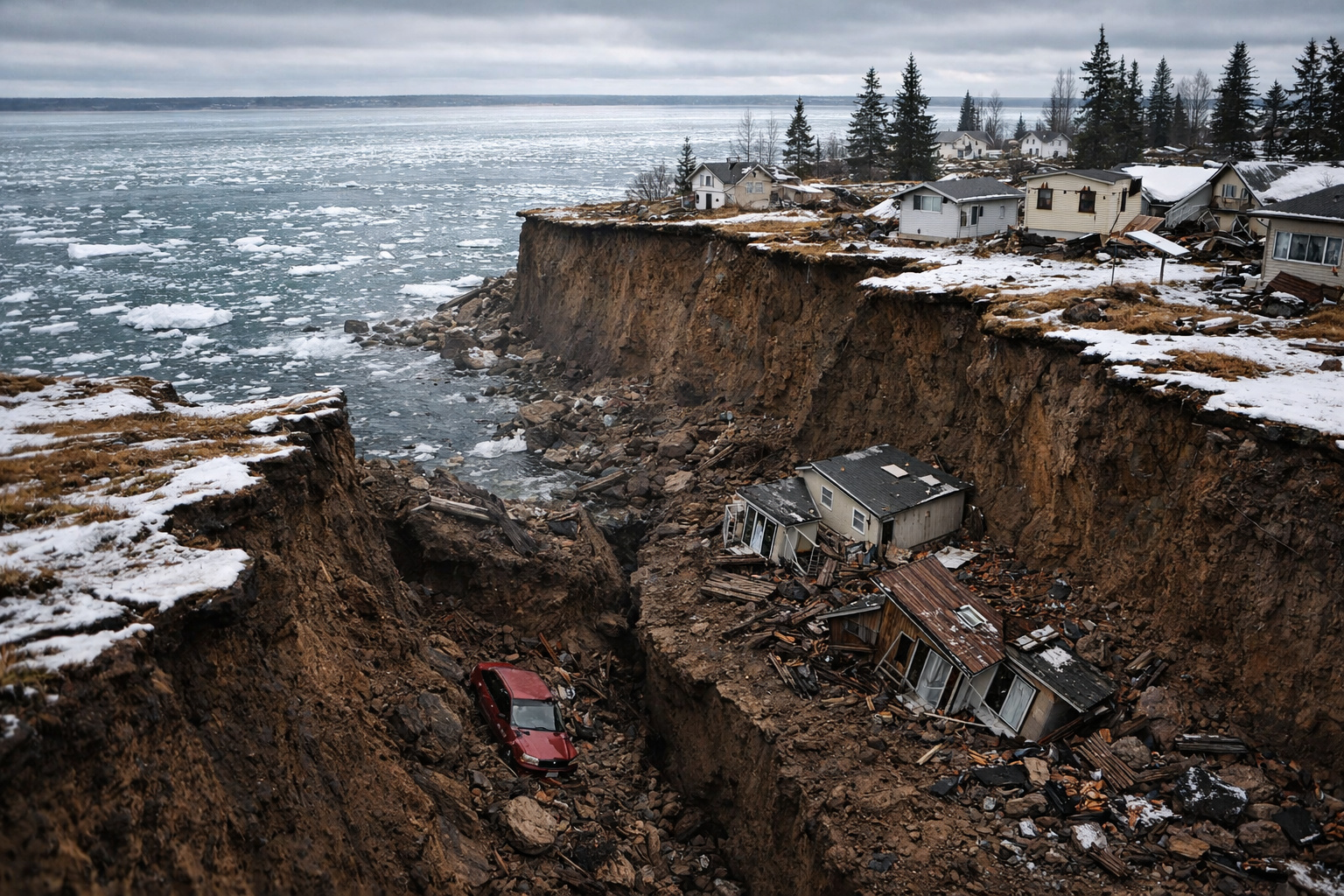
A magnitude 9.2 earthquake in Alaska reshaped the coastline in minutes, sank entire cities, raised sections of the seabed by several meters, and left one of the fastest geographical transformations ever recorded on Earth.
-
The entire Brazil is expected to face above-average rainfall in the next ten days, with accumulations reminiscent of the peak of summer, raising concerns especially for those living in the Southeast, Northeast, and Northern regions of the country.

-
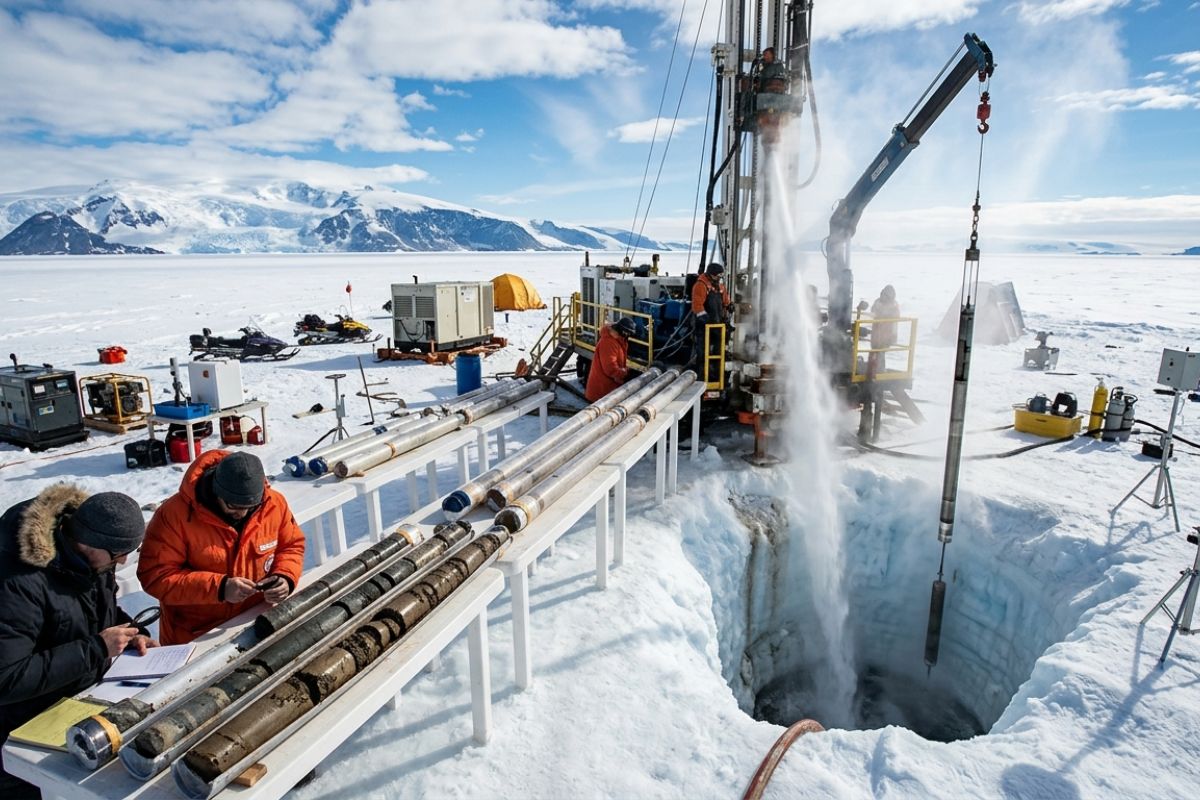
With pressurized hot water, scientists melt 523 meters of ice in West Antarctica and extract a 228-meter rock core with a record of 23 million years, revealing ice-free periods and global warnings.
-
Denmark resumes the idea of building the world’s first energy island with $30 billion, connecting several countries and changing the European energy game amid uncertainty due to the war in Iran.


What Happened And Why It Got Attention
An international study brought together Portuguese and German universities and presented a three-dimensional model to observe the interaction of the plates in the Gibraltar region.
The work was published by the Geological Society of America and proposes a revision of the local tectonic framework, showing movements that help explain the seismicity around.
The main novelty lies in the reading of the system as something active and evolving, even where a more stable behavior was assumed.

The 3D Model And The Reading Of The Plates In The Region
The model allows visualization of the behavior of the African and Eurasian plates at a point considered critical for the geology of the planet.
The simulation indicates that the Western Mediterranean plate is sinking beneath the Atlantic, a process known as subduction.
This type of movement involves one plate bending and sliding beneath another, which helps to understand why certain areas accumulate energy and can register earthquakes.
Signs Of Subduction And Seismic Activity Between Atlas And Gulf Of Cádiz
The region shows seismic intensity recorded from the Atlas to the Gulf of Cádiz, reinforcing the idea of a system in constant readjustment.
Subduction appears as a central element to explain this behavior, with the Western Mediterranean plate descending towards the mantle.
In simple terms, it’s as if a part of the ocean floor is being pushed down, keeping the area in motion for a long time.
How The Atlantic Could Start To Shrink In This Scenario
For a mature ocean like the Atlantic to enter a contraction phase, new subduction zones need to emerge.
These zones mark where the plates start to yield and shift, but this does not happen easily as the plates are dense and resistant.
The central explanation involves the possibility of subduction zones migrating and advancing to areas where they were not previously established, thus broadening the reach of the process.

What Could Happen From Now On With The Strait Of Gibraltar
The projection indicates that the Strait of Gibraltar is likely to close over a horizon that, on a geological scale, is short: about 20 million years.
With the closure, the consequence would be the union of Europe and Africa, changing the continental configuration at the point where the maritime passage currently exists.
This type of transformation is not perceived on a human scale but helps to map how the planet reorganizes over time.
Invasion By Subduction And The Relation With Seismic And Volcanic Belts
The mechanism called invasion by subduction emerges as a key to understanding how new zones can form and advance through oceanic areas.
This behavior is also linked to the idea of future volcanic and seismic rings similar to the Pacific Ring of Fire, a belt of 40 thousand kilometers known for its strong tectonic activity.
In this scenario, the Mediterranean could function as an initial signal of chain changes, with the potential to reshape landscapes and geological structures around.
The region’s history includes extreme events such as the Messinian salinity crisis, reinforcing that the Mediterranean has undergone profound transitions.
The proximity between plates in an area with a high population and active economy highlights the importance of increasing seismic monitoring and improving the understanding of natural risks.
Even without visible effects in the short term, the main message is clear: the planet continues to build and rebuild itself, and the Strait of Gibraltar is part of this ongoing movement.





Ooh! What is it with these people? One minute they tell us the planet will be underwater if I have a shower longer than 15 minutes, the next they say all the water is gonna dry up.
20 milhões de anos… e o pessoal acredita em tudo kkkk
Estou ansioso para ver.