





 Portuguese
  English
  Spanish
  2 min of reading


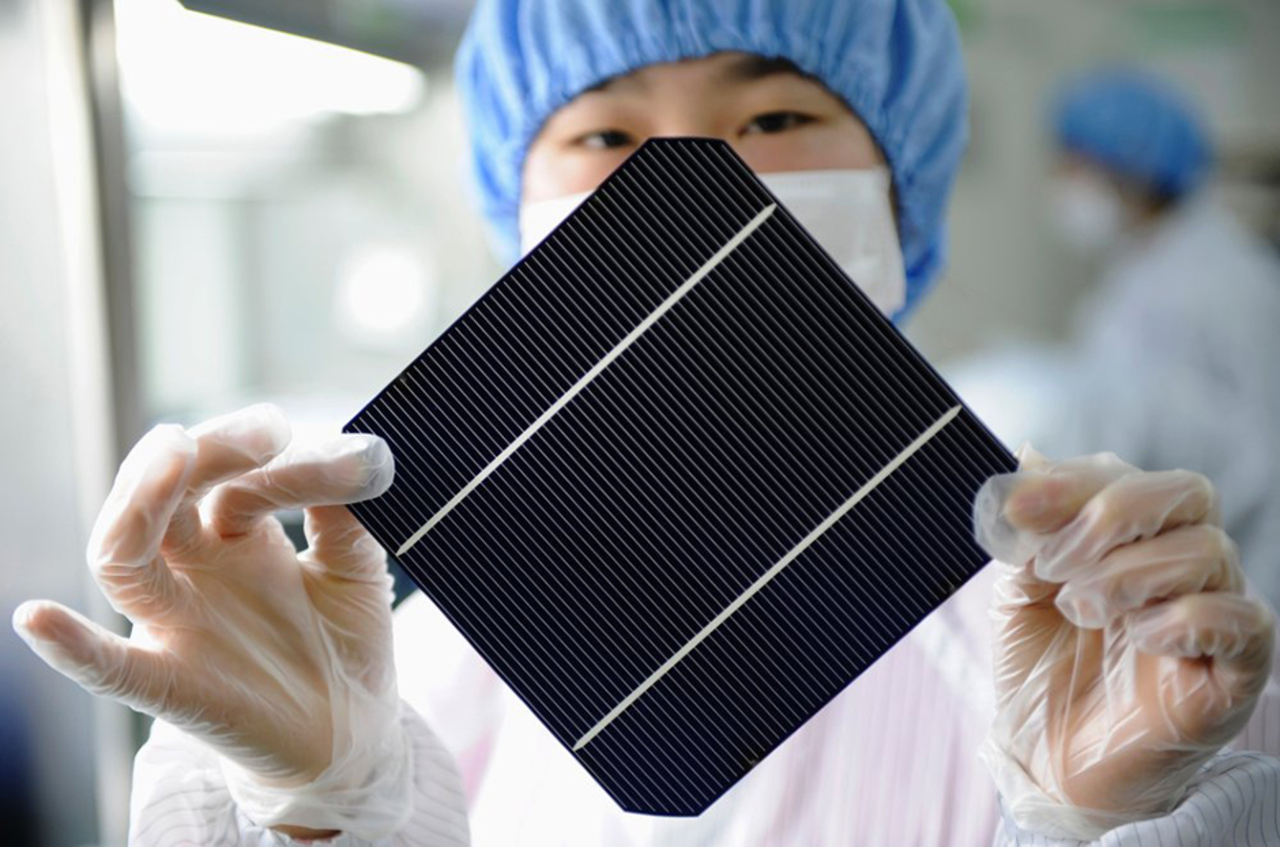
Scientists Design New Transparent Solar Cells Using Thin Silicon Films, With Efficient Renewable Energy Generation on Smartphone Screens
The novelty of today’s renewable energy may even sound somewhat contradictory, but it certainly promises many benefits: a team of scientists from two Korean universities has developed solar power panels that can even work on a smartphone screen.
Read Also
Dry and Wet Solar Cells – Understanding
Conventional solar cells can be of the “wet type” (solution-based) or the “dry type” (made from metal oxide semiconductors). Among these, dry renewable energy cells have a slight advantage over wet cells: they are more reliable, environmentally friendly, and cost-effective.
Moreover, metal oxides are suitable for utilizing ultraviolet light. Despite all this, however, the potential of metal oxide TPVs has not been fully explored until now.
-
Renewable energy advances over protected areas in Brazil, and a survey by the Energy Transition Observatory reveals silent impacts that challenge environmental conservation and pressure sensitive traditional territories.

-
Rio Grande do Sul accelerates energy transition: State invests in renewable technologies and consolidates decarbonization strategies and pathways to attract billions in new industrial investments.

-
With 160,000 m² of collectors, an area larger than 20 football fields, Silkeborg, in Denmark, hosts a solar thermal plant that heats 19,500 homes and could become the largest solar heating plant in the world.

-
A study reveals the expansion of renewable energy procurement in Brazil and shows how companies are taking advantage of opportunities to reduce expenses, ensure energy efficiency, and strengthen strategic environmental commitments.


The New Discovery by Scientists in the World of Renewable Energy
For this purpose, researchers from Incheon National University, Republic of Korea, created an innovative design for a metal oxide-based TPV smartphone. They inserted an ultrathin layer of silicon (Si) between two transparent metal oxide semiconductors, aiming to develop an efficient solar-powered smartphone.
These findings were published in a study in Nano Energy, which was made available online on August 10, 2020 (before the final publication scheduled for the December 2020 issue). Professor Joondong Kim, who led the solar energy study, explains: “Our goal in the world of renewable energy was to develop a high-power transparent solar cell, incorporating an ultrathin amorphous Si film between zinc oxide and nickel oxide in a smartphone.”
This new design consisting of the Si film had three main advantages. First, it allowed the use of longer wavelength light (as opposed to bare smartphones).
Second, it resulted in efficient photon collection in smartphones. Third, it enabled faster transport of charge carriers to the electrodes. Furthermore, the design can potentially generate electricity even in low light conditions (for example, on cloudy or rainy days). The scientists also confirmed the renewable energy generation capability of the smartphone by using it to operate the DC motor of a fan.










Seja o primeiro a reagir!