





 Portuguese
  English
  Spanish
  3 min of reading
  8 comments


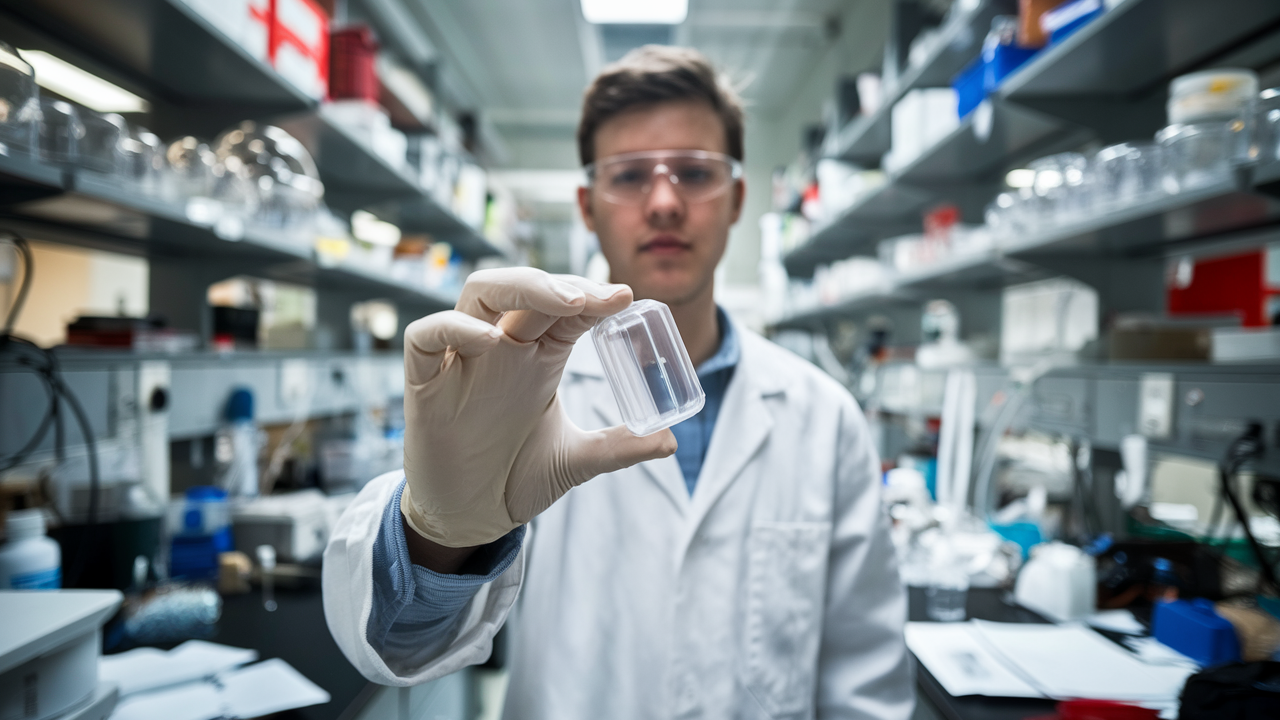

Researchers Create Plant-Derived, Super-Resistant Plastic, Considered a Milestone for Sustainability.
An innovative advance in materials science could transform the way we produce objects and industrial parts. Researchers from the Massachusetts Institute of Technology (MIT) announced the development of a new sustainable, ultra-resistant plastic. Derived from plants, the material combines cellulose nanocrystals (CNCs) and synthetic plastic, promising superior mechanical properties and reducing reliance on petroleum-derived plastics.
The composite, which can be 3D printed or molded, not only offers a more sustainable alternative but is also described as “stronger than some types of bone and harder than typical aluminum.”
New Sustainable Plastic Created by MIT Researchers Promises Revolution in Industrial Production
The innovation begins with cellulose, the most abundant polymer in the natural world, present in every wood cell.
-
Something is happening around the Earth: Inside the huge explosion of fireballs in 2026

-
A hot air bubble coming from Argentina expands over Brazil, causing thermometers to exceed 38 degrees with a thermal sensation of 40 degrees in late March, affecting 6 states at once.

-
The radish leaf that almost everyone throws away has more polyphenols, flavonoids, and fiber than the consumed root, and a 2025 study showed that the leaf contains compounds that protect the intestine, combat inflammation, and may inhibit the growth of cancer cells.

-
A planet that seemed to defy the laws of physics has intrigued scientists for decades, until the James Webb revealed what is really affecting Saturn’s rotation.


Within this structure are the CNCs, chains of polymers organized in a crystalline manner that provide strength and stiffness to wood.
While cellulose is widely used in paper manufacturing and in sectors such as food and textiles, the MIT team found a way to maximize its mechanical properties.
According to A. John Hart, professor of mechanical engineering at MIT, the solution was to develop a hybrid material that elevates the concentration of CNCs to up to 90%.
This approach overcomes previous limitations, such as the tendency for CNCs to clump together and weakly bond to other polymers.
“By creating composites with high-load CNCs, we can give polymer-based materials mechanical properties they never had before,” explains Hart.
The new material is produced by mixing the CNCs with an epoxy oligomer and a photoinitiator, forming a moldable gel.
This gel can be fed into 3D printers or poured into molds, allowing for the manufacturing of complex and highly resistant parts.
Imitation of Nature and Surprising Results
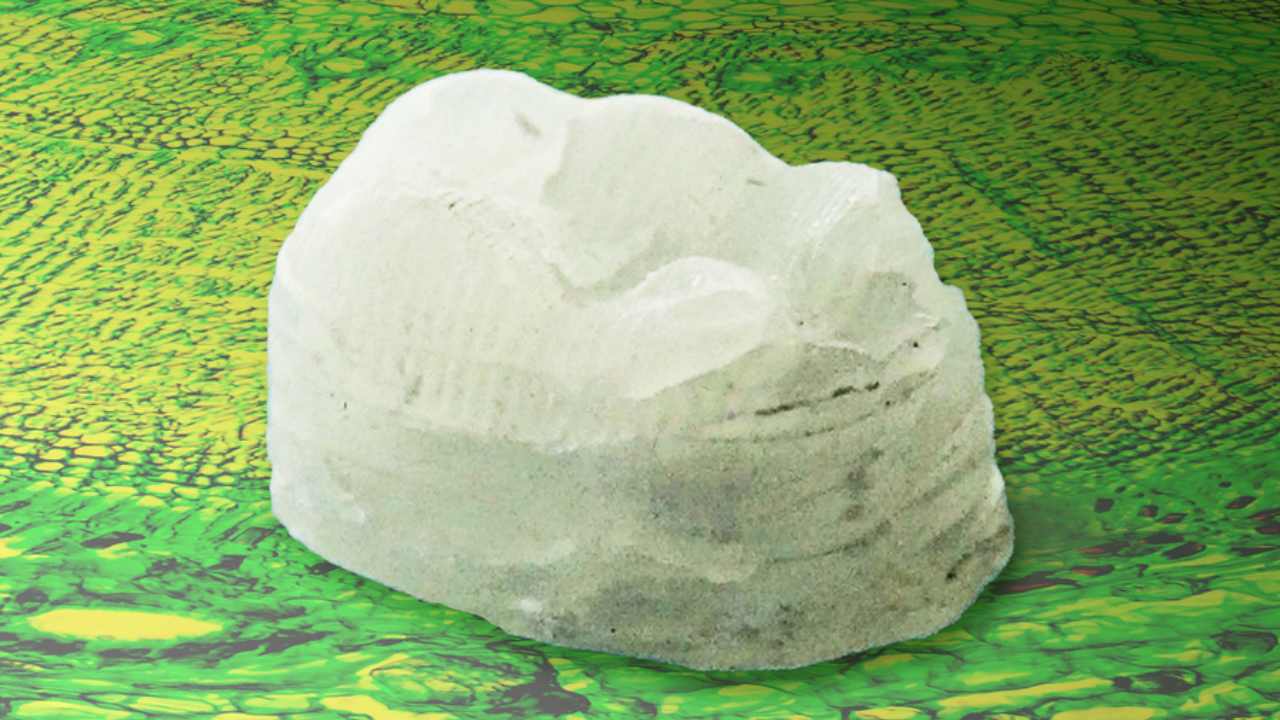
When analyzed under a microscope, the material revealed a microstructure similar to nacre, the internal lining of mollusk shells known for its strength and hardness.
Drawing inspiration from nature, researchers shaped the material into durable forms and began testing it in 3D printers.
During testing, the material was deposited in layers of 0.5 mm and subjected to drying and thermal curing processes.
A notable curiosity observed was the material shrinking by 80% due to solvent evaporation, a property that can be controlled to achieve precise and uniform results.
In strength tests, the prototypes surprised.
Even in coin-sized parts, the new plastic proved to be firm and hard to break, solidifying its position as a robust and eco-friendly alternative to conventional polymers.
Impacts and the Future of Production
One of the greatest promises of this new plastic is its contribution to sustainability.
The partial or total replacement of petroleum-based plastics with materials derived from natural cellulose could significantly reduce the carbon footprint of the industry.
“If we can replace some petroleum-based plastic with naturally derived cellulose, that is undoubtedly better for the planet,” emphasizes Hart.
Furthermore, the technology also opens doors to innovative applications.
From the production of industrial components to furniture made with lab-grown wood, as proposed by another MIT team, the potential to diversify the use of cellulose is immense.
The new plastic developed by MIT researchers represents a milestone in the pursuit of sustainable solutions in materials science.
By combining cutting-edge technology and inspiration from nature, the team succeeded in creating a strong, durable, and environmentally responsible composite.
This innovation not only demonstrates the potential of cellulose nanocrystals but also reinforces the importance of continuing to invest in technologies that combine performance and sustainability.
The industry, which has long relied on petroleum-based materials, may finally find in the plant kingdom a viable and revolutionary alternative for the future.
Click here to read the research!







O MUNDO NÃO PRECISA DE MAIS PLÁSTICO PAREM COM ESSAS PESQUISAS DESTRUTIVAS
Isso foi inventado decadas atras em star treck kkkkk
Aluminio transparente…
Talvez o spock ainda esteja por aqui!
Vida longa e prospera.
O importante será saber se é reciclavel. Se o material tiver aplicabilidade estrutural, a biodegrabilidade é desvantajosa.