





 Portuguese
  English
  Spanish
  3 min of reading
  0 comments


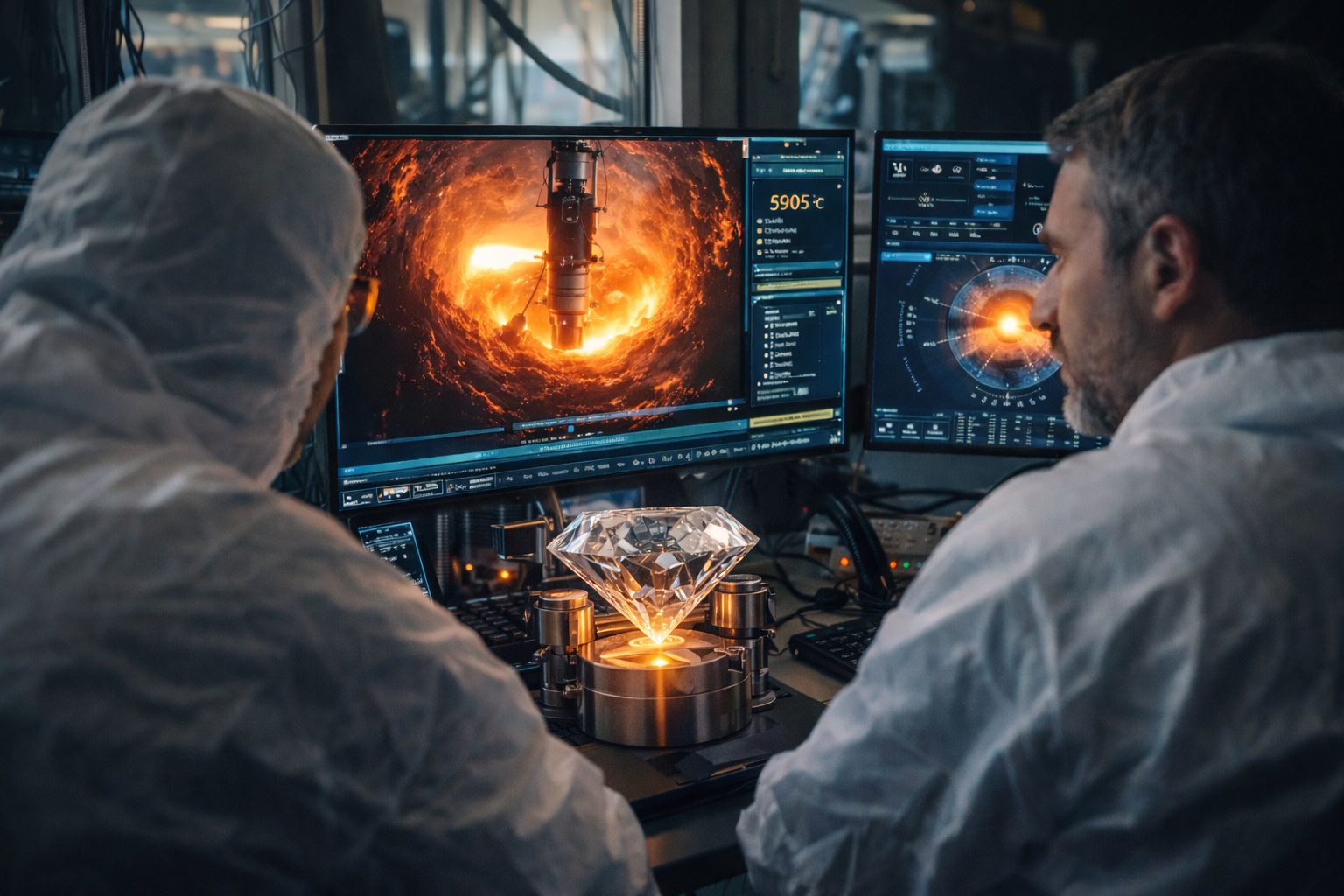
Experiments with Diamonds Simulate Extreme Conditions of the Planet’s Interior and Help Scientists Understand How Earth’s Deep Heat Dissipates Over Geological Time
A new scientific investigation suggests that the Earth’s interior may be losing heat faster than previous estimates indicated.
The study was conducted by researchers at the Carnegie Institution for Science in Washington, who developed an experimental method to reproduce in the laboratory the extreme conditions present in the planet’s interior.
This way, scientists managed to simulate the environment located at the boundary between the deep mantle and the Earth’s outer core, one of the most inaccessible regions of modern geophysics.
-
Dialysis as we know it may be numbered: researchers at the University of Southern California have managed to cultivate kidney cells in the lab that refuse to die and form mini-structures that mimic the actual functioning of a kidney.

-
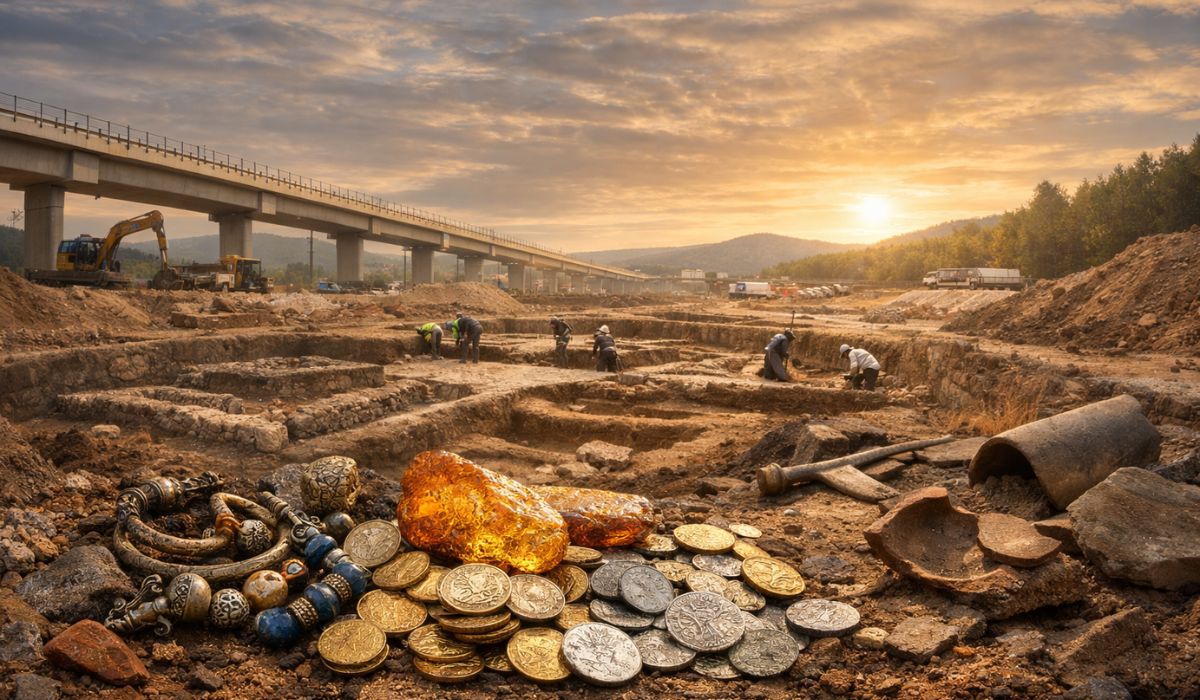
They were going to build a highway, but they ended up finding in the Czech Republic an entire Celtic city buried for more than 2,000 years, with hundreds of gold and silver coins, precious amber, and one of the largest archaeological treasures ever discovered.
-
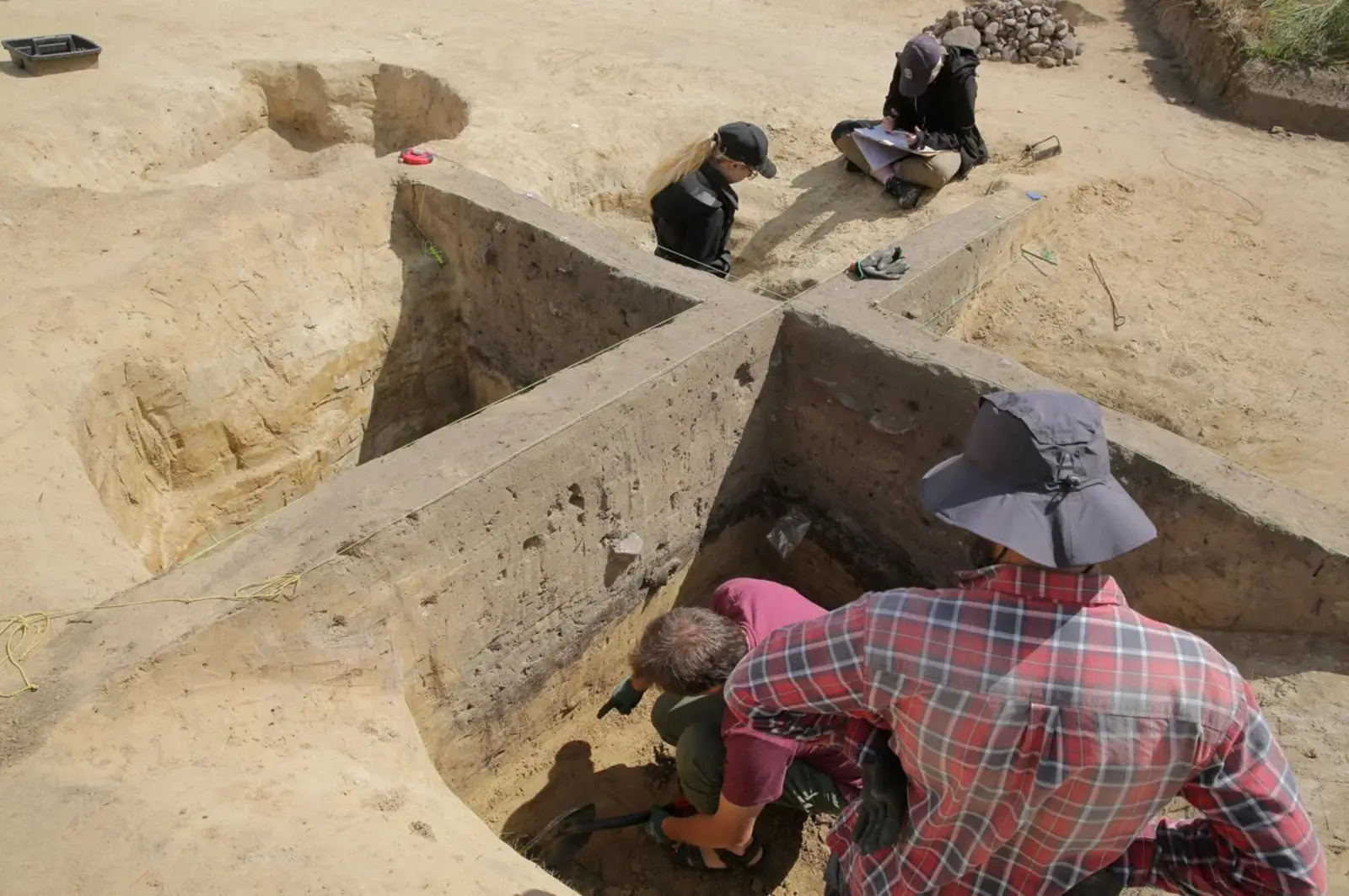
Archaeologists find lost medieval city in Poland with a central square, cemetery, forge, and more than 500 buried artifacts.
-
A massive warm air mass stretched from Brazil to near Antarctica and caused something that almost never happens: lightning and thunderstorms in Ushuaia, in the Falkland Islands, and in the South Georgia Islands.


Consequently, the results help to understand how the planet’s internal heat is transferred over millions of years, influencing the thermal evolution of the Earth.
Scientific Investigation Recreates Earth’s Deep Environment
Initially, researchers created an experiment capable of reproducing the pressure and temperature conditions found between the Earth’s mantle and core.
To do this, diamonds were used in the laboratory, as this material can withstand extremely high pressures.
Moreover, diamonds allow scientists to recreate deep geological environments under controlled conditions, making it possible to study minerals that cannot be directly observed.
In this way, the experiments allowed analyzing how heat moves from the planet’s inner regions towards the Earth’s mantle.
Therefore, this experimental approach made it possible to investigate physical properties that previously remained inaccessible to science.
Deep Minerals May Control Earth’s Cooling Rate
At the same time, scientists raised an important hypothesis.
According to researchers at the Carnegie Institution for Science, the cooling rate of the Earth’s interior may directly depend on the thermal conductivity of the minerals present at the boundary between the mantle and the core.
In other words, the way these minerals conduct heat may determine how long the planet will continue dissipating its internal thermal energy.
Thus, understanding this physical property becomes essential to explain how Earth thermally evolves over its geological history.
Consequently, the research highlights the importance of studying the materials that make up this deep region of the planet.
Bridgmanite Dominates the Boundary Between the Mantle and the Core
Furthermore, studies indicate that this deep layer is primarily composed of a mineral called bridgmanite.
This mineral dominates much of the Earth’s lower mantle and plays an essential role in the thermal processes of the planet’s interior.
However, measuring the thermal conductivity of bridgmanite has always been extremely difficult.
This is because this region is located almost at the center of the Earth, an environment that remains out of reach for direct observations.
Thus, scientists had to resort to laboratory experiments to investigate its properties.
Laboratory Experiments Reveal Clues About the Planet’s Interior
Faced with this challenge, researchers reproduced conditions similar to those of the Earth’s deep interior within controlled experiments.
As a result, it became possible to analyze how bridgmanite conducts heat under extreme pressures and temperatures.
In addition, the obtained results help clarify how heat from the Earth’s core is transferred to the mantle over time.
Consequently, this data contributes to enhancing scientific understanding of the processes occurring in the Earth’s deepest layers.
Therefore, the research reinforces the importance of high-pressure experiments to study phenomena that occur in the planet’s interior.
What the Cooling of Earth’s Interior May Reveal About Planetary Evolution
The investigation conducted by scientists at the Carnegie Institution for Science demonstrates that the study of deep minerals can reveal essential information about Earth’s thermal dynamics.
Thus, understanding how the planet’s internal heat dissipates continues to be one of the central questions of modern geophysics.
As new experiments continue to be conducted, researchers seek to better understand how the thermal conductivity of bridgmanite influences the energy balance of the Earth’s interior.
In light of these discoveries, a provocative scientific question arises: what more could the Earth’s deep interior reveal about the history and evolution of our planet?








Seja o primeiro a reagir!