





 Portuguese
  English
  Spanish
  4 min of reading
  0 comments


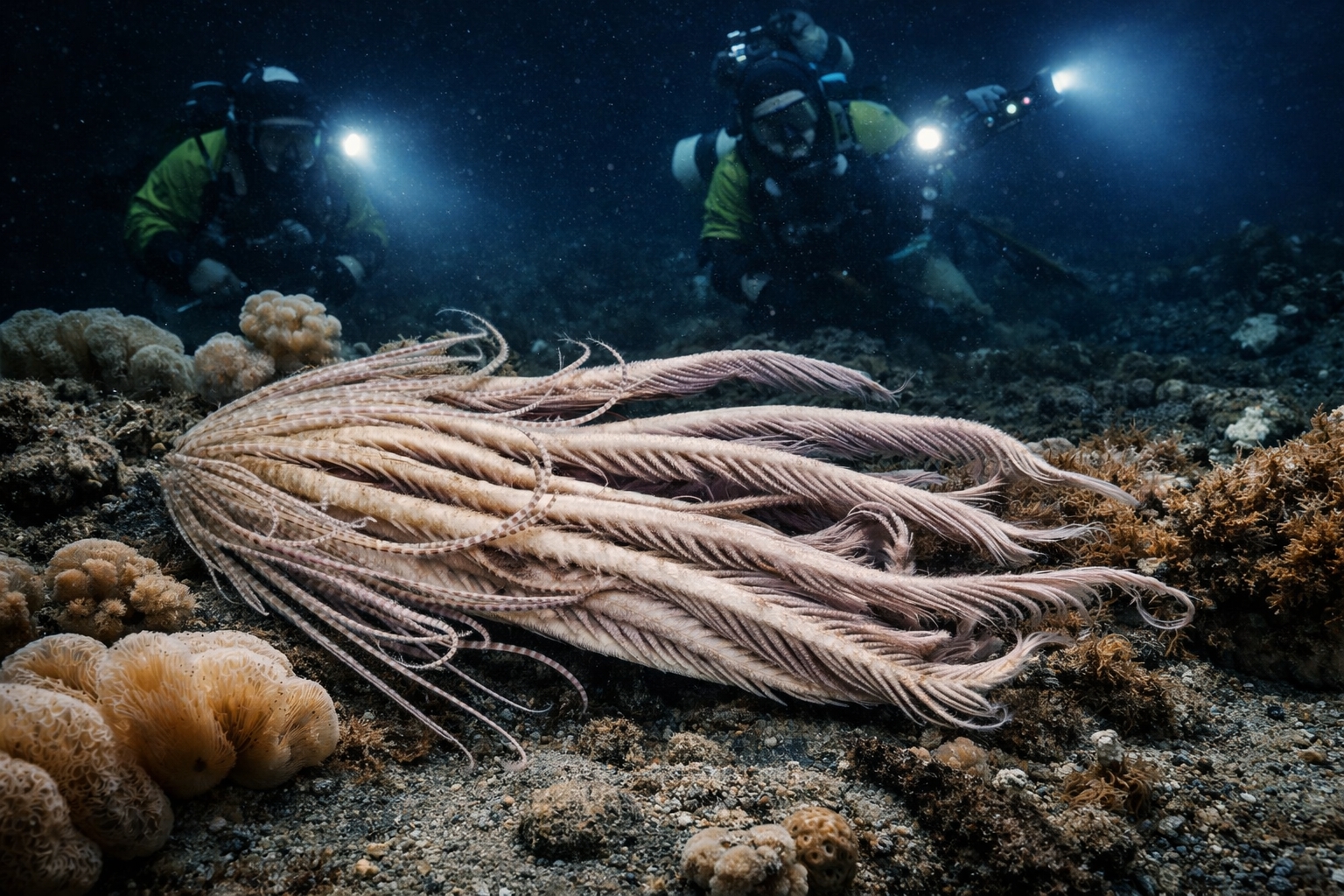
The Discovery by the USA and Australia Expands the Number of Promachocrinus Species and Shows How the Biodiversity of the Seafloor Still Holds Surprises.
The identification of an animal with 20 arms caught attention during research in the waters of Antarctica. The discovery took place in studies conducted by scientists from the United States and Australia, focusing on still little-known marine species.
In addition to its unusual shape, the specimens exhibit color variations ranging from purple to dark red. The finding also reinforces how the seafloor remains a difficult environment to explore and understand.

The Discovery of a New Species with Up to 20 Arms in the Waters of Antarctica
The work focused on a group of the phylum of echinoderms, which includes starfish, sea cucumbers, sand dollars and sea urchins. Within this group, researchers turned their attention to the genus Promachocrinus.
-
The Himalayas continue to grow to this day, with tectonic plates advancing 5 cm per year, mountains rising up to 10 mm annually, and the 2015 earthquake that killed 9,000 people may have increased the risk of an even larger seismic mega-event.

-
At an altitude of 400 km by astronauts from the International Space Station, Paris transforms at night into a golden mesh so precise that it reveals the outline of the Seine River, avenues, and entire neighborhoods like a luminous map drawn over the Earth.

-
iPhone 17 reaches historic low price with 256 GB, 120 Hz display, and drops to R$ 5,703 on Shopee, featuring A19 chip, dual 48 MP cameras, battery life of up to 30 hours, and advanced AI features.

-
Trip to Mars getting closer: Pulsar Fusion, from the UK, advances with plasma ignition in fusion engine and could drastically reduce space travel time, making crewed missions faster, safer, and economically viable.


This genus is almost exclusive to the waters of Antarctica and was still little known. The thorough analysis helped to better detail the diversity of these animals and reveal new species.
What the Scientists from the United States and Australia Were Studying in Antarctica
The goal was to better understand how echinoderms live and how they differ in the region. This group includes species with very characteristic body structures and a wide variety of shapes.
In the case of Promachocrinus, there was a gap in information, even though it is a genus present in an environment with extreme conditions. The research advanced precisely by targeting this specific group of animals.
DNA Analyses Revealed the Existence of Seven More Promachocrinus Species
The analyses of DNA confirmed the existence of seven more species of Promachocrinus. Previously, only Promachocrinus kerguelensis was known.
With this confirmation, the variety within the genus was greater than previously thought. Genetic identification helped to separate species that may look very similar at first glance.
Why the Animal May Have Up to 20 Arms

The appearance is described as unusual, with many arms, some reaching 20. Each arm has structures that resemble “hairs,” which contributes to the different look.
These “hairs” are ambulacral feet, structures used for locomotion by echinoderms. They help the animal move and interact with the environment on the seafloor.
The Highlight of the Species Called Strawberry Pen
Among the most unusual species is the Promachocrinus fragarius. It was nicknamed the Antarctic Strawberry Feather Star because of its reddish coloration, similar to that of a strawberry.
This color detail, along with the shape with many arms, made the species one of the most striking within the group identified in the research.
How Depth Hindered the Discovery
The animals live on the seafloor, between 65 and 1,100 meters deep. This range makes collection and observation more complex, which helps explain why species of the genus were still little known.
The depth, combined with the conditions of the Antarctic environment, requires greater effort to expand sampling and better understand local biodiversity.
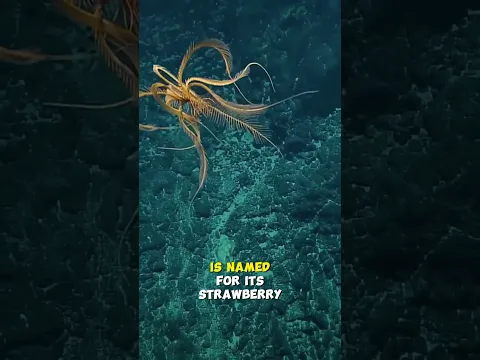

Discovery of New Species Reveals the Mysteries of the Seafloor of Antarctica
The discoveries reinforce the need to investigate the marine ecosystems of the region with more scope. The biodiversity of the Southern Ocean may still be greater than what has been mapped so far.
With new samplings and analyses, the trend is that knowledge about Promachocrinus and other echinoderms from Antarctica will continue to advance.
The identification of species with characteristics such as 20 arms and colors ranging from purple to dark red shows that the seafloor still holds much undocumented diversity.
By expanding what was known by seven more species beyond Promachocrinus kerguelensis, the research makes clear the practical impact of better studying marine life at great depths, especially in the Southern Ocean.










-

-

-

-

-

-

73 pessoas reagiram a isso.