





 Portuguese
  English
  Spanish
  3 min of reading


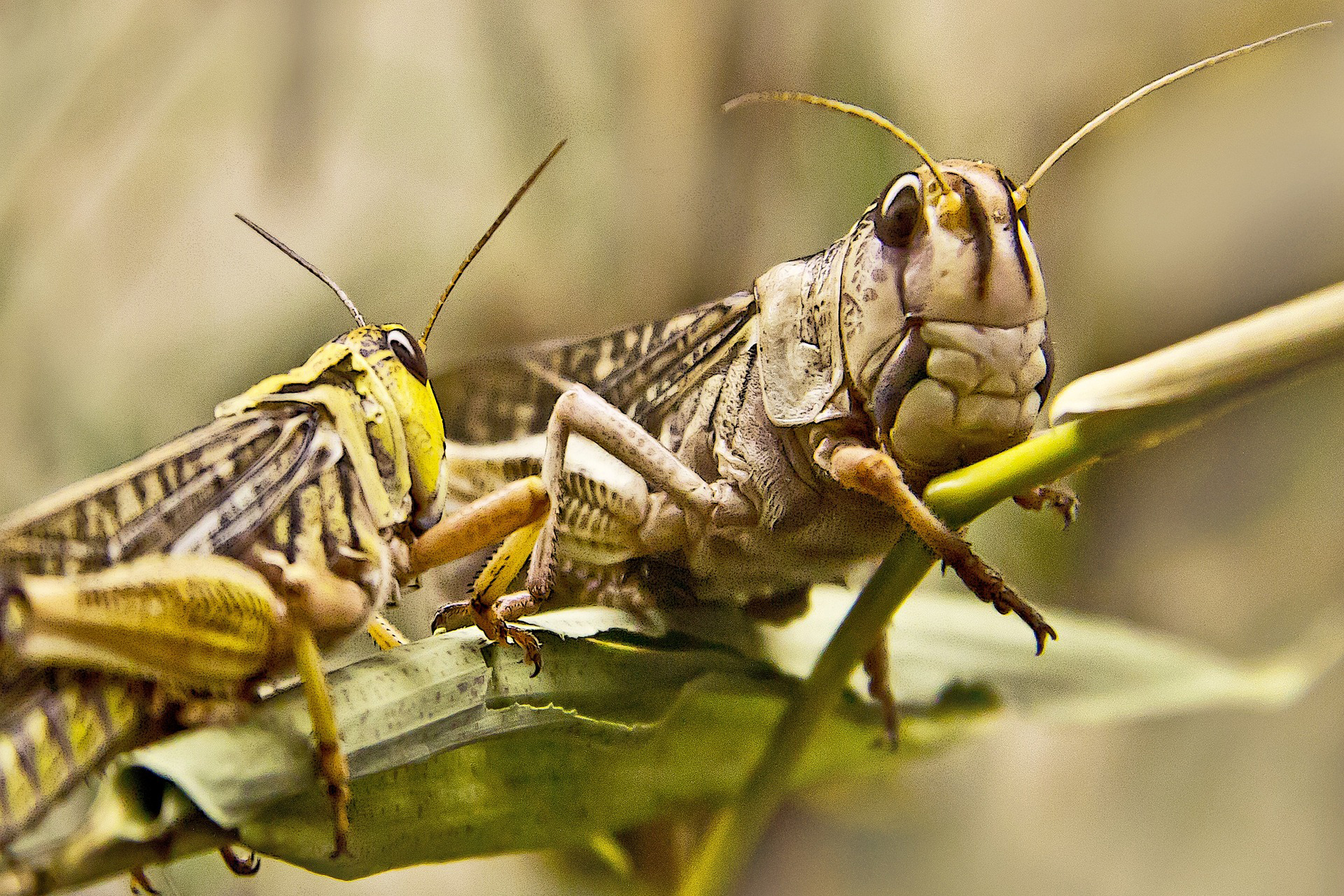
Autonomous System for Cars, Based on the Ability of Grasshoppers, Was Able to Detect a Collision Three Seconds in Advance in Tests Conducted in the Laboratory
In order to avoid traffic accidents, technology companies like Tesla and others that provide autonomous driving solutions often employ technologies such as radar and LiDAR. However, the performance of these autonomous systems is not particularly good at night. In search of providing drivers a safer alternative, researchers from Penn State University in the United States developed an autonomous system that follows the abilities of insects like grasshoppers.
The research was the subject of a study recently published in the scientific journal American Chemical Society Nano. The study was led by Professor Saptarshi Das. To create a sensor analogous to what exists in nature, the researchers examined the neural networks of insects like grasshoppers to learn how these species avoid colliding with each other or being eaten by their predators.
The researchers created an algorithm modeled after the brain circuit of grasshoppers. With the new system, for instance, to avoid a blockage, instead of processing an entire image, only one variable will be processed: the intensity of the headlights of the cars around the vehicle. This means that a vehicle will no longer need numerous cameras spread all around.
-
Honda performs miracles in fuel consumption with a hatch that marks 13.2 km/l in the city and 15 km/l on the highway, leaving Polo, HB20, 208, and Onix behind and becoming a reference among compact cars without resorting to turbo or hybrid systems.

-
Six diseases that seem common but can prevent the renewal of the driver’s license for the elderly throughout Brazil and surprise experienced drivers — could any of them affect you without showing clear signs?

-
With 122 hp, fuel consumption of up to 17.7 km/l, and a trunk capacity of 440 liters, this hybrid SUV impresses even though it costs up to R$ 47,000 more than the Yaris — meet the Toyota Corolla Cross.
-
600 km with three Chinese plug-in SUVs, same mode and air conditioning on: Jaecoo 7, BYD Song Plus, and Haval H6 hit the road, and the pump reveals who was truly the most economical.

The researchers achieved their goal of developing an optoelectronic sensor in this way. The sensor is composed of eight “memtransistors” that are light-sensitive derived from a layer of molybdenum disulfide (MoS2).
The grasshopper-based sensor has a surface area of about 40 square micrometers and consumes only a few hundred picojoules of energy, using much less power than conventional sensors. The system was able to predict an accident about two to three seconds before it actually occurred when tested using real-world configurations.
Even though it seems like a short time, the driver or the autonomous system of the vehicle can take three seconds to make the necessary adjustments to the vehicle to avoid a collision. Scientists believe that the sensor will make existing choices better, but likely not the current ones obsolete, compared to the grasshopper-inspired system.
The Grasshopper-Based Sensor Developed by Researchers at Penn State University Is Much More Energy Efficient, Meaning It Can Be Used for Longer Periods Without Needing to Be Recharged or Replaced
Another advantage of the grasshopper-inspired system is that it is capable of detecting collisions at night, when visibility is reduced and conventional collision detection systems tend to fail. This means that the sensor can provide an additional layer of safety for autonomous vehicles, especially in adverse weather conditions or in poorly lit areas.
The research team is currently working in partnership with technology companies to develop commercial prototypes of the sensor and test its viability in real-world conditions.
This research from Penn State University demonstrates how inspiration from nature can provide innovative solutions to technological problems. The grasshopper-inspired collision detection system is more efficient and safer than conventional systems available and can be adapted for other applications beyond autonomous driving. It is expected that the sensor will help make autonomous vehicles safer and aid in preventing traffic accidents.







Seja o primeiro a reagir!