





 Portuguese
  English
  Spanish
  4 min of reading
  0 comments


Researchers at Zhengzhou University in China Succeeded in Synthesizing Millimeter-Sized Hexagonal Diamond Crystals Using 20 Gigapascals of Pressure and Temperatures Near 3,500 °F. The Experiment Reignites Scientific Debates About the Structure of Lonsdaleite, a Rare Material Associated with Meteorite Impacts and Potentially Harder Than Traditional Cubic Diamond
Researchers in China announced the synthesis of a pure phase hexagonal diamond with crystals about one millimeter in size, produced under 20 gigapascals of pressure and temperatures near 3,500 °F, reigniting scientific discussions about the properties of this rare material.
After decades of debates over its existence and physical characteristics, the hexagonal diamond was artificially produced by a team of Chinese physicists. The scientists reported obtaining millimeter-sized crystals of this rare carbon structure, considered potentially superior to traditional cubic diamond.
Rare Structure of Hexagonal Diamond and Differences from Common Diamond
Conventional diamonds have a cubic crystalline structure that organizes carbon atoms in a characteristic three-dimensional pattern. In contrast, the hexagonal diamond, also known as lonsdaleite, has an atomic arrangement with a six-sided pattern.
-
China creates hypersonic engine that can make planes and missiles fly more than 6 times the speed of sound with less weight, more range, and without system change.

-
Mysterious object on Mars divides NASA and Harvard after Curiosity image reignites suspicions about what was really found on the planet.

-
Giant structures 14 meters beneath Egypt are revealed by satellites and expose a millennia-old secret buried in Buto.

-
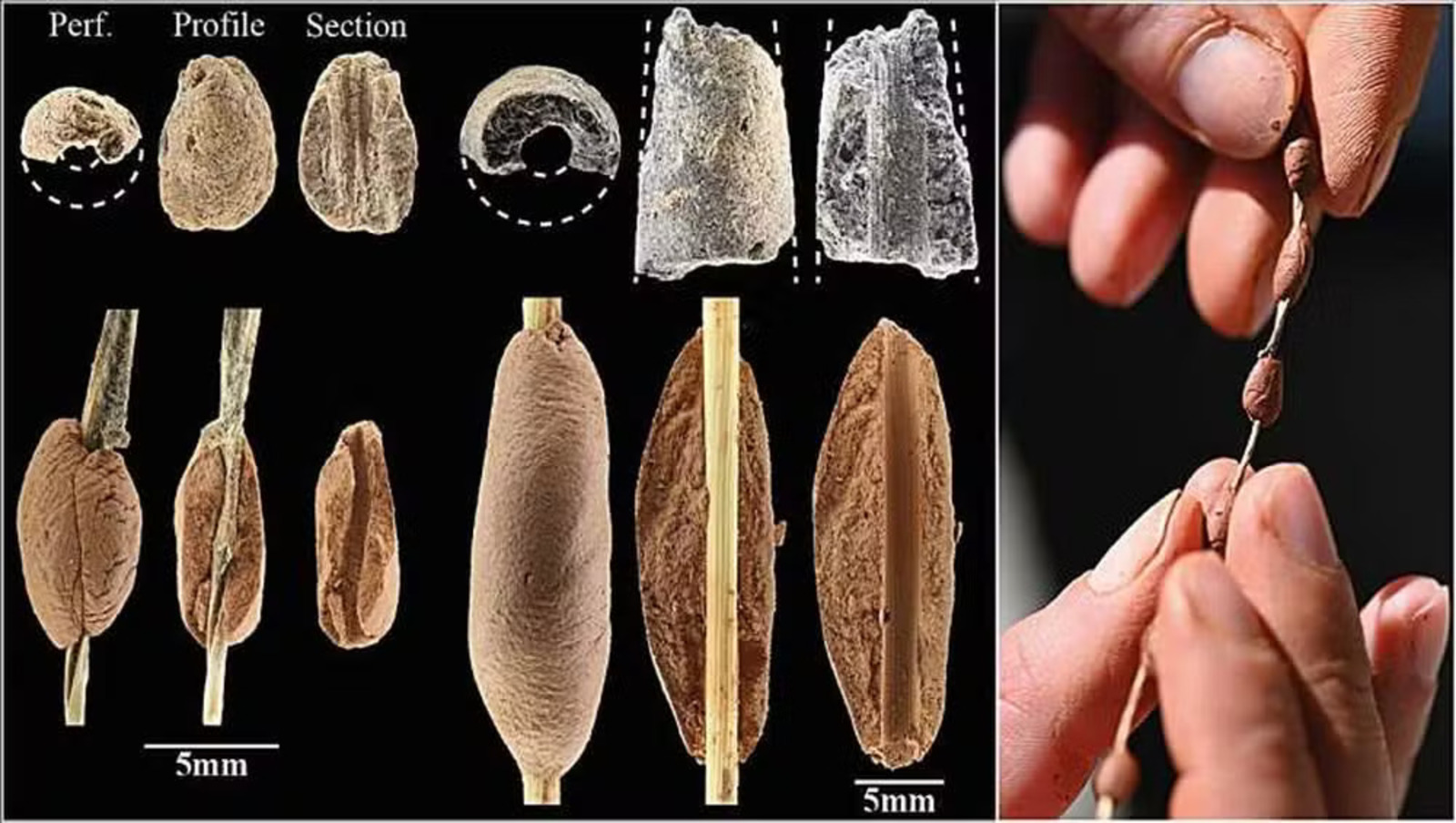
Children have been making clay pieces for 15,000 years in Southwest Asia, and fingerprints preserved on 142 ornaments helped archaeologists prove this.

Historically, this type of diamond has been identified only in very small quantities in locations where meteorite impacts occurred. This limited occurrence led scientists to question whether the material was truly distinct or merely cubic diamonds containing structural defects.
The new synthesis provides clearer experimental evidence of the existence of an independent hexagonal diamond. The production of crystals with measurable size allowed for more detailed structural analyses of the material.
Atomic Structure and Search for Superhard Carbon
In a conventional cubic diamond, the carbon bonds between layers are slightly weaker than those within the layers themselves. This structural characteristic imposes a natural limit on the overall strength of the material.
In the case of hexagonal diamond, the bonds between layers are shorter and stronger. This structural difference led researchers to predict that this form of carbon could be up to 50% harder than cubic diamond.
The possibility of an even more resistant material has sparked significant scientific interest. Superhard carbon is considered strategic for industrial and technological applications requiring highly wear-resistant materials.
Synthesis Method with Extreme Pressure and High Temperatures
The study was led by physicist Chongxin Shan from Zhengzhou University, who used a high-pressure and high-temperature method known as HPHT. This process is frequently employed in the artificial production of diamonds.
The researchers compressed graphite between tungsten carbide anvils applying 20 gigapascals of pressure. This value corresponds to approximately 200,000 times the atmospheric pressure on Earth.
During the experiment, the material was also heated to nearly 3,500 degrees Fahrenheit. Under these extreme conditions, the crystalline structure of carbon was reorganized, successfully forming the hexagonal diamond.
Millimeter-Sized Crystals Enable Detailed Structural Testing
The crystals obtained by the researchers measured about one millimeter in width, a size considered significant for scientific analysis. The size allowed for the application of various structural characterization methods.
To confirm the purity of the hexagonal diamond, the scientists used X-ray diffraction and atomic-scale microscopy. These techniques allowed for the direct observation of the arrangement of atoms within the crystalline structure.
The tests indicated that the material has greater rigidity and higher resistance to oxidation compared to traditional diamonds. These characteristics reinforce the technological potential of the material in industrial applications.
Hardness Results and Scientific Implications
Despite theoretical predictions, tests showed that the hardness of the hexagonal diamond is only slightly superior to that of common cubic diamond. The result fell short of estimates suggesting up to a 50% gain in hardness.
This result led researchers to consider that the theoretical limits of carbon hardness may need to be revised. The new measurements provide important experimental data for physical models that describe superhard materials.
Even with this smaller difference than expected, the synthesis of pure phase hexagonal diamond opens possibilities for advanced industrial applications. Among the cited uses are cutting tools, materials for thermal management, and quantum sensors.
Beyond industry, the material also holds scientific relevance. The study of these structures may help geologists better understand how minerals form under extreme conditions, such as those generated by meteorite impacts on Earth and other planets.
The production of millimeter-sized crystals with a clear structure represents a significant advancement in materials science. Previous similar results faced skepticism, but the new experimental data expand the understanding of this rare form of carbon.









-

-

-

5 pessoas reagiram a isso.