





 Portuguese
  English
  Spanish
  3 min of reading
  7 comments





Experiment at 1,629 Meters in the South China Sea Revealed Eight Visitors with Queue Feeding Behavior, Size-Related Aggressiveness Differences, and New Evidence on Distribution in Little-Documented Tropical Deep Waters
Scientists conducted an unusual experiment by dropping a cow carcass 1,629 meters deep in the South China Sea, recording the rapid arrival of eight unexpected species attracted by the food.
The experimental drop of a cow carcass at 1,629 meters deep, near Hainan Island, revealed eight Pacific sleeper sharks, the first recorded occurrence in the region, providing new data on distribution, feeding behavior, and ecology in deep waters.
Deep Water Experiment and Scientific Objective
Scientists planned to investigate ecological processes associated with the fall of large animal carcasses to the seafloor, a phenomenon observed when whales die and sink in deep ocean areas.
-
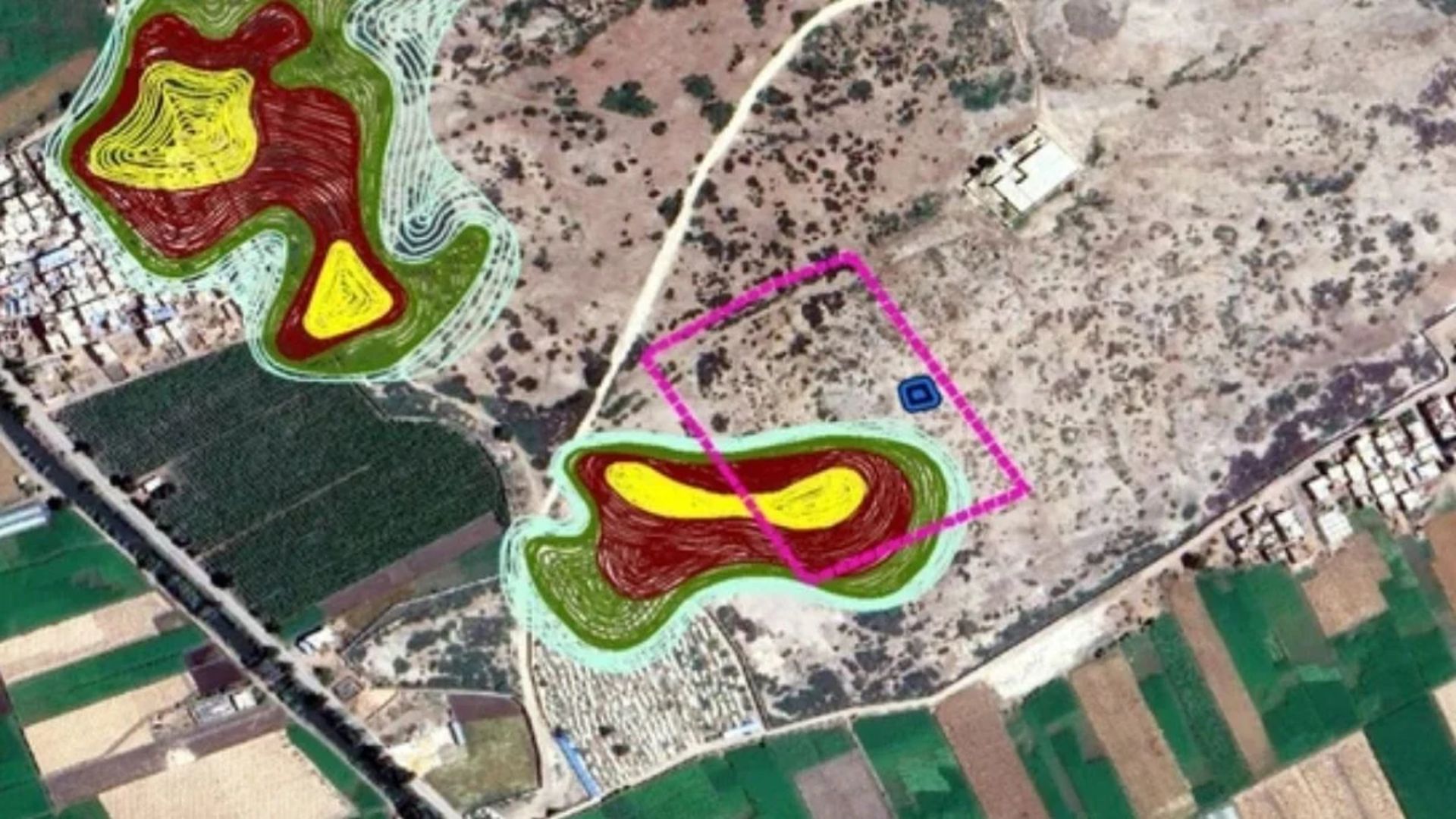
A mysterious structure has been found beneath an ancient city in Egypt — and the most impressive thing is what technology has revealed hidden for 2,600 years.
-
Astronauts reveal that cities shine so brightly at night that they are visible from space as “artificial constellations,” while highways in the desert appear more than the Great Wall of China, which practically disappears when viewed from orbit.

-
A magnitude 9.2 earthquake in Alaska reshaped the coastline in minutes, sank entire cities, raised sections of the seabed by several meters, and left one of the fastest geographical transformations ever recorded on Earth.

-
The entire Brazil is expected to face above-average rainfall in the next ten days, with accumulations reminiscent of the peak of summer, raising concerns especially for those living in the Southeast, Northeast, and Northern regions of the country.


To simulate this natural event, the team deliberately dropped a cow carcass on a continental slope of the South China Sea, exactly 1,629 meters deep.
The experiment was monitored by underwater cameras, capable of recording continuous images of the ocean floor, allowing observations of which species would approach the carcass and how they would interact during feeding.


First Regional Occurrence and Scientific Surprise
The recordings revealed eight Pacific sleeper sharks around the carcass, marking the first known occurrence of the species in this specific area of the South China Sea.
The simultaneous presence of so many individuals surprised researchers since the species is considered elusive, despite its wide distribution in different areas of the Pacific Ocean.
This record expanded knowledge about the presence of the species in tropical deep waters, traditionally associated with higher temperatures than those typically attributed to the Pacific sleeper shark.
Feeding Behavior and Queue Formation
The images showed not only direct attacks on the carcass but also an unusual organizational behavior during feeding, described as a sort of queue formation among the sharks.
The individuals positioned at the front of the carcass made way for sharks approaching from behind, allowing for orderly alternation during access to the available food.
According to Han Tian, from Sun Yat-sen University and the South Guangdong Marine Science and Engineering Laboratory, this behavior reflects an adaptive survival strategy in deep environments.
He stated that feeding priority seems to be determined by individual competitive intensity, even in extreme conditions, indicating non-solitary food-seeking behavior among Pacific sleeper sharks.

Size Differences, Aggressiveness, and Physical Adaptations
The team observed that sharks measuring 2.7 meters or more exhibited more aggressive behavior when attacking the carcass, while smaller individuals showed cautious approaches and deliberate circulation.
This contrast suggests behavioral hierarchies related to body size, directly influencing how animals explore food resources concentrated in deep waters.
A behavior of eye retraction during feeding was also recorded, interpreted as a protective adaptation, as the species lacks a nictitating membrane, known as a third eyelid, common in other animals.
The images also revealed the presence of parasitic copepods on some sharks, although unidentifiable, reinforcing similarities with close relatives, such as Greenland sharks, known for ocular parasites.
Known Distribution and Open Questions
Pacific sleeper sharks are documented in the North Pacific, from Japan to Alaska, down to southern Baja California, as well as records in deep regions like the Tonga Trench.
Although believed to prefer cold waters, the species has also been accidentally observed near the Solomon Islands and Palau, previously considered the southern limit of its distribution.
The frequent occurrence recorded in the southwest of the South China Sea raises questions about whether this area has always been part of its natural distribution or if it reflects recent environmental changes.
Tian highlighted that the recurring presence indicates that scientific understanding of this population remains limited, necessitating new studies to clarify distribution patterns and behavior at tropical depths.
The study detailing these observations was published in the journal Ocean-Land-Atmosphere Research, contributing to the understanding of deep ecosystems and interactions among large marine predators.






Propagação da **** louca! -.-
V.A.C.A.
Estratégia de propaganda além de errada, ****. Cria repulsão até de ler a matéria.
Ridículo o número de propagandas desorganizadas que tira o tesão de ler…por aqui nunca concluo a leitura!
Falta de respeito conosco o leitor!