





 Portuguese
  English
  Spanish
  4 min of reading
  0 comments


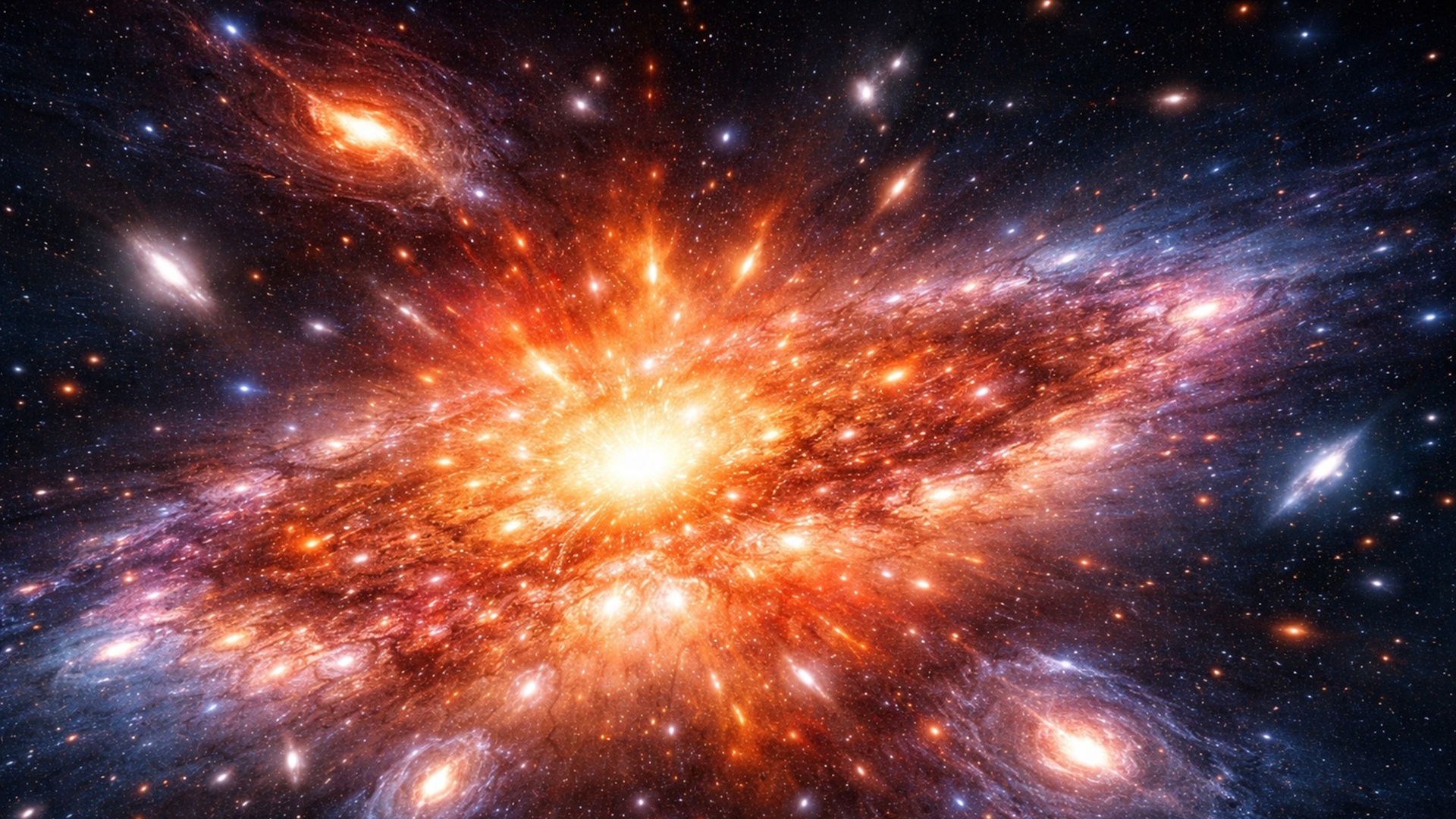
Identified When The Universe Was Only 1.4 Billion Years Old, The Cluster Has Gas Five Times Hotter Than Predicted By Models, Bringing Together Dozens Of Extremely Active Galaxies And Raising Questions About How Large Cosmic Structures Formed In The Early Stages Of The History Of The Cosmos
A Newly Identified Galaxy Cluster, Observed When The Universe Was Only 1.4 Billion Years Old, Showed Temperatures Five Times Higher Than Predicted, Suggesting That Extreme Processes Occurred Much Earlier Than Expected And Challenging Established Models Of Cosmic Evolution.
Unexpected Discovery In A Young Universe
Researchers Identified That The Cluster Was Burning At A Temperature Five Times Greater Than Expected For That Phase Of The Universe, Just 1.4 Billion Years After The Big Bang. This Finding Led Scientists To Classify The Phenomenon As Something The Universe Should Not Present So Early.
Until Then, Astronomers Believed That Such Extreme Temperatures Would Only Be Possible In More Mature And Stable Galaxy Clusters, Formed Much Later In Cosmic History. The Discovery Indicates That This Understanding May Be Incomplete.
-
The gigantic steel shell built to contain Chernobyl for a century has been pierced by a drone, exposing a critical system and creating a hole that could cost over 500 million euros to repair.

-
Brazilian Navy reaches a new level by taking over an airport with a 1,600-meter runway used by 1,800 military personnel and autonomous attack drone testing.

-
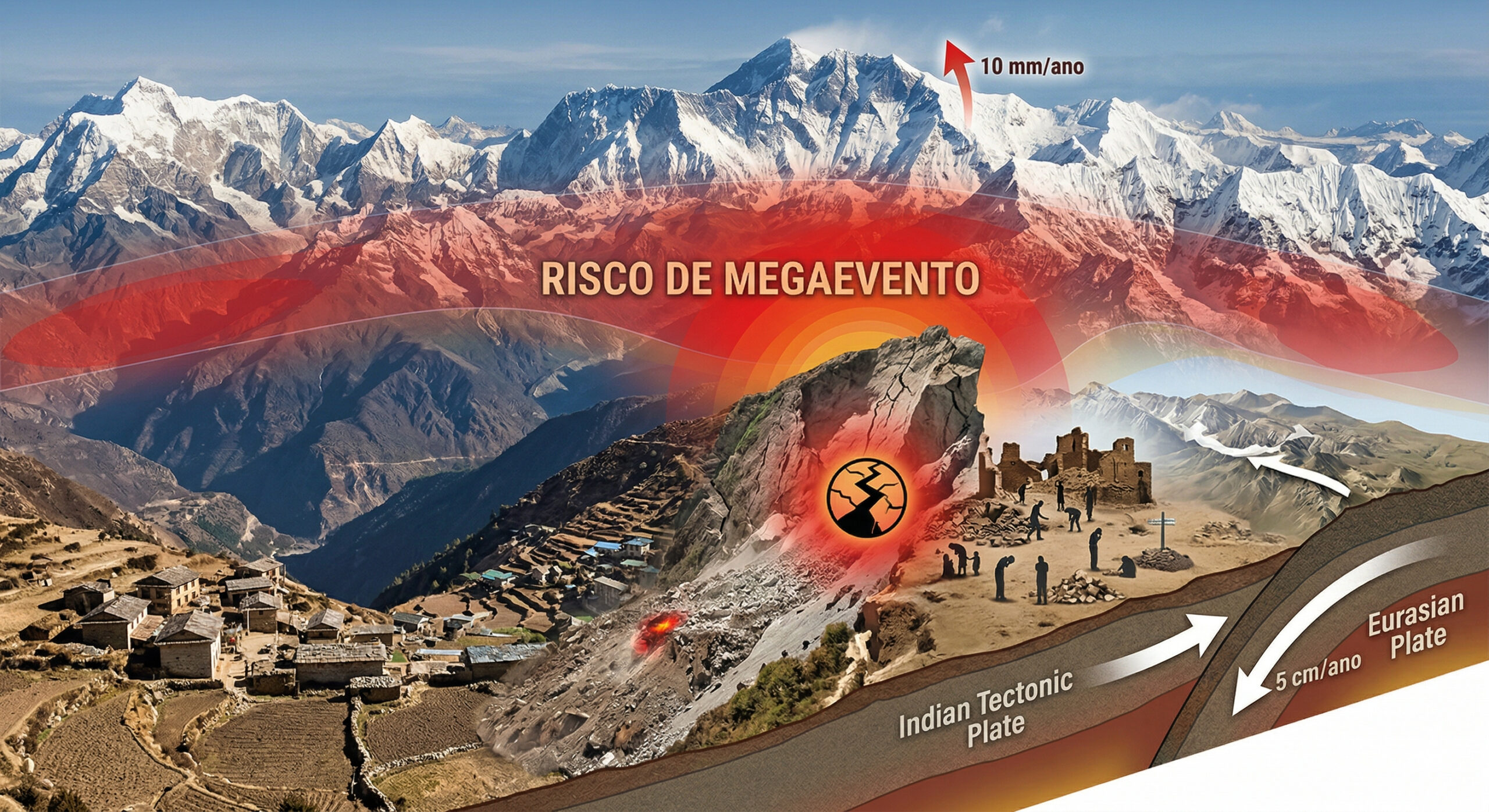
The Himalayas continue to grow to this day, with tectonic plates advancing 5 cm per year, mountains rising up to 10 mm annually, and the 2015 earthquake that killed 9,000 people may have increased the risk of an even larger seismic mega-event.
-
At an altitude of 400 km by astronauts from the International Space Station, Paris transforms at night into a golden mesh so precise that it reveals the outline of the Seine River, avenues, and entire neighborhoods like a luminous map drawn over the Earth.


This Young And Hot Nuclear Cluster Suggests That The First Moments Of The Universe May Have Been Much More Explosive Than Previously Thought, With Intense Energy Release On Unanticipated Scales.
Structure And Characteristics Of Galaxy Clusters
Galaxy Clusters Are Among The Largest Objects In The Universe Capable Of Staying Together By Their Own Gravity. They Gather Large Amounts Of Individual Galaxies, Invisible Dark Matter, And Vast Clouds Of Superheated Gas.
Between Galaxies, The Gas Is Heated And Transformed Into Plasma, Potentially Reaching Hundreds Of Millions Of Degrees. This Plasma Emits Intense Radiation In The X-Ray Spectrum, Allowing Astronomers To Investigate Its Physical Properties.
Scientists Believed That This Intracluster Medium Was Primarily Heated By Gravitational Interactions As An Immature And Unstable Cluster Gradually Collapsed To Reach A More Stable State. New Evidence Suggests That This Process May Be More Complex.
Observations With ALMA And The Size Of SPT2349-56
The Discovery Was Published In The Journal Nature And Was Based On Observations Made With The Atacama Large Millimeter-submillimeter Array, Known As ALMA. With This Array Of Telescopes, Researchers Were Able To Observe The Universe As It Was About 12 Billion Years Ago.
During This Period, The Cluster Named SPT2349-56 Was Still Extremely Immature, But It Was Already Remarkably Large For Its Cosmic Age. Its Core Extends More Than 500,000 Light-Years In Diameter.
This Size Is Approximately Comparable To The Size Of The Vast Halo Of Matter And Dark Matter Surrounding The Milky Way, Reinforcing The Exceptional Nature Of The Observed Structure.
The Cluster Also Hosts More Than 30 Extremely Active Galaxies That Produce Stars At A Rate More Than 5,000 Times Greater Than Our Own Galaxy, Indicating A Highly Energetic Environment.
Extreme Temperature And Questioning Of Models
When Researchers Used ALMA To Measure The Temperature Of The Intracluster Medium, They Found It Was Much Higher Than The Models Predicted For That Moment In The Evolution Of The Universe. The Observed Signal Was Intense And Unexpected.
Co-author Dazhi Zhou, A PhD Candidate At The University Of British Columbia, Stated That A Cluster Atmosphere This Hot Was Not Expected To Be Found So Early In Cosmic History. He Reported That He Initially Was Skeptical About The Signal.
According To Zhou, After Months Of Verification, It Was Confirmed That The Gas Is At Least Five Times Hotter Than Predicted And Even Hotter And More Energetic Than Many Current Clusters, Reinforcing The Solid Nature Of The Result.
Possible Role Of Supermassive Black Holes
Scientists Are Still Not Absolutely Sure How The Cluster Reached Such High Temperatures. One Hypothesis Considered Is The Influence Of Three Recently Discovered Supermassive Black Holes Deep Within The Cluster.
Supermassive Black Holes Represent The Largest Known Class, With Masses At Least 100,000 Times Greater Than That Of The Sun. They Are Typically Found In The Cores Of Galaxies, Where They Feed On Gas And Release Enormous Amounts Of X-Ray Radiation.
Professor Scott Chapman From Dalhousie University Explained That These Black Holes Were Already Pumping Enormous Amounts Of Energy Into The Surrounding Environment, Shaping The Young Cluster Much Earlier And More Intensely Than Previously Thought.
Implications For The Evolution Of The Universe
This Discovery Comes At A Time When Astronomers Are Identifying More Supermassive Black Holes In The Primitive Universe, Which Seem To Have Grown Much Faster Than Expected By Current Models.
It Is Important To Note That One Of These Black Holes Was Much Larger Than The Size The Host Galaxy Would Suggest, Indicating An Imbalance Between The Growth Of The Black Hole And The Galaxy Itself.
This Implies That In The Early Universe, Black Holes May Have Evolved More Rapidly Than The Galaxies That Harbored Them, Even In Relatively Small Systems, Altering The Dynamics Of Large Structure Formation.
Chapman States That Studying How These Dynamics Unfold Is Essential To Explain The Universe Observed Today. According To Him, Understanding Galaxy Clusters Is Crucial To Understand The Largest Galaxies That Exist, Whose Evolution Was Strongly Shaped By Intense Environments Such As This Intracluster Medium.








-

-

-

-

20 pessoas reagiram a isso.