





 Portuguese
  English
  Spanish
  3 min of reading
  1 comment


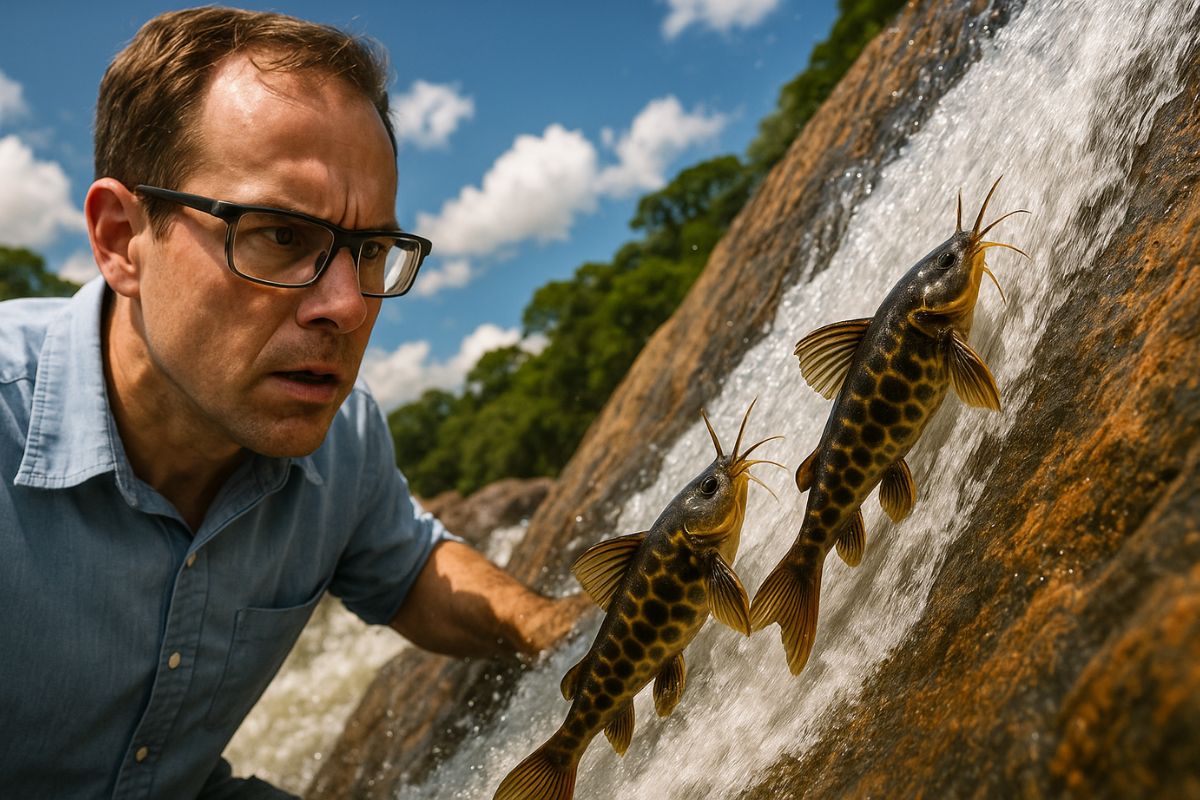


UFMS Study Identifies Unprecedented Behavior of Catfish That Can Climb Rocks and Waterfalls, Revealing Surprising Adaptations in the Fauna of Brazilian Rivers.
According to information from the Uol portal, researchers from the Federal University of Mato Grosso do Sul (UFMS) recorded for the first time fish that “climb” walls up to four meters high in rivers of the state. The behavior was observed in thousands of catfish (Rhyacliangus paranensis) during the rainy season, in the stretches of Cachoeira do Sossego and Cachoeira Diamantes, on the Aquidauana River, part of the Paraguay basin.
The discovery, published in the Journal of Fish Biology, represents the first record of climbing and mass aggregation among fish of the Pseudopimelodidae family. In addition to surprising by the technique used to ascend vertical surfaces, the phenomenon raises questions about migration, reproduction, and conservation of little-studied river species.
How Fish Can “Climb” Walls
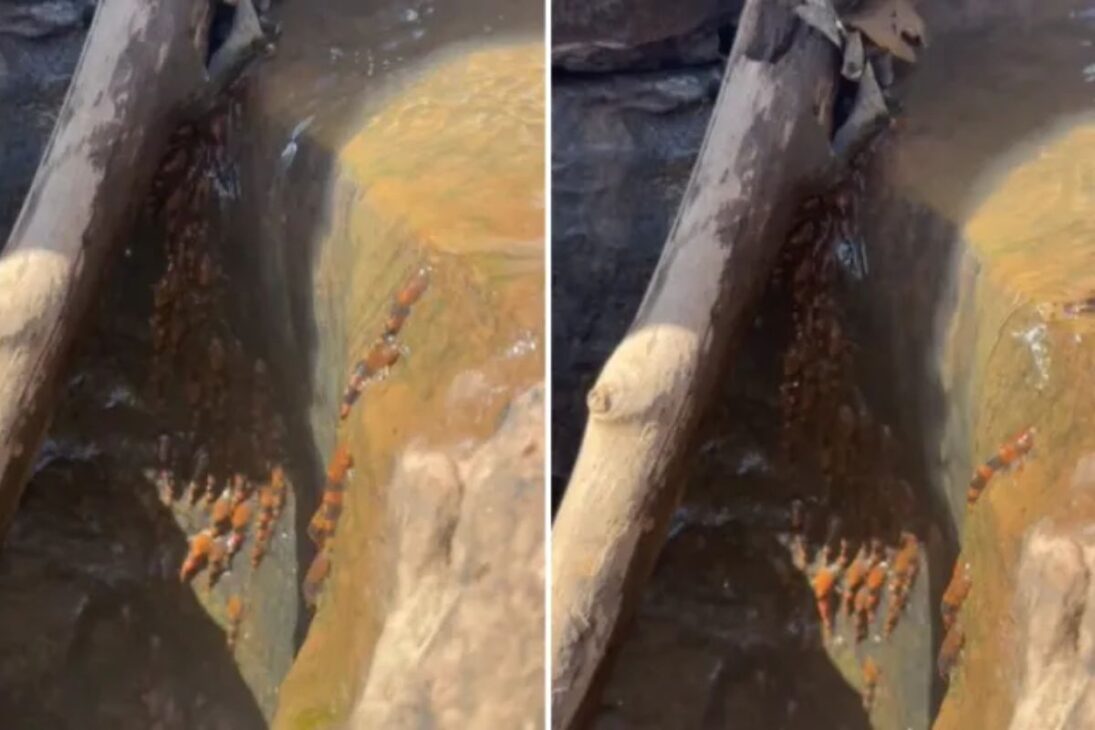
According to UFMS scientists, the catfish uses coordinated movements between fins and tail, creating a kind of natural suction that keeps it attached to the rock even in strong currents.
-
While restoring a historic mansion from 1910, a brick structure with an old turbine that generated energy from the Rio do Testo emerged, along with a hidden door and a rare floor concealed under layers of wax.

-
Italian researchers have detected what appears to be a second Sphinx buried under the sands of Egypt, and satellite scans reveal a gigantic underground megastructure hidden beneath the Giza Plateau for over 3,000 years.

-
There are 4,223 drums and 1,343 metal boxes concreted with 50-centimeter walls that store the radioactive waste from Cesium-137 in the worst radiological accident in Brazil, just 23 kilometers from Goiânia, with environmental monitoring every three months.

-
Giant Roman treasure found at the bottom of Lake Neuchâtel in Switzerland reveals an advanced trade system, circulation of goods, and armed escort in the Roman Empire about two thousand years ago.


By spreading its pectoral fins and generating negative pressure between its body and the surface, the fish can secure itself and gradually advance, even in steep sections.
This behavior, previously unknown in Brazilian fish, demonstrates an impressive biomechanical adaptation to fast-flowing environments, such as rapids and waterfalls.
Other rheophilic species living in turbulent waters exhibit similar behaviors, but the catfish drew attention for the scale and synchronization of collective movement.
The Discovery on the Aquidauana River
The record was made by the Environmental Military Police of Mato Grosso do Sul in November 2024, at the beginning of the rainy season.
The agents spotted large groups of catfish climbing rocky walls and slopes, an unprecedented behavior for the region. The images, sent to researchers at UFMS, prompted the field investigation.
According to the study, the fish were slowly migrating upstream, indicating a possible reproductive behavior associated with spawning.
During the observations, 439 specimens were captured for biological analysis. Among the identified individuals, there were males, adult females, and juveniles, but all with empty stomachs, suggesting that the animals do not feed during the climbing process.
Extreme Adaptation and Collective Behavior
During the day, catfish remain hidden under rocks and in shaded areas. At dusk, they emerge to climb vertical surfaces, often facing intense water flow.
In some records, the fish were seen climbing upside down, attached to the tops of rock crevices, demonstrating exceptional muscular strength and control.
Although observed in large groups, climbing occurs in a individual and interleaved manner, with each fish finding its own path of adhesion.
The behavior may represent an ancestral migratory instinct, adapted to the conditions of the Midwest waterfalls.
Ecological Implications and Conservation
Researchers emphasize that the phenomenon has direct implications for the conservation of migratory fish. Habitat fragmentation, damming rivers, and changes in the rainfall regime can compromise natural behaviors such as climbing.
According to the study, understanding these adaptations is essential to assess the impact of dams and hydraulic works on small but crucial species for the ecological balance of rivers.
The presence of catfish in such challenging environments indicates the resilience of the local fauna, but also highlights the need for continuous monitoring policies.
The record of fish that “climb” walls in Mato Grosso do Sul broadens the understanding of the diversity and ingenuity of Brazilian river species.
The discovery reinforces the importance of field research and the keen eye of local teams, capable of revealing behaviors invisible to the naked eye.
And you, did you imagine that small fish could climb entire waterfalls? Do you believe that this type of adaptation can help species survive in increasingly modified rivers? Leave your opinion in the comments.








Conversa que até agora nunca tinham visto???Eu mesmo já vi isso pessoalmente há pelo 15 anos em Rio do Mato Grosso!