





 Portuguese
  English
  Spanish
  5 min of reading
  0 comments


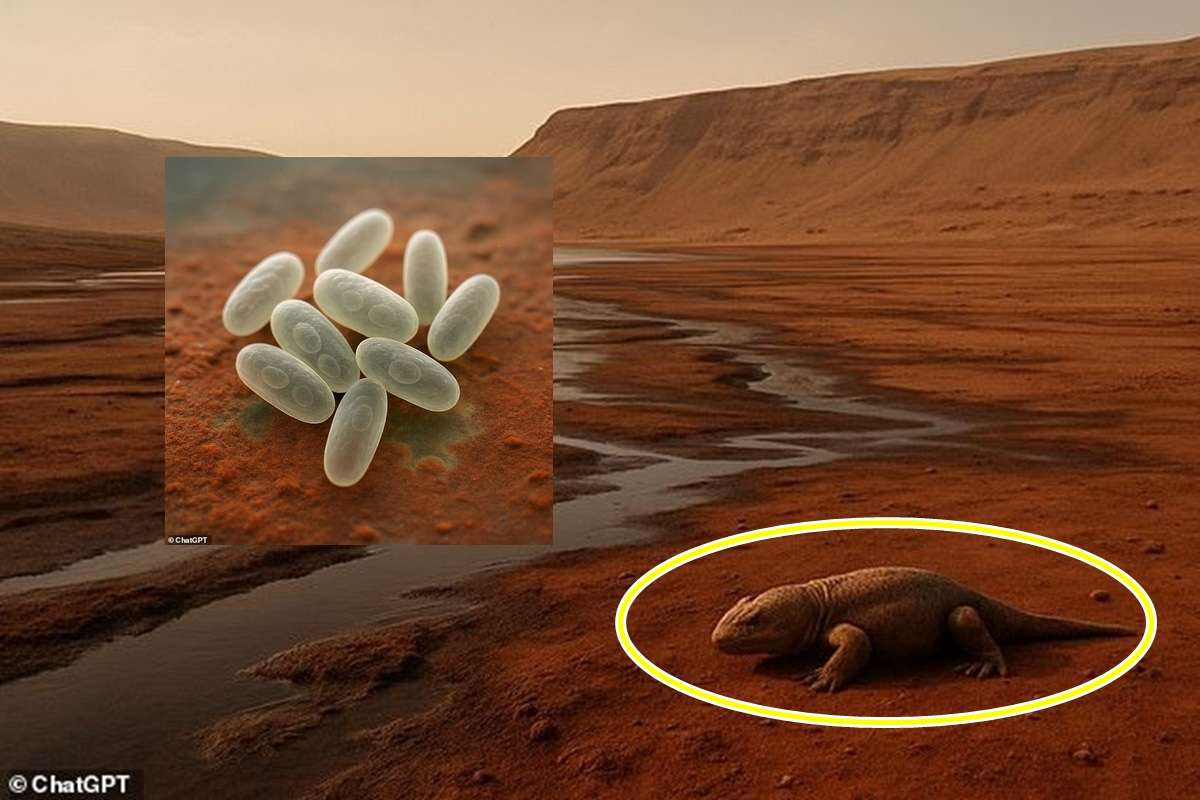
For Decades, Mars Was The Target Of Speculation About The Possibility Of Housing Life. Now, New Analyses From The Perseverance Rover Point To Mineral Marks Associated With Biological Activity, Offering The Most Consistent Indications Ever Recorded By NASA And Reigniting The Debate About The Presence Of Organisms In The Planet’s Past.
This week, NASA announced what its scientists consider the clearest evidence yet of life on Mars.
The findings were made by the Perseverance rover while investigating regions north of the Martian equator, where rust-colored circular marks known as “leopard spots” were identified.
After a year of analyses and reviews, researchers assert that these formations may represent biosignatures of microbial organisms that lived billions of years ago.
-
How the terraforming of Mars can transform the planet: artificial aerosols can increase the temperature by up to 35°C in 15 years, creating conditions for liquid water.
-
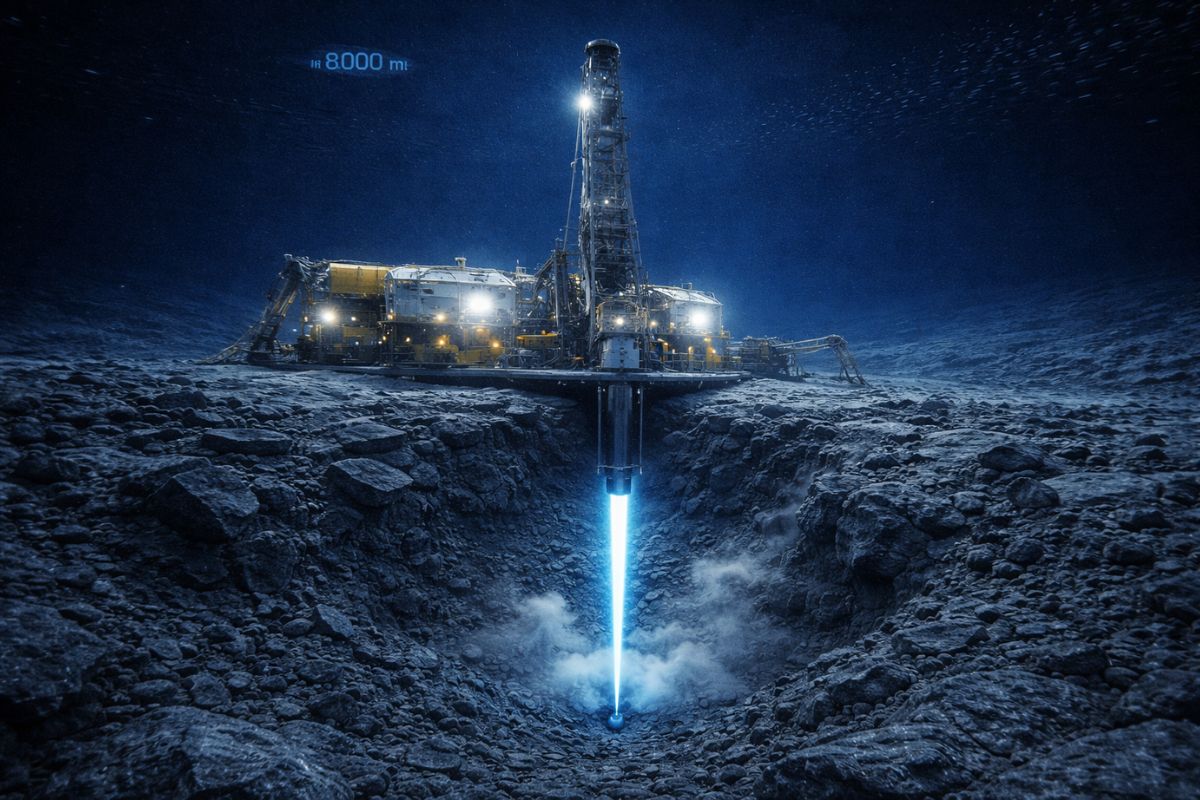
Scientists drilled nearly 8,000 meters into the ocean floor above the fault that caused the 2011 tsunami in Japan and discovered that a layer of clay 130 million years old was responsible for making the wave much worse than any model had predicted.
-
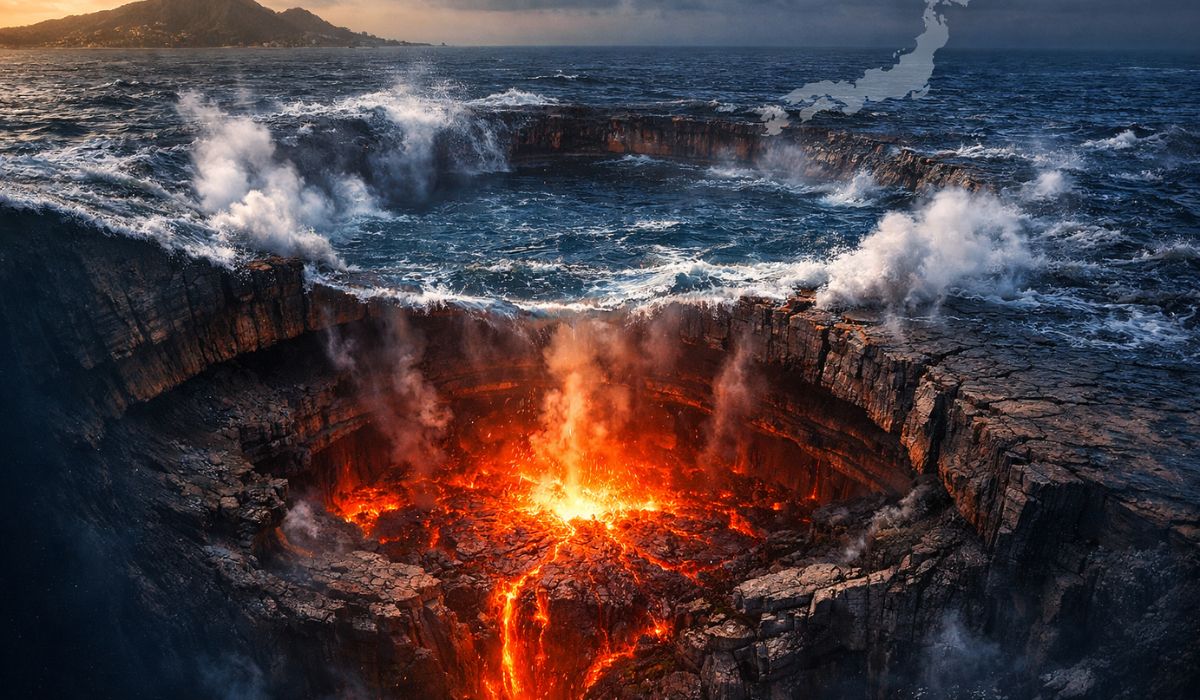
Thousands of years after causing the largest eruption of the Holocene, one of the world’s largest supervolcanoes is rebuilding itself beneath the sea south of Japan, receiving new magma and alarming scientists with its transformation.
-
China has activated a magnet 700,000 times more powerful than the Earth’s magnetic field that operates for over 200 consecutive hours while consuming little energy, and now the world wants to know what Beijing plans to do with this technology in 2026.


Unusual Marks At The Site Known As Bright Angel
Evidence of life on Mars was found in an area called Bright Angel, located at the bed of an ancient dry river in Jezero Crater.
The Perseverance identified distinct circular patterns that scientists call “reaction fronts”.
These points are zones where chemical and physical reactions occurred in the past, leaving preserved mineral records on the Martian surface.
Analyses conducted by the rover’s onboard laboratory detected two iron-rich minerals associated with organic matter on Earth: vivianite and greigite.
Vivianite is often found in decomposing organic material, while greigite is produced by microorganisms in terrestrial environments.
For researchers, this combination is unusual and highly suggestive of past biological activity.
Organic-Mineral Associations Similar To Those On Earth
Earth scientist Keyron Hickman-Lewis from the University of London and co-author of NASA’s report stated that the organic-mineral associations observed in Bright Angel are known on Earth to be generated by microbial activity.
According to him, finding structures so similar on Mars represents a promising observation for astrobiology.
Hickman-Lewis emphasized that the Mars 2020 mission team does not use the term “potential biosignature” lightly.
While it is still not irrefutable proof of life on Mars, scientists ruled out several alternative explanations of purely chemical origin for the formations.
After extensive reviews, they consider that the obtained data constitutes the most convincing evidence ever found by the space agency.
Environmental Conditions During The Presence Of Liquid Water
The possible evidence of life on Mars dates back to a time when the Jezero Crater was a liquid water lake.
Billions of years ago, the region had milder temperatures and abundant water presence, factors that could have supported simple microbial ecosystems. Currently, the site is an arid desert exposed to extreme temperatures and high solar radiation.
According to Hickman-Lewis, the environment where these potential biosignatures were detected seems to have been a low-temperature aquatic system, considered conducive to the development of microorganisms.
Researchers suggest that these organisms could have metabolized carbon, sulfur, and phosphorus naturally present in the rocks, leaving as a byproduct the minerals now visible as leopard spots.
Signs Compatible With Microbial Activity
The central hypothesis of the study is that these traces correspond to ancient microorganisms similar to terrestrial extremophiles capable of surviving in hostile conditions.
Professor Michael Garrett from the University of Manchester stated that good analogs would be microbial mats that grow in highly saline lakes or microbes that live kilometers below the Earth’s crust.
Garrett highlighted that the existence of resilient organisms in extreme environments on Earth demonstrates that life can persist in a minimalist and resilient way even under severe conditions.
This would make it plausible that similar structures formed on Mars during its wettest phase when liquid water was available on the surface.
Search For Signs In Other Regions Of The Planet
Based on the evidence of life on Mars found in Bright Angel, the Perseverance team expanded the investigation to other ancient areas outside Jezero Crater.
The objective is to determine whether the possible biosignatures are restricted to a single location or represent a more widespread phenomenon across the planet.
Scientists believe that if these structures are indeed of biological origin, they would not have emerged in just one isolated point.
The current mission strategy includes analyzing very old rocks that could preserve additional evidence of microbial activity.
This approach aims to map the spatial distribution of potential biosignatures and reconstruct the extent of the ancient Martian biosphere.
Limits To The Evolution Of Complex Life Forms
Despite the discovery, researchers assess it to be extremely unlikely that complex life evolved on Mars.
It is believed that microorganisms arose on the planet around the same time that life appeared on Earth.
However, after about a billion years, Mars experienced severe climate changes triggered by the loss of its atmosphere due to solar winds, becoming cold and dry.
According to Garrett, these adverse conditions imposed strong limitations on the size and complexity of any Martian life form.
On Earth, it took another three billion years for complex multicellular organisms to develop, which was only possible due to the presence of stable and energy-rich environments—conditions that Mars did not maintain after losing its primitive atmosphere.
Adaptations Needed For Survival On Mars
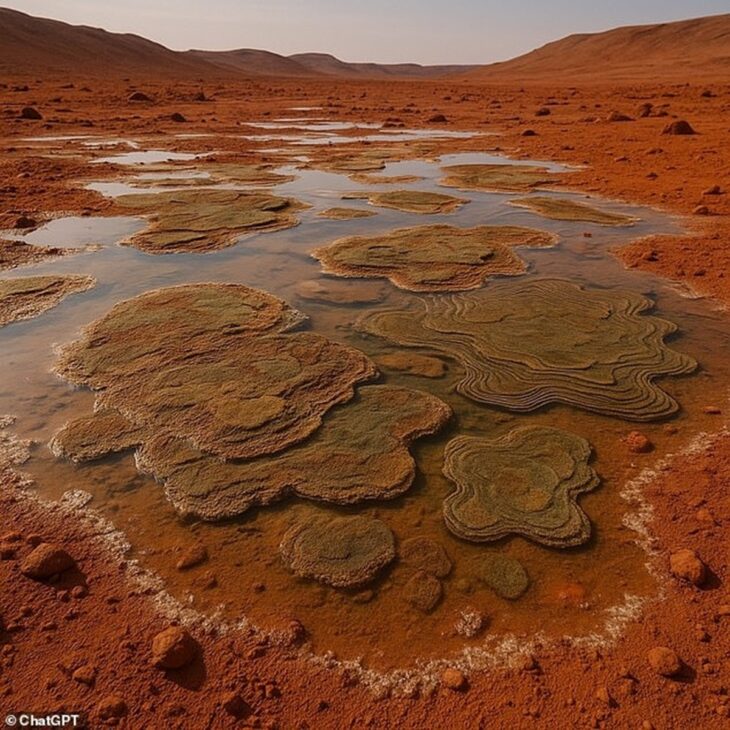
Even in the hypothetical scenario where more complex organisms evolved, they would have faced severe restrictions.
Garrett points out that any multicellular life form would have to develop extreme adaptations, such as resistance to ultraviolet radiation, tolerance to extreme cold, and strategies to deal with the scarcity of liquid water.
Among the possible adaptations would be thick protective layers or the habit of living underground to avoid direct solar radiation.
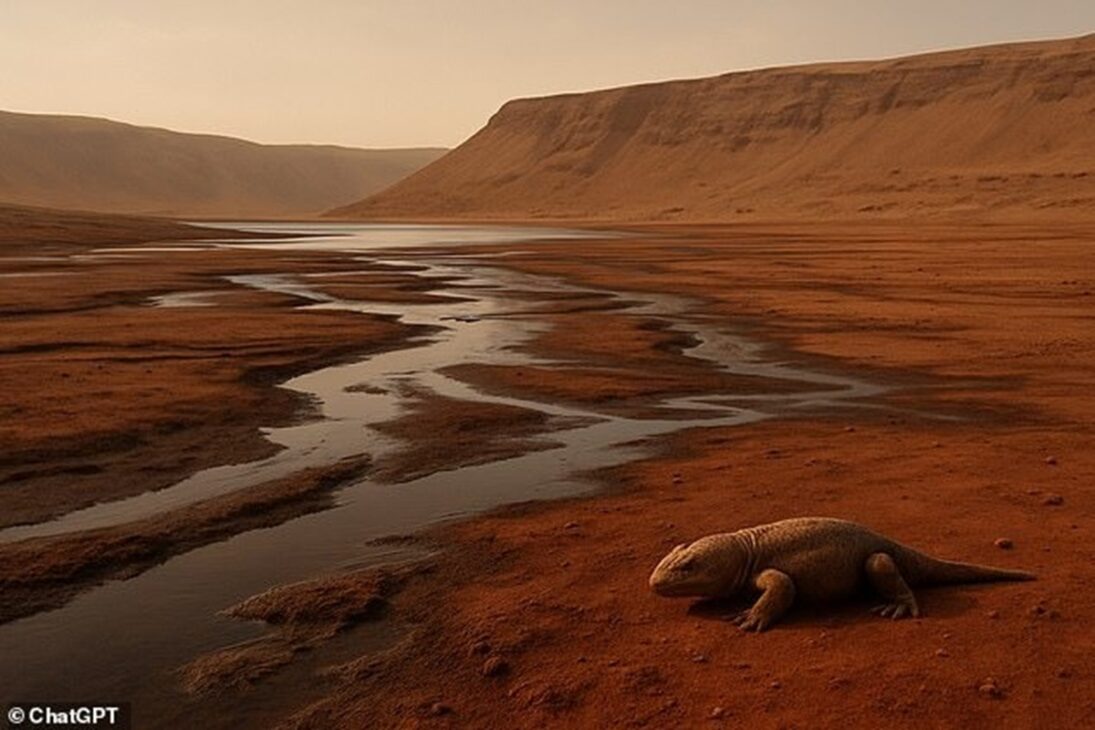
These characteristics would resemble those of terrestrial creatures that inhabit extreme environments, such as some desert lizards or filter-feeding organisms that survive near hydrothermal vents at great depths.
Challenges In Determining The Nature Of The Structures
The main difficulty faced by scientists is that only indirect traces are available for analysis.
There are no preserved biological samples, only mineral records possibly associated with microbial activity. This hinders definitive confirmation that the detected signals are indeed evidence of life on Mars.
Researchers emphasize that while the current data is the most promising ever obtained, new laboratory studies and future sample return missions are still needed to establish the exact origin of the structures.
Until then, the leopard spots will remain as potential but inconclusive indications of an ancient Martian biosphere.










-

-

-

5 pessoas reagiram a isso.