





 Português
  Inglês
  Espanhol
  7 min de leitura
  0 comentários


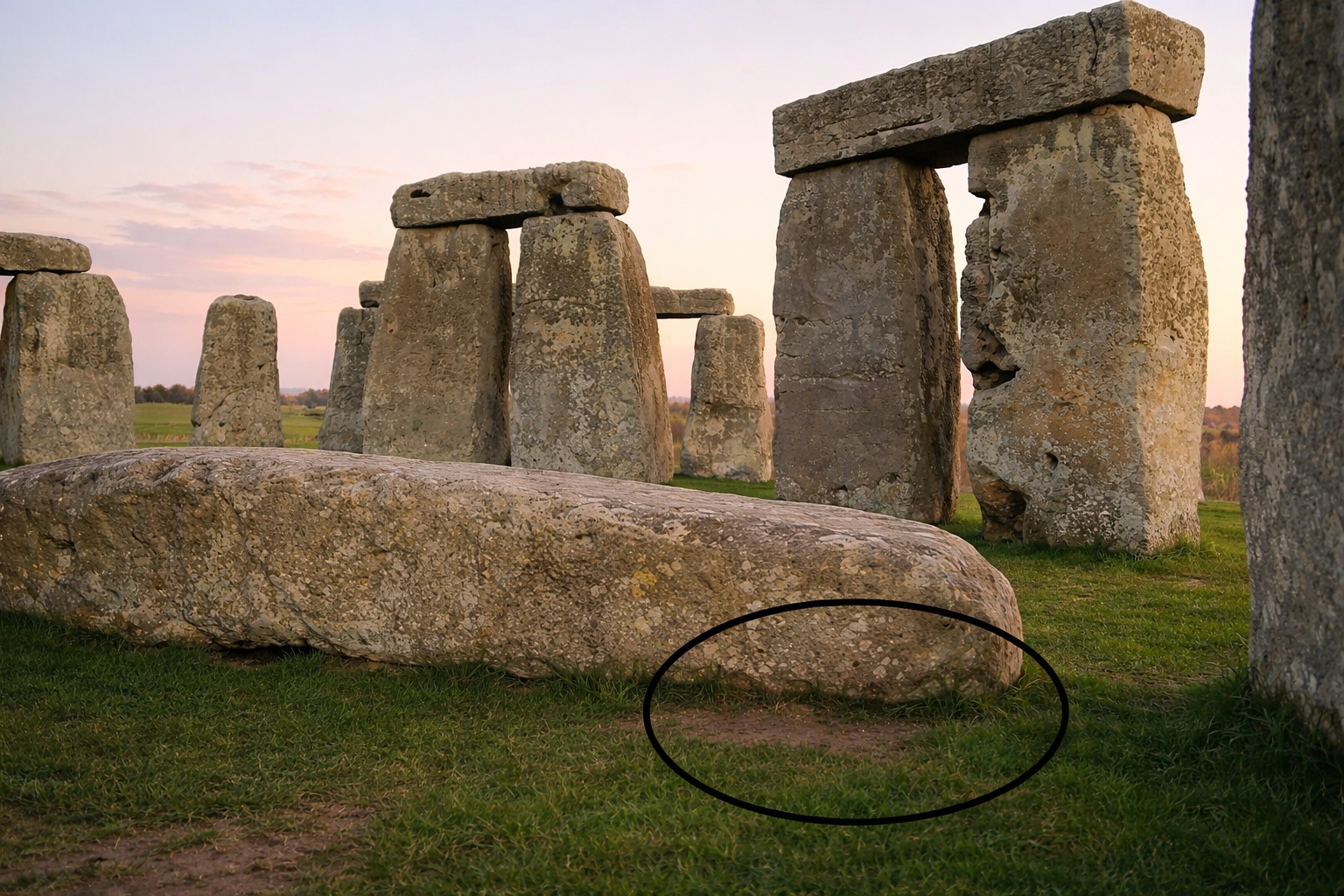
Study Published in Nature and Research by Scientists from Aberystwyth University, UCL, Curtin University, and the University of Adelaide Reveal That the Stonehenge Altar Stone Came from Northeastern Scotland, Over 750 km from the Monument, Indicating Neolithic Transport Networks and Social Organization Much More Complex Than Previously Imagined.
The minerals in the rock did not match any geological formation in Wales. When the first results appeared, Clarke was incredulous. In an interview with NPR, he recounted his initial reaction to seeing the data.
“When I received the first batch of results, I looked and thought: ‘There’s no way this can be so distinctly Scottish.’ But it was.”
-
A gigantic freshwater reservoir appears beneath the Great Salt Lake, between 3 and 4 kilometers deep, surprising scientists with an unexpected flow towards the interior of the lake.

-
At over 8,800 meters above sea level, the summit of Mount Everest is made up of rocks that originated at the bottom of an ocean about 500 million years ago and were pushed to the highest point on Earth by the collision of tectonic plates.

-
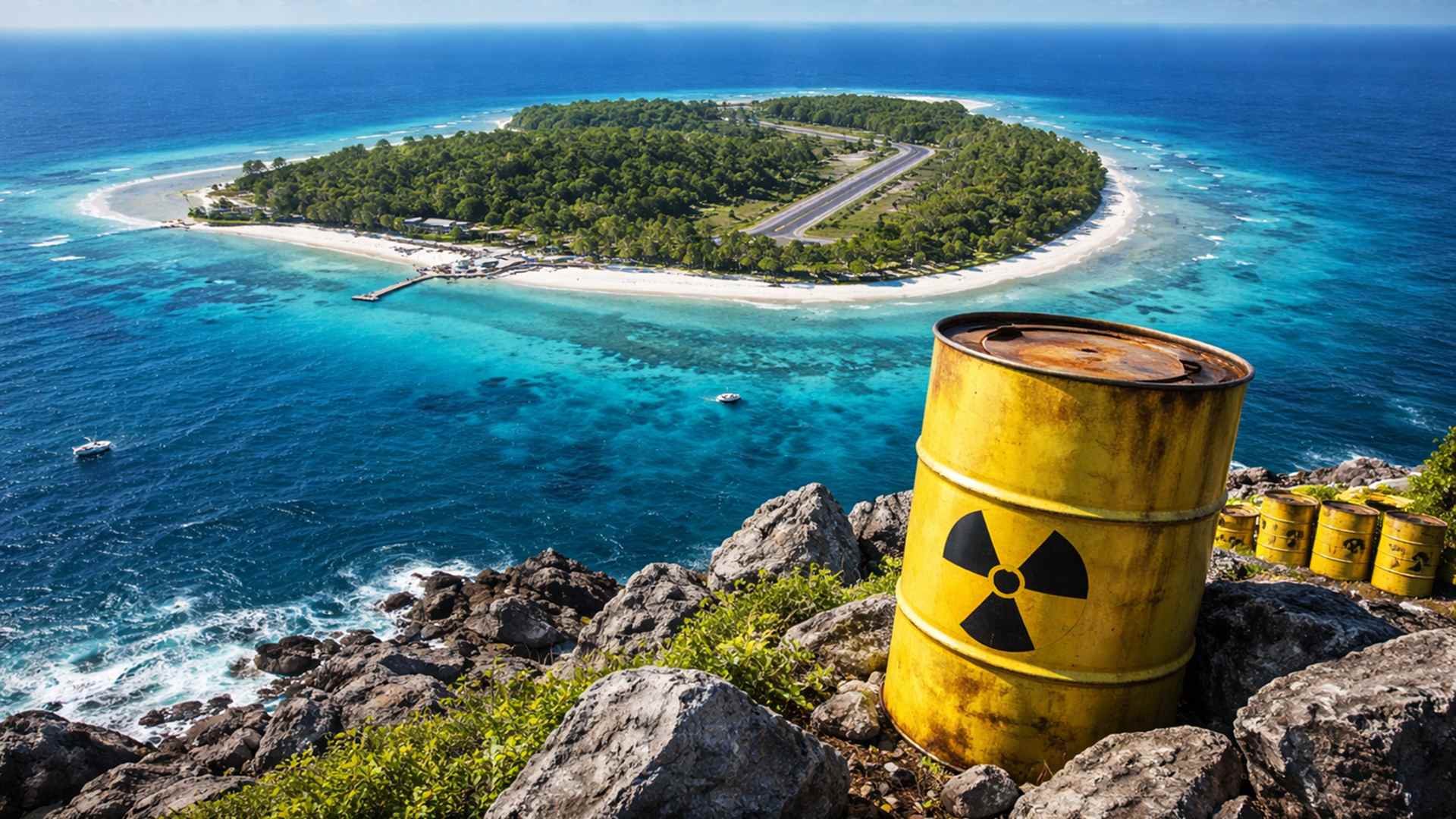
Japan targets a remote island in the Pacific measuring only 1.51 square kilometers, located 1,900 kilometers from Tokyo, to store nuclear waste for up to 100,000 years, raising alarms at sea.
-
A 1,900-year-old papyrus found in the Judean Desert reveals a crime of the Roman Empire involving fraud, forgery, and a detailed court hearing.
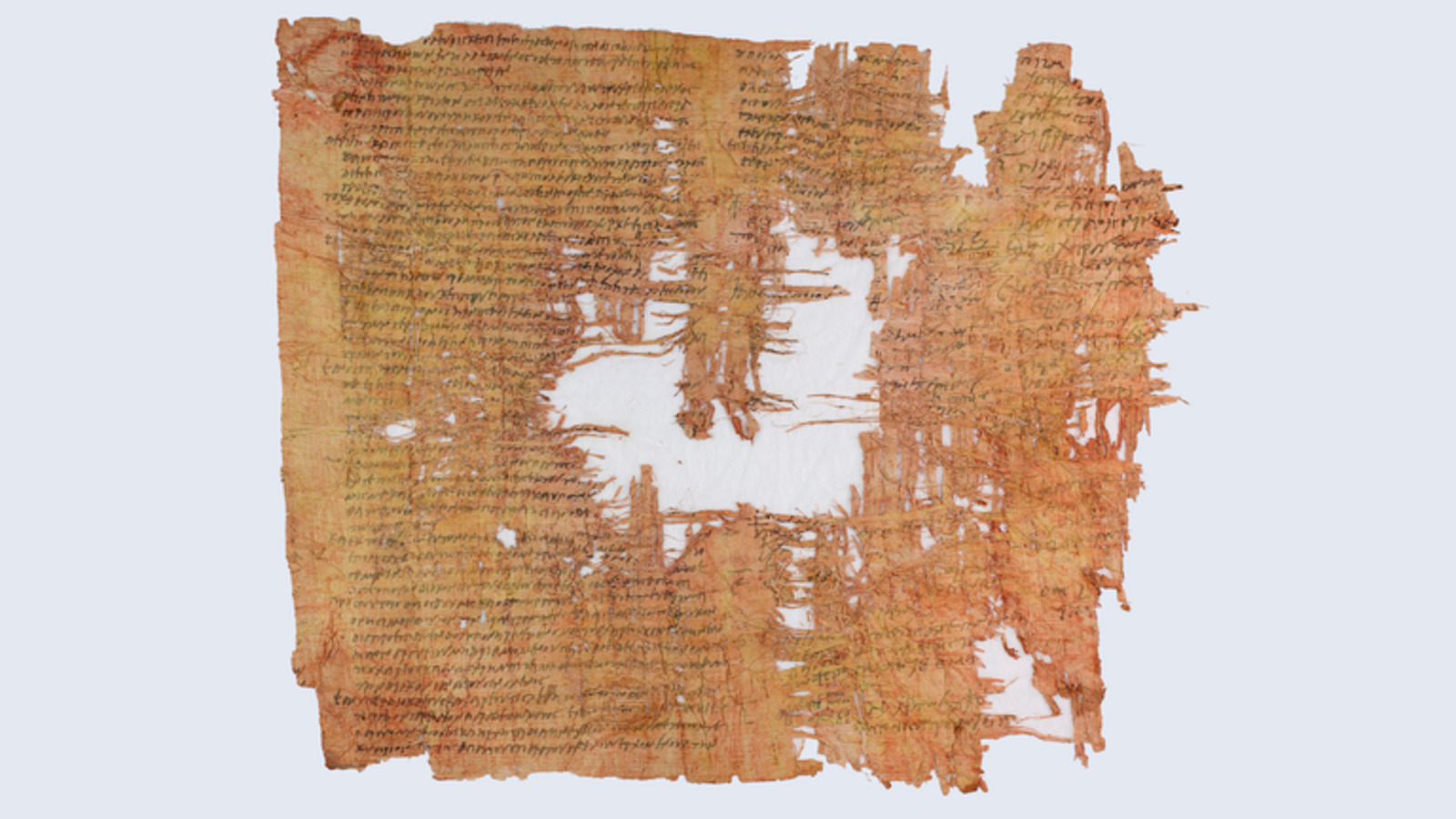

The study was published in August 2024 in the scientific journal Nature and radically changed the understanding of the origin of one of the most important stones of Stonehenge. The Altar Stone did not come from Wales — it came from northeastern Scotland, over 750 kilometers away.
What Is the Altar Stone of Stonehenge and Why Is It One of the Most Important Rocks of the Monument?
Stonehenge was constructed in several phases between approximately 5,000 and 4,200 years ago, on the Salisbury Plain in southern England. The monument is composed of different types of rocks with distinct geological origins. The giant sarsen stones — which form the outer circle and can weigh up to 30 tons — were quarried from the Marlborough Downs region, located about 25 kilometers away.
Meanwhile, the so-called bluestones, smaller and weighing between one and three tons, were traced to the Preseli Hills in southwestern Wales, approximately 225 kilometers from the monument. However, at the center of Stonehenge, there is a different stone.


Known as the Altar Stone, it is a large rectangular block of gray-green sandstone about 5 meters long, 1 meter wide, and approximately 50 centimeters thick, weighing around 6 tons.
Today, the stone lies inside the monument and is partially buried, compressed by two larger stones that collapsed onto it at some point in history. Since it is located near the bluestones, archaeologists assumed for decades that its origin was also Welsh. Studies conducted since 2006 began to question this hypothesis, but no convincing alternative had been found. Until the publication of the study in 2024.
Mineral Analysis Reveals the True Origin of the Altar Stone of Stonehenge
To determine the origin of the rock, researchers used a technique called detrital grain geochronology. Instead of analyzing the rock as a whole, scientists examined the individual minerals that make up the sandstone — especially zircon, apatite, and rutile.
Each of these mineral grains has a specific geological age, which can be determined through the radioactive decay of elements such as uranium into lead. By measuring hundreds of these grains, researchers can create a kind of “geological fingerprint” of the rock.
This mineral signature can then be compared with known rock formations in different regions. In the case of the Altar Stone, the results revealed an extremely specific combination. The mineral grains showed ages between 1 and 2 billion years, while other minerals indicated around 450 million years.
This geological combination is characteristic of only one region in Great Britain: the Orkney Basin, located in northeastern Scotland. Geologist Robert Ixer from the UCL Institute of Archaeology succinctly summarized the impact of the discovery.
“It’s a genuinely shocking result. But if atomic physics and plate tectonics are correct, then the Altar Stone is Scottish.”
Transport of the Stone Required a Journey of Over 750 km in the Neolithic Period
Dating indicates that the Altar Stone was transported to Stonehenge between approximately 2620 BC and 2480 BC, during the late Neolithic. This detail makes the discovery even more impressive.
At that time, Great Britain did not have cities, writing systems, advanced metallurgy, or organized state structures. Still, a six-ton rock was transported over a huge distance. The Orkney Basin, the region of origin of the stone, is located in the far northeast of mainland Scotland and extends to the Orkney Islands.
The straight-line distance to Stonehenge is about 750 kilometers. Considering coastal routes — which are seen as more likely for transporting such a heavy rock — the distance could exceed 1,000 kilometers. Overland transport would be extremely difficult.
Neolithic England was covered with dense forests, rivers without bridges, swampy areas, and mountain ranges. Clarke described the challenge directly.
“The dense forest, rivers, swamps, and mountains would make overland travel virtually impossible.”
Thus, researchers believe that the stone was transported via the sea.
Evidence Suggests Maritime Transport Along the Coast of Great Britain
Researchers argue that the Altar Stone was likely transported in Neolithic vessels along the east coast of Great Britain.
In this scenario, the rock would have been carried by sea from northeastern Scotland to southern England, arriving near the English Channel. From there, it would have been transported overland for about 160 kilometers to Salisbury Plain.

Before this study, archaeologists already had evidence of maritime contact networks in Neolithic Britain. Stone tools found in different regions suggested the circulation of materials between distant communities. Chemical analyses of bones also indicated the movement of domesticated animals between the north and south of the island.
The Altar Stone has now become the heaviest and most concrete physical evidence of these prehistoric transport networks.
Discovery Completely Changes the Understanding of Neolithic British Society
The discovery has implications far beyond simply determining the origin of a rock. Professor Chris Kirkland, co-author of the study from Curtin University, emphasized that transporting a six-ton block over hundreds of kilometers requires a much more complex social organization than previously imagined.
“Transporting a stone of this size by sea implies long-distance trade networks and significant social coordination in the Neolithic period.”
Archaeologist Alasdair Whittle from Cardiff University reinforced this interpretation. Recent research has already suggested that Neolithic British communities were much more interconnected than previously thought. Similar ceramic styles, comparable domestic architecture, and patterns of animal husbandry indicated cultural exchange between distant regions.
The Altar Stone now provides monumental evidence of this connection. According to researchers, this is the longest documented journey of any stone used in a Neolithic monument in the world.
A Century of Archaeological Consensus May Have Been Wrong
For over a hundred years, the Welsh origin of the Altar Stone was considered practically certain. This hypothesis seemed logical: since several smaller stones of Stonehenge came from Wales, it was believed that the central stone had the same origin. However, various geological studies conducted throughout the 20th century failed to find a convincing match between the Altar Stone and Welsh rock formations.
It was only with the application of modern geochronology techniques that the mystery finally began to be resolved. The discovery also shows how technological advances can completely transform the understanding of monuments studied for centuries.
What Is Still Unknown About the Altar Stone of Stonehenge
Despite the discovery regarding its origin, several questions remain open. The main one is identifying the exact point from which the stone was quarried within the Orkney Basin. The region covers hundreds of kilometers and includes both continental areas and the Orkney Islands.
Determining this location is important to understand which route of transport was used. Another issue involves the reason for choosing this stone. Similar sandstones exist in regions much closer to Stonehenge. This suggests that the selection of the Altar Stone may have had a specific cultural or symbolic significance.
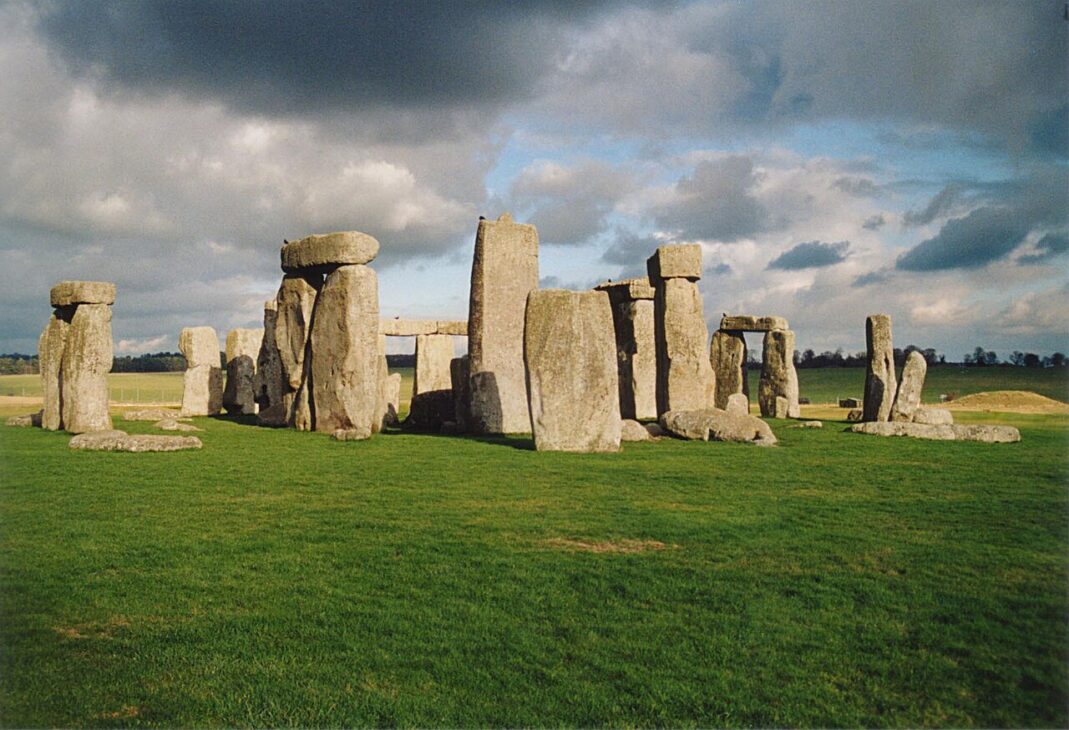
Some archaeologists believe that different communities in Great Britain may have contributed stones from their own regions to the construction of the monument. If this hypothesis is correct, Stonehenge may have been not only a religious or astronomical monument but also a symbol of unity among Neolithic communities spread across the island.
Future studies should focus efforts precisely in the northeast of Scotland. Researchers have already indicated that the next stage of investigation will be to identify the exact extraction site of the rock — a step that could reveal even more details about how Neolithic peoples managed to transport a six-ton stone over 750 kilometers about 4,500 years ago.









-

2 pessoas reagiram a isso.