Portuguese
  Spanish


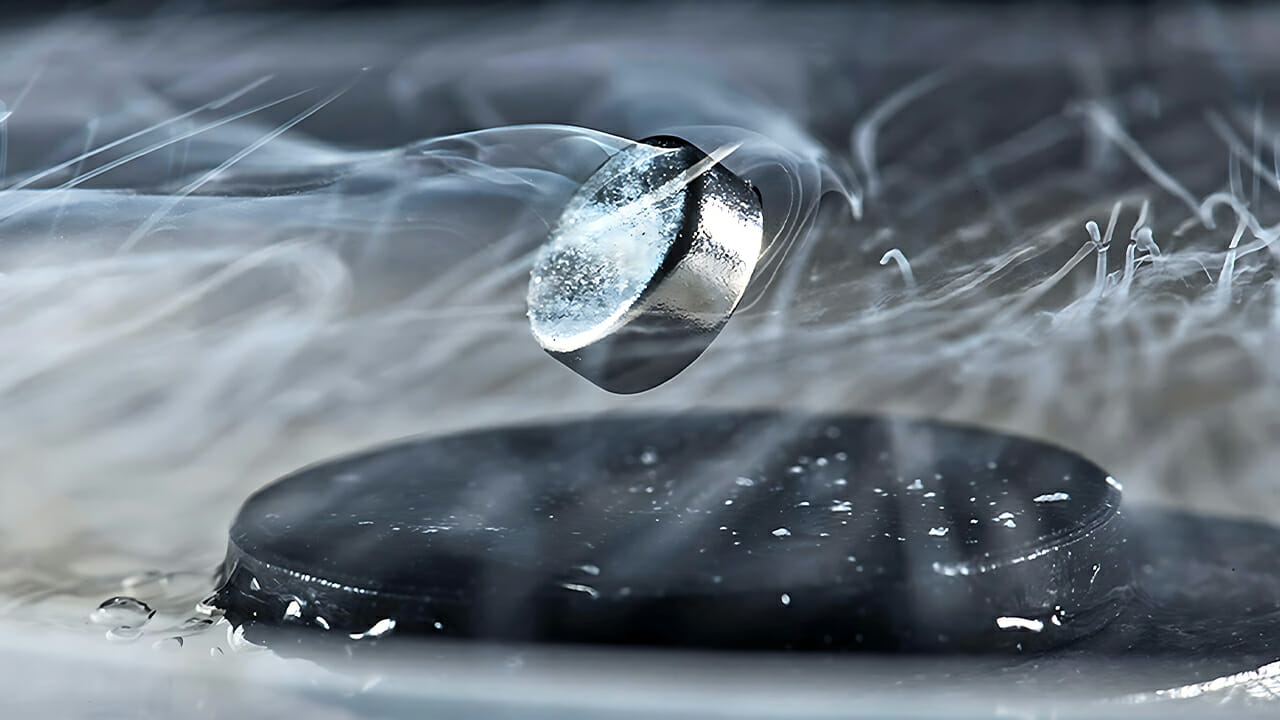

The Creators of LK-99 Expressed Optimism About the Potential of the Superconductor Material That Can Operate at Normal Temperature and Pressure.
A team of scientists from South Korea has presented an impressive breakthrough in materials science, a superconductor that can operate under normal temperature and pressure conditions. If the capabilities of the new material are confirmed, it would be the first time a superconductor does not require extreme pressures to function, which could mark a turning point in how energy is transmitted and used.
What Makes the South Korean Superconductor a Potential Game Changer?
Superconductors are materials that can carry electrical current with zero resistance, making them valuable instruments for a range of technological applications. However, the vast majority of these materials require cooling to extremely low temperatures to exhibit superconductivity. The possibility of a superconductor that can operate under standard conditions, outside of a controlled laboratory environment, is undoubtedly a transformative innovation.
However, it is worth noting that other claims of room temperature superconductivity have emerged before and failed to pass rigorous scientific scrutiny. The South Korean researchers are cautious, having recently submitted their study for peer review and awaiting publication in a scientific journal.
-
Antarctic Sea Creature Yields Promising Compound Against Melanoma, Captivating U.S. Researchers

-
Underwater Guardian: The Autonomous Robot Monitoring Submarine Cables, Self-Returning, Wirelessly Charging, and Transmitting Data Without Onboard Crew

-
Robots Clean Solar Panels in Desert Power Plants Without Water, Preventing Energy Losses
-
AI Radar Built with Old Camera and $20 Gains Attention After Alleged $317,000 Sale to Chinese Government, But Lack of Documentation and Official Confirmation Raises Questions



The Science Behind the Superconductor Discovered in South Korea
Superconductivity depends on a key factor called critical temperature – the temperature below which a material becomes superconducting. The reported value for the new material, called modified lead-apatite (LK-99), is 127°C. This implies that the material could be used practically in any environment on Earth.
If these claims hold true, LK-99 would not be the only room temperature superconductor, but it would have the distinction of being the first to operate without the need for enormous pressures.
The researchers also recorded several properties of the material, such as critical current, absence of electrical resistance, critical magnetic field, and the Meissner effect – the ability of a superconductor to expel a magnetic field during its transition. Such characteristics led the researchers to classify LK-99 as a true superconductor.
The Future Prospects of LK-99
The creators of LK-99, Sukbae Lee, Ji-Hoon Kim, and Young-Wan Kwon, expressed optimism about the material’s potential. According to them, LK-99 has many possibilities for various applications, such as magnets, motors, cables, levitation trains, power cables, qubits for quantum computers, THz antennas, among others. This breakthrough could usher in a new era for humanity, they believe.
The absence of electrical resistance in superconductors is due to the behavior of electrons. When the material achieves superconductivity, the electrons overcome their repulsion and form pairs, allowing the free flow of energy without losses.
Scientists believe that this superconductivity is achieved in LK-99 due to the stress induced by the copper atoms in lead, which is not alleviated by the material’s structural uniqueness.
If the claims about LK-99 are confirmed, we are on the brink of a new era in materials science. With a superconductor capable of operating under common temperature and pressure conditions, the implications for the world of technology are unimaginable. Nevertheless, the outlook remains cautious, as only time and peer review will confirm whether South Korea has truly accomplished this extraordinary feat in the history of superconductors.