





 Portuguese
  English
  Spanish
  4 min of reading
  0 comments


Researchers from the University of Pennsylvania Developed a Method That Uses Light Patterns Based on the Theory of Relativity to Guide 100-Micrometer Microscopic Robots Through Mazes, Creating an Artificial Space-Time That Allows Precise Navigation Without Bulky Sensors or Electronics, With Potential Applications in Medicine and Manufacturing in the Coming Decades
Researchers Demonstrated That Microscopic Robots Can Navigate Through Mazes Using Light Patterns Based on Einstein’s Theory of Relativity, Allowing 100-Micrometer Robots to Find Precise Paths Without Sensors or Bulky Electronics, in an Experiment Published in November 2025.
How Scientists Taught Microscopic Robots to Navigate Without Electronic Sensors
Scientists Developed a Method to Control Swimming Microscopic Robots Using Light Patterns Combined With Principles of General Relativity. The Technology Represents a First Step Toward Applying Microscopic Robots in Areas Such as Medicine and Manufacturing.
One of the Biggest Challenges in Developing Microscopic-Scale Robots Is Allowing Precise Navigation Without Adding Sensors or Bulky Electronic Components. These Devices Would Increase the Size of the Machines and Make It Impractical to Use Them in Extremely Small Environments.
-
Scientists have finally discovered where the plastic that disappeared from the oceans went, and the answer is frightening: it fragmented into such tiny particles that they became invisible and now there are 27 million tons of nanoplastic just in the North Atlantic.

-
The Artemis II mission will take the Orion capsule back to the vicinity of the Moon with four astronauts, a private bathroom with a curtain, a system adapted for men and women, and a level of comfort that highlights how the Apollo era operated at the rawest limits of space exploration.
-
Giant structures on the seabed precisely control oil and reveal how high-tech underwater valves work.

-
China has just tested a giant drone the size of a fighter jet with a wingspan of 25 meters that carries 6 tons, flies for 12 hours, and the most frightening part: it can launch entire swarms of smaller drones directly from the air.

To Tackle This Problem, Physicists from the University of Pennsylvania Created a System Described as Artificial Space-Time. This Model Allows Guiding Robots Similarly to the Behavior of Light or Spacecraft as They Traverse Curved Regions of the Universe.
Experiment Set 100-Micrometer Robots to Cross a Maze
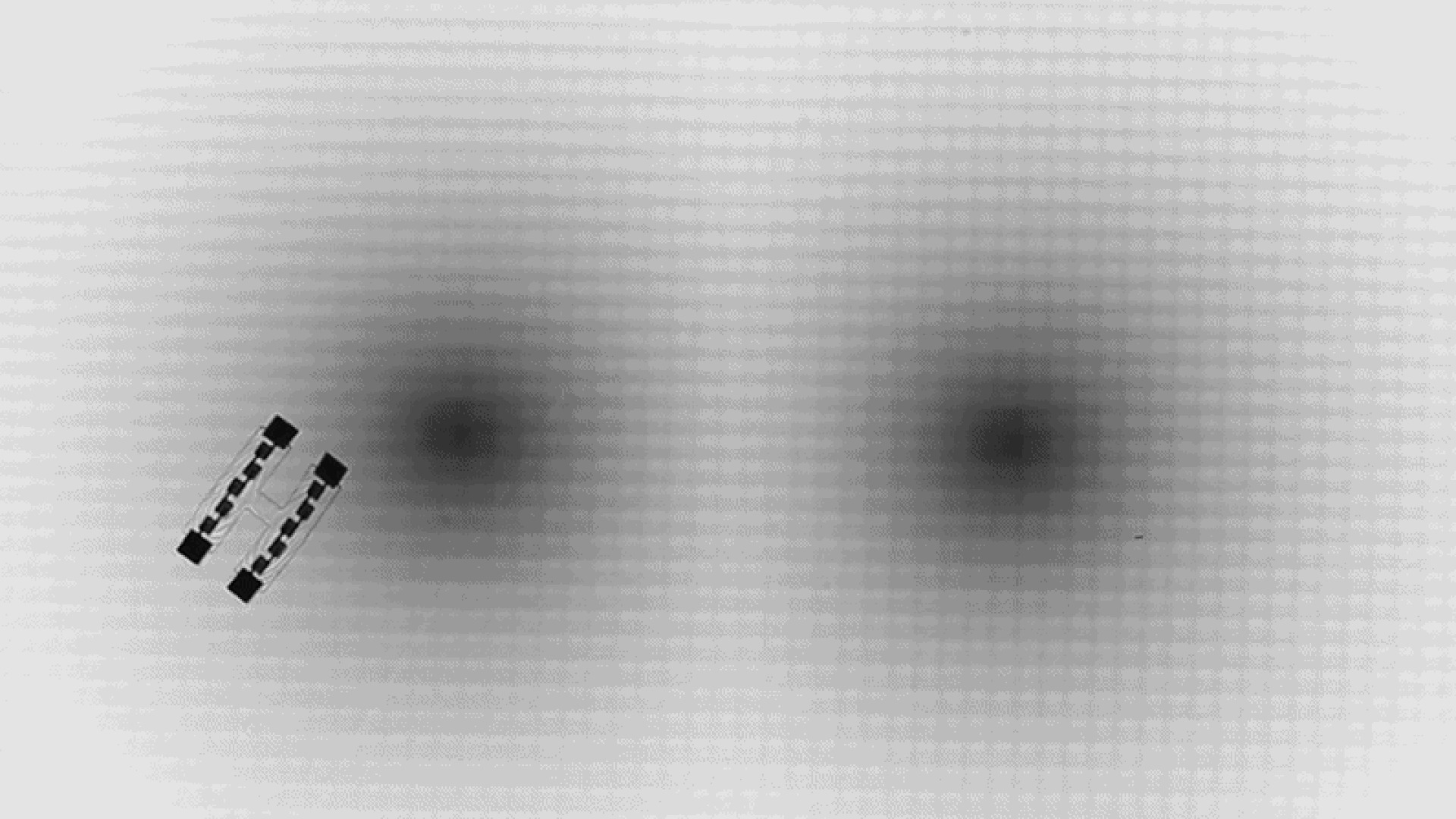
In the Experiment, Scientists Used Electrokynetic Swimming Robots About 100 Micrometers in Size, Approximately the Thickness of a Human Hair. These Robots Were Submerged in an Ionized Solution and Tasked With Crossing a Simple Maze.
Each of the Robots Had Tiny Solar Cells With Electrodes Positioned at Both Ends. When These Cells Were Exposed to Light, They Powered the Electrodes, Generating an Electric Field That Propelled the Robots Through the Solution.
The Main Challenge Was Ensuring That the Robots Reached a Specific Point Inside the Maze Without Colliding With the Walls. The Solution Found by Researchers Involved Applying Concepts from General Relativity to Guide the Movement of the Microscopic Machines.
Theory of Relativity Helped Guide Robots Through Curved Paths
According to Einstein’s General Theory of Relativity, Gravity Curves the Space-Time Around Massive Objects. In This Curved Environment, Light and Other Objects Follow Geodesics, Which Are the Shortest Possible Paths Within That Geometry.
This Phenomenon Can Be Observed in Events Like Gravitational Lensing, When Light Appears to Curve as It Passes Through the Gravitational Field of a Massive Object. While Light Travels in a Straight Line in Space, the Effect of Curvature Makes Its Path Look Deviated.
According to Marc Miskin, Assistant Professor of Electrical and Systems Engineering at the University of Pennsylvania, the EK Robots Displayed Behavior Equivalent to That of Light in General Relativity. He Stated That the Robots Can Function as an Experimental Analogue of Gravity.
Artificial Space-Time Guides Robots Through Light Patterns
To Reproduce This Behavior, Researchers Modeled the Maze as a Curved Virtual Space Using Equations of Relativity. In This Mathematical Model, the Paths Leading to the Target Become Straight Lines in the Simulated Space-Time.
After Creating the Model, the Team Converted It Into a Two-Dimensional Light Map. In This Map, Darker Areas Attracted the Robots While Brighter Regions Repelled Them, Allowing Their Movement to Be Directed Without Direct Commands.
The Final Destination Inside the Maze Was Set as the Darkest Point on the Map, Simulating a Type of Black Hole. Obstacles Were Lit More Intensely to Prevent the Robots from Approaching the Walls.
Regardless of the Starting Point in the Maze, the Robots Automatically Followed the Paths Defined by the Light Field. Their Movement Occurred as If They Were Gliding Through a Distorted Space, Naturally Avoiding Barriers.
Future Applications for Microscopic Robots May Emerge in the Next Decade
The Results of the Study Were Published in November 2025 in the Scientific Journal npj Robotics. For Miskin, the Work Represents a Connection Between Concepts of Physics and Technological Applications in Robotics.
According to the Researcher, Relativity and Light Are Already Well-Understood Phenomena in Science. By Applying These Principles to the Control of Microscopic Robots, Scientists Begin to Utilize Established Theoretical Tools to Solve Engineering Challenges.
At the Same Time, the Experiments Provide a Concrete Way to Explore Abstract Concepts of General Relativity. Observing the Behavior of the Robots Allows Studying Effects Related to Flat Space-Times in Two-Dimensional Systems.
Miskin States That Although the Maze Experiment Represents Only a First Step, Practical Applications May Arise in the Next Ten Years. Possible Uses Include Medical Procedures, Such as Checking Teeth After Root Canal Treatment or Removing Tumors After Local Measurements.
The Researcher Also Mentioned Applications Outside the Biomedical Field, Such as Assembly of Microchips with the Aid of Microscopic Robots. He Stated That the Microworld Still Holds Numerous Possibilities, and Current Results May Represent Just the Beginning of New Technologies Based on Robots.
This Article Was Based on Information Released by Live Science and the Scientific Study Published in November 2025 in the Journal npj Robotics, Conducted by Researchers from the University of Pennsylvania.










-

-

2 pessoas reagiram a isso.