





 Portuguese
  English
  Spanish
  5 min of reading
  0 comments


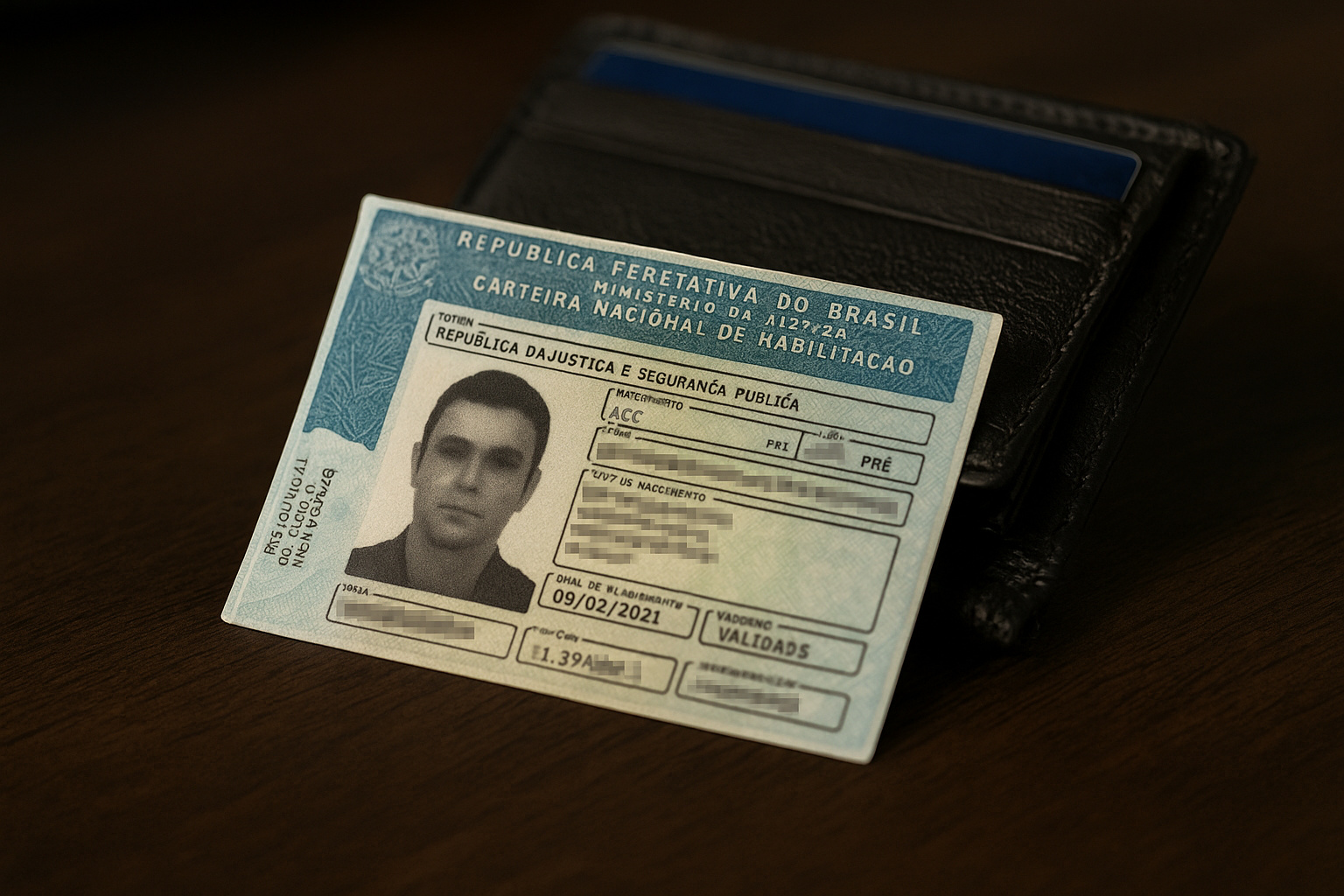
Public Consultation Open Until November Defines New Format of the National Driver’s License
The Ministry of Transportation announced, in October 2025, the new digital driver’s license model without driving school.
The proposal is in public consultation until November 2 and focuses on modernizing the licensing process, ensuring freedom, savings, and speed for Brazilians.
Furthermore, the measure represents an advancement in the traffic system, as it reduces costs and increases access to the process of obtaining the license.
Thus, the government begins a significant change in the training of new drivers.
Public Participation Open Until November
Until November 2, 2025, any citizen can submit suggestions via the Participa + Brazil portal, which strengthens transparency and brings the public closer to decisions.
With this initiative, the government ensures direct involvement of the population and encourages democratic debate about the future of licensing.
This consultation allows drivers, instructors, and specialists to contribute suggestions that improve the proposed format.
Thus, the Ministry of Transportation builds a more accessible and technological system, adapted to the digital reality of the country.
As a result, the licensing process becomes more participatory, practical, and reliable.
ARTICLE CONTINUES BELOWSee also
These living root bridges and ladders are over 700 years old and help indigenous people survive in one of the rainiest regions in the world.

From sertanejo star to international investor: Ana Castela invests millions in a mansion in the USA, creates a themed accommodation in Orlando, and shows that the “boiadeira” also wants to grow away from the stage.

The 10 most stunning motorhomes in the world: a $3 million trailer with a rooftop nightclub and garage for a Ferrari, “palaces on wheels” with Italian marble, private cinema, and five-star hotel luxury for billionaires.

Trump wanted to spend $400 million on the White House, but the courts prohibited the million-dollar construction.

Basic Requirements to Apply for the National Driver’s License
To initiate the process, the candidate must be at least 18 years old, know how to read and write, have an identity document, and be registered with the CPF.
Additionally, those who choose the online theoretical course can validate their identity through the gov.br system, which makes the process faster and safer.
The request is made through the website or application of the Detran of each state, ensuring ease of access and digital tracking.
However, those who prefer can opt for in-person service, maintaining options for all user profiles.
During the stages, the progress is available in the National Driver’s License Registry (Renach), which ensures transparency and traceability.
Thus, citizens can follow each phase quickly and easily.

Theoretical Stage and New Learning Methods
After starting the process, the candidate begins the theoretical course, a fundamental stage of training.
In this model, the content does not rely solely on driving schools, which increases freedom and reduces costs.
The student decides how to study and sets the pace of learning, without needing to fulfill the 45 mandatory hours of theoretical classes.
With this change, the system becomes more inclusive, flexible, and accessible.
The study options are varied and include:
- Online course offered by the Ministry of Transportation;
- In-person or virtual classes at accredited driving schools;
- Public traffic courses offered by Detrans and recognized institutions.
Additionally, the candidate completes the mandatory biometric data collection, which ensures security, authenticity, and validity of the process.
With this step, the system accurately identifies the student and prevents fraud, reinforcing the credibility of the digital driver’s license.
Thus, the theoretical training maintains control while enhancing flexibility and autonomy for the future driver.
Biometric Collection and Mandatory Examinations
After completing the theoretical course, the candidate attends the Detran to perform the biometric data collection, including photo, signature, and fingerprints.
This collection confirms identity and ensures total security in all phases of the process.
Subsequently, the participant undergoes psychological and physical fitness exams, conducted at clinics accredited by the Detran.
These assessments confirm the necessary conditions to drive responsibly and maintain the quality of training.
Furthermore, the exams are scheduled in the state system, which organizes the flow and prevents unnecessary delays.
As a result, the licensing process gains agility, control, and efficiency.
Changes in Practical Lessons and New Possibilities
The new model eliminates the requirement for a minimum of 20 hours of practical lessons, increasing the freedom of choice and autonomy of the candidate.
Now, the student can hire independent instructors accredited by the Detran or continue with traditional driving schools.
Additionally, the vehicle used in the lessons can be from the instructor or the candidate themselves, which reduces costs and facilitates learning.
With these changes, the government encourages a more economical, accessible, and personalized model.
According to the Ministry of Transportation, the expectation is to reduce up to 80% of the total cost of licensing.
This data was presented in October 2025, during a press conference in Brasília.
Thus, Brazil moves towards a fairer and more efficient system that values the autonomy and responsibility of drivers.
Theoretical and Practical Exams Remain Mandatory
The theoretical exam remains mandatory and must be scheduled at the Detran, which ensures control and standardization.
The exam can take place in-person or online, depending on the structure of each state.
To pass, the candidate must get at least 70% of the questions right, demonstrating knowledge and preparedness.
Those who do not achieve the score can retake the exam as many times as necessary, which encourages continuous learning.
The practical driving test remains mandatory and is conducted by Detran evaluators, who assess the candidate’s performance.
The scoring system maintains the current format: the student starts with 100 points and must maintain 90 to be approved.
At the end, the driver receives the Provisional License (PPD), valid for one year, according to the National Traffic Council (Contran).
Thus, the process maintains the necessary rigor and ensures safety on the roads.
Expectations and Next Steps
The federal government modernizes the licensing system, reduces costs, and ensures digital inclusion at all stages.
The proposal strengthens the efficiency of the State, simplifies access to the driver’s license, and values technology as a tool for transformation.
While the public consultation remains open until November 2025, the Ministry of Transportation is finalizing the definitive ordinance that will formalize the new rules.
After publication, the new model will change the experience for those seeking the driver’s license, making the process faster, more accessible, and transparent.
Thus, Brazil enters a new phase of mobility, which combines innovation, inclusion, and social responsibility.








-

-

-

6 pessoas reagiram a isso.