





 Portuguese
  English
  Spanish
  4 min of reading
  2 comments


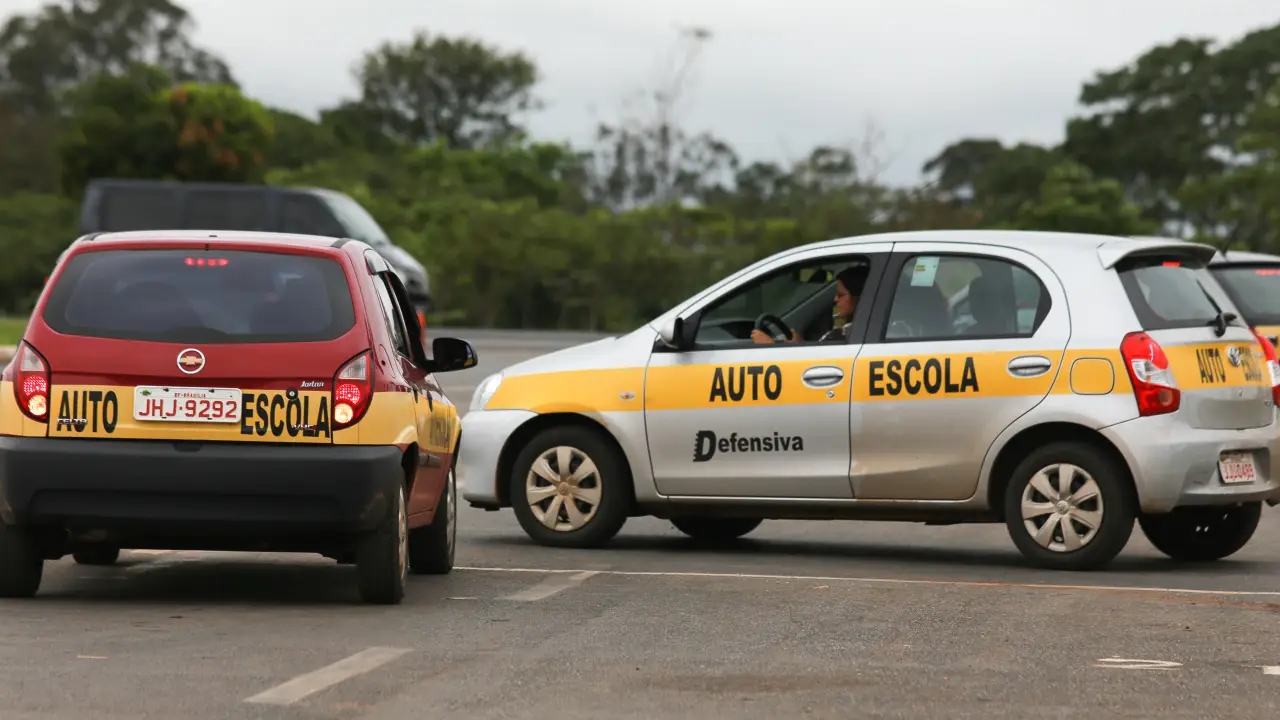


The Government Proposes Driver’s License Without Mandatory Driving School, Promising to Reduce Costs by Up to 80%. The Measure Divides Opinions: It Could Legalize Millions of Drivers, but Threatens 300 Thousand Jobs in the Sector
The proposal to end the requirement for driving schools to obtain a driver’s license (CNH – Carteira Nacional de Habilitação) already has the approval of President Luiz Inácio Lula da Silva and will be implemented through a resolution from Contran (National Traffic Council).
Before that, the Ministry of Transport opened a 30-day public consultation to hear society on the subject.
According to Transport Minister Renan Filho, the goal is to reduce the cost of the document, considered one of the highest in the world today.
-
Government enacts new law: paternity leave increases from 5 to 20 days with gradual increases until 2029, and Social Security pays the paternity salary; companies no longer bear the absence cost, estimated at R$ 5.4 billion.

-
End of the 1-hour lunch break in the CLT? Current labor law maintains the break, allows for negotiated reductions, and defines rules for working hours and home office in Brazil.

-
Employee Fired After Accumulating 114 Days of Medical Leave in One Year, Labor Court Upholds Company’s Decision

-
Employee Fired While Treating Depression Wins in Court and Vale Is Required to Rehire Him Following Decision Based on the CLT and INSS Benefits


The government estimates that the initial license could be up to 80% cheaper. Currently, the process costs between R$ 3,000 and R$ 4,000. With the change, this amount could drop to between R$ 750 and R$ 1,000, on average.
Cost Reduction and Social Inclusion
For Renan, the flexibility will make licensing more accessible and help reduce the number of drivers who drive without a driver’s license. Senatran estimates that around 20 million Brazilians drive without being legally licensed.
The minister also highlighted that the measure has a social character. He argues that many young people, especially from low-income backgrounds, are forced to drive motorcycles without a license because they cannot afford the costs. This, according to him, makes them more vulnerable to organized crime.
With a more accessible license, these young people will be able to work as delivery drivers, bus drivers, or truck drivers, professions that offer salaries above the national average.

Driving Schools at Risk
On the other hand, the driver training sector sees the measure as a threat to its survival. Feneauto (National Federation of Driving Schools) warns of the closure of more than 15,000 establishments across the country and the extinction of approximately 300,000 jobs.
The organization also disputes the cost estimates published by the government. According to a technical study by Senatran itself, the average cost of theoretical and practical training in the states hovers around R$ 1,350, a figure that is far from the range projected by the Ministry of Transport.
Despite this, Renan Filho stated that driving schools will continue to exist, but on a voluntary basis. “We are not ending driving schools; we are making them optional. Those that provide quality service will continue to have demand,” he said.
How Will the Driver’s License Be Without Driving School
The Contran proposal eliminates the requirement for 45 theoretical classes and 20 practical classes for candidates in categories A (motorcycles, mopeds, and tricycles) and B (cars and light utility vehicles). However, the theoretical and practical exams remain mandatory.
The model shifts the responsibility for preparation to the candidate themselves. In practice, it will be possible to choose not to take any classes before taking the exam. The exam will carry greater weight as a quality filter, being more rigorous and administered on public roads, as already provided by law.
Another change is the creation of a new professional category: the “personal traffic instructor.” Like a personal trainer, this professional will be able to work independently, without mandatory ties to driving schools, offering practical lessons to those who wish to hire them.
The National Traffic Secretary, Adrualdo Catão, explained that the measure aims to break the market reserve logic. “Citizens will be able to choose whether they want to learn in a driving school or with an independent instructor. The freedom of choice will reduce costs and expand access,” he stated in an interview with UOL Cars.
Free Theoretical Course and New Rules
The theoretical course will remain mandatory, but it will be offered for free and online through a Senatran platform. The EAD model will allow candidates to study at their own pace, with exercises and digital attendance control.
Additionally, students from schools that already include education for traffic may be exempt from this stage. There will also be the option to attend classes at driving schools or state Detrans.
Another measure under study is the end of the exclusivity of accredited clinics for medical examinations, which should also reduce costs and expand the network of service.
More Flexible Exam
The proposal also foresees changes in the format of the practical exam. The current “eliminatory faults” system will be replaced by a gradual scoring system, which should reduce candidates’ nervousness and prioritize technique.
Another novelty is the possibility of taking the exam in vehicles with manual or automatic transmission, at the candidate’s discretion. If they choose to take classes, the type of car used for training can also be freely chosen.
According to the government, those who already know how to drive will continue to seek optional classes to improve their skills, while drivers who currently operate without a license will have a simpler and cheaper way to regularize their situation.










A manchete apresentada foca quase exclusivamente no impacto econômico da possível dispensa da obrigatoriedade das autoescolas, destacando a perda de empregos, mas ignora o principal problema social envolvido: o alto custo da Carteira Nacional de Habilitação (CNH). Hoje, tirar a CNH pode ultrapassar R$ 3 mil, valor inviável para grande parte da população brasileira. Segundo o próprio ministro dos Transportes, cerca de 20 milhões de brasileiros dirigem sem habilitação justamente porque não conseguem arcar com esse processo burocrático e oneroso.
O argumento da federação, ao enfatizar apenas os empregos que podem ser perdidos, soa corporativista e descolado da realidade social. É inegável que os postos de trabalho nas autoescolas merecem atenção, mas não se pode esquecer que o direito de mobilidade é essencial, sobretudo em um país com transporte público precário em muitas regiões. Se milhões de pessoas dirigem sem habilitação, o problema não está na “irresponsabilidade” do cidadão, mas sim em um sistema que cobra caro demais para formalizar algo que já acontece de fato.
Assim, ao invés de apenas defender o modelo atual sob a ótica da manutenção de empregos, seria mais adequado que o debate se voltasse para formas de baratear o processo, desburocratizar etapas e permitir alternativas mais acessíveis de capacitação. Do contrário, continuará prevalecendo uma lógica desigual: quem tem dinheiro pode dirigir legalmente, quem não tem é criminalizado, embora ambos necessitem da carteira pelo mesmo motivo — o direito de se locomover.
Você levantou um ponto muito importante. De fato, o debate não pode se restringir apenas ao impacto econômico nas autoescolas, mas também precisa considerar o direito de mobilidade e a inclusão social. O alto custo da CNH é um obstáculo real para milhões de brasileiros, e qualquer mudança deveria equilibrar a preservação de empregos com a necessidade de tornar o processo mais acessível e menos burocrático