





 Portuguese
  English
  Spanish
  4 min of reading
  0 comments


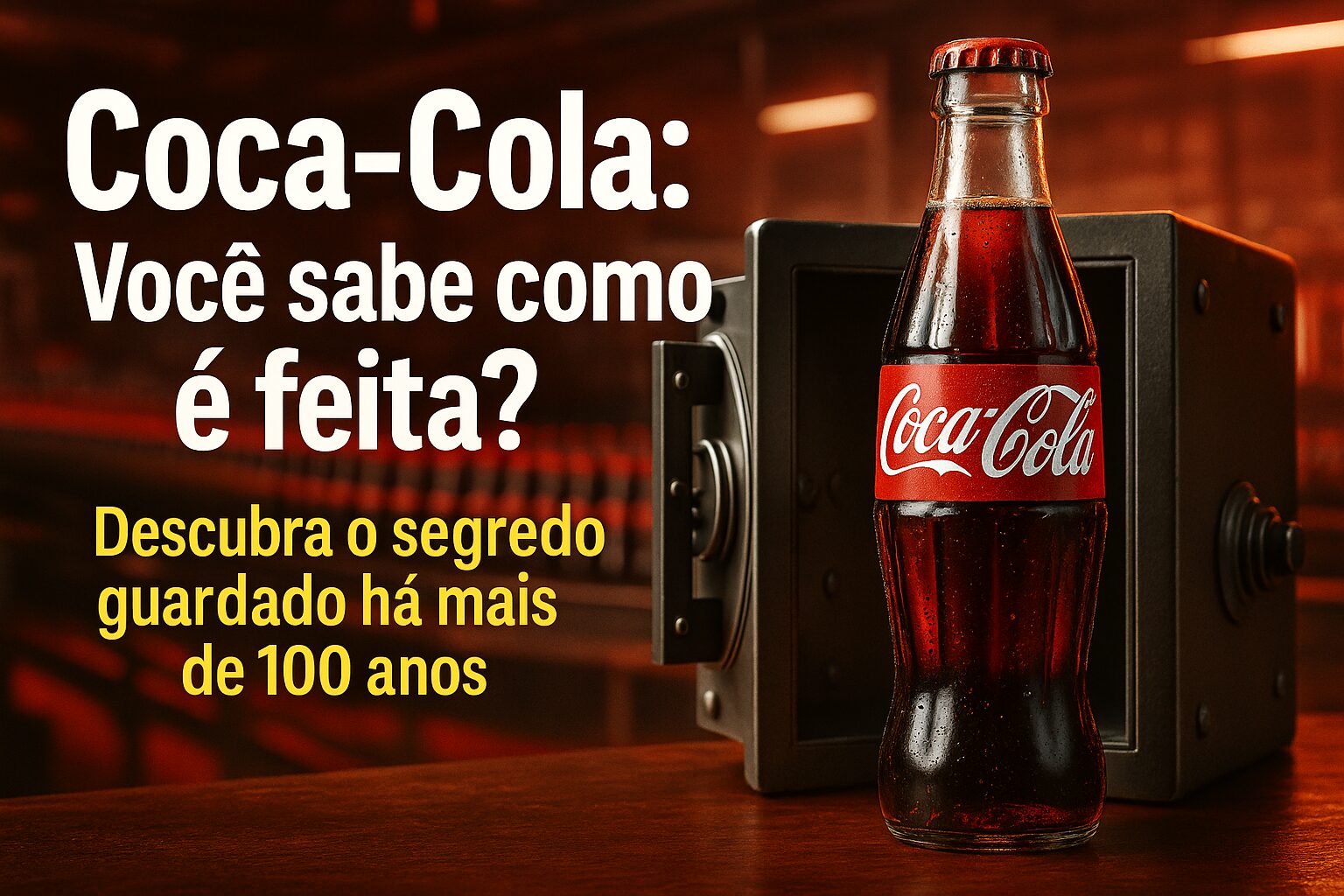
More Than 40 Billion Liters of Coca-Cola Are Consumed Annually on the Planet: One of the Most Powerful Brands in the World, Present in Over 200 Countries
Did you know that Coca-Cola is as mysterious as it is powerful? More than 800 million servings are consumed every day, but almost no one knows how this non-alcoholic beverage is made or where its original formula is kept.
Discover behind the scenes of this giant, how the production of the world’s best-selling soft drink works, and what secrets the brand has been hiding for over a century.
A Medicine That Became a Global Symbol
Coca-Cola was created in 1886 in the United States by pharmacist John Stith Pemberton. Originally designed as a medicinal tonic with kola nut extracts and coca leaves, the beverage was sold by the dose in Atlanta pharmacies. Its name and logo were created by Frank Robinson, Pemberton’s accountant, who designed the brand with his own handwriting — which remains to this day.
-
He started running at 66 years old, broke records at 82, and is now a subject of study for having a metabolic age comparable to that of a 20-year-old, in a case that is intriguing scientists and inspiring the world.

-
Oldest tree on the planet reappears after 130 years of searches: Wattieza, 385 million years old, was 10 meters tall and had no leaves or seeds; Gilboa fossils in New York solved the mystery in 2007.

-
A 48-square-meter house assembled in hours with 4,000 bricks made of recycled plastic that does not absorb moisture, has natural thermal insulation, and costs less than 90,000 reais in a complete kit.

-
Luciano Hang revealed that Havan’s air fleet has already accumulated more than 20,000 landings, 10,000 flight hours, and 6 million kilometers traveled, and he says that without the planes, the company would never have grown so quickly.


However, Pemberton never lived to see the success of his invention. In financial trouble and with health issues, he sold his rights to the formula to Asa Griggs Candler, who turned Coca-Cola into a global empire. Candler was a pioneer in bold marketing strategies, such as distributing free tasting coupons and standardizing production — a differential at the time.
How Coca-Cola Conquered the Planet
Under Candler’s management, Coca-Cola rapidly expanded and adopted a franchising model for bottling, which allowed for mass production and global distribution at low cost. In 1919, the company was sold for US$ 25 million to businessman Ernest Woodruff, who ensured the continuation of the expansion.
Since then, Coca-Cola has established itself as one of the most powerful brands in the world, currently present in over 200 countries. According to The Coca-Cola Company itself, the product reaches about 99% of the global population.
The Best-Kept Secret in the Beverage Industry
Few stories are as shrouded in mystery as the formula for Coca-Cola. Considered one of the most well-protected trade secrets in modern history, its original recipe was kept for decades in bank vaults, serving even as loan collateral.
Today, the formula is stored in a special vault at the World of Coca-Cola museum in Atlanta, where visitors can see the vault but never its contents. It is said that only two anonymous employees of the company know the complete recipe, and that they are not allowed to travel together for security reasons.
But After All, How is Coca-Cola Made?
Despite the mystery surrounding its exact composition, the main ingredients of the soda are listed on the packaging: carbonated water, sugar, kola nut extract, caffeine, phosphoric acid, and the famous “natural flavors,” the exact composition of which is confidential.
To preserve the secret, The Coca-Cola Company internally produces the concentrated syrup, known as the “beverage concentrate.” This base liquid is then sent to about 900 factories worldwide, operated by more than 225 bottling partners, according to official data available on the brand’s institutional website.
These partners are responsible for diluting the concentrate, carbonating, bottling, and final distribution. Some production lines can bottle up to 300,000 units per day, and the most modern ones can fill 6,000 cans per minute, according to the FoodBev Media portal.
Continuous Production and Cutting-Edge Technology
The manufacturing process in Coca-Cola factories is highly automated and follows strict quality standards. The water used, which accounts for 90% of the beverage’s volume, goes through filtering systems with reverse osmosis, sterilization, and chemical control to ensure flavor neutrality and sanitary safety.
The syrup is diluted, carbonated with carbon dioxide, and cooled between 1°C and 4°C to preserve carbonation. The bottling is done by machines called isobaric fillers, which prevent foam formation and maintain the exact quantity in each bottle or can with millimeter precision.
The packaging, before receiving the liquid, undergoes washing, sanitization, and optical inspections to detect any flaws. Every detail is monitored by smart sensors that ensure standardization and safety.
More Than 40 Billion Liters of Coca-Cola Are Consumed Annually on the Planet
Coca-Cola operates in a decentralized and efficient logistical system. Although it does not directly own the factories, the company adopts a licensing model. This allows local companies to produce and distribute the beverage according to the brand’s global standards.
The result of this system is impressive: more than 40 billion liters of Coca-Cola are consumed annually on the planet, according to consumption data released by Statista.
Coca-Cola Has Taken Measures to Reduce the Use of Plastics and Increase Recycling
In response to environmental criticism and consumer pressure, Coca-Cola has taken measures to reduce the use of plastics and increase recycling. According to the company, more than 90% of the packaging produced is already recyclable, and a project for 100% recycled material bottles is underway, as highlighted by EcoWatch.
Additionally, the company announced in 2024 that it will reduce its global water footprint by 25% by 2030, prioritizing more efficient technologies in production units.
The success of Coca-Cola is not just about the taste of the soft drink, but about total domination of a technological production chain, the power of marketing, and the maintenance of a secret that challenges generations. Knowing how Coca-Cola is made reveals not only advanced industrial processes but also the symbolic value of one of the most iconic brands on the planet.
And you, are you part of those 40 billion liters? How many Coca-Colas do you consume per day? Did you already know the whole story behind the world’s most famous beverage? Share with us in the comments!








Seja o primeiro a reagir!