





 Portuguese
  English
  Spanish
  4 min of reading
  0 comments


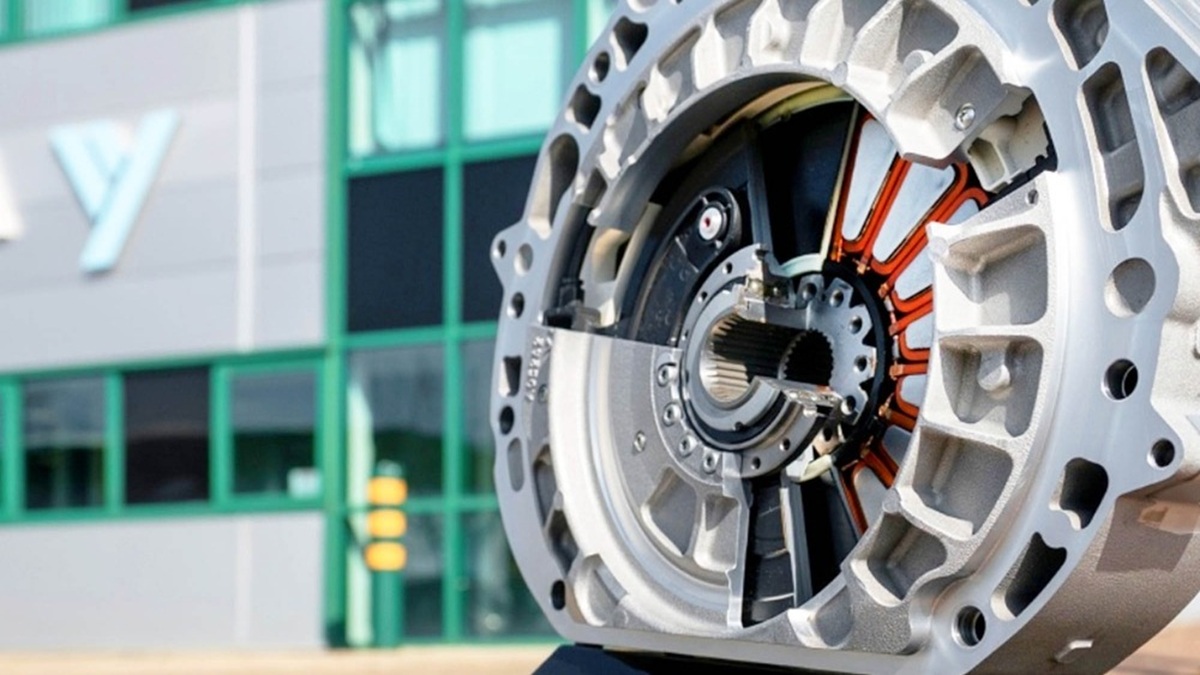
12.7 Kg And 1,000 Hp Axial Electric Motor Developed By YASA Redefines Power Density, Surpasses Previous Records, And Strengthens Mercedes AMG’s Electric Foundation For The Next Generation Of High-Performance Vehicles
The development of axial flow motors has gained momentum because it represents a shift in how to generate power efficiently. This technology has become central to YASA, a subsidiary of Mercedes-Benz, which seeks to overcome the limitations of radial motors used in most current electric vehicles.
The axial configuration alters the orientation of the magnetic field, which operates parallel to the rotation axis. This change opens up space for compact structures, reduces mass, and improves energy efficiency. Additionally, it allows for better utilization of the winding, increasing torque and reducing heat.
The use of this architecture also decreases the need for expensive metals, as energy transfer occurs directly from the coil to the external housing. This feature impacts costs and favors the adoption of lighter and more efficient designs in the automotive sector.
-
Caoa Chery Tiggo 5X skyrockets in sales in Brazil: a 2,318% increase and waiting lists of up to 4 months to acquire the model.

-
Goodbye falls: Singaporean company Omoway begins production of a motorcycle that doesn’t fall and surprises the market by offering automatic balance technology that reduces accidents and transforms the urban riding experience.
-
A French brand placed a car on four huge red balloons to prove that its suspension made the vehicle “float,” and the surreal scene became one of the most iconic and unusual images in automotive history.

-
Jeep Avenger begins production in Brazil, debuting as the brand’s new entry-level SUV and inaugurating an unprecedented phase by becoming the first national Jeep manufactured outside of Goiana, as part of a R$ 3 billion plan.


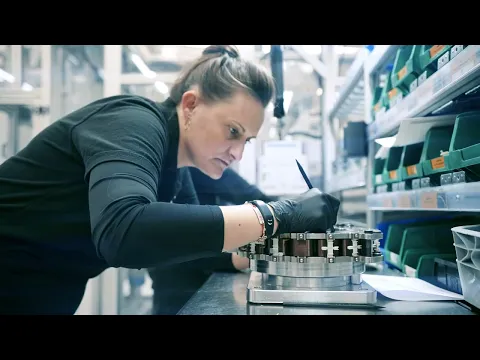

The 12.7 Kg And 1,000 Hp Prototype
The new axial flow motor developed by YASA has achieved a power density of 80 hp/kg. In technical parameters, this result corresponds to 59 kW/kg, an index that reinforces the break from previous market standards.
The unit weighs 12.7 kg and can reach a maximum power of 750 kW, exceeding 1,000 hp. This performance surpassed the previous record set by the company itself and tripled the density presented by the best radial motors available.
The advance represents a 40% growth compared to YASA’s previous record. The technical leap demonstrates that studies have evolved rapidly, exceeding the projections set by engineers monitoring the evolution of projects.
This result redefines parameters for high-performance electric motors and strengthens the company’s position as a developer of compact, efficient solutions suitable for demanding applications.
The Structural Advantage Of Axial Flow
Radial flow motors use a magnetic field perpendicular to the axis. YASA adopted axial flow, a design format nicknamed pancake motor due to its flat and more compact geometry compared to conventional models.
These units are lighter, take up less space, and can generate up to four times more torque than radial motors in the same segment. They also achieve double the power density, favoring applications in vehicles with high-performance demands.
The achieved compactness helps designers develop more flexible architectures, with gains in internal space or reductions in the total mass of the assembly. This influences range and dynamics, aspects valued in the electric sector.
The Importance Of The Segmented Armature
YASA uses a segmented and forkless armature as the basis of its new architecture. The concept eliminates the iron housing present in the stator of traditional motors, reducing iron mass by up to 80%.
This reduction limits magnetic losses and decreases the total weight. The measure frees up performance and allows the motor to reach unprecedented indicators in an assembly of extremely reduced dimensions, reinforcing the high density recorded in tests.
The design facilitates large-scale production processes, as it uses less copper, iron, and permanent magnets than radial motors. This simplification reduces costs and contributes to the possibility of producing more affordable units in the future.
Thermal Stability And Continuous Power
Peak power needs to be accompanied by continuous operating capacity. YASA integrated a direct oil cooling system, designed to preserve performance during prolonged use and reduce the risk of overheating.
Radial motors can lose up to half their power when maintained in continuous operation. The axial flow model developed by the company maintains performance estimated between 350 kW and 400 kW without experiencing a sudden drop, according to internal projections.
This stability makes the prototype suitable for high-demand situations, such as track use. Maintaining this continuous power reinforces the feasibility of application in segments that require constant delivery and efficient thermal control.
Performance Comparisons
The metrics presented show marked differences between leading radial motors, the previous YASA motor, and the new prototype. While reference radial units reach approximately 20 kW/kg, YASA’s previous motor achieved 42 kW/kg.
The new record reached 59 kW/kg, consolidating the advance. The power density in hp/kg also surpassed the previous mark, reaching around 80 hp/kg. The weight dropped from 13.1 kg to 12.7 kg, while peak power increased from 550 kW to 750 kW.
These data highlight a successive leap in development stages. Each update improved performance, reduced mass, and expanded the competitive advantage of the axial flow architecture over radial alternatives.
The Mercedes-AMG Strategy
The acquisition of YASA in 2021 aimed to secure a strategic foothold in the electric sector. Mercedes-Benz intends to incorporate the technology into new platforms of the AMG line, aimed at high-performance vehicles.
The compactness of these units directly influences automotive design. The description that the motor is small enough to fit in a suitcase reinforces this versatility and allows for imagining more varied applications in future projects.
Models like the Concept AMG GT XX are expected to benefit from the installation of multiple axial flow motors. This would increase torque and power density, creating a driving profile suited to the sport ambitions of the AMG division.
Path To Mass Production
The main current obstacle lies in adapting industrial processes. Production lines have historically been structured for radial motors, requiring reorganization and new methodologies to manufacture axial motors at scale.
The investment from Mercedes-Benz indicates confidence in overcoming these limits. The combination of accelerated technical development and industrial support can enable the introduction of this technology in larger series.
The continuous advancement suggests that mass production is closer. The consolidation of this step is expected to redefine automotive standards and signal a period in which high-density motors will gain traction in commercial products.
With Information From yasa.com









-

Uma pessoa reagiu a isso.