





 Portuguese
  English
  Spanish
  5 min of reading
  0 comments


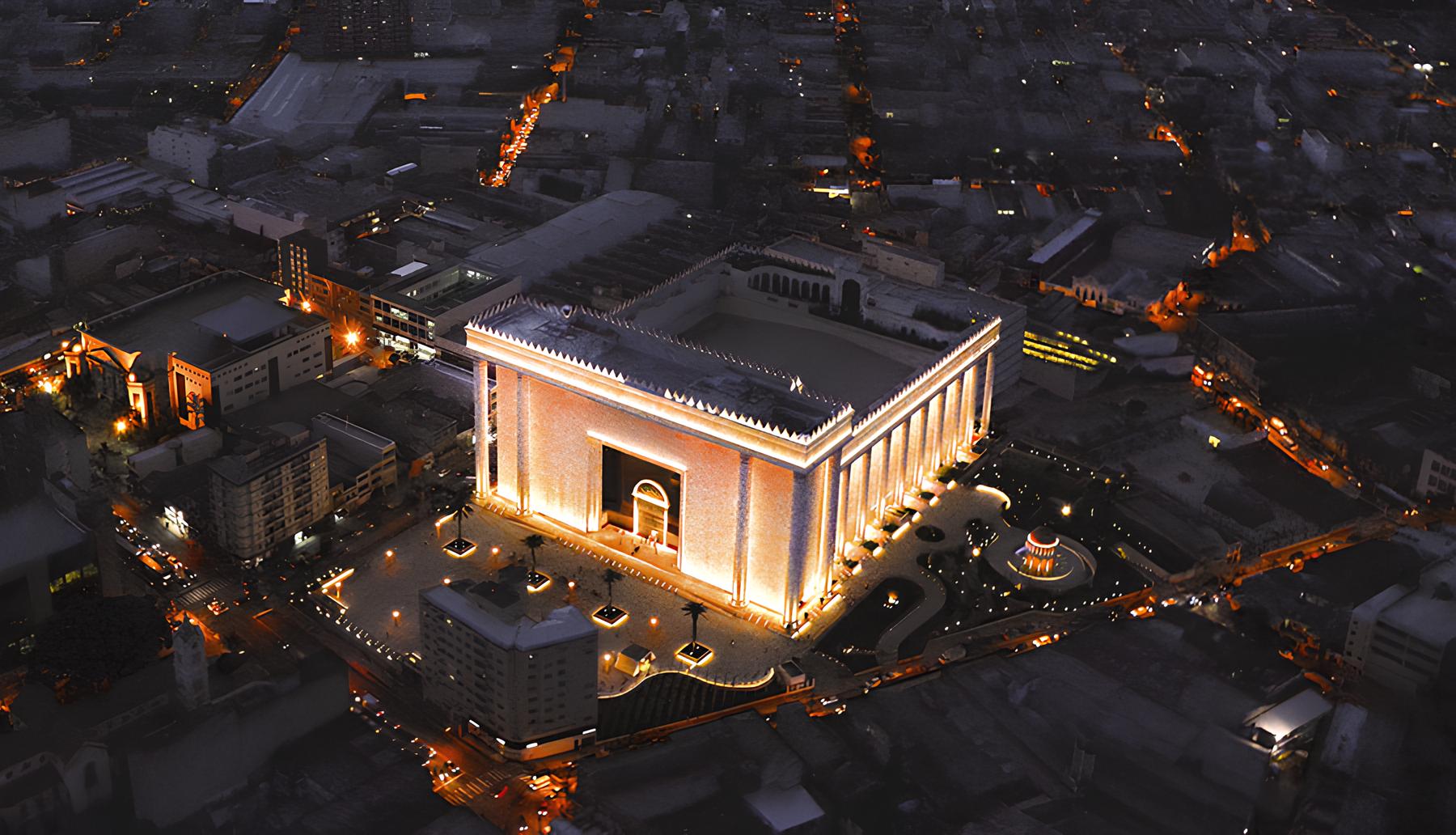
With 100,000 m² and capacity for 10,000 worshipers, the Temple of Solomon is the largest in Latin America and functions as a city of faith in São Paulo.
In the heart of the East Zone of São Paulo stands one of the most monumental constructions ever made in Brazil. With 100,000 square meters of total area, a height equivalent to an 18-story building, and space for 10,000 seated worshipers, the Temple of Solomon is today the largest religious temple in Latin America. More than just a place of worship, it functions as a self-sufficient city, with internal streets, parking, TV studios, shops, apartments, and even its own energy and security systems.
What impresses is not only the size but the symbolic ambition of the project: to reproduce in a modern scale the biblical temple of Jerusalem with stones imported from Israel, columns of sacred proportions, and architecture laden with spiritual and cultural meanings.
The Origin of the Project That Transformed São Paulo
The story of the Temple of Solomon begins in 2006, when the Universal Church of the Kingdom of God decided to build its new worldwide headquarters. The idea came from Bishop Edir Macedo, the founder of the institution, who wanted to create a space capable of welcoming thousands of worshipers with comfort and grandeur—something that reflected the expansion of the church, present in over 100 countries.
-
These living root bridges and ladders are over 700 years old and help indigenous people survive in one of the rainiest regions in the world.

-
From sertanejo star to international investor: Ana Castela invests millions in a mansion in the USA, creates a themed accommodation in Orlando, and shows that the “boiadeira” also wants to grow away from the stage.

-
The 10 most stunning motorhomes in the world: a $3 million trailer with a rooftop nightclub and garage for a Ferrari, “palaces on wheels” with Italian marble, private cinema, and five-star hotel luxury for billionaires.

-
Trump wanted to spend $400 million on the White House, but the courts prohibited the million-dollar construction.


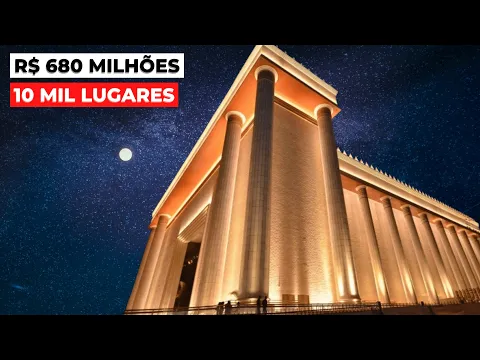

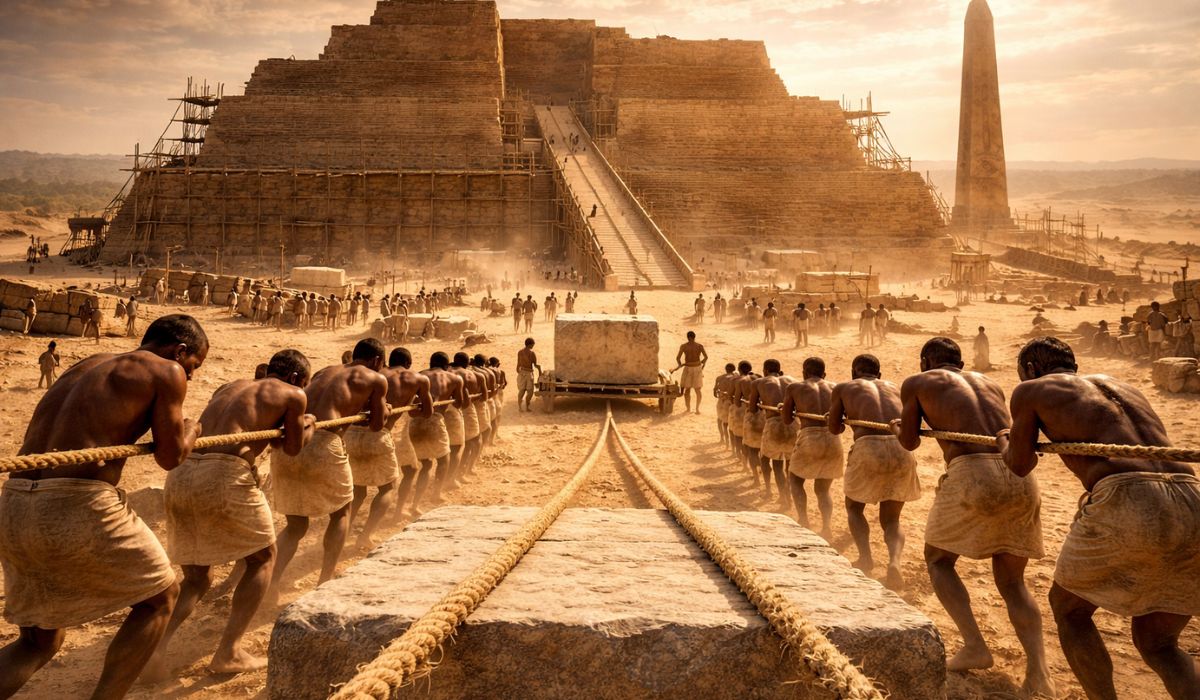
The chosen land, on Avenida Celso Garcia, in São Paulo, occupied the old warehouse of a factory. Construction began in 2010 and mobilized over 1,200 workers over four years.
40,000 cubic meters of concrete, 2 million stone blocks, and 10,000 tons of steel were used, a scale comparable to large sports arenas.
The result was officially inaugurated on July 31, 2014, at a ceremony broadcast live to dozens of countries and attended by religious and political leaders, including then-president Dilma Rousseff.
The Largest Religious Temple in Latin America
In numbers, the Temple of Solomon impresses any visitor:
- Total Area: approximately 100,000 m², including the main building, parking lots, and administrative areas.
- Capacity: 10,000 seated people in the main auditorium.
- Height: 56 meters, equivalent to an 18-story building.
- Parking: for 2,000 vehicles.
- Estimated Cost: R$ 680 million.
The sanctuary is twice the size of the Colosseum in Rome in usable area and surpasses St. Peter’s Cathedral in the Vatican in height. Only the bronze doors of the main entrance weigh 200 kg each, and the central altar is covered with gold leaves imported from Turkey.
Stones Imported from Israel and Millennial Symbolism
To reproduce the original Temple of Jerusalem, the architects of the project traveled to Hebron, Israel, from where limestone stones aged 12,000 years were imported, the same type used in biblical constructions.
These stones were cut and numbered in the Middle East, then transported in shipping containers to the Port of Santos and assembled piece by piece in São Paulo. The symbolism goes beyond aesthetics: the measurements follow the proportions of the Temple described in the Old Testament, adapted to modern scale.
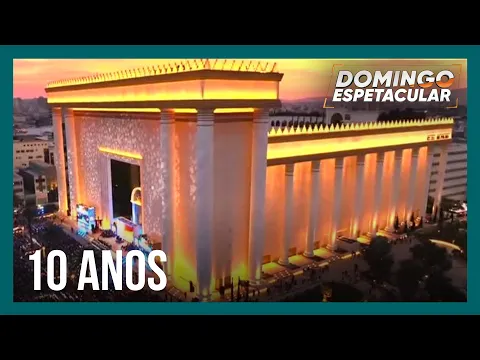
The central sanctuary has 12 monumental columns, representing the 12 tribes of Israel, and the altar of the ark, where a replica of the Ark of the Covenant rests, is considered the most sacred point of the building.
A City of Faith: Structure and Functioning
The Temple of Solomon is not just a church. It is a multifunctional complex with infrastructure comparable to that of a small municipality. In addition to the main sanctuary, there are:
- TV and radio studios, where programs from Record TV and Rede Aleluia are produced;
- Internal residences for foreign bishops and visitors;
- Shops, bookstores, and cafés aimed at visitors;
- Visitor center with historical and biblical exhibitions;
- Bible school and educational center;
- Own security system, fire brigade, and medical team.
The operation mobilizes about 2,000 employees and volunteers every Sunday. During special dates, such as the Holy Fire of Israel, attendance can exceed 40,000 people in a single day, considering the services conducted in sequence.
Global Comparisons: A Colossus of Modern Architecture
When compared to other religious constructions, the Temple of Solomon impresses even international architects.
- The Colosseum of Rome has an area of about 24,000 m²; the temple has 100,000 m².
- The Basilica of St. Peter, in the Vatican, covers 21,000 m².
- The National Sanctuary of Aparecida, in São Paulo, is larger in internal volume but not in total built area.
The monumentality of the São Paulo temple places it among the ten largest religious centers in the world in physical area, side by side with the Hassan II Mosque in Morocco and the Akshardham Temple in India.
Urban and Economic Impact
Since its inauguration, the Temple of Solomon has transformed the surrounding area of Avenida Celso Garcia, in the Brás neighborhood. The region, once marked by warehouses and workshops, underwent a revitalization process.
New restaurants, parking lots, hotels, and religious shops have emerged to meet the demand of visitors.
According to estimates from the city hall, the average weekly flow is 20,000 to 30,000 people, generating hundreds of indirect jobs and boosting the local economy. Furthermore, the presence of Record TV, just a few kilometers away, means that the temple also serves as a frequent backdrop for television productions and international broadcasts.
Sustainability and Cutting-Edge Technology
Despite its size, the Temple of Solomon adheres to modern energy efficiency standards.
The project includes water reuse systems, natural ventilation, and high durability LED lighting, reducing electricity consumption by up to 40%.
The panoramic elevators and the acoustic system were designed by international companies specializing in opera houses and auditoriums. The acoustics are so precise that a person can speak at the altar and be heard clearly at any point in the hall, even without sound amplification.
Criticism, Controversies, and International Recognition
The size and cost of the Temple of Solomon have sparked intense debates since the beginning.
While critics pointed to the high financial investment and the urban impact of the construction, architecture and engineering specialists highlighted its technical precision and structural boldness.
In 2018, the temple received the International Structural Engineering Award, granted by World Construction Review, for the complexity of assembling the imported stones and the natural ventilation system.
Even among critics, there is consensus that the construction represents a landmark in contemporary Brazilian architecture, combining modern technology with millennial symbolism.
Today, the Temple of Solomon has become an official tourist attraction of the city of São Paulo, drawing visitors from all over Brazil and abroad. Over 2 million people have participated in guided tours, where they learn about the history of the construction and the symbolic significance of each detail.
The temple represents the fusion of faith, architecture, and engineering, demonstrating how Brazil is capable of realizing monumental works with international quality standards.
With 100,000 square meters of area, 10,000 seats, stones brought from Israel, and a structure comparable to a city, the largest religious temple in Latin America continues to be one of the most impressive buildings ever erected in the country, a spiritual and architectural colossus that redefines the concept of grandeur in Brazilian faith.








-

-

-

-

-

-

67 pessoas reagiram a isso.