





 Portuguese
  English
  Spanish
  4 min of reading
  3 comments


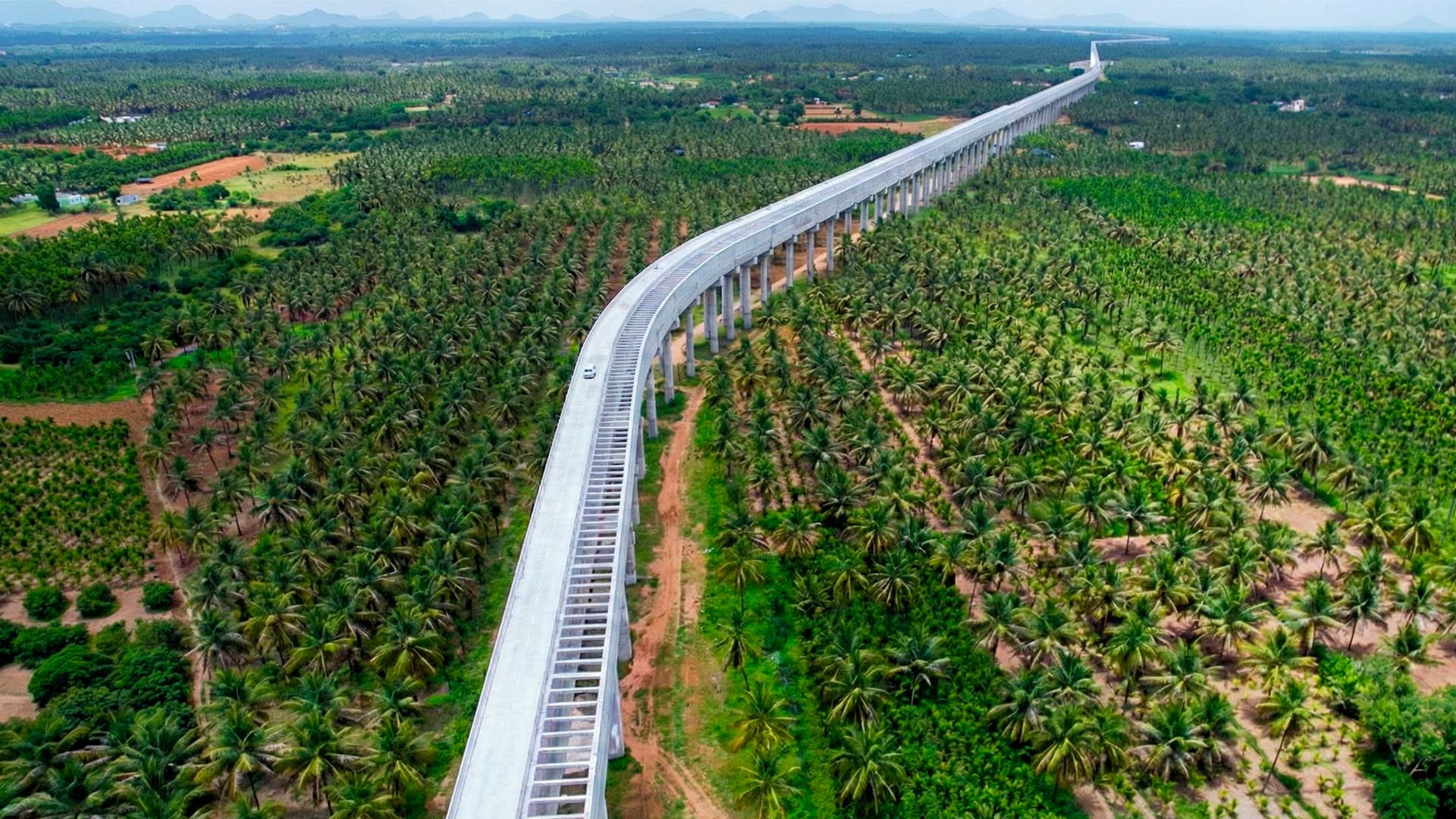


10.47 Km Structure About 40 Meters High Integrates the Yettinahole Project and Became a Symbol of a New Water Rush in Southern India
The state of Karnataka, in southern India, has highlighted a new water infrastructure project that local authorities and regional media describe as the tallest aqueduct in the world. The structure is part of the Yettinahole Integrated Drinking Water Project, designed to alleviate the pressure for drinking water in areas frequently affected by drought.
The aqueduct crosses the Gubbi region in the Tumakuru district and was designed to move water through a gravity-fed channel system, without relying on the same level of pumping throughout its entire route. In practice, the project aims to shorten distances and overcome terrain variations with an elevated crossing.
The announcement comes at a time when water security has returned to the center of debate in Karnataka, where water scarcity affects both urban and rural areas, leading to local disputes during dry periods. The official promise is to improve the regularity of supply in historically vulnerable districts.
-
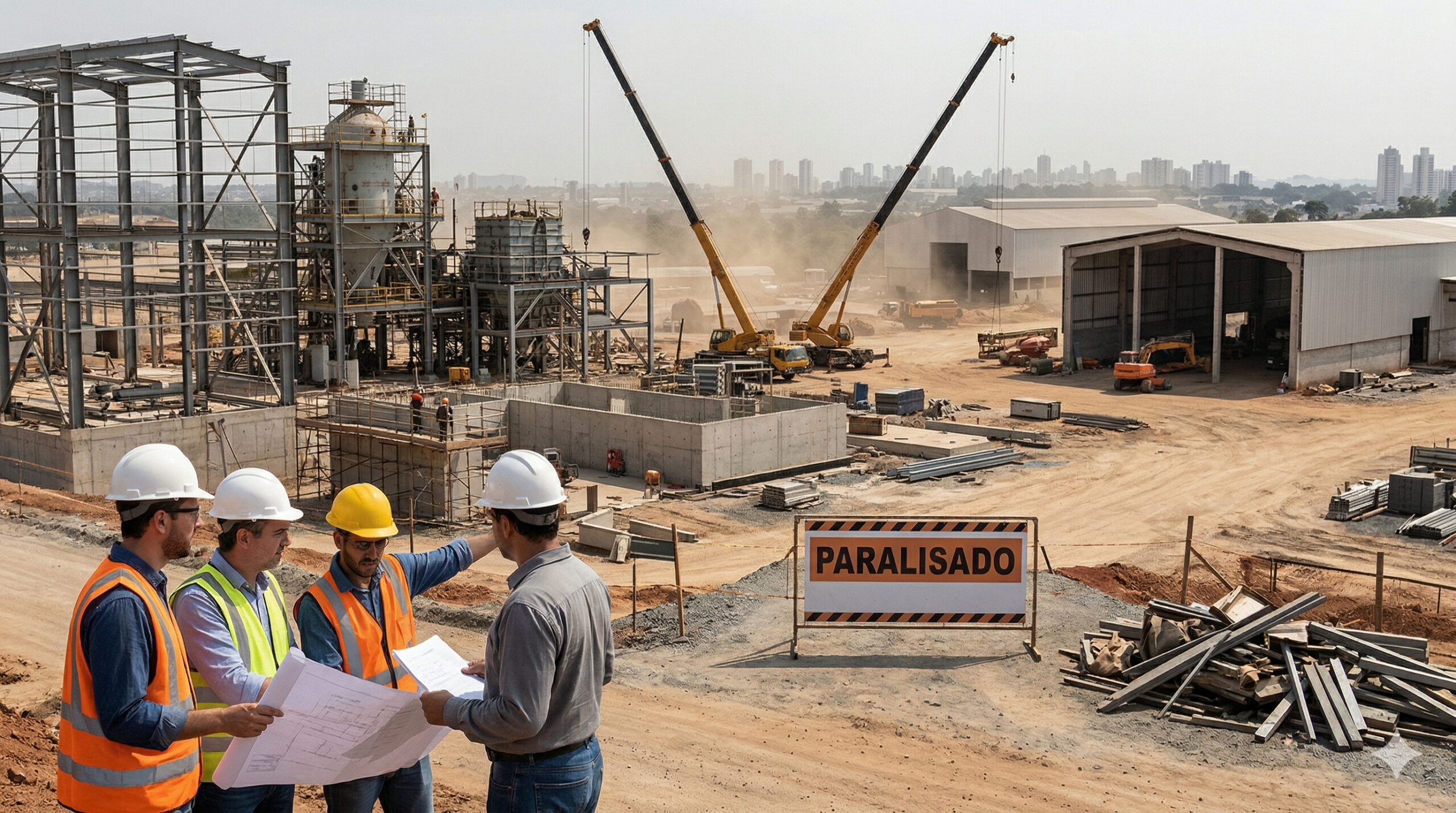
The lack of welders, electricians, and operators becomes a structural threat in 2025, with the construction industry and manufacturing already suffering from delays, cost pressures, and labor shortages in Brazil.
-
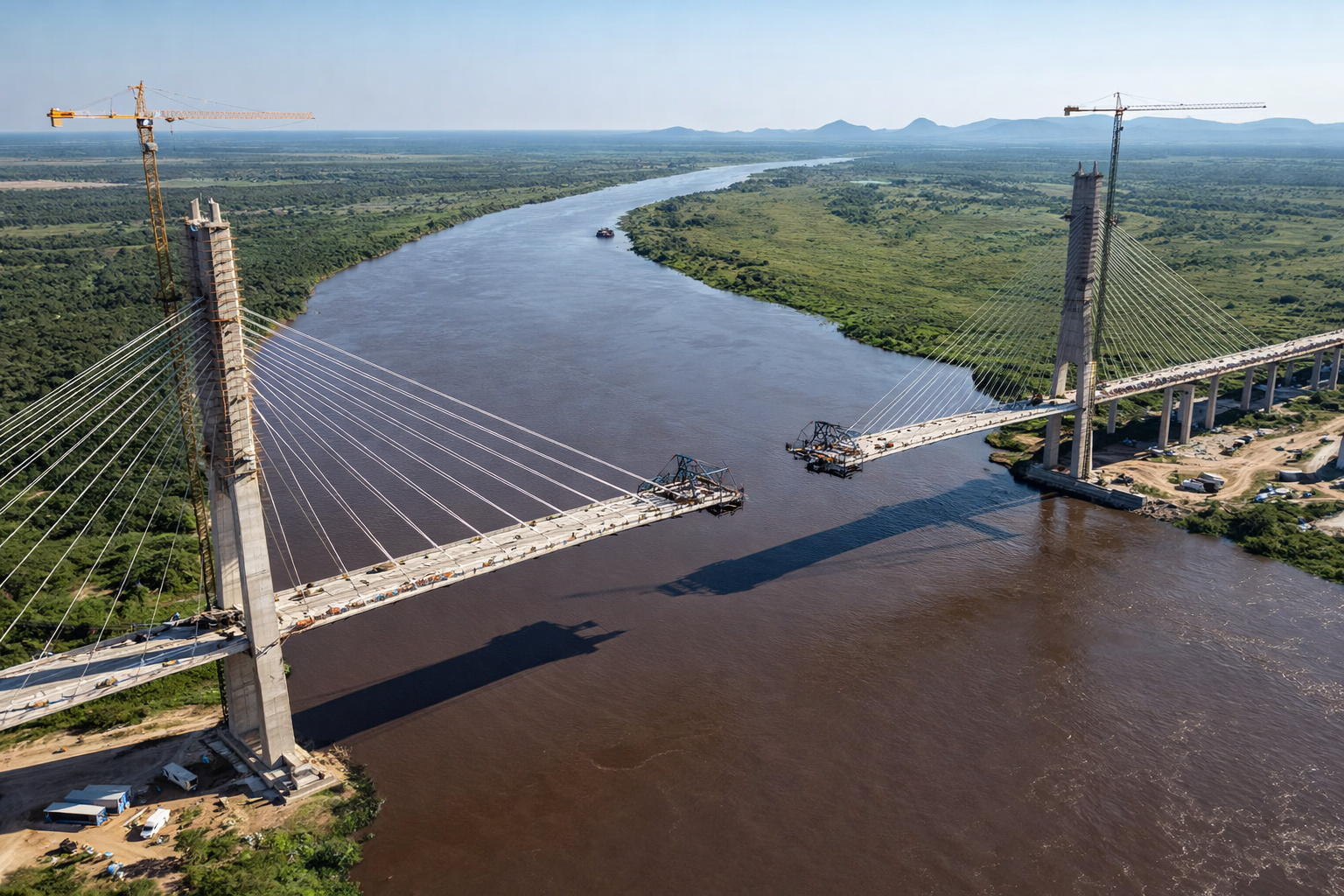
Brazil and Paraguay are just 46 meters away from a historic union on the bioceanic bridge that promises to revolutionize trade between the Atlantic and the Pacific.
-
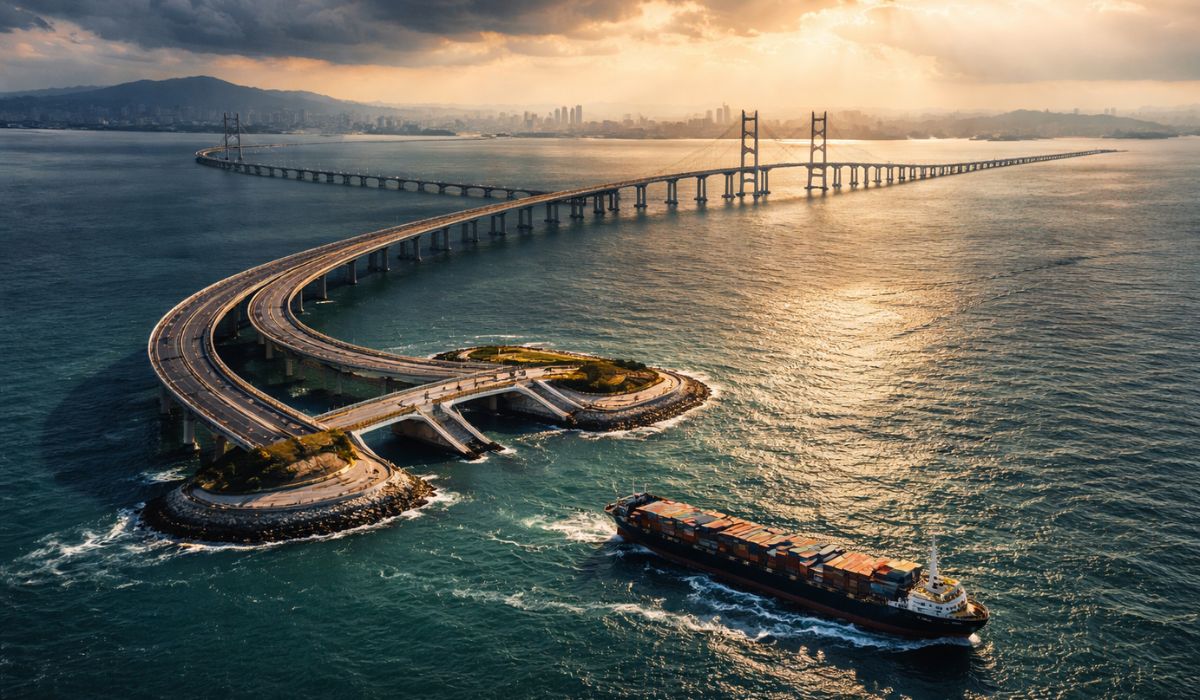
With 55 km over the sea, a cost of US$ 20 billion, and enough steel to build 60 Eiffel Towers, China’s largest project has connected Hong Kong, Zhuhai, and Macau in a colossal bridge that defies the logic of engineering.
-
A trick with joint compound transforms a Styrofoam ceiling into a plaster-like ceiling: leveled panels, wires and mesh at the joints, sand, paint, and change the environment while spending little today.


Although the aqueduct is complete and is treated as an engineering landmark, the larger project still has ongoing phases and faces environmental and bureaucratic hurdles. Nonetheless, the structure has already become a showcase for the government to demonstrate progress in drinking water projects.
What Is the Yettinahole Aqueduct and Why Does It Draw Attention?

According to locally disclosed information, the aqueduct has a length of 10.47 kilometers and reaches about 40 meters in height at elevated sections, dimensions that support the claim of a world height record. The structure is located near Chelur, in Gubbi, within the Tumakuru district.
In the logic of the project, the structure operates as a hydraulic bridge, carrying large volumes of water over valleys and passage areas without cutting the land with open channels. The idea is to minimize direct impacts on inhabited areas and maintain continuous flow by gravity.
The aqueduct is presented as part of a larger network of channels and collection systems that connect watercourses from western Karnataka to inland regions. This transfer, in the government’s view, is a response to a recurring problem of water availability in years of irregular rainfall.
How the Project Was Built and How Much It Cost
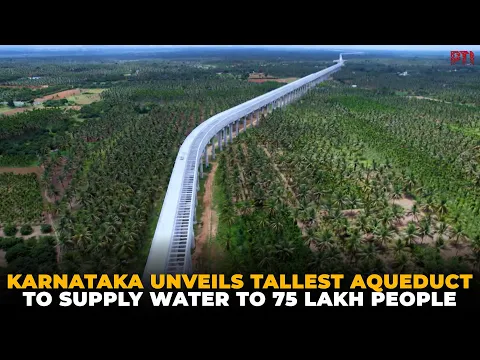

According to the Deccan Herald, the aqueduct was designed to transport 3,300 cusecs of water and operate with gravitational force, reducing the need for energy along part of the route. The same article mentions a cost of 1,203.68 crore rupees, including 41 crore allocated for land acquisition.
Besides its scale, the project gained prominence for national recognition linked to execution practices and safety. The official list of winners from the ISDA INFRACON National Awards records Visvesvaraya Jala Nigam Limited, a government body in Karnataka, as the winner in the category of good practices in health, safety, and environment, citing the construction of the large aqueduct of the Yettinahole project in Tumakuru.
The Promised Impact for Drought-Affected Areas in Karnataka
The state government links the aqueduct to a broader strategy for supplying populations in the interior, where scarcity often recurs. The frequently cited goal is to benefit about 75 lakh people, equivalent to 7.5 million, in regions with a history of drought.
According to The New Indian Express, the project aims to raise 24.01 TMC of water from rivers descending from the Western Ghats, focusing on areas of 28 taluks in seven districts. Therefore, the project is not just a “concrete monument”, but a logistical component within an extensive network of collection, conveyance, and distribution.

Meanwhile, the Times of India described the inauguration of an initial phase of the project in 2024, with 35 km completed of a planned 265 km canal, in addition to the filling of local reservoirs along the way. This helps explain why, even with structures ready, the complete delivery of the supply relies on several simultaneous fronts.
In public communication, the project also attempts to address a sensitive social issue, the increasing competition for water among cities, rural communities, and agriculture during dry periods. It is at this point that the aqueduct stands as a symbol, an effort to demonstrate the ability to bring water where it has historically been lacking.
At the same time, experts and residents often remind that transposition and diversion projects require strong governance, ongoing maintenance, and transparency regarding distribution. Without this, the risk is that water will first reach those with greater infrastructure, leaving the more vulnerable areas still reliant on temporary solutions.
What Still Needs to Be Done for Water to Arrive and Environmental Challenges
Despite the physical progress, The New Indian Express reports that the project faces delays due to environmental licenses and approvals, especially related to forest areas, and that the expected completion date has been pushed to 2027. The article also notes successive revisions of costs and funds already spent on the project.
This type of mega project often divides opinions because it weighs the urgency of supply against environmental and social concerns related to interventions in sensitive areas. In practice, the aqueduct can become the perfect image of a modern dilemma, saving communities from thirst today, but exacting a high price in disputes, licenses, and territorial impact tomorrow.
And you, is an aqueduct of this scale the missing solution, or just another mega undertaking that could create new environmental and political problems? Should water first go to human consumption in cities, or also to fill reservoirs and meet other demands? Leave your comment with your opinion, as this type of project always sparks heated debate.









NO NORDESTE O POVO É ACORRENTADO NA SECA E MISERICÓRDIA POIS MANTÉM OS DEPUTADOS DA ESQUERDA NO PODER
Enquanto nas terras tupinikins, nosso 9 dedos opta por “Carros Pipas” digamos que beneficia mais gente!!! Se é que vcs me entendem!!!
Com certeza que sabemos quem eles beneficiam, amigos,parentes,amigo do amigo e por ai vai.