





 Portuguese
  English
  Spanish
  6 min of reading
  0 comments


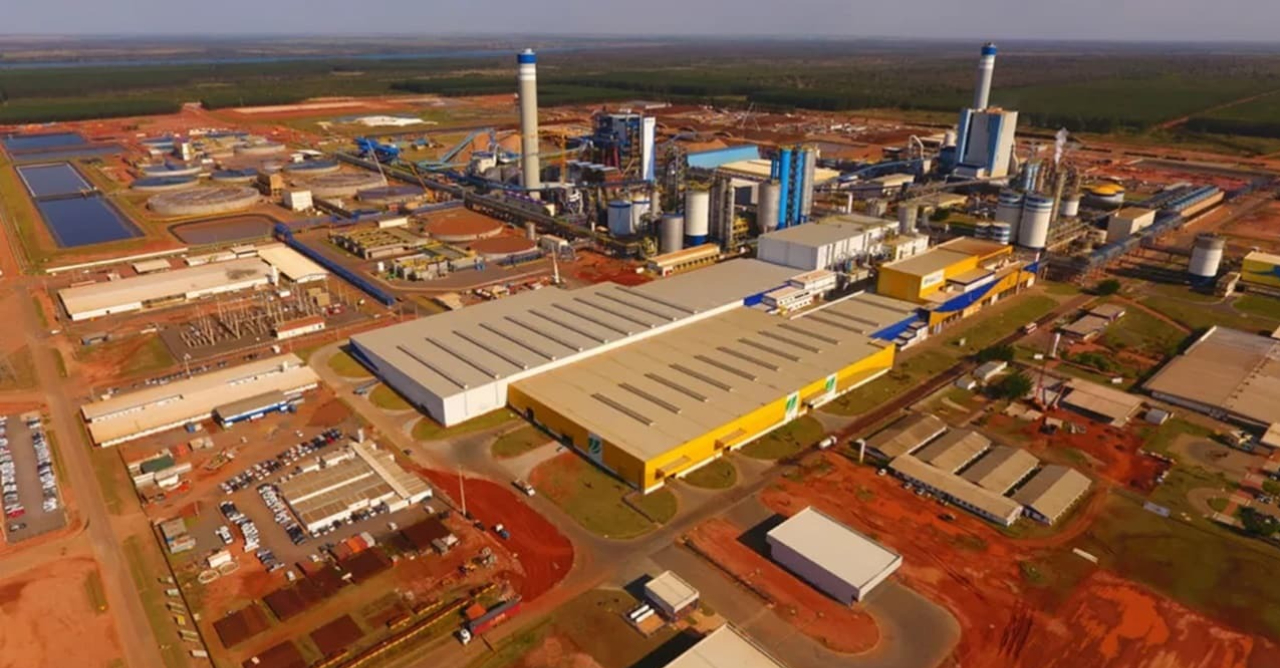
Largest Pulp And Paper Mill In The Americas, In Três Lagoas, Produces 3.2 Million Tons Per Year And Operates Like A Sustainable City
In the heart of Mato Grosso do Sul, a colossal structure redefines the concept of modern industry in Brazil. Located in Três Lagoas, the Suzano S.A. mill impresses with its monumental scale: it covers 1.2 million square meters of built area, has over 7,000 direct and indirect workers, and an annual capacity of 3.2 million tons of eucalyptus pulp. What began as an ambitious expansion project has become the largest pulp and paper mill in the Americas — and one of the most sustainable on the planet.
An Industrial Colossus That Functions Like A City
Upon entering the Suzano complex, it is impossible not to compare it to a functioning city. The site features paved internal streets, its own energy and water treatment systems, cafeterias, leisure areas, parking lots, offices, and even internal transport structures. Thousands of people circulate daily, in a continuous rhythm of operation 24 hours a day, seven days a week.
The magnitude of the structure is impressive: the industrial complex occupies 40 km² of total area, considering planted forests, preservation areas, and logistical zones.
-
Historic bankruptcy of Centauro shocks the market, and the century-old company puts more than 500,000 products, machines, and complete infrastructure up for online auction.

-
New shoe factory in Ceará is expected to create 400 jobs and strengthen the local economy.
-
No one imagined it, but a mixture of sawdust with a mineral that fights fires surprises scientists with a result that changes the course of fire-resistant construction.

-
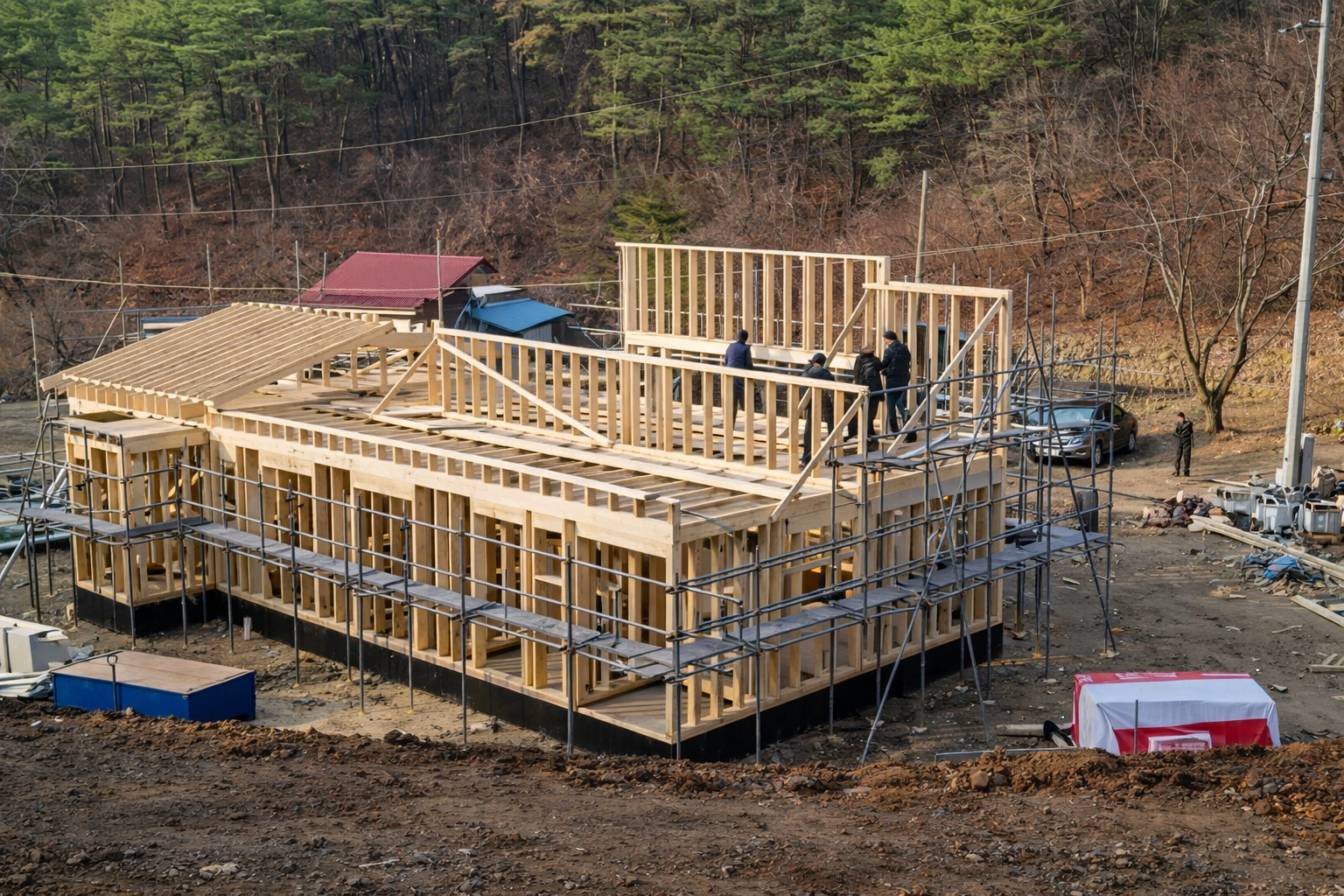
From empty land to a high-end house, wooden construction uses a lightweight system, metal structure for the foundation, ventilated ceramic cladding, and special windows to create an efficient and comfortable living space throughout the year.
The heart of the system is made up of two production lines, known as Project Horizonte I and Horizonte II, inaugurated in 2012 and 2017, respectively.

The investment in the expansion of the unit exceeded US$ 2.7 billion, one of the largest in the recent history of the Brazilian forestry sector. The economic impact was so significant that Três Lagoas became known as the “World Capital of Pulp”, also housing other giants of the sector.
Center Of Technology And Energy Efficiency
Beyond size, what distinguishes Suzano’s plant is its industrial intelligence. The unit was designed with the highest standards of automation and sustainability.
The production process uses self-sufficient energy, generated by burning lignin — a byproduct of wood in high-efficiency boilers. This energy powers the entire complex, and the surplus is sent to the national electricity grid, supplying neighboring cities.
Its water reuse system is also a global reference: 99.7% of all water used in the process is treated and reused, minimizing environmental impact and drastically reducing water consumption.
The mill also operates with automated sensors and digital process control, ensuring precision in the cooking, bleaching, and drying stages of the pulp.
Sustainability And Circular Economy
The production model at Suzano in Três Lagoas was designed to follow the concept of circular economy, where practically everything is transformed.
Solid waste is repurposed to generate energy; the gases from biomass combustion are converted into steam; and even the ashes produced in the boilers return to the soil as fertilizers.
Additionally, the company maintains over 100,000 hectares of environmental preservation areas around the eucalyptus plantations, forming ecological corridors that protect native species of the Cerrado.
According to the company’s sustainability report, around 40% of the total area of the complex is exclusively designated for biodiversity conservation.
Suzano also invests in social programs aimed at the local community, promoting professional training, social inclusion, and technical education incentives.
Motor Of The Economy Of The Midwest
The presence of the largest pulp and paper mill in the Americas has completely transformed the economy of Três Lagoas and the Midwest region.
Since the implementation of the first industrial module, the municipality has seen its GDP triple and the number of formal jobs soar. Today, the city is considered one of the largest industrial hubs in Brazil and concentrates a productive chain that includes transportation, metallurgy, energy, chemicals, and specialized services.
It is estimated that, for every direct job at the mill, five indirect jobs are generated in supporting companies, such as equipment suppliers, maintenance, transportation, and food services.
The collection of state and municipal taxes has also grown significantly, making Três Lagoas one of the cities with the highest per capita tax revenue in the state.
Brazilian Technology With Global Impact
The pulp produced in Três Lagoas is sent to more than 60 countries, notably China, the United States, Germany, France, and Italy, where it is used in the manufacturing of sanitary papers, printing papers, packaging, and even hospital products.
Brazil is now the largest exporter of short-fiber pulp in the world, and a large part of this title is due to Suzano’s operations in Mato Grosso do Sul.
The port of Santos (SP) is the main destination for the production, which is transported by specialized trains and trucks.
Each year, more than 100,000 containers leave Três Lagoas heading to maritime terminals, carrying a 100% national product that has become a reference for quality and sustainability.
A Model For The Future Of The Brazilian Industry
While the world seeks to reduce emissions and make industrial production cleaner, the model adopted by Suzano is often cited in international sustainability forums.
The company is a member of the UN Global Compact, participates in reforestation projects, and is one of the pioneers in issuing green bonds to finance sustainable expansion.
The automation of the mill is also a showcase of Industry 4.0 in Brazil: robots are used to move bundles of pulp, drones monitor the forests, and big data systems control energy consumption in real time.
This technological ecosystem positions the country as one of the global leaders in the forestry sector, combining high productivity with environmental responsibility.
From Três Lagoas To The World: The Power Of Brazilian Eucalyptus
The secret to the mill’s efficiency lies in its national raw material. Eucalyptus cultivated in the Midwest grows up to three times faster than that of Nordic countries, thanks to favorable climatic conditions.
This allows for more sustainable and competitive production, reducing the rotation time of forests and ensuring one of the lowest carbon footprints in the sector.
With the growth of exports and the increasing demand for recyclable products, Brazilian pulp is set to become even more strategic in the global transition to renewable materials.
An Industrial City That Never Stops Growing
Almost two decades after its inauguration, the Suzano complex continues to expand. New investments in infrastructure and technology are planned for the coming years, including bioproduct projects derived from wood, such as bioplastics and sustainable fuels.
For the local population, the impact goes beyond numbers: the mill has spurred the modernization of the city, attracted new companies, and transformed Três Lagoas into one of Brazil’s main industrial and logistics hubs.
More than just a manufacturing plant, the site is a living organism, where technology, nature, and people coexist in harmony.
A Giant That Symbolizes The New Industrial Brazil
The largest pulp and paper mill in the Americas is an example that Brazil can lead high-productivity sectors based on innovation and sustainability.
With its 1.2 million square meters, 3.2 million tons produced annually, and a self-sufficient operating model, the Suzano complex demonstrates that the country has the ability to transform natural resources into wealth responsibly.
Just as Itaipu is a symbol of energy and Embraer of technology, Três Lagoas consolidates itself as the portrait of Brazilian green industrial power, a place where the sound of machines merges with the song of forests and where progress is measured not only in tons but in environmental and social legacy.








Seja o primeiro a reagir!