





 Portuguese
  English
  Spanish
  6 min of reading
  0 comments


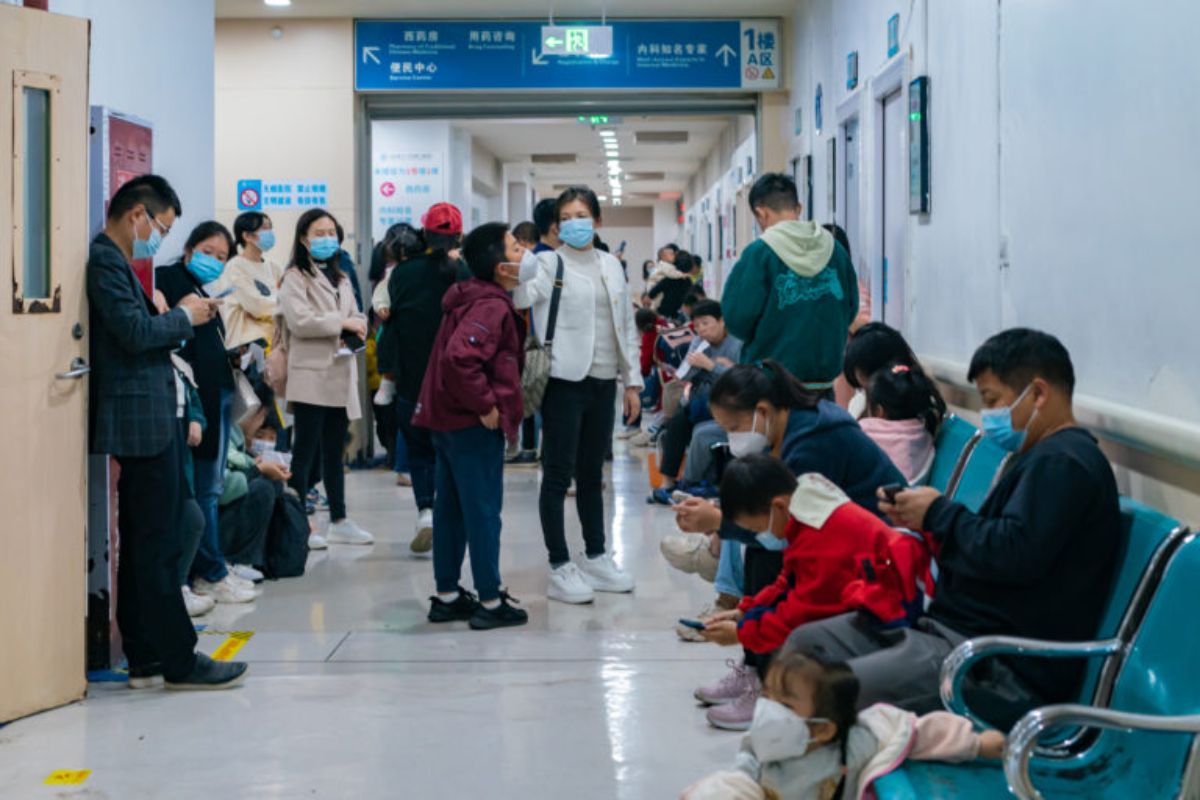
With Strong State Coordination, Three Main Types of Health Insurance, and Public Investment Equivalent to 6.7% of GDP, China Manages to Provide Medical Coverage for Over 95% of the Population
China has built one of the most comprehensive healthcare systems in the world, capable of serving more than 1.3 billion inhabitants. The Chinese healthcare system combines modern medicine, traditional Chinese medicine, and strong coordination between the public and private sectors to sustain near-universal medical coverage.
According to a report from the State Council Information Office for the period from 2021 to 2025, just over 95% of the Chinese population has access to the healthcare system. In a country of continental dimensions, achieving this rate requires decades of reforms, centralized planning, and a clear political decision to treat health as a strategic priority.
For the Brazilian public, accustomed to the SUS and recurring discussions about queues, funding, and regionalization, understanding how China organizes its healthcare system helps illuminate possible pathways — and also limits — for national systems seeking universal coverage.
-
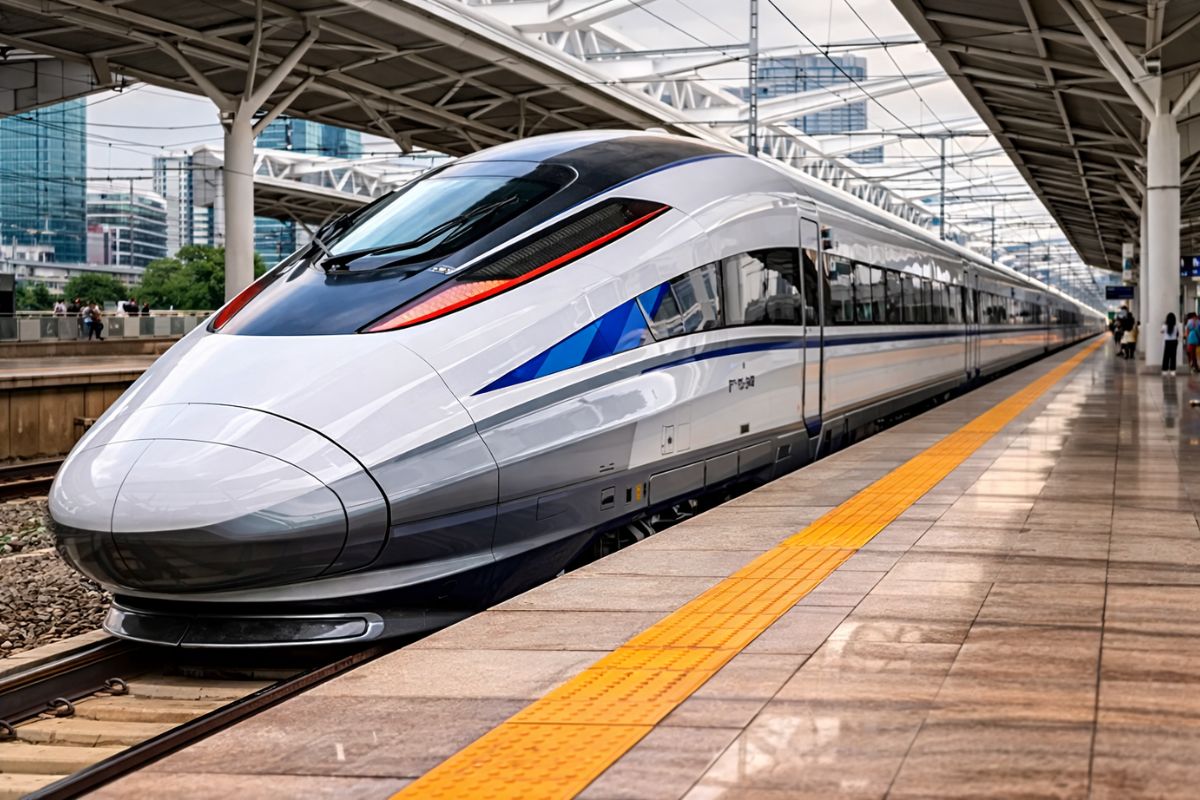
China is testing a train that will operate at 400 km/h in daily service, which is 80 km/h faster than the French TGV, and uses carbon fiber, magnesium alloys, and more than 4,000 sensors to become the fastest commercial train on the planet.
-
Forget about having an air fryer, electric oven, and steam pot taking up space in your kitchen because a 30-liter smart oven combines all these functions, automatically selects the ideal temperature, and even turns off by itself when cooking is done.

-
Engineers rewrote all the apps from scratch and bet everything on a buttonless screen: now the creator of the iPhone says that Apple needs to make the same revolution again because of AI.

-
Researchers in the U.S. have created a flying robot that transforms into a land vehicle while still in the air. The technology, based on aerodynamic transition, converts landing into a scene worthy of Transformers and redefines mobility between sky and ground.


See also: how the way public health is financed impacts the quality of life and economic development of a country.
Who Runs the Healthcare System in China
The command center of China’s healthcare system is the National Health Commission. This body coordinates and updates reforms, oversees health plans, and manages policies that guide the provision of medical services across the Chinese territory. Practically, it functions as the brain of the system.
Working alongside the National Health Commission is the State Administration of Traditional Chinese Medicine. It is responsible for updating, regulating, and integrating the use of traditional medicine within the public system. In China, traditional Chinese medicine does not occupy a marginal space: it is part of official health policy and is present from primary care to higher-complexity hospitals.

Financing, Insurance, and Regulation
In the financial area, the Ministry of Finance and the State Administration of Health Insurance play a decisive role. The Health Insurance Administration manages general health insurance programs, including coverage for disasters and maternity, sets drug prices, and seeks resources for specific programs.
The National People’s Congress, in turn, is responsible for legislating on the most important health policies. Meanwhile, the National Development and Reform Commission develops the infrastructure of plans and defines the competencies of welfare service providers, connecting policy formulation with execution on the ground.
Research, Innovation, and Disease Control
The National Health Commission also oversees the Centers for Disease Control and Prevention and the Academy of Medical Sciences. These institutions are responsible for epidemiological surveillance, outbreak response, and health research, producing knowledge and protocols that are then incorporated into China’s healthcare system.
This robust institutional structure allows for the alignment of national guidelines, financing, research, and service delivery, something essential to sustain medical coverage in a country with over 1.3 billion inhabitants.
Three Types of Insurance Structure Medical Coverage in China
Medical coverage in China is organized around three main types of health insurance, designed for different population profiles.
The first type of insurance caters to employed workers in cities, meaning people with formal ties in urban areas. Generally, this model is funded by contributions associated with employment, offering a package of services aimed at the economically active population.
The second type is aimed at residents of rural areas. Historically, this population has always had less access to health services. Rural insurance seeks to reduce this inequality by bringing primary care, specialists, and hospital infrastructure to previously underserved regions.
The third insurance type serves urban residents without formal employment, including children, the elderly, and self-employed workers. Thus, China’s healthcare system attempts to ensure that no one is completely left out, regardless of their type of occupation or income.
When there is consistent funding and clear rules, this segmented health insurance model can be a powerful tool to achieve nearly universal coverage, including for vulnerable groups.
How Much China Invests in Health – and What This Suggests to Brazil
Behind the medical coverage for over 95% of the population lies a significant volume of resources. In 2024, China allocated 9.09 trillion yuan to the health sector, equivalent to about 6.7% of its Gross Domestic Product. The country’s goal is to exceed 7% of GDP in the coming years.
These numbers show that China’s healthcare system does not rely solely on good organization: it is supported by a state decision to invest heavily in public health. Substantial resources allow for strengthening health insurance, financing hospitals, expanding the primary healthcare network, training professionals, and subsidizing medications.
In Brazil, the existence of the Unified Health System (SUS), with universal and free access, is a civilizational milestone and international reference. However, the debate on underfunding, regional inequalities, and the difficulty of ensuring the same quality of care across the country is recurrent. The Chinese experience reinforces the idea that it is not enough to have a robust institutional design; it is necessary to maintain a stable and growing flow of resources.
What Services Does the Chinese Healthcare System Offer to Citizens
In addition to the volume of investments, the variety of services offered by China’s healthcare system is noteworthy. Coverage includes primary care, specialized assistance, mental health care, medication prescriptions, physiotherapy, intensive care units, and practices of traditional Chinese medicine.
In practice, the system is designed to support citizens throughout their entire care journey, from health posts to high-complexity hospitals. When the public service does not cover a specific procedure or medication, the private sector acts as a complement rather than a complete substitute.
This logic reduces out-of-pocket expenses for families regarding health. In many cases, Chinese citizens need to spend relatively low amounts to access medical coverage, which decreases the risk of indebtedness and impoverishment due to illness.
See also: how the integration of the public and private sectors can reduce out-of-pocket expenses for families regarding health and increase the system’s efficiency.
Lessons from China’s Healthcare System for Brazil
Brazil does not need — and could not — literally copy the Chinese model. However, China’s healthcare system offers important lessons for the Brazilian debate on the SUS, universal medical coverage, and public financing.
One first lesson is the importance of national coordination. China uses a centralized structure to define policies, articulate institutions, and organize the healthcare system. Brazil already has strong federal coordination in the SUS but still faces challenges in aligning priorities and ensuring that decisions made at the national level translate into effective access in all regions.
The second lesson concerns financing. The Chinese experience shows that without a long-term commitment to health as a fiscal priority, it is difficult to ensure broad coverage and quality services. For Brazil, the challenge is to shield health financing from political and economic cycles, preventing the SUS from experiencing cuts or restrictions that compromise its capacity to respond.
Finally, China demonstrates how to integrate different forms of care within the same system, combining modern medicine, traditional Chinese medicine, and complementary participation from the private sector. In Brazil, there is room to expand and qualify the already present integrative and complementary practices in the SUS, always based on evidence, to alleviate the demand for high-complexity services.
In summary, China’s healthcare system indicates that it is possible to offer medical coverage to over 1.3 billion people with strong coordination, three main types of health insurance, and consistent public investment. Brazil has already taken a historic step with the SUS, but it still needs to decide, as a society, what place public health will truly occupy on the list of national priorities.
In your opinion, should Brazil head in the direction of strengthening and further financing the SUS, drawing inspiration from some elements of China’s healthcare system, or is the main problem today in management and how existing resources are applied?







-

-

2 pessoas reagiram a isso.