





 Portuguese
  English
  Spanish
  5 min of reading
  0 comments


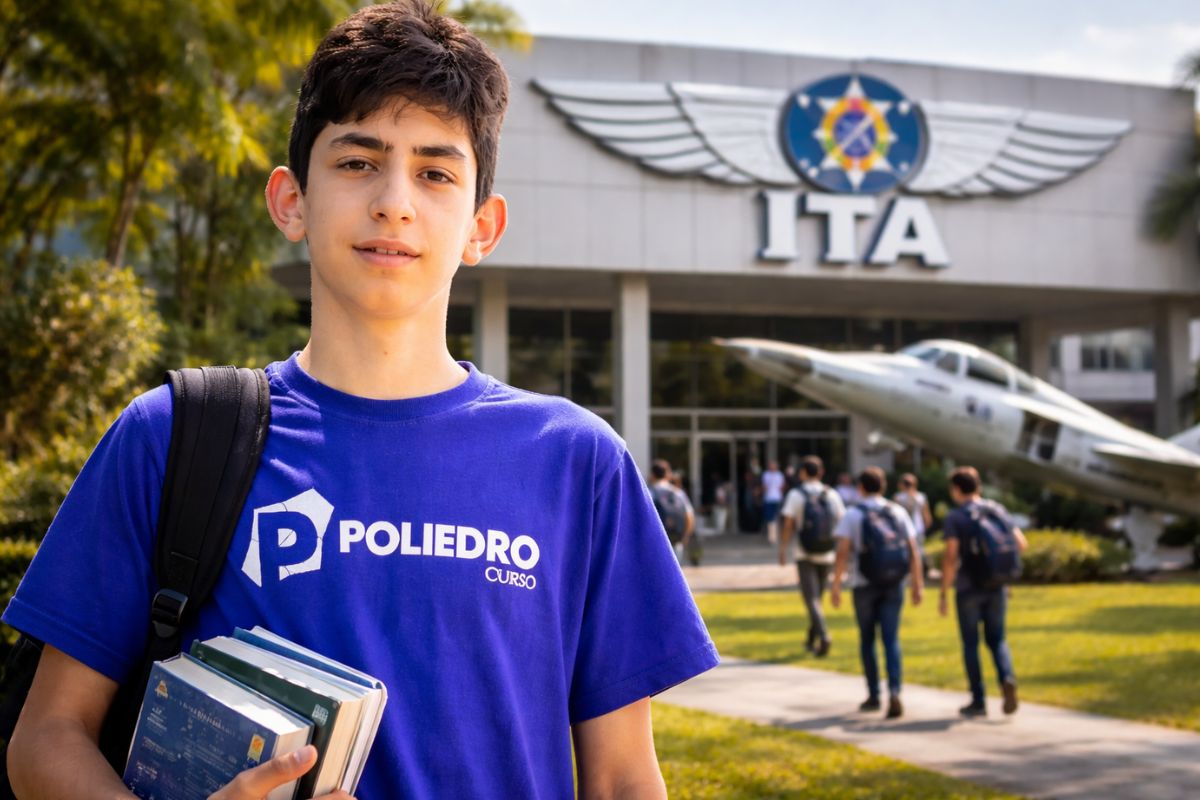
Bernardo Dias, Gifted Student Who Skipped Two Grades, Completed High School at Poliedro School and, After Two Years of Preparation, Was Approved in the 2019 ITA Entrance Exam; in São José dos Campos, He Describes a Rigid Routine, Old Tests, and Adjustment to the New Objective Phase of 2018 with Family Support.
At 15 years old, student Bernardo Dias saw his name on the 2019 ITA entrance exam list, results released on December 20, and began to face a timeline that usually arrives later for most: health inspection on January 13, moving to the H8 dormitory, and starting the Aeronautical Engineering course in São José dos Campos.
The approval did not come from a stroke of luck or a single skill. It was built through a combination of academic advancement, study methods, and strategic readjustment when the ITA entrance exam changed in 2018, gaining an objective phase and a two-stage competition, while the student still tried to balance sleep, leisure, and the pressure of entering early into the toughest funnel in the country.
Accelerating School Changes the Entrance Exam Clock
Bernardo Dias finished 3rd grade of High School at Poliedro School in São José dos Campos just before securing his spot at ITA.
-
The narrowest house in the world is only 63 centimeters wide, but inside it can accommodate a bathroom, kitchen, bedroom, office, and even two staircases.

-
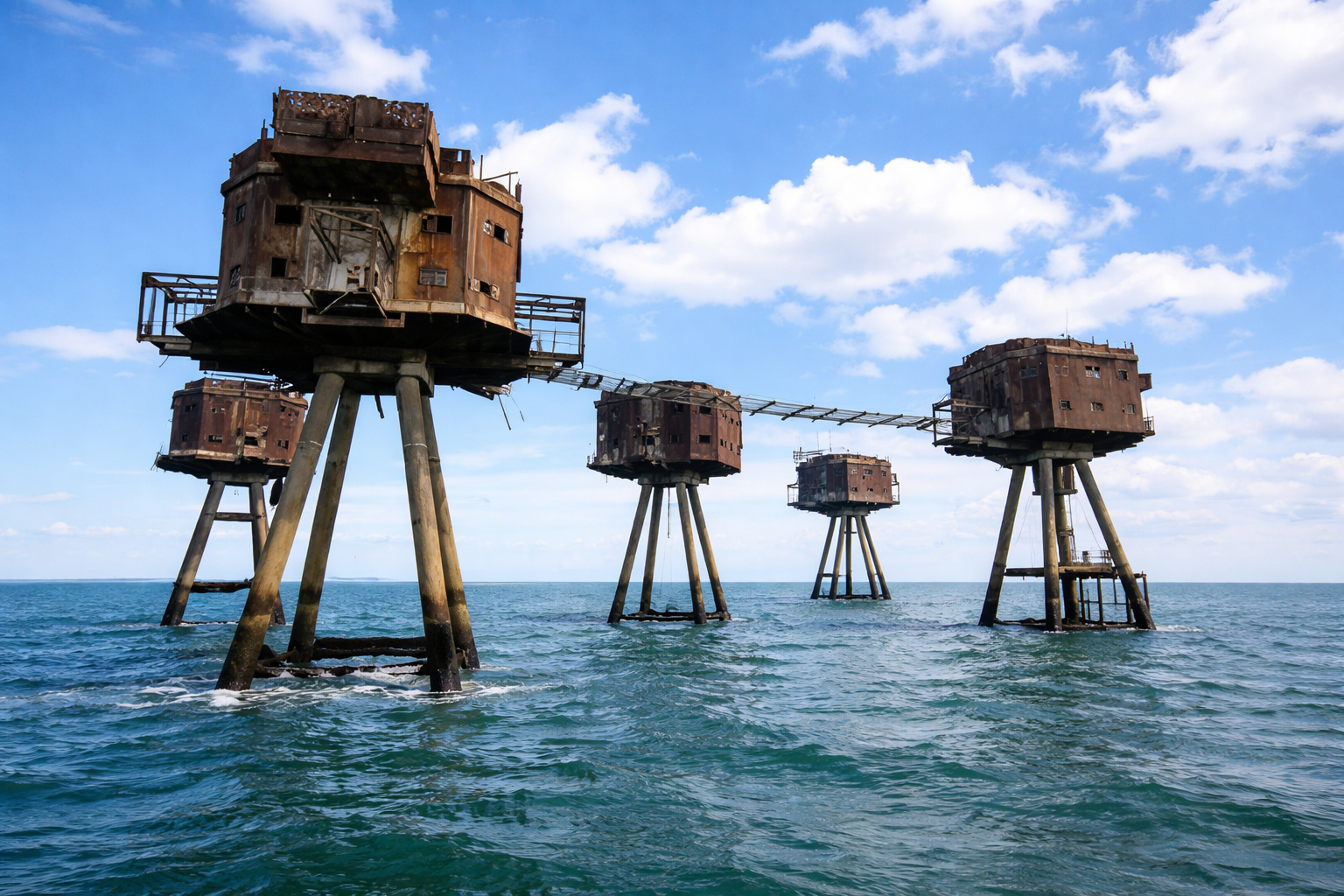
In the middle of the sea, these enormous concrete and steel structures, built by the British Navy to protect strategic maritime routes, look like they came straight out of a Star Wars movie.
-
For years, no one could cross a neighborhood in Tokyo because of the tracks, but an impressive solution changed mobility and completely transformed the local routine.

-
With 15 floors, an unusual building in Curitiba uses concrete, pilasters, and exposed roofs to create the effect of stacked houses.


What stands out, besides the approval, is the path that shortened stages: the student was advanced in 1st and 4th grade of Elementary School, which in practice meant skipping two grades and completing basic education two years earlier than the standard seen around.
The decision to advance grades came after the school noticed his ease of learning and sought a way to better take advantage of this pace.
Bernardo is described as gifted, with an above-average IQ, and this is reflected in the way he narrates his own relationship with content: the speed did not eliminate effort, it only anticipated the point of pressure. In the end, the ITA entrance exam became the definitive test of this advancement.
When ITA Becomes a Daily Project and Not Just an Exam
The student’s routine was designed to sustain a specific goal: to face the ITA entrance exam as a marathon of consistency.
He reports that in the morning, he studied at home from 8:00 AM to 11:30 AM, following a plan adjusted to his needs.
In the afternoon and on Saturdays, he went to Poliedro School, maintaining a rhythm where school functioned as the core of his preparation.
At night, the student still fit in some study days, usually from 10:00 PM to 11:30 PM, sleeping between midnight and 7:30 AM.
On Saturdays, he had class in the morning, returned at 1:00 PM, and resumed studying at home from 4:00 PM to 9:00 PM. On Sundays, he sought to rest, although sometimes there was a mock exam in the morning.
The detail of the schedule matters because it shows what gets left out when the entrance exam becomes routine: he acknowledges that he needed to cut back on leisure to maintain focus.
Old Tests, Question Selection, and the Shift of 2018
The foundation of the training was repetition with purpose. The student says that his preparation focused on answering questions from previous ITA exams and other entrance exams, starting with those considered easier and advancing as he gained confidence.
He estimates that he completed eight to nine years of old exams, which served as a practical library of patterns, errors, and execution time.
In 2018, the ITA entrance exam changed, requiring a reengineering of strategy. According to him, the exam began to include an objective phase and the competition became two-stage.
In the first phase, he describes a scenario of six high-level questions in four hours, requiring quick decisions: where to start, when to skip, how to recognize difficulty level, and how not to get lost on a single question.
Passing the ITA, in this context, is also a test of time management and risk.
Talent Doesn’t Guarantee a Spot, and the Student Feels the Cost of Focus
Bernardo acknowledges that many attribute the approval to his ease with Mathematics, but he insists that dedication weighs more than any talent.
Even before the entrance exam, he already enjoyed Mathematics and mentions Kumon as part of the process of learning on his own, through an individualized method in Mathematics and Portuguese subjects.
At 12 years old, during his first contact with Physics and Chemistry, he decided that he would try for ITA, turning curiosity into a goal.
The cost appears in small sacrifices and discipline in the face of common distractions, such as the internet and social media.
The student says he needed to restrict time and space for leisure, although he still sought typical moments of his age, like riding a bike, playing soccer, and going to the mall.
At the same time, he argues that sleep and leisure should factor into extra study, as they help lighten the weight of the routine and protect mental health. The ITA funnel measures not only knowledge but also resilience.
The List of Approved Students, the H8, and the Decision About a Military Career
The student took the ITA entrance exam twice: in 2017 as a practice candidate and, in 2018, as a candidate.
Even with an intense routine, he says he was taken by surprise by the approval and recalls the physical reaction upon receiving the news, a portrait of how anxiety can go hand in hand with discipline in long processes.
Family comes as direct support: he cites the support of his parents and sister Júlia, who is also advanced in school by a year at 13.
The next step already has a date and logistics. Bernardo will report to ITA in São José dos Campos on January 13 for the health inspection, and if approved at this stage, intends to move to the institute’s dormitory, the H8.
For now, he does not plan to pursue a military career and says he will wait to start the Aeronautical Engineering course before making a decision.
Getting into ITA early opens doors, but it also brings forward choices that don’t always have an easy answer.
The case of student Bernardo Dias, who was approved for the ITA entrance exam at 15 years old in São José dos Campos, sheds light on a little-discussed point behind the scenes: accelerating stages can change the clock, but it does not eliminate the funnel, it only makes the funnel arrive sooner, with demands for strategy, routine, and balance.
If you were in this student’s shoes, what would weigh more on the scale: skipping grades to gain time or waiting to gain maturity? And for those who have already faced a long entrance exam, what was the most challenging adjustment, the study method, sleep management, or control of distractions?







-

-

-

-

-

-

62 pessoas reagiram a isso.