





 Portuguese
  English
  Spanish
 4 min of reading
  0 comments


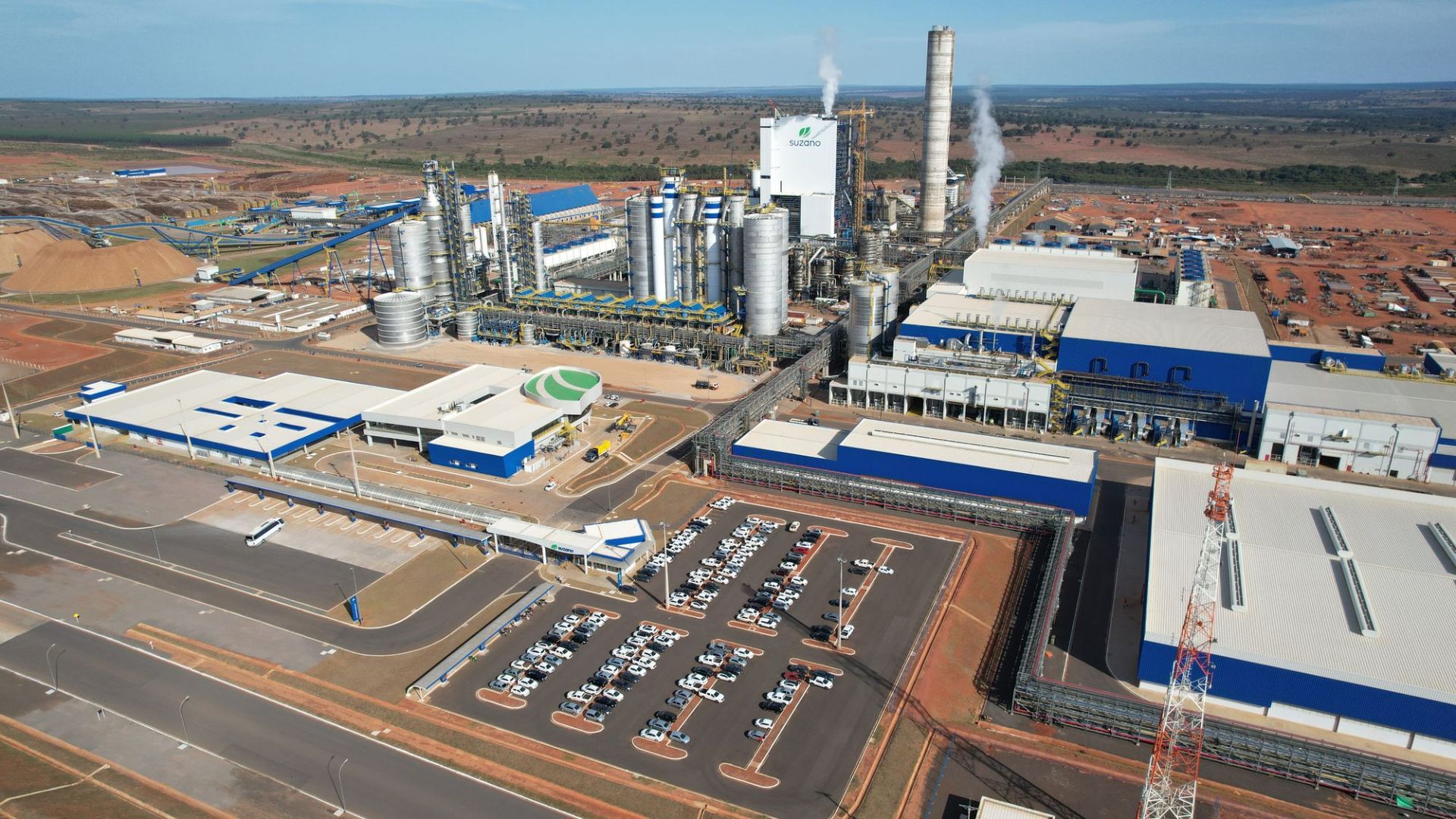
Suzano Mega Factory in Mato Grosso do Sul Impresses With Scale and Energy Efficiency, With Billion-Dollar Investment, Record Production of Pulp, and Self-Sufficiency in Clean Energy That Reinforces Brazil’s Role in the Global Market.
With 15 million m² and a capacity of 2.55 million tons per year, the largest pulp mill is in Brazil, having received R$ 22.2 billion in investments and exporting 180 MW of clean energy to the national system.
The Suzano unit in Ribas do Rio Pardo (MS) began operations on July 21, 2024 and is classified by the company as the largest single-line pulp mill in the world, with an annual capacity of 2.55 million tons of eucalyptus pulp.
The project consumed R$ 22.2 billion and, since its startup, the plant has been self-sufficient in energy, with an average surplus of about 180 MW delivered to the National Interconnected System.
-
It shouldn’t exist — but it’s there: James Webb telescope captures impossible atmosphere on giant exoplanet that challenges all known astrophysics.

-
Seen from space, an image taken by an astronaut shows in Argentine Patagonia the exact point where a colossal glacier, a turquoise-blue lake, and a greenish arm of water meet, creating one of the rarest and most impressive landscapes in the region.

-
Workers are being forced to train the AI that will replace them in their jobs.

-
Archaeologists found in the desert an oasis 5,000 years old surrounded by giant walls, in a discovery that reveals a civilization much more complex, powerful, and organized than previously thought.

The official inauguration took place on December 10, 2024.
Operation, Investment, and Industrial Scale
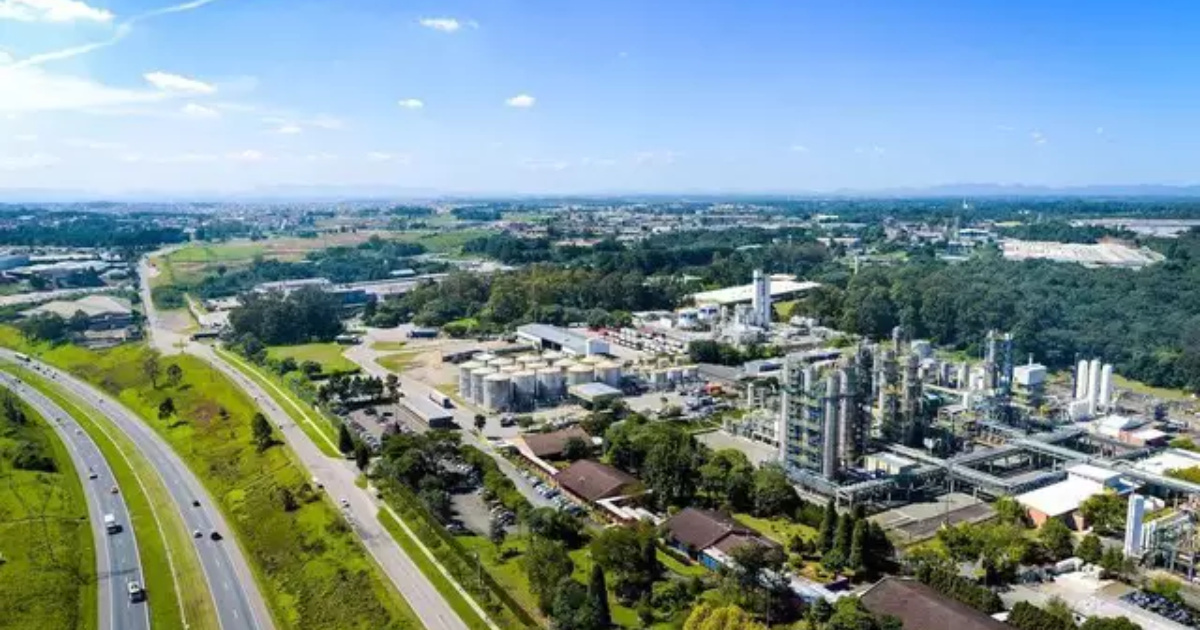
Designed as a high-capacity complex, the factory brings together all the typical processing blocks of the sector — from wood preparation to bleaching and drying — in a single line of fibers sized for large volumes.
The company reports that the investment covered both the manufacturing park and planted forests and the logistics of processing.
During the inauguration ceremony, Suzano detailed the allocation of the investment: R$ 15.9 billion for the construction of the factory and R$ 6.3 billion for the forestry base and logistics infrastructure.
Technology and Industrial Integration
The supplier Andritz was responsible for the scope of engineering, supplies, construction, and commissioning of the production chain (EPCC), including the fiber line and chemical recovery.
The Austrian company also confirms the record size in a single line and emphasizes that the unit operates entirely with renewable energy, generating surplus of 180 MW for the grid.
Clean Energy and Self-Sufficiency
The energy self-sufficiency results from the burning of biomass and the recovery of black liquor in the pulp chemical cycle, using high-efficiency turbo generators.
According to the project’s energy solutions provider, the expectation of about 180 MW surplus allows for the sale of electricity and the supply of satellite suppliers, in addition to contributing to the National Interconnected System.
Supply Forest and Wood Logistics
To reduce cost and variability in z, the forest network was designed with a mean structural radius of 65 kilometers between plantings and the factory, the smallest among Suzano’s operations.
This distance shortens wood transport routes and tends to increase the predictability of flow.
The data is part of institutional communication and has been reiterated by specialized economic outlets.
Total Capacity and Market Impact
With the opening of Ribas do Rio Pardo, Suzano’s installed pulp capacity increased by over 20%, rising from 10.9 million to 13.5 million tons per year, according to official statements from July and December 2024.
The increase repositioned the global supply of market eucalyptus pulp, a segment in which Brazil stands out for its forest productivity.

Environmental Licensing and Jobs
The operation was authorized after the issuance of the Operating License by the Mato Grosso do Sul Environmental Institute (Imasul) at the end of July 2024.
The document certifies compliance with conditions and is valid for four years.
With the shift to operational routine, about 3,000 people — among direct and outsourced employees — began to work in the industrial, forestry, and logistics fronts related to the project.
At the peak of construction, there were over 10,000 direct jobs.
Timeline and Ramp-Up Milestones
Announced to the market in May 2021, the Cerrado Project met the sequence of construction, integrated testing, and startup on July 21, 2024, with an official inauguration in December 2024.
Subsequently, the learning curve was completed at the end of December 2024, and the unit reached its first 1 million tons accumulated on January 8, 2025, according to the fiber line supplier and corporate publications.
Physical Dimension of the Industrial Site
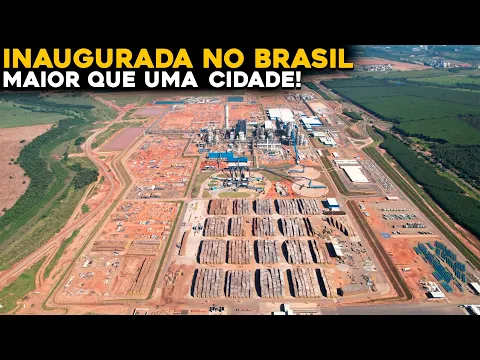
The complex is described by industry sources as being installed on a land of approximately 3 kilometers by 5 kilometers — an area close to 15 million square meters — with wood yards, tanks, utilities, and storage structures distributed to support a continuous flow of production and shipment.
Suzano does not publish the exact total area of the land on its official channels.
Regional Chain and Dispatch
The location on the axis of BR-262 integrates the project into established export road and rail corridors in the Midwest.
By increasing the volume of available pulp, the unit tends to intensify freight traffic related to dispatch to terminals and ports, in line with the logistics layout reported by the company for Mato Grosso do Sul.







-

-

-

7 pessoas reagiram a isso.