





 Portuguese
  English
  Spanish
  4 min of reading
  0 comments


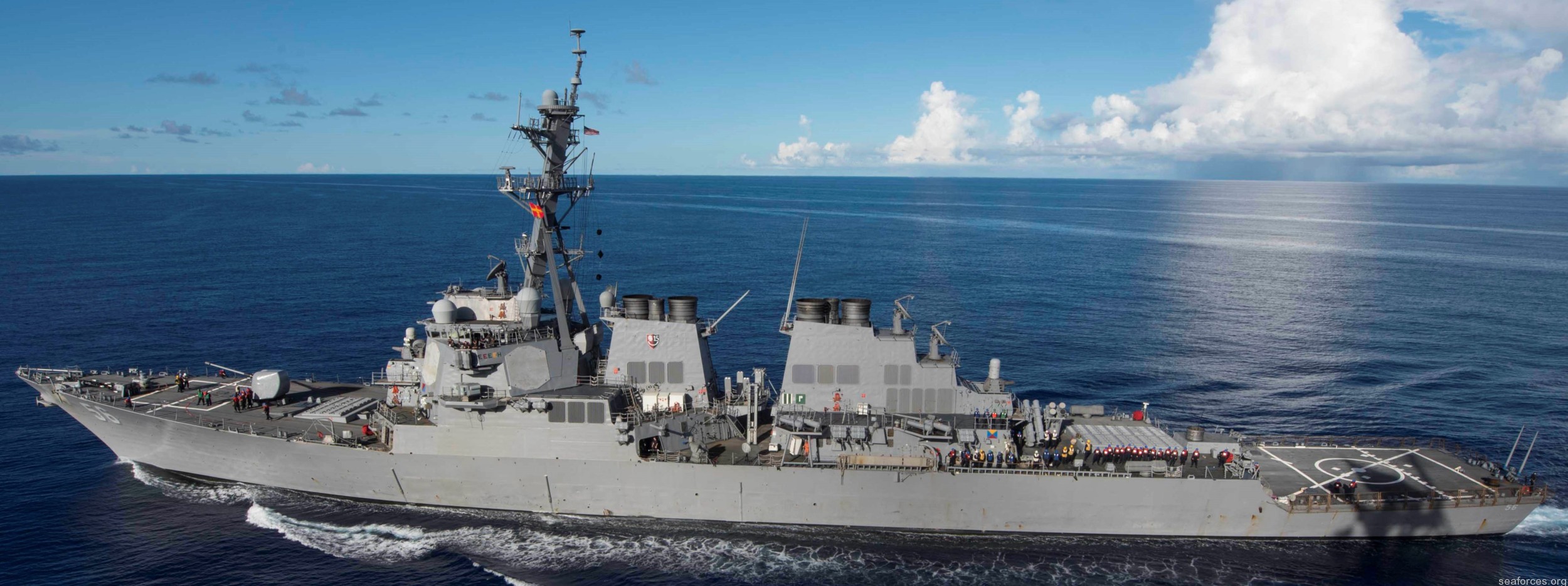
With 155 Meters and 9,800 Tons, the Arleigh Burke Destroyers Operate the Aegis System and 96 VLS Cells, Acting as Missile Defense, Surface Attack, and Anti-Submarine Warfare.
The Arleigh Burke-class destroyer represents one of the pillars of the United States Navy since the early 1990s. With approximately 155 meters in length, a displacement of nearly 9,800 tons at full load, and propulsion based on four gas turbines that generate around 100,000 horsepower combined, these ships were designed to operate in multiple combat scenarios without the need for structural modifications between missions.
The difference that sustains this versatility is the Aegis Combat System, an integrated architecture of sensors, radars, and missiles that allows the ship to switch between missile defense, surface attack, and anti-submarine warfare during the same operation.
High-Power Propulsion and Oceanic Performance
The Arleigh Burke class utilizes General Electric LM2500 gas turbines, allowing speeds of over 30 knots, equivalent to more than 55 km/h. This capability ensures strategic mobility in battle groups and quick responses to emerging threats.
-
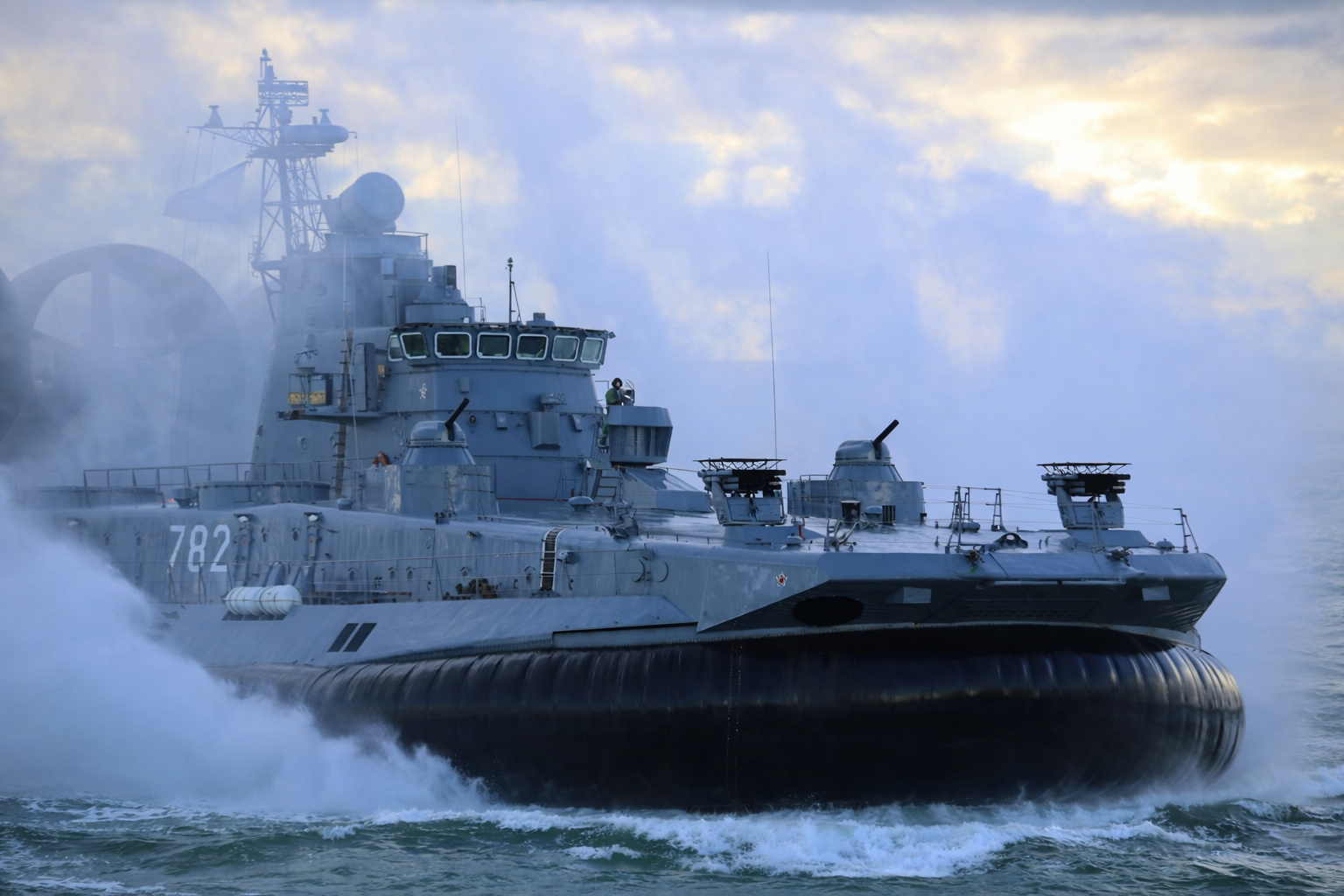
Classified as a “amphibious monster” weighing 555 tons, 57 meters long, and featuring three propellers with a diameter of 5.5 meters, the Zubr is the largest military hovercraft ever built, capable of transporting 3 tanks or 500 soldiers at speeds exceeding 100 km/h over water, ice, and sand, and China has resumed production of it to project power in the South China Sea.
-
The U.S. Army receives the first Black Hawk helicopter that can fly without pilots, be controlled by a tablet, and even land on its own during high-risk missions.

-
With 11,000 tons and sensors capable of hunting submarines at long distances, the Type 055 has become one of the most feared floating arsenals of the Chinese navy.

-
With over 15,000 tons, radars capable of tracking hundreds of targets simultaneously, and more than 120 missiles ready for launch in seconds, modern destroyers cease to be escorts and begin to dominate the naval battlefield.
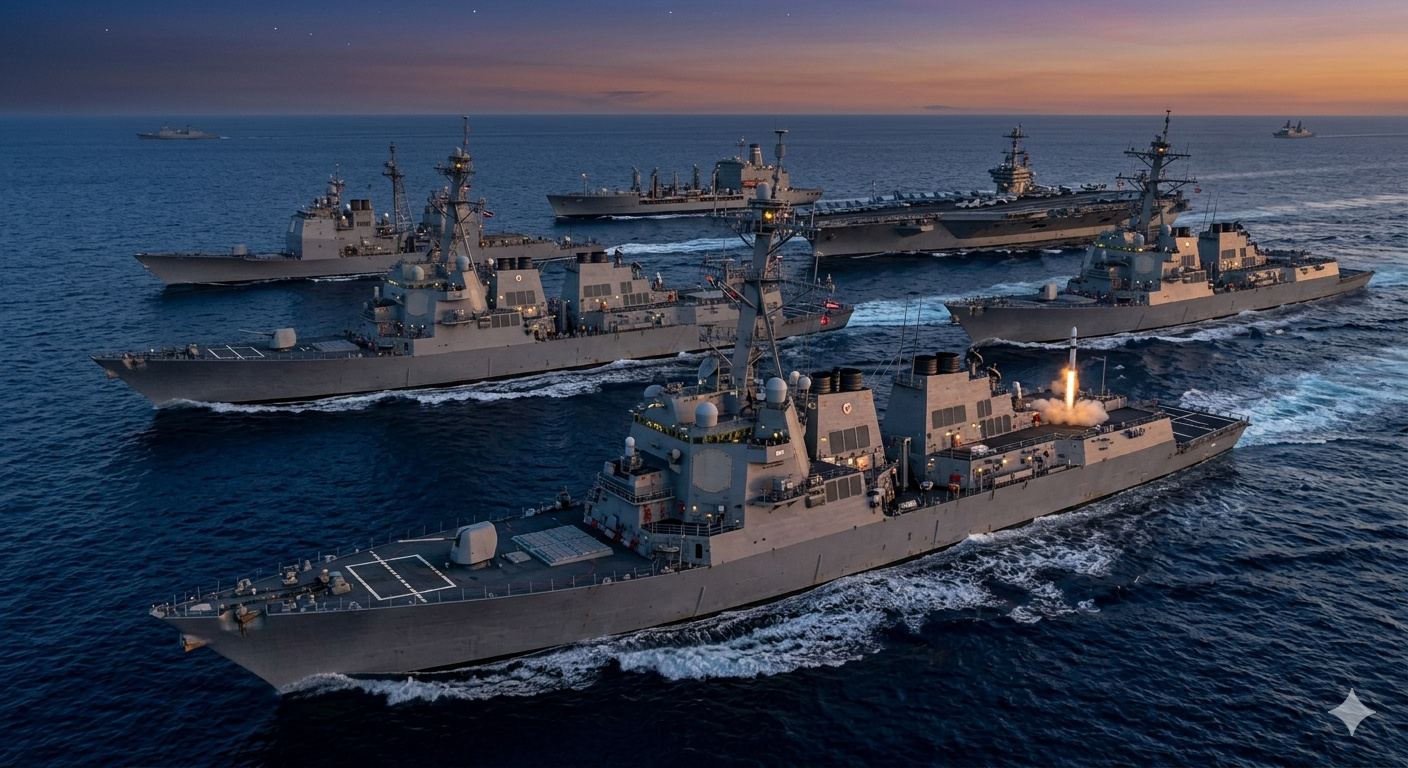


The reinforced steel hull was designed to increase structural resistance and reduce vulnerabilities to combat damage. Unlike some experimental designs with composite materials, structural robustness was prioritized from the start.
This combination of power and resilience ensures prolonged operation in rough seas and conflict zones.
Aegis System: The Core of Operational Transformation
The technological heart of the class is the Aegis system, integrated with the multifunctional SPY-1 radar in its initial versions and with progressive updates in the more recent variants.
The Aegis allows simultaneous tracking of hundreds of aerial, maritime, and ballistic targets, providing real-time situational awareness. The system not only detects but also automatically calculates interception solutions and coordinates missile launches.
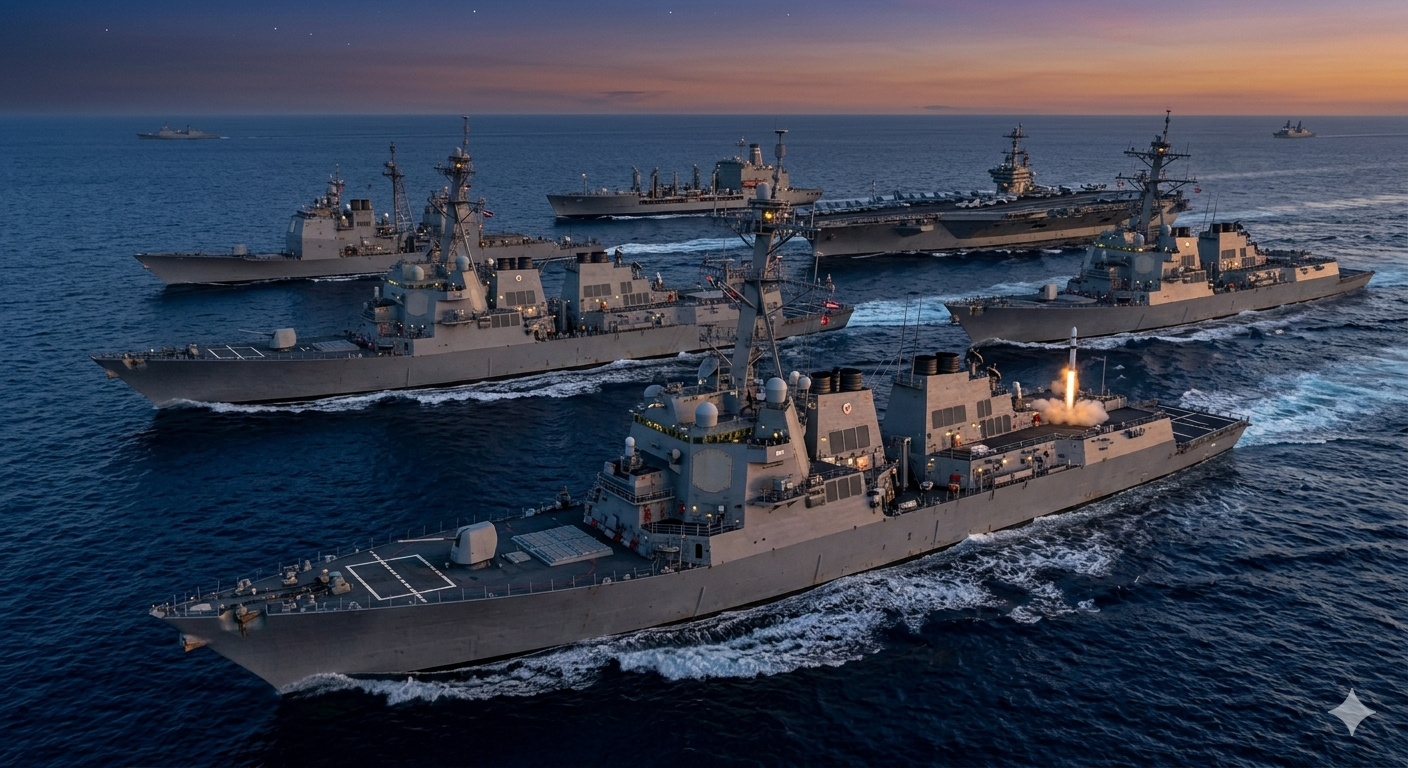
This digital architecture transforms the destroyer into a mobile air defense center, capable of protecting:
- Aircraft Carriers
- Amphibious Ships
- Coastal Infrastructure
- Strategic Areas Against Ballistic Missiles
96 Vertical Launch Cells and Modular Firepower
Most Arleigh Burke units are equipped with up to 96 cells of the Mk 41 vertical launch system (VLS). These cells allow the ship to configure according to the mission, embarking different types of missiles:
- SM-2, SM-3, and SM-6 interceptor missiles for air and missile defense
- Tomahawk missiles for long-range land attack
- ASROC anti-submarine rockets
This modularity occurs without the need for structural alteration at the shipyard. The configuration is done during mission preparation, allowing for rapid operational adaptation.
Anti-Missile Shield in Open Seas
One of the most strategic roles of the Arleigh Burke class is to act as a component of the United States’ anti-missile shield. With specific Aegis versions integrated into the ballistic missile defense system, these ships are capable of intercepting threats in the mid-flight phase.

This capability extends the defensive reach beyond continental territory, creating a maritime layer of protection against long-range threats.
The destroyer ceases to be merely an escort ship and operates as a strategic regional defense platform.
Anti-Submarine Warfare and Advanced Sensors
In addition to air defense, the Arleigh Burke class maintains robust anti-submarine warfare capabilities. Equipped with hull sonar, towed sonar, and embarked MH-60R helicopters, these ships can detect and engage enemy submarines at great distances.
The integration of acoustic sensors and weapons allows the ship to act as a submarine hunter while simultaneously maintaining its air defense function.
This overlap of capabilities is one of the factors solidifying the class’s versatility.
Surface Attack Platform and Power Projection
The cruise missiles Tomahawk embarked expand the role of the Arleigh Burke beyond naval combat. With a range exceeding 1,000 kilometers in some variants, these missiles allow precision strikes against strategic land targets.
This transforms the destroyer into a power projection tool without the need for immediate air support.
In recent conflicts, units of the class have been employed to launch missiles against targets in enemy territory from international waters.
Continuous Upgrades and Operational Longevity
Since its introduction, the class has undergone multiple evolutions, known as Flight I, II, IIA, and Flight III. The most recent versions incorporate enhanced radar, greater electrical capacity, and upgraded electronic warfare systems.
This continuous modernization has allowed the design to remain relevant for over three decades. The longevity of the program demonstrates the structural and technological flexibility of the original concept.
Versatility Without the Need for Structural Reconstruction
With 155 meters in length, 9,800 tons, and 100,000 horsepower, the Arleigh Burke destroyers remain one of the most versatile naval designs ever built.
The combination of powerful propulsion, 96 vertical launch cells, and the Aegis system transforms each unit into:
- Missile Shield
- Long-Range Attack Platform
- Submarine Hunter
- Strategic Escort Ship
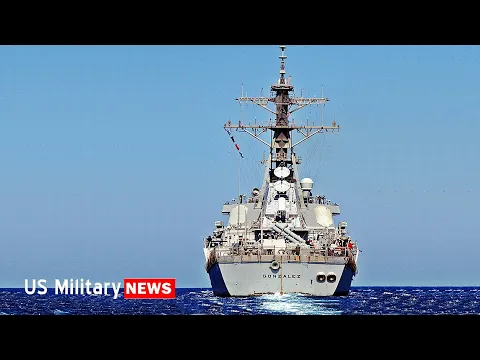
Without the need to return to the shipyard for structural changes, adaptation occurs through the configuration of armaments and combat software.
This operational transformation capability has solidified the Arleigh Burke class as one of the pillars of contemporary naval warfare and one of the most enduring projects in the modern history of the United States Navy.









-

-

-

-

-

-

25 pessoas reagiram a isso.