





 Portuguese
  English
  Spanish
  6 min of reading
  0 comments


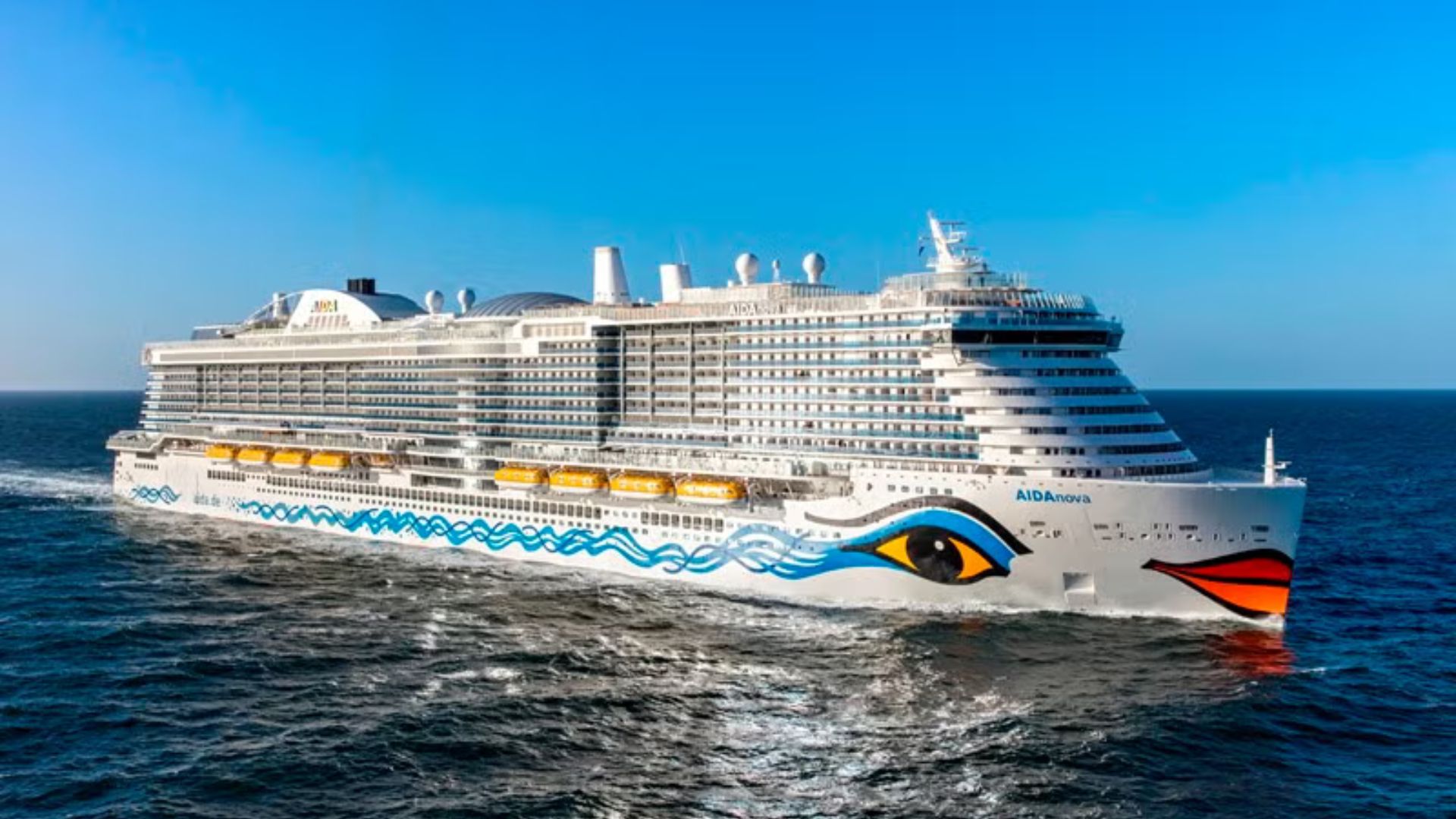
Naval Gigantism, Energy Technology, and Resort Structure Transform the AIDAnova into One of the Most Emblematic Cruises of the New European Generation. Project Combines Industrial Scale, Entertainment Spread Across Multiple Decks, and a Liquefied Natural Gas Propulsion System that Marked the Environmental Transition of the Cruise Industry.
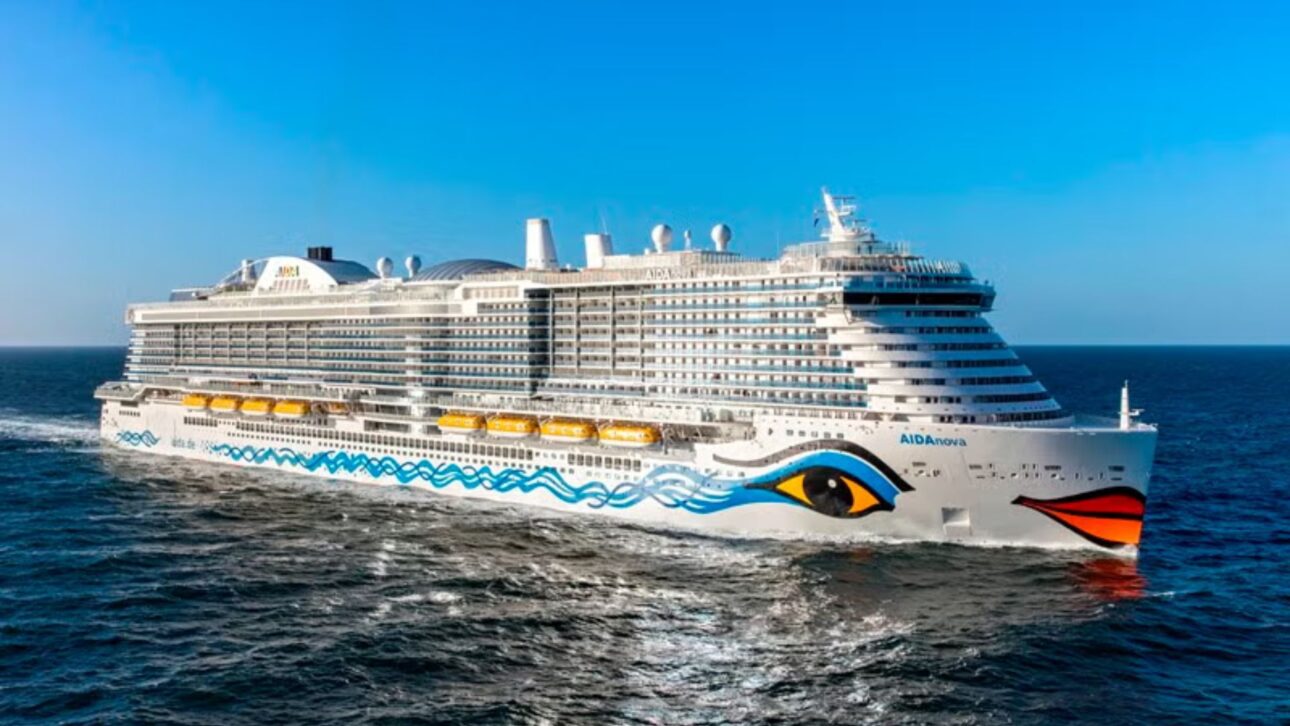
The AIDAnova has established itself as one of the largest cruise ships ever put into operation by a European company by bringing together megaproject dimensions, resort structure, and a propulsion system that marked the technological turning point of AIDA Cruises.
Data released by the shipping company and shipyard Meyer Werft indicate 337 meters in length, 183.9 thousand gross tons, 20 decks, and 2,626 cabins for guests.
Built in Papenburg, Germany, the ship entered service in 2018 as the first of the Helios class and has since occupied a strategic position in the company’s fleet.
-
China is building a city in Brazil: a complex with an investment of R$ 5.5 billion comes to light, but allegations involving workers draw attention.
-
While Argentina buys old war equipment, Brazil is keeping an eye open and joins the select group of nations with advanced military technology by investing $5.2 billion, producing 36 Gripen fighters in the country, and reducing operational costs.

-
Brazil on alert? Why invading Brazil is a NIGHTMARE for the USA: 8.5 million km², 213 million inhabitants, Amazon covering 60% of the territory, trillion-dollar war, and resistance that even 13,000 aircraft could not control.

-
How to build a floating island from scratch with reeds, giant blocks, and stakes in the lake in a process that needs to be repeated almost every day.


More than just increasing capacity, the project was designed to support long voyages with a great supply of leisure, accommodation, and services, reducing dependence on shore attractions to maintain passenger interest throughout the itinerary.
Technology and LNG Propulsion Placed the Ship at the Center of the Energy Transition
The main distinction of the AIDAnova lies in the propulsion system described by AIDA as LNG/diesel-electric, utilizing liquefied natural gas and electric generation for the ship’s movement.
The company and Carnival Corporation presented the vessel, since its launch, as the world’s first cruise capable of operating with LNG both at sea and in port, an argument that transformed the ship into a symbol of the emissions reduction agenda within the sector.
In practice, the technical innovation was combined with a scale that already attracts attention from the outside.
The Meyer Werft shipyard reports a width of 42 meters, a draft of 8.6 meters, a speed of 17 knots, a total power of 61,760 kW, and a propulsion power of 37,000 kW.
These numbers help to measure the degree of operational complexity required by a vessel designed to function as both a tourist destination and an industrial system simultaneously.
Internal Structure Transforms the Ship into a Floating City
If the size impresses at the dock, the internal layout explains why the AIDAnova is often described as a floating city.
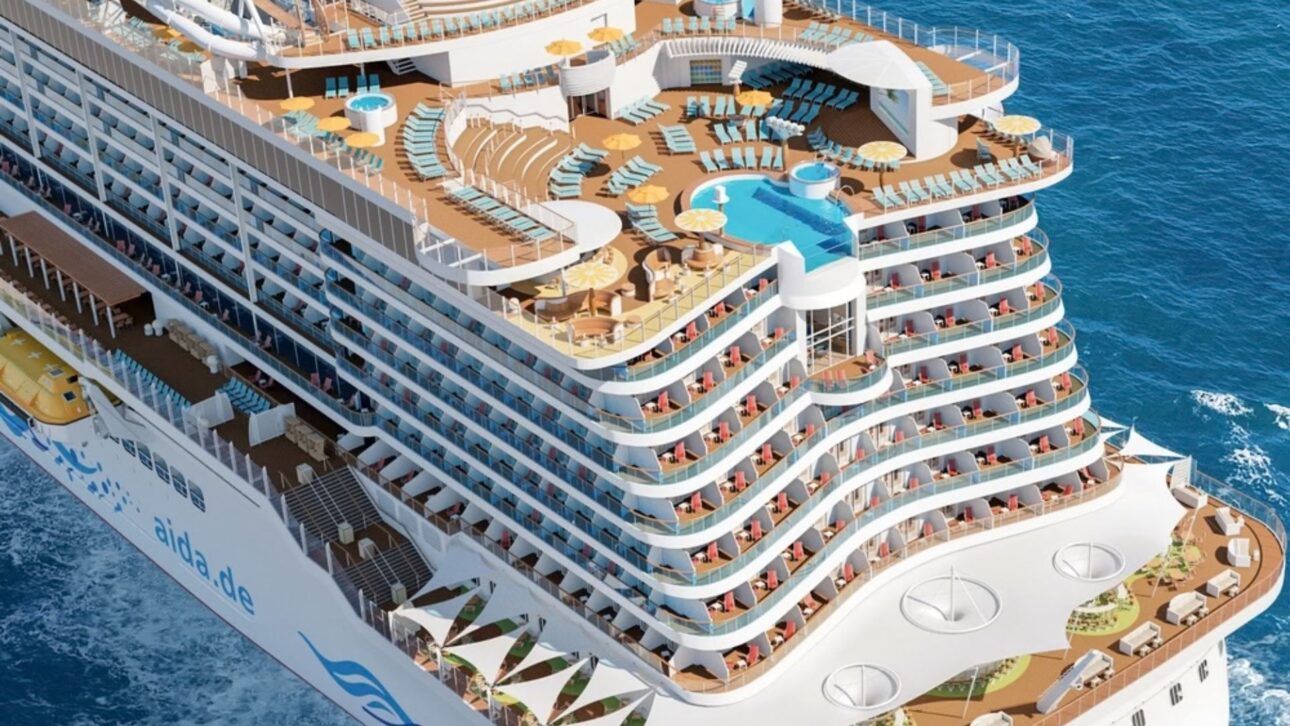
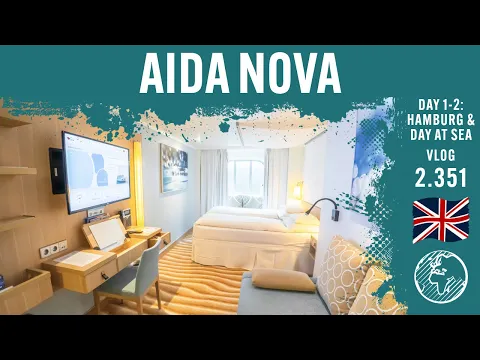
On the ship’s official page, AIDA reports 15 pools, 18 restaurants, 16 bars and clubs, three lounges, a spa area of 3,545 square meters, and a commercial space of 1,098 square meters distributed over three decks.
The proposal was to dilute the circulation of thousands of people across different points of interest, avoiding concentration in a single central axis.
This design changes the experience on board.
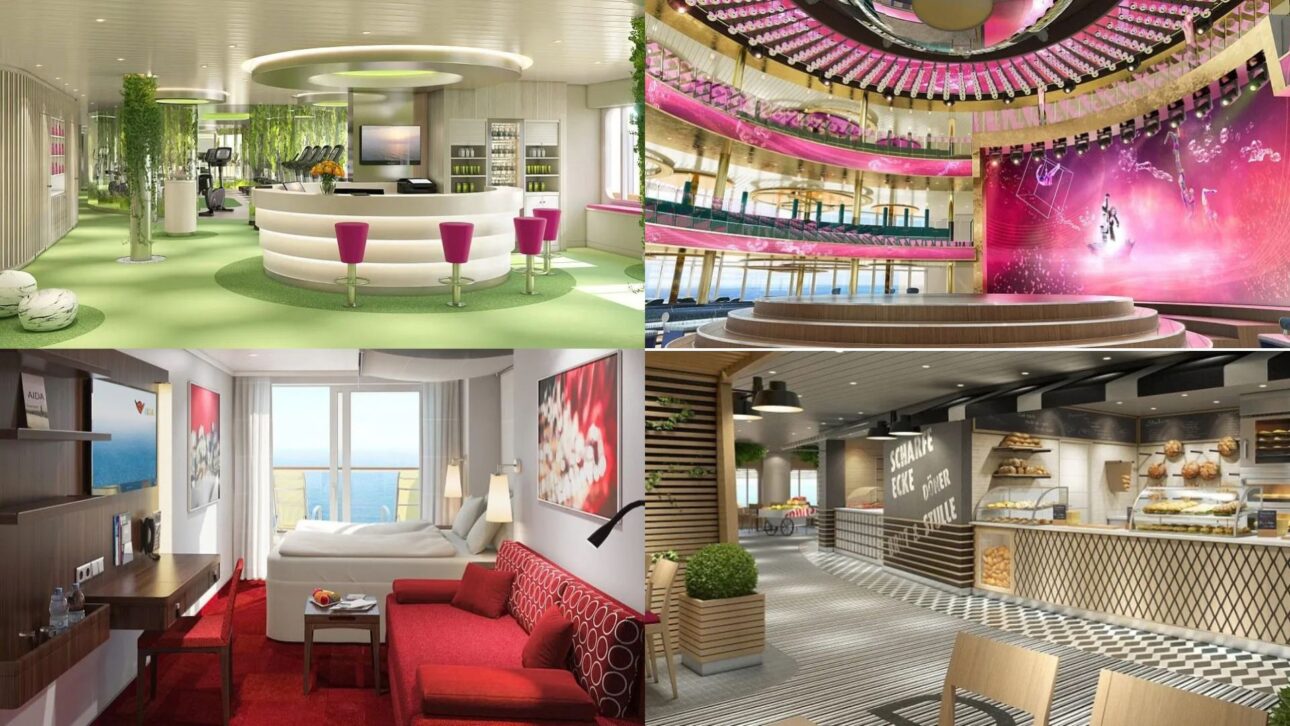
Instead of organizing all social life in a main hall, the ship spreads entertainment, gastronomy, shopping, relaxation, and physical activities across multiple floors.
This way, circulation is no longer just a functional movement between cabins and restaurants, but rather integrates the very journey, something essential on ships of this category, where much of the trip is experienced inside the vessel.
Shows, Studios, and Entertainment Distributed Across Various Decks
In the field of entertainment, the most visible highlight is the Theatrium, presented by the shipping company as a performance space in 360 degrees.
AIDA associates the environment with stage productions, acrobatic performances, and live musical acts.
The proposal emphasizes the idea that the ship was designed to offer continuous programming without relying solely on shore stops to sustain the itinerary.
The offer of attractions has been expanded with more interactive areas, such as Studio X, promoted by the company as a TV studio at sea.
Although the institutional page highlights mainly the multimedia character and use in live experiences, the commercial logic remains clear.
The goal is to transform the ship into a platform for consuming time, attention, and presence, with activities spread throughout the day and night.
Diverse Gastronomy Became One of the Pillars of the Project
The gastronomic area holds a decisive position in this strategy.
The AIDAnova restaurant page details a combination of buffet, themed venues, specialty restaurants, and à la carte options, in a selection designed to cater to distinct audience profiles over several consecutive days.
Among the concepts promoted by the shipping company is the Time Machine, a restaurant that mixes dining and thematic decor in an immersive experience.
This model helps to explain the commercial relevance of the ship even years after its debut.
In large contemporary cruises, dining has ceased to be merely a support item for accommodation and has become entertainment in its own right.
On the AIDAnova, the variety of environments and formats reinforces this logic and contributes to keeping the ship in the spotlight of the company’s campaigns.
Spa, Sports Activities, and Shopping Areas Expand the Experience Onboard
The wellness area was structured with the same reasoning of prolonged stay on board.
AIDA reports that the Body & Soul Spa offers up to 80 treatments, while the brand’s fitness portfolio highlights more than 30 free classes per week.
These activities supplement the gym, guided classes, and other sports experiences available throughout the journey.
The goal is to sustain a complete vacation routine without exhausting the guest’s options in just a few days.
Moreover, the presence of a wide commercial area and multiple social spaces shows that the ship was designed to operate as a closed ecosystem of consumption and leisure.

This logic has become central in the large cruise industry.
On the AIDAnova, however, it gained extra weight by being combined with the narrative of energy innovation explored by the company since its launch.
Official Capacity and Numbers Circulating Outside the Shipping Company
Capacity is one of the points where the most discrepancies arise in viral publications and promotional texts reproduced without verification.
The Meyer Werft shipyard reports 5,228 passengers and about 1,545 crew members.
However, numbers above 6,600 guests appear in secondary sources from the sector linked to maximum occupancy.
This difference significantly changes the total number of people on board. When summing the official metrics from the shipyard, the total remains below 7,000 people.
Estimates of maximum occupancy released by unofficial sources bring the ship closer to 8,000 people on board by including high occupancy and a larger crew.
Therefore, any comparison depends on the adopted criteria. The data confirmed by the manufacturer and the company remain the most conservative and verifiable.
AIDAnova Continues as the Showcase of AIDA Cruises’ Fleet
Even after its debut, the AIDAnova continues to occupy a prominent position in the commercial communication of the shipping company.
On the current page of the ship, the company showcases the transatlantic with highly viewed itineraries.
Among them are trips between Hamburg and Kiel, as well as specific campaigns for the winter season in Northern Europe.
The AIDAnova’s permanence at the center of the company’s communication shows that the ship still plays the role of showcase of scale, technology, and integrated experience within the brand’s portfolio.






-

-

2 pessoas reagiram a isso.