





 Portuguese
  English
  Spanish
  5 min of reading
  14 comments


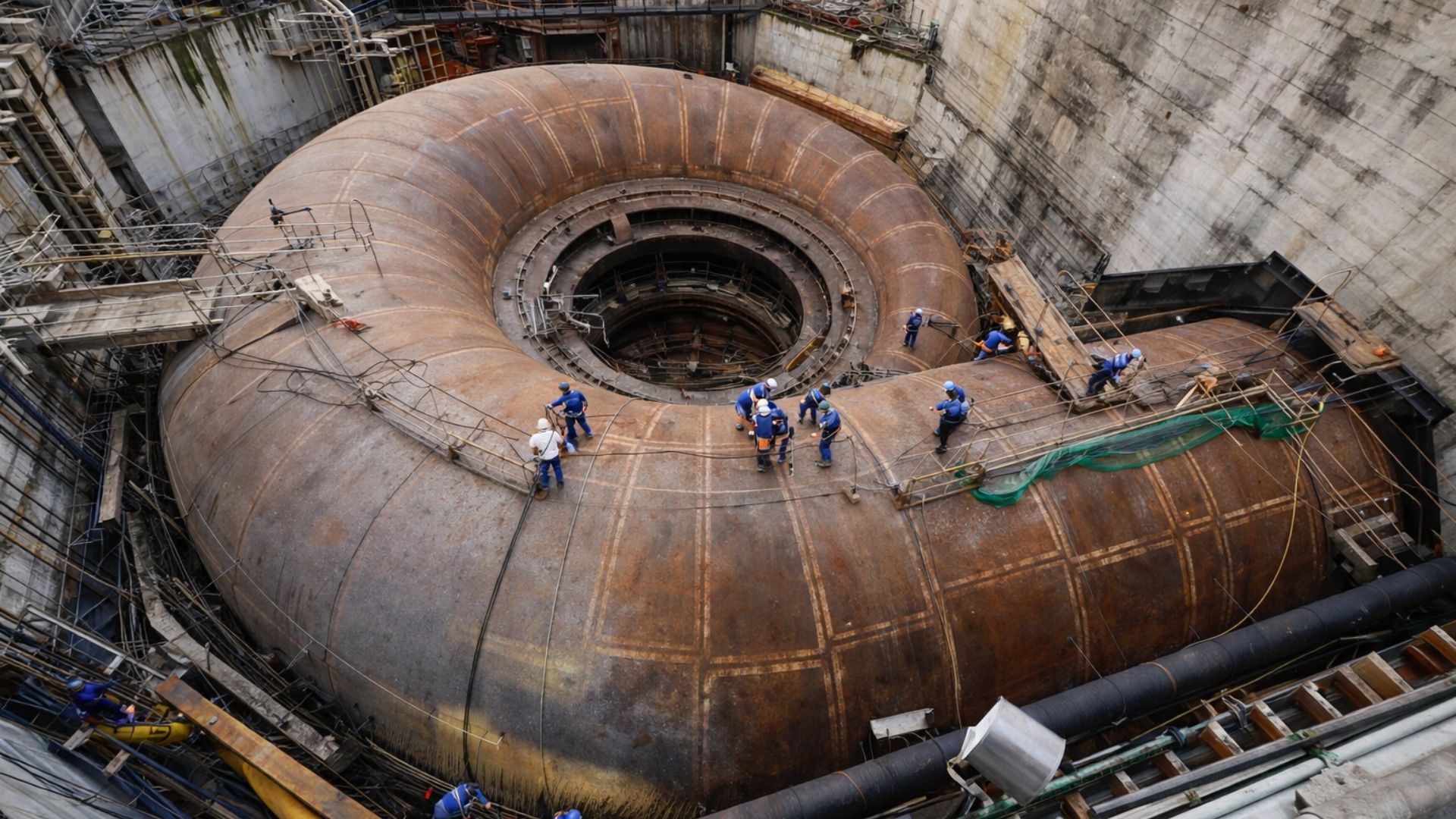


Hidden Monumental Structure Inside the Largest 100% Brazilian Hydroelectric Reveals How Heavy Engineering Transforms the Force of the Xingu River Into Electricity on a National Scale, with a 1,200-Ton Rotor at the Center of the System That Drives Turbines, Generators, and Supplies Millions of People.
Hidden inside the main powerhouse, the Belo Monte generator rotor is one of the largest pieces ever installed in the country’s electric generation infrastructure.
With a diameter of 18.7 meters, height of 2.5 meters, and weight of 1,200 tons, the equipment occupies the center of the system that converts the mechanical energy of water into electricity and helps give physical scale to the numbers often associated with the plant, such as its installed capacity and its participation in the National Interconnected System.
The size of the piece matches the scale of the project itself.
-
Archaeologists find a colossal 2,000-year-old vessel at the bottom of the sea near Alexandria linked to the elite of Egypt and reveal a pleasure barge from the last dynasty of the pharaohs that the sea has hidden for centuries.

-
United Kingdom clears 40 tons of shells and concrete into the sea in an innovative project that promises to restore a marine ecosystem lost for over 200 years and improve water quality.
-
With emergency diversion to abandoned mining craters, engineers save villages from a devastating flood that was advancing through the desert and threatening to destroy entire communities in a matter of hours.

-
It seems simple, but it enriches: from R$ 500 to R$ 6,000 per piece and up to 10 days of handcrafted production, how is the couple from Praia Grande making a high income with hyper-realistic miniatures and turning a hobby into a money-making machine?


Belo Monte operates with a total installed capacity of 11,233.1 megawatts, distributed between the main powerhouse at the Belo Monte site and the complementary structure of Pimental.
In the configuration currently in commercial operation, there are 18 main generating units and six complementary units, a set that consolidated the plant as the largest 100% Brazilian hydroelectric and brought it to full operation on November 19, 2019, when the 18th main unit came online.
How the Rotor Transforms Water Motion Into Electricity
The rotor attracts attention for its size, but its relevance lies in its function.
It is the moving part of the generator, driven by the motion transmitted by the turbine shaft after the water from the Xingu moves the hydraulic set.
As it rotates inside the stator, which is the fixed part of the system, it allows the conversion of mechanical energy into electrical energy, a crucial step for the plant’s generation to reach the National Interconnected System.
This separation between components is often lost in the public imagination when the hydroelectric plant is viewed only from the outside, through the dam, the canal, or the aggregated power data.
The generator rotor is not the same piece as the turbine wheel, although both are massive and part of the same generation chain.
The Francis wheel sent to Belo Monte, for example, weighed about 320 tons, had approximately eight meters in diameter, and five meters in height, and was treated by the manufacturer as one of the largest ever produced in the world.
Power of the Plant Explains the Dimension of the Equipment
In the main powerhouse, each of the 18 units operates with a nominal power of 611.11 megawatts, while the six Pimental units each have 38.85 megawatts.
This architecture helps explain why the plant features equipment of extreme mass and why the rotor has become a recurring symbol of Belo Monte’s electromechanical assembly, even though it remains invisible to those observing the project only through external images.
In addition to the installed capacity, the project has a physical guarantee of 4,571 average megawatts, with 4,418.9 MW average attributed to UHE Belo Monte and 152.1 MW average to UHE Pimental, data utilized for commercial purposes in the electricity sector.
In more recent documents, Norte Energia also reports that, at times of high national demand, the plant continues to be among those that contribute the most to the country’s supply, reinforcing the operational weight of the structure installed within the main powerhouse.
Operation of Installation of the Heaviest Piece of the Project
Getting a set of this size to the exact installation point required an equally unusual operation.
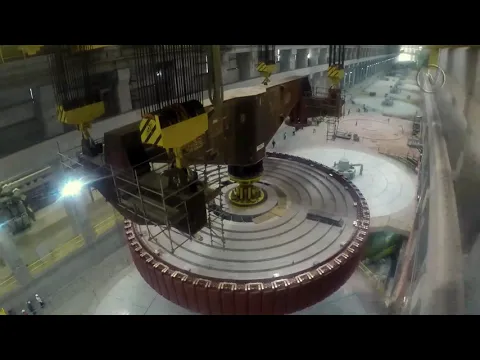
In the record of lowering the first rotor of the generator of Generating Unit 1, the movement was made with two overhead cranes attached, each with a capacity of 800 tons.
The procedure was treated by Norte Energia itself as one of the most emblematic moments of the main powerhouse assembly phase.
The company classified the rotor as the heaviest piece of the project at that stage, and reports from the period show that its installation occurred amid the accelerated advance of the electromechanical assembly of the Belo Monte site.
The same documents record the arrival of other large components, produced in different industrial poles, revealing the scale of the logistical and manufacturing chain mobilized to equip a plant with 24 generating units in commercial operation.

Invisible Engineering That Supports Energy Generation
Although the public debate about Belo Monte tends to focus on the power of the hydroelectric plant, the flow of the Xingu, or the plant’s weight in national supply, generation depends on a sum of components installed with millimeter precision inside the powerhouse.
The rotor is the most evident example of this invisible engineering: a monumental equipment housed within the civil structure, which only makes complete sense when connected to the turbine, the stator, the shaft, and the rest of the electromechanical system.
This context helps explain why the piece sparks curiosity far beyond the technical field.
Upon reaching full operation, Belo Monte began to have sufficient installed capacity to serve about 63 million people, according to institutional records released by the company responsible for the plant.
In more recent documentation, the company also stated that, at a certain point in the operation of the national electric system, the generation of the plant represented a demand equivalent to 49.6 million people, a reference that shows how the performance of the complex varies according to operational conditions and national load.
Within this machinery, the rotor synthesizes the real scale of the project with a concrete image.
More than visual curiosity, it is a central component of a hydroelectric plant that began operation gradually between 2016 and 2019 and remains among the strategic assets of the Brazilian electricity sector.
Its size helps translate into matter, weight, and movement what the plant’s numbers often summarize in megawatts.








Prezado Alisson, só um ponto de observação, a imagem apresentada não corresponde as informações a baixo, a foto se refere a Caixa Espiral, e as informações se refere ao Rotor do Gerador.
Uma correção, a foto apresentada na imagem se refere a Caixa Espiral, não tem nada haver com o Rotor do Geradosr
Uma correção a foto apresentada é da Caixa Espiral, não tem nada haver com o Rotor do Gerador.