





 Portuguese
  English
  Spanish
  8 min of reading
  0 comments


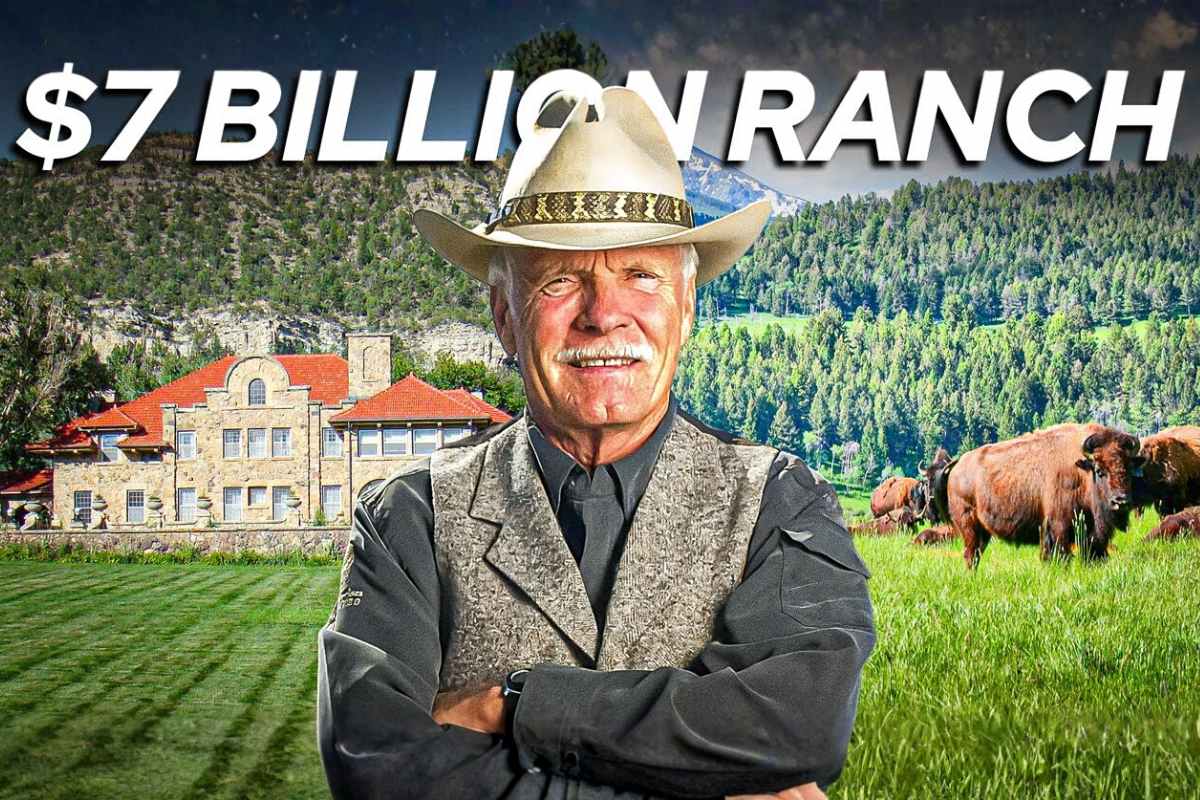
With 2 Million Acres Purchased at Rock Bottom Prices, 51,000 Bison and Species Saved from Extinction, Ted Turner’s Farm Empire Blends Radical Ecological Restoration, Scientific Research, Tourism, Controlled Hunting, and Bison Meat Restaurants to Fund Large-Scale Conservation in the United States
In most agribusiness stories, the script is known: buy cheap land, livestock, fence it in, and profit at the end of the season. What the Ted Turner Farm Empire did was something else. It transformed devastated properties into a conservation laboratory, billion-dollar businesses, and a kind of private national park spread across 15 American states.
With over 2 million acres, a private herd of around 51,000 bison, and programs that have pulled animals back from the brink of extinction, the Ted Turner Farm Empire has become a unique case at the intersection of ecology, rural economy, applied science, and gastronomy. It is a vertically integrated operation where the same owner restores ecosystems, sells burgers, funds research, and generates over $100 million per year in revenue.
The Crazy Bet on Devastated Lands No One Wanted

In 1989, Ted Turner climbed a windswept slope in Montana to gaze at 113,000 acres of a landscape that looked lunar.
-
China rejected an entire shipment of beef from Argentina after detecting an antibiotic so dangerous that it has been banned for human consumption for over 30 years, and now the export sector is facing a crisis of international trust.

-
With nearly 500 thousand tons per year, barley production is growing in Brazil, while a decline in beer consumption among Generation Z raises alarms in the sector.

-
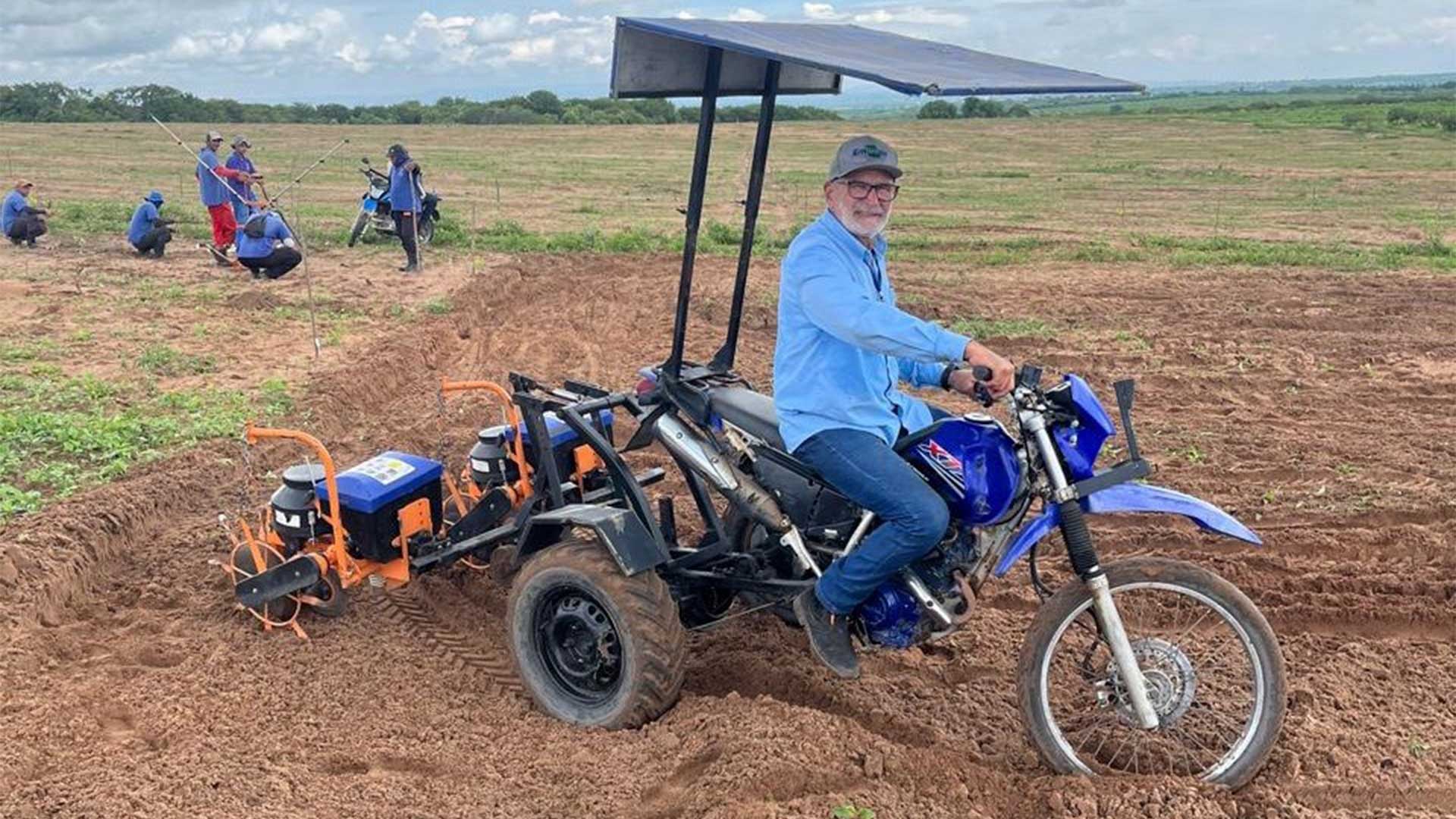
With tractors out of reach for small producers, a tricycle created by Embrapa Algodão becomes a cheap and efficient solution and gains national prominence.
-
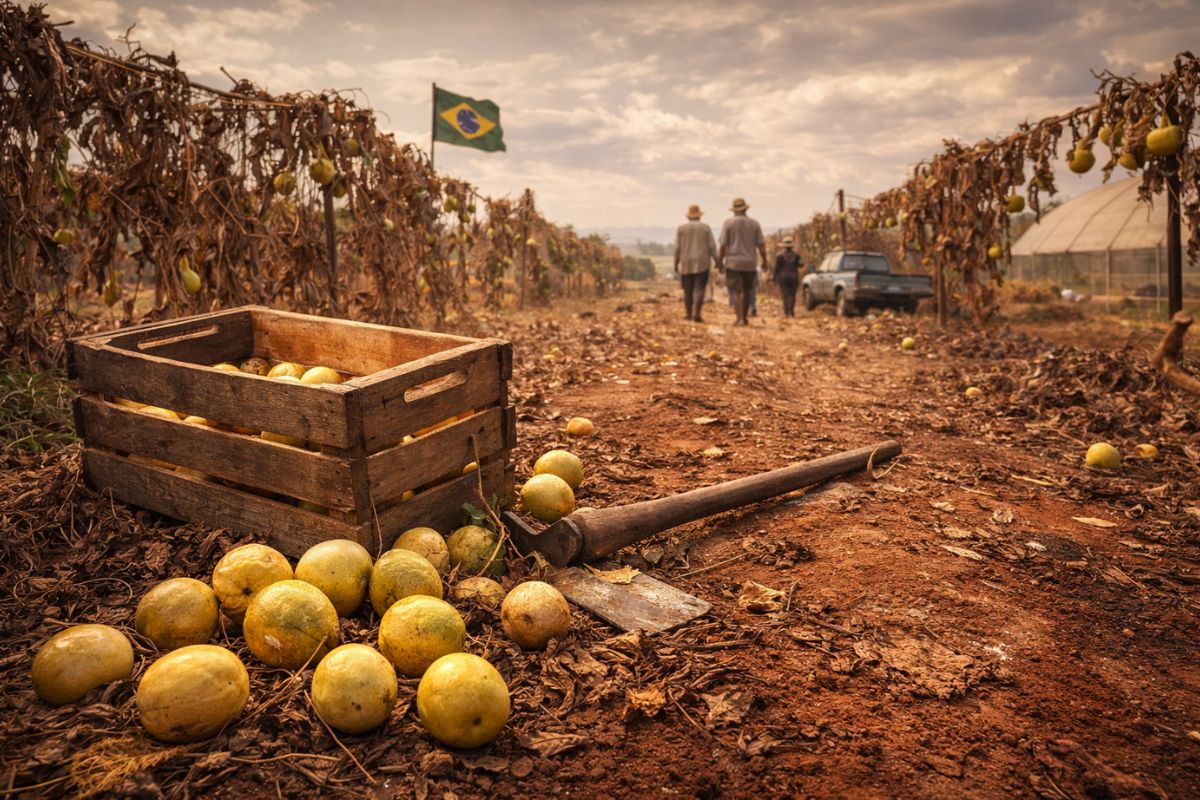
From 130 producers in the year 2000 to just 15 today: the dramatic decline of passion fruit in Araguari shows how the lack of labor in the Brazilian countryside is killing a decades-old agricultural tradition, even with Brazil being the largest producer in the world.

Overgrazed pasture, destroyed soil, practically no visible native grass.
The previous owners had drained the land with decades of mismanagement.
Everyone said he was crazy for paying $22 million for that ecological desert scenario.
Advisors advised him to back off; local farmers laughed at the city billionaire who thought he could fix a problem built up over generations.
Turner, however, saw there the embryo of the Ted Turner Farm Empire as an ecological project and not just as a cattle business.
Instead of repeating the beef model, he imagined restored prairies with massive herds of American bison, just like 150 years earlier, before the near extermination of the species.
This vision would guide the purchase of struggling farms across the western United States over decades, in an effort that consumed over $2 billion until forming a mosaic of over 2 million acres.
Bison as Ecosystem Engineers and the Visible Turn from Space

When Turner released the first group of bison onto his Flying D ranch in Montana, the animals came from small government corrals, having never known the freedom typical of their ancestors. In the first minutes, they stood still, confused.
Until an old bull lifted his head, felt the cold air, bolted and the entire herd came behind.
From there, the recovery stopped being just a plan on paper.
Unlike cattle, which insist on grazing repeatedly in the same spots, bison move all the time, following ancestral migratory patterns ingrained in their DNA.
Their hooves turn over compacted soil, the mud areas they create become micro-habitats for plants and insects, and intermittent grazing stimulates regrowth of grasses.
The transformation was so great that NASA satellite images began to capture the difference.
Areas that appeared as brown and barren patches in the 1990s began to turn green within a few years, with pastures that had not existed for over a century reappearing clearly visible from orbit.
Species on the Brink of Extinction and Recovery Driven by a Single Owner

As the pastures of the Ted Turner Farm Empire recovered, a silent movement began: species that hadn’t been seen for generations returned on their own.
Prairie dogs reappeared in abandoned burrows, native birds resumed nesting areas, and the ecological chain began to reorganize.
Turner, however, did not limit himself to waiting for nature to respond. He set up one of the most ambitious private species recovery programs in American history.
In the case of the Mexican gray wolf, when the program began, fewer than 50 animals remained in the world. Diseases, genetic issues, and low variability threatened the project before it even launched.
Even after spending millions of dollars with no immediate results, Turner insisted.
On a cold February morning in 2008, the first healthy wolf pups were born on his farms in over 50 years.
Since then, the ranches of the Ted Turner Farm Empire have bred and released dozens of Mexican gray wolves into reintroduction areas, helping to pull the species off the direct path to extinction.
The challenge with the Bolson tortoise was even more extreme.
With fewer than 2,500 remaining individuals, a long life cycle, and sexual maturity only between 15 and 20 years, experts considered the case practically lost.
Today, one of the ranches in New Mexico houses one of the largest captive populations in the world, with hundreds of tortoises bred and reintroduced, ensuring that a species that survived the Ice Age has a future.
How the Ted Turner Farm Empire Transformed Conservation into a Business
The turning point came when Ted Turner realized that, to be sustainable in the long term, the Ted Turner Farm Empire needed to pay for itself.
Instead of relying solely on donations and his own wealth, he decided to create an entire market around bison.
Thus was born the Ted’s Montana Grill network, a chain of restaurants serving bison meat sourced from Turner’s own ranches.
The idea seemed risky in a country accustomed to traditional beef.
The advantage lay in the numbers: bison meat has more protein, less fat, higher nutrient concentration, and lower environmental impact on pastures.
The result was a chain with over 40 locations spread across the United States, responsible for over 50 million bison meals, creating stable demand for the meat produced on the farms and directly helping to finance conservation programs.
In addition to Turner’s ranches, other producers began raising bison, extending the conservation effect beyond the billionaire’s lands.
Income, Employment, and Multiplier Effect in Rural Communities
The combination of bison ranching, tourism, controlled hunting, and restaurants has allowed the Ted Turner Farm Empire to surpass the $100 million mark in annual revenue, generating hundreds of jobs in small rural communities across several states.
In towns that had been shrinking for decades, ranch operations brought new economic oxygen.
Rural workers, wildlife biologists, hunting guides, hotel and restaurant staff found well-paid positions in places where job availability was minimal.
Regional suppliers began to thrive again, selling millions in feed, fuel, equipment, and services to Turner’s operations.
Veterinarians, machinery dealers, and agricultural service providers found in the Ted Turner Farm Empire a stable client with demand spread across 15 states.
Hunting and ecotourism programs attracted visitors from around the world, supporting inns, restaurants, and small businesses in towns that were losing people and income.
The property taxes paid by the ranches generated significant revenue for rural county governments, helping to fund schools, roads, and public services in historically tight-budget regions.
Ranches That Became Ecological Research Campuses
Another central axis of the Ted Turner Farm Empire is the use of the properties as a platform for scientific research.
Universities and research institutions utilize the ranches as experimental fields to study everything from the impact of climate change on wildlife behavior to advanced pasture restoration techniques.
Articles with data collected on Turner’s lands are regularly published in leading scientific journals, shaping global understanding of conservation in large private properties.
Turner himself has invested millions in research infrastructure, building weather stations, wildlife monitoring structures, and laboratory facilities to support long-term studies.
Students and researchers from various countries spend time on these ranches, learning techniques they later take back to their home locations.
In practice, the Ted Turner Farm Empire operates as a kind of field university focused on conservation, funded by bison burgers, hunting programs, and income generated from the restored land.
GPS, Drones, and Technology to Manage Every Bison and Every Drop of Water
Despite the discourse of natural management, the Ted Turner Farm Empire employs technology at a level that would make many research centers envious.
GPS collars, which cost thousands of dollars each, track the movement of bison across hundreds of thousands of acres, allowing precise understanding of habitat use patterns.
These devices monitor location, activity level, and even health signs in almost real-time.
In some cases, the system can predict calving, identify diseases before visible symptoms, and track the social dynamics of herds.
At the same time, weather monitoring stations provide continuous data on rainfall, temperature, wind, and other variables affecting pastures.
By combining this information, the managers of the Ted Turner Farm Empire adjust grazing rotations, estimate future forage availability, and determine stocking rates based on scientific evidence rather than trial and error.
Drones and aircraft conduct aerial surveys to assess wildlife populations and habitat conditions in areas that would take weeks to traverse on the ground.
Predators, Water, and the Return of a Complete Ecosystem
As the vegetation and base fauna recovered, another unexpected movement appeared: top predators began to return on their own.
Cougars, bears, and coyotes reappeared on properties where they hadn’t been recorded for decades. Instead of seeing these animals as threats, Turner decided to integrate them into the system.
The ranches began to support some of the healthiest predator populations in the American West, serving as a source of animals for reintroduction projects in other areas.
The presence of these predators reinforced the health of prey populations by removing weak and sick individuals and re-establishing natural selection pressure.
In water, the Ted Turner Farm Empire implemented watershed restoration projects in arid regions, increasing water retention and storage capacity in important headwaters.
Degraded streams were restored using techniques that mimic natural processes, tanks were built, and systems were adapted to capture more rainwater.
The result was the return of native fish, improved water quality, and a more stable supply for communities located downstream, many of them hundreds of miles away.
Hunting, Expensive Licenses, and Direct Funding for Conservation
The ranches’ hunting programs also follow the logic of partnership between economy and conservation.
The properties offer some of the most expensive hunting experiences in North America, with high-quality animals and professional guiding services.
Hunters from various countries pay high prices for licenses, knowing that this money goes directly to habitat restoration, species recovery, and research projects.
All aspects are managed based on scientific wildlife management principles, ensuring sustainable populations.
In practice, hunting becomes a tool to fund the very conservation efforts, rather than just a recreational activity, overturning the traditional logic of conflict between hunters and environmentalists.
The Legacy of the Ted Turner Farm Empire
The result of all of this is a rare case in which a single private owner created, on a continental scale, a model that combines profit, conservation, and restoration of entire ecosystems.
The Ted Turner Farm Empire has kept species like the American bison, the Mexican gray wolf, and the Bolson tortoise off the direct path to extinction and has shown that large farms can be more than just production areas.
At the same time, the ranches continue to generate revenue, jobs, research, and data that influence policies and conservation practices well beyond the borders of the properties.
It is a practical demonstration that conservation and economic success can go hand in hand when there is capital, long-term vision, and willingness to take risks in territories that everyone else had already given up as lost.
And you, looking at the story of the Ted Turner Farm Empire, what impresses you most: the environmental scale, the economic impact on rural towns, or the fact that all of this began with lands considered worthless?









-

-

-

9 pessoas reagiram a isso.