





 Portuguese
  English
  Spanish
  6 min of reading
  3 comments


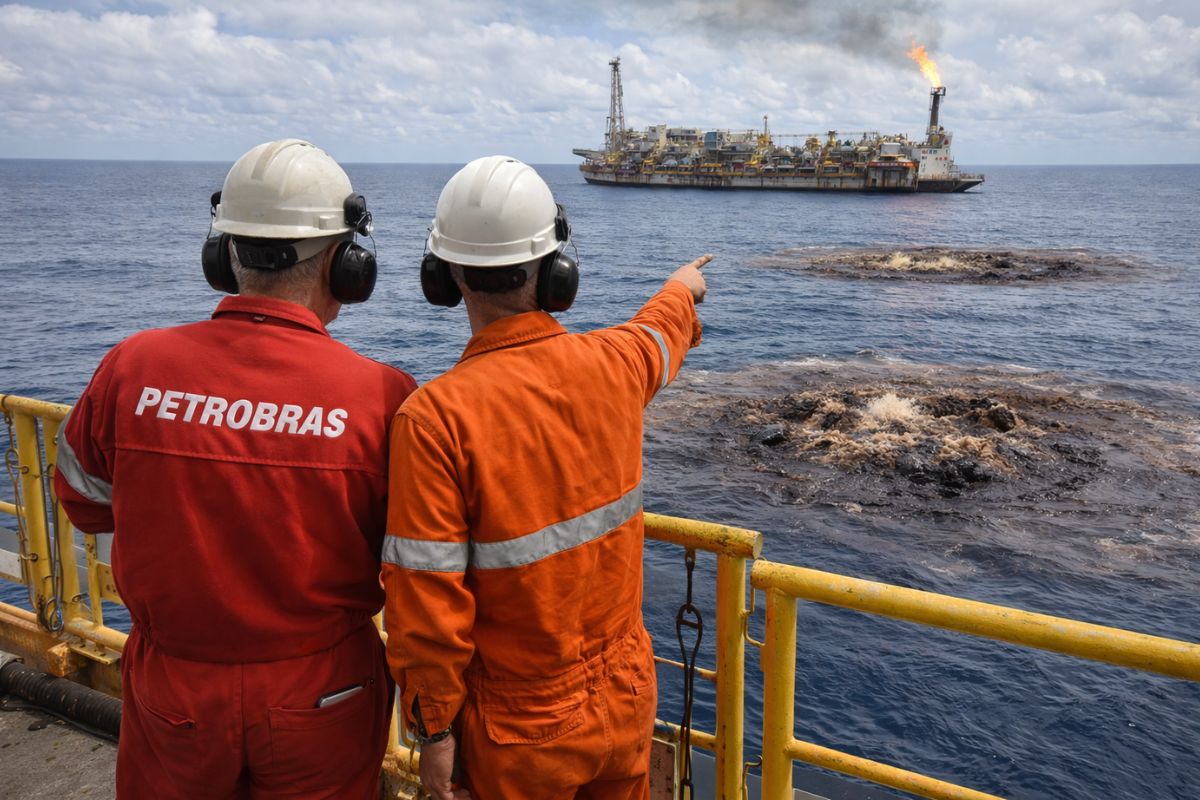


The Oil Reservoirs Announced Between the Equatorial Margin and the Campos Basin Put the Mouth of the Amazon in the Center of the Debate, with Estimates of Up to 10 Billion Barrels and Comparison with the Pre-Salt, While Licensing, Incidents, and Deadlines in 2026 Pressure Petrobras and Government on the North Coast.
Petrobras Concluded 2025 Pointing to Two Oil Reservoirs as Strategic Bets, One in the Equatorial Margin, at the Mouth of the Amazon Basin, and Another in the Campos Basin, on the Coast of Rio de Janeiro. The Announcement Reopens a Discussion That Had Been Stalled for Years, How Much Is It Worth to Insist on New Frontiers, Where the Risk Is Greater, and Who Assumes the Political Cost If the Clock Tightens Until 2026.
In the Assessment Released, Cited in a Document from the Ministry of Mines and Energy, the Equatorial Margin Can Concentrate Up to 10 Billion Recoverable Barrels, a Volume Comparable to That Observed in New Oil Provinces in Guyana and Suriname and Close to the Explorable Reserves of the Pre-Salt, Estimated at About 12 Billion Barrels. If the Potential Is Confirmed, Exploration Could Attract US$ 56 Billion in Investments and Generate an Estimated Government Revenue of US$ 200 Billion Over Time, but Progress Depends on Environmental Licensing Described as Lengthy and Troubled.
Where the Oil Reservoirs Are and Why Geography Affects Costs
The Two Oil Reservoirs Mentioned Are on Different Sides of the Board.
-
The rise in oil prices could ensure an extra revenue of R$ 100 billion for the Federal Government, indicates a recent economic study.

-
Naturgy begins an investment of R$ 1.6 million to expand the gas network in Niterói and benefit thousands of new residences and businesses.

-
A major turn in the Justice system suspends tax increases and directly impacts oil and gas companies in Brazil by affecting costs, contracts, and financial planning, leaving uncertain what could happen to the sector if these costs had increased.

-
Brava Energia begins drilling in Papa-Terra and Atlanta and could change the game by reducing costs in oil while increasing production and strengthening competitiveness in the offshore market.


The Equatorial Margin, Focused on the Mouth of the Amazon, Appears as a Frontier, an Area Where Infrastructure, Routes, and Routines Still Need to Be Validated Under Public Scrutiny.
The Campos Basin, on the Other Hand, Is a Mature Province, with a Known Supply Chain and Production History, and Therefore Tends to Offer Greater Predictability in Engineering and Scheduling.
This Geographical Difference Has a Direct Effect on the Cost.
In a Frontier, Compliance Costs Increase Along with Environmental and Logistical Complexity, While in a Mature Province the Debate Shifts to Efficiency, Asset Recovery, and Utilization of Already Installed Infrastructure.
In Both Cases, the Return Curve Depends on the Technical Sequence: Assess, Confirm, License, Develop, Produce, and Only Then Turn Potential into Public Revenue.
Equatorial Margin and Mouth of the Amazon as the Last Frontier Under Social Pressure
The Equatorial Margin Is Seen as One of the Last Great Oil Frontiers in the Country and Extends from Amapá to Rio Grande do Norte, but the Mouth of the Amazon Has Become the Most Controversial Point in This Corridor.
It Is in This Zone That the Project Encounters the Most Sensitive Intersection Between Biodiversity, Fishing, Navigation, and the Expectation That Any Operational Failure Will Become a Definitive Argument Against Continuity.
The Potential Is What Drives Insistence.
The Estimate of Up to 10 Billion Recoverable Barrels in the Equatorial Margin Repositions the Mouth of the Amazon in the Conversation That, for Years, Has Been Dominated by the Pre-Salt.
However, There Is a Structural Difference: The Dispute Here Is Not Just About Volume, It Is About Legitimacy, and This Includes How Licensing, Risk Audits, Transparency, and Communication with Communities Are Conducted.
What the Number of 10 Billion Barrels Means and What It Does Not Yet Prove
Technically Speaking, Talking About Recoverable Barrels Is to Admit Uncertainty.
The Estimate of 10 Billion Barrels in the Equatorial Margin Still Depends on Geological Confirmation, Well Performance, Oil Quality, and Economic Viability, in an Environment Where Operating Costs, Weather Windows, and Environmental Requirements Can Alter Investment Decisions.
At the Same Time, the Number Creates an Inevitable Effect of Comparison.
When It Is Mentioned That the Pre-Salt Has About 12 Billion Explorable Barrels, Part of the Public Debate Begins to Treat the Mouth of the Amazon as a New Pre-Salt Before a Technical Basis Exists for That.
This Shortcut Inflates Revenue Expectations and Reduces Room for Serious Discussion on Stages, Timelines, and Stopping Criteria, Including the Possibility of Halting Projects If the Risk Proves Greater Than Tolerable.
The January Incident and What Changes When the Focus Shifts from Promise to Operation
The Discussions at the Mouth of the Amazon Gained Weight Following an Incident in January, When About 15,000 Liters of Synthetic Drilling Fluid Leaked Offshore, 175 Kilometers from the Coast of Amapá.
According to Petrobras, There Was No Oil Leakage and the Material Is Biodegradable, but the Episode Shows Why the Equatorial Margin Can Be Judged by Operational Events, Not by Macroeconomic Projections.
In Engineering, Drilling Fluid Is Used to Cool and Lubricate the Bit, Stabilize the Well, and Transport Cuttings, but Any Loss of Containment Becomes a Public Test of Governance.
Ibama Confirmed the Suspension of Drilling for Safety Reasons and Reported an Administrative Investigation.
From There, the Debate Stops Being Abstract: It Is Not Enough to Declare an Absence of Damage; It Is Necessary to Demonstrate a Response Chain, Monitoring, and Timely Communication, with Verifiable Records, Response Goals, and Clarity on How Impact Is Measured Before, During, and After Each Stage.
Campos Basin, a New Reservoir and the Attempt to Extend a Province That Has Already Supported the Country
On the Other Axis, Petrobras Confirmed the Discovery of a New Reservoir in the Campos Basin, on the Coast of Rio de Janeiro, with Initial Assessment Indicating Oil of Excellent Quality.
This Statement Has an Objective Implication: Quality Usually Reduces Marketing Barriers, Improves Project Attractiveness, and Facilitates Fitting Development into Already Existing Infrastructure.
The Campos Basin Was Responsible for a Large Portion of National Production in Past Decades and Remains Relevant Even with the Rise of the Pre-Salt.
The Logic Here Is Less Epic and More Accounting, Taking Advantage of What Already Exists, Extending Useful Life, Reducing Marginal Costs, and Maintaining Revenue.
Even So, A New Reservoir Does Not Erase the Central Question: Why Open a New Frontier in the Equatorial Margin If Energy Transition Pressures Timelines and Reputation?
Exploration Is Slow and ANP Data Helps to Explain Why
Despite Highlighted Oil Reservoirs, Exploratory Activity Remains Low.
ANP Registered Only 19 Exploratory Wells Drilled in 2025, Well Below the Peak of 2011, When There Were 150 Wells in a Single Year, An Indicator of How Appetite for Risk Has Declined.
The Decline Began After the 2014 Crisis, When the Barrel Dropped to US$ 40, and Continued Even with Partial Recovery of Prices.
Ineep Analysts Point Out That Expectations of Cheaper Oil and Environmental Requirements Reduce Investment Appetite.
It Is in This Context That the Equatorial Margin, Mouth of the Amazon, Campos Basin, and Pre-Salt Enter the Same Equation; Capital Only Enters Where Risk and Return Seem Defensible.
Billions at Stake, but with Steps That Do Not Fit in Headlines or Fandom
When Mentioning the Possibility of US$ 56 Billion in Investments and US$ 200 Billion in Government Revenues Over Time, the Temptation Is to Treat Oil Reservoirs as Immediate Money.
The Reality Is Slower: First Comes Confirmation, Then Licensing, Then Development Engineering, and Only Then Continuous Production Capable of Generating Revenue.
In This Chain, Delays at the Mouth of the Amazon Change the Schedule, and Regulatory Changes in the Equatorial Margin Change Costs.
At the Same Time, the Campos Basin Offers a Path of Least Institutional Resistance, Precisely Because It Has an Operational History and Installed Base.
Even So, the Pre-Salt Continues as a Technical and Symbolic Reference, Because It Defines the Standard of What the Country Calls a Major Discovery.
This Bar Shapes Expectations and Frustration, and Can Impoverish the Debate If Numbers Are Treated as Guarantees.
The Oil Reservoirs Announced in 2025 Put the Equatorial Margin and the Mouth of the Amazon Under Microscope, While the Campos Basin Tries to Gain Momentum with a New Find and the Pre-Salt Continues as a Benchmark for Comparison.
Between Investment Projections, Promises of Revenue, and an Incident That Interrupted Drilling, the Decisive Point Becomes Operational Confidence, Transparency, and Criteria for Progress Until 2026.
If Exploration in the Equatorial Margin Advances and the Mouth of the Amazon Becomes a Permanent Front, What Rule Would You Require as a Red Line: Total Transparency of Incidents, Veto in Sensitive Areas, Counterparties for Local Communities, or Concentrating Efforts in Provinces Like the Campos Basin and the Pre-Salt?










E a busca por energias limpas e renováveis?
Não seria possível se investir em mais hidroelétricas, energias eólicas e solares, por um lado, e por outro lado, incentivar a produção de veículos elétricos de tal modo a dar escala e barateá-los?
Naturalmente, isso leva tempo, mas não vemos um esforço do nosso governo nesse sentido.
Eu acredito que e sta na hora de buscar novos horizontes. É claro que na Bacia de Campos só existem pontos positivos, mas no Amapá a exploração tem que iniciar uma hora, senão outros países próximos podem oferecer uma concorrência muito acirrada com o Brasil e até consumir o nosso petróleo.
A foto de capa da matéria induz uma extrema poluição no local, fato que não existe quando ligado a Petrobrás. Tudo preparado e pensado pra prejudicar a imagem da empresa.