





 Portuguese
  English
  Spanish
  8 min of reading
  0 comments


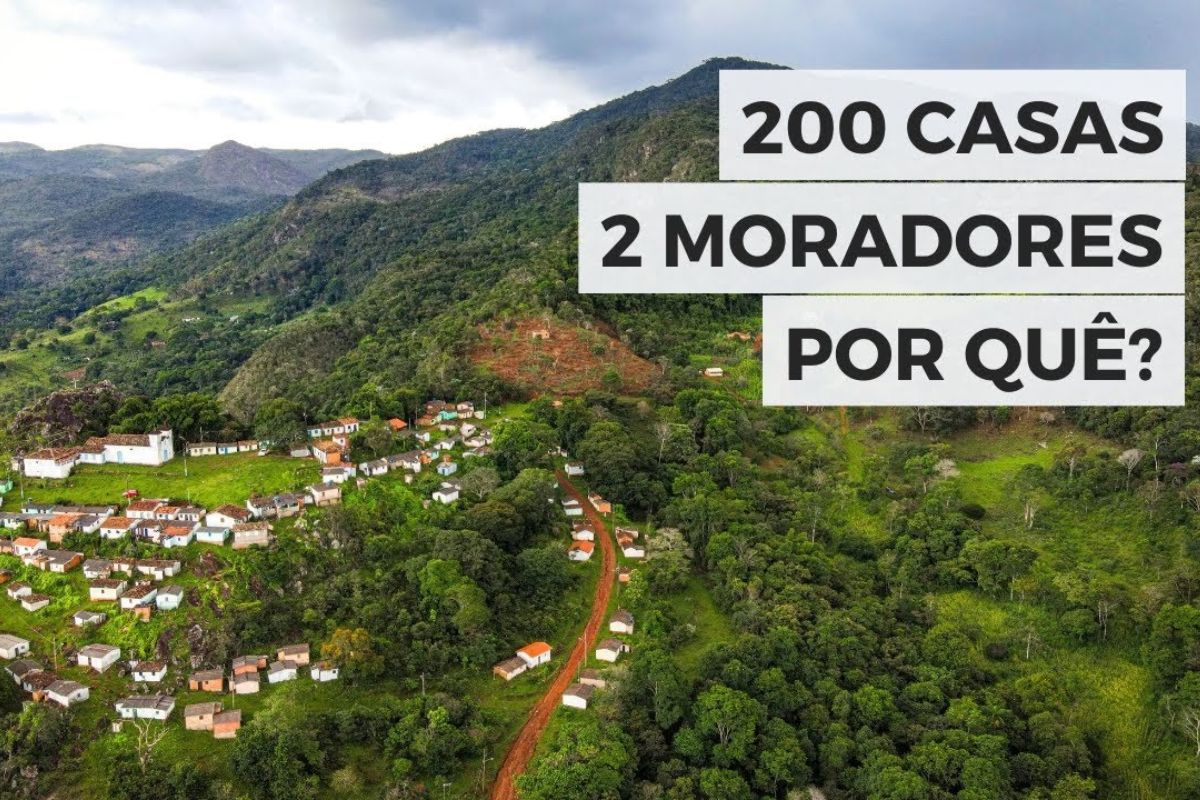
Almost Deserted Year-Round, The Village In The Serra Do Carola Has 200 Houses, Only 2 Permanent Residents, And Transforms Into A City Of 8 Thousand Pilgrims During The Jubilee Of Our Lady Of Sorrows, Between The Second And Third Sundays Of July, Driven By Promises And Collective Memory
High in the mountains of Minas Gerais, the village in the Serra do Carola spends almost the entire year in silence, with about 200 houses closed and only two permanent residents. Once a year, however, the scene changes completely. Between the second and third Sundays of July, the small village transforms into a Vila da Capelinha filled with pilgrims, receiving about 8 thousand people who ascend the mountain to fulfill promises, attend masses, and celebrate the Jubilee of Our Lady of Sorrows.
What many today call a ghost village is, for the devotees, one of the most remarkable corners of faith in the countryside of Minas. The pilgrimage, which has been going on for over seven decades, has transformed the place into an emotional heritage for entire families, who maintain the tradition of climbing the mountain every year. There, the village in the Serra do Carola becomes a meeting point for generations, popular culture, and striking landscapes of the rural area of the municipality of Serro.
Where Is The Village In The Serra Do Carola In Minas Gerais

The village in the Serra do Carola is located at the top of the mountain of the same name, about 19 kilometers from the seat of the municipality of Serro, in the interior of Minas Gerais.
-
China is building a city in Brazil: a complex with an investment of R$ 5.5 billion comes to light, but allegations involving workers draw attention.
-
While Argentina buys old war equipment, Brazil is keeping an eye open and joins the select group of nations with advanced military technology by investing $5.2 billion, producing 36 Gripen fighters in the country, and reducing operational costs.

-
Brazil on alert? Why invading Brazil is a NIGHTMARE for the USA: 8.5 million km², 213 million inhabitants, Amazon covering 60% of the territory, trillion-dollar war, and resistance that even 13,000 aircraft could not control.

-
How to build a floating island from scratch with reeds, giant blocks, and stakes in the lake in a process that needs to be repeated almost every day.

The village is part of the rural area of the district of Deputado Augusto Clementino, known in the region as Mato Grosso, whose nearest urban center is approximately 3 kilometers away.
From above, visitors see a sea of hills and pastures, with few permanent structures besides the chapel, the cross, and the simple houses lined around the small church.
On regular days, those passing through find closed doors, little movement, and the atmosphere of a place that seems frozen in time.
However, when the week of the Jubilee of Our Lady of Sorrows arrives, the village in the Serra do Carola in Minas Gerais changes its rhythm and volume: stalls are opened, families arrive with luggage, children run around the yard, and the sounds of masses, singing, and forró fill the usual silence.
How The Devotion Arise In Vila Da Capelinha
Long before the current houses and the chapel itself existed, Vila da Capelinha began with a simple act of faith. Around the early 20th century, faithful from the region, without access to doctors and health resources, began to climb the mountain in search of cures and special graces.
Promises of healing for sick children and requests for protection motivated entire families to face the steep climb, often carrying the child in their arms throughout the journey.
At the origin of this devotion, there was only a rudimentary cross, made of bamboo, placed by a devotee known as Gulim.
The location became a place of prayer. In 1924, the community organized and erected a wooden cross in a permanent position at the top of the Serra do Carola, later replaced by a masonry version in the same spot.
From then on, religious festivals intensified, with celebrations in honor of St. John in June and later, Our Lady of Sorrows in July.
From The Cross To The Chapel: The Beginning Of The Jubilee Of Our Lady Of Sorrows
With the increase of devotion, the faithful decided to take an image of Our Lady of Sorrows to the top of the hill, which became the patroness of the mountain. To shield the image from rain and sun, the devotees mobilized to build the chapel.
The small church in Vila da Capelinha was inaugurated in 1945, the result of volunteer work and donations from the community itself.
Shortly after the construction of the chapel, the first Jubilee of Our Lady of Sorrows occurred, which has been held annually since then, in July.
Since then, the Jubilee of Our Lady of Sorrows is the heart of the village in the Serra do Carola, bringing together pilgrims from neighboring cities, other parts of Minas Gerais, and different regions of the country.
The celebration lasts for eight days, from the second to the third Sunday in July, with masses, processions, confessions, moments of silence, and family reunions that occur only at this time.
Empty Houses Year-Round, Full Stalls During The Jubilee
The houses of the village in the Serra do Carola were built as support structures for those coming to the Jubilee. To avoid the daily trek up and down the mountain during the festival, the pilgrims started building simple stalls around the chapel, used only during the week of the celebration.
Over the decades, these stalls, often built with clay, adobe, wattle and daub, bamboo mats, and reclaimed wood, have been renovated into masonry.
Today, according to the devotees themselves, there are about 200 houses and properties in the village, including simple homes, support kitchens, food sales points, and vacant lots.
During the Jubilee, between 600 and 800 people occupy these houses over eight days, preparing meals, welcoming relatives, organizing celebrations, and keeping the tradition alive.
Throughout the entire celebration, about 7 to 8 thousand people pass through Vila da Capelinha, reinforcing the fame of the place as a small temporary city of faith.
Ghost Village?
Because it remains almost deserted for 51 of the 52 weeks of the year, the village in the Serra do Carola is often nicknamed a ghost village.
For those who know the story well, however, the more accurate title is different. Local devotees prefer to call the place a village of faith, since it is precisely this religious dimension that justifies the existence and preservation of the houses.
Nanza, a member of the pilgrimage association of the mountain, states that many families organize their vacations and days off not to go to the beach, but to spend Jubilee week in the mountain.
The keys to the stalls are passed down from generation to generation, along with the memories of promises, healings, packed masses, and lively forrós after the celebrations.
The village remains unoccupied for most of the year due to the lack of comfort and infrastructure for permanent living, and also because the place has established itself as an annual gathering space, not as a residential neighborhood.
The Two Permanent Residents Of The Village In The Serra Do Carola
If during the Jubilee the village in the Serra do Carola buzzes with activity, the rest of the year is another scene. Only Mr. Damião and his son live there permanently, taking care of the houses, the area around the chapel, and the surroundings of the cross.
The family moved to the top of the mountain after a house linked to the organization of the Jubilee needed someone to take care of it.
Mr. Damião describes a routine of silence, wind, and birdsong, interrupted only by occasional visits from tourists and devotees outside the festival. He usually works on farms in the region and descends to the city from time to time to resolve practical matters. For him, the tranquility compensates for the distance from the urban center.
He describes the mountain as a place of peace, where the presence of God ensures that no one truly feels alone. During the Jubilee, the resident bids farewell to the quiet and welcomes the crowd, reuniting with friends and pilgrims who only appear during this period.
The Pilgrim Who Grew Up During The Jubilee And Calls The Village Home
Nanza, one of the most emotional voices when she talks about the Vila da Capelinha, has been attending the Jubilee since she was four years old. She recalls that the first climbs were made by ox cart, accompanied by her father, uncles, and other relatives. The memories blend faith, family, and the physical effort of the climb, which, for many people, was the concrete fulfillment of a promise.
Now, as an adult, she brings her children and grandchildren to the pilgrimage, keeping the emotional connection with the village in the Serra do Carola in Minas Gerais alive.
When speaking about the future, Nanza expresses her dream of seeing everything there even more beautiful and preserved, acknowledging the weight of the memories of those who have passed away and the responsibility of maintaining the tradition for future generations. For many devotees, the village is a part of home at the top of the hill, a symbol of belonging and continuity.
Living Memory Of 70 Years Of Jubilee With The Oldest Pilgrims

Among the veteran pilgrims is Mr. José Nicodemos, a resident of the Pedra Lisa region, about 3 kilometers from the mountain.
He says he first came to the Jubilee as a baby, in his mother’s arms, and claims to have never missed an edition in over seven decades. Today, he serves as a minister of the Eucharist and helps with church activities during the week of the festival.
José Nicodemos remembers the old organization of the masses, when men and women formed separate lines at the foot of the altar, and the time when access was more difficult, with pilgrims arriving on foot, by train, on horseback, or in ox carts.
In his view, the number of people has increased over the years, following the growth of the population and the improvement of roads and means of transportation.
As he walks through the village, he recalls the different phases of constructing the stalls, renovating the chapel, and the community’s collective effort to keep what exists today standing.
Community, Identity, And The Future Of Vila Da Capelinha
Over time, the village in the Serra do Carola has solidified its role as a symbol of community unity. The first masonry works, both in the chapel and in the stalls, were carried out using resources gathered by the population itself.
Residents from the surrounding area donated materials, labor, and time, reporting back to the priest and the community, in a mutual aid model that is still proudly remembered by the elders.
In a world that increasingly encourages individuality, Vila da Capelinha stands out as a space for collective experience.
The tradition renews every time someone receives the key to a stall or climbs the hill for the first time, guided by the stories of those who came before. The future of the village hinges precisely on this ability to transmit devotion, history, and care for the place from one generation to the next.
Amid so many changes in Brazil and the world, the question that resonates among the faithful and curious is simple yet powerful: would you want to visit the village in the Serra do Carola during the Jubilee of Our Lady of Sorrows and experience, for a few days, the routine of the pilgrims who transform this village of faith into a bustling city at the top of the mountain?





-

-

-

-

6 pessoas reagiram a isso.