





 Portuguese
  English
  Spanish
  6 min of reading
  0 comments


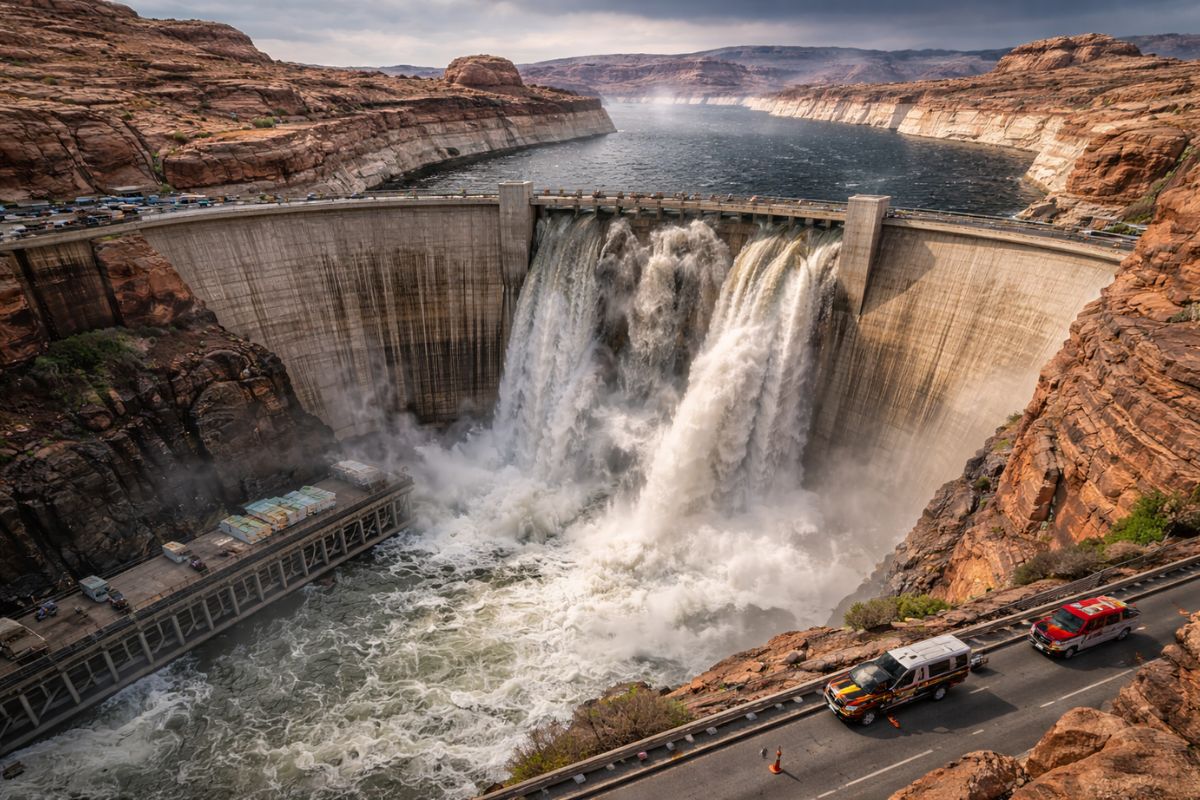
In The Colorado River Basin, The Ongoing Decline of Lake Powell Exposes Design Flaws and Makes The Collapse of The Glen Canyon Dam A Technical Hypothesis, with Turbines Threatened by Cavitation, Discharge Limited by Four 96-Inch Pipes and The Risk of “Dead Pool” At 3,370 Feet By 2026.
The collapse of the Glen Canyon Dam has moved from being just a backroom warning to entering the public agenda of the Colorado River basin because Lake Powell has fallen to levels that approach the operational limit of the turbines and compress the margin for delivering water downstream.
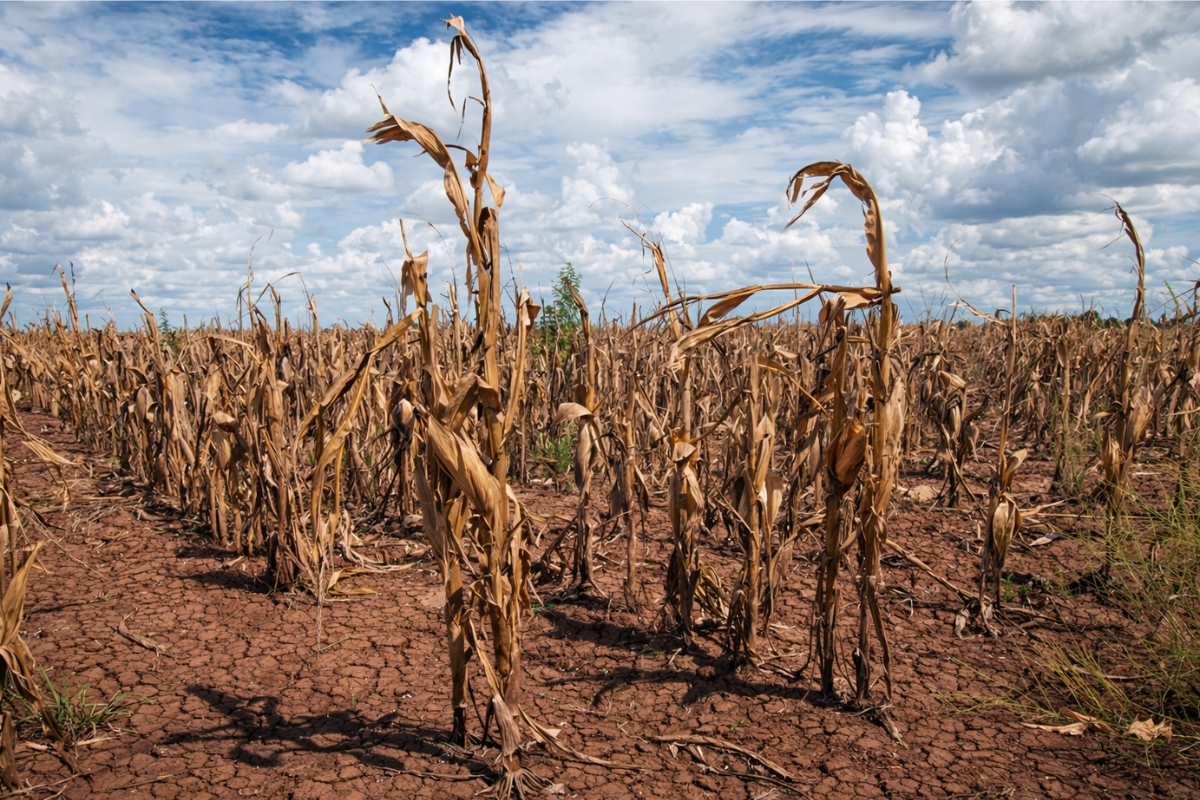
With the federal deadline approaching to redesign rules for managing the Colorado River, the debate over cuts, allocation, and usage priorities gains urgency, but the infrastructure that supports this arrangement also exposes vulnerabilities in a warming scenario, with less snow coverage and persistently low reservoirs.
The Dispute Over A Smaller River

The negotiations involve California, Arizona, Nevada, Utah, New Mexico, Colorado, and Wyoming, as well as 30 Indigenous tribes that historically have been excluded from the central decision-making framework.
-
After 377 years of history, the Brazilian Army will have its first female general: Colonel Claudia Cacho has been promoted to brigadier general by Lula and will receive the sword and command baton this Wednesday in Brasília.

-
A Mercado Livre customer opened their package and found 32 resumes of people looking for jobs crumpled as protective paper inside the box, exposing names, addresses, documents, and phone numbers of dozens of candidates.

-
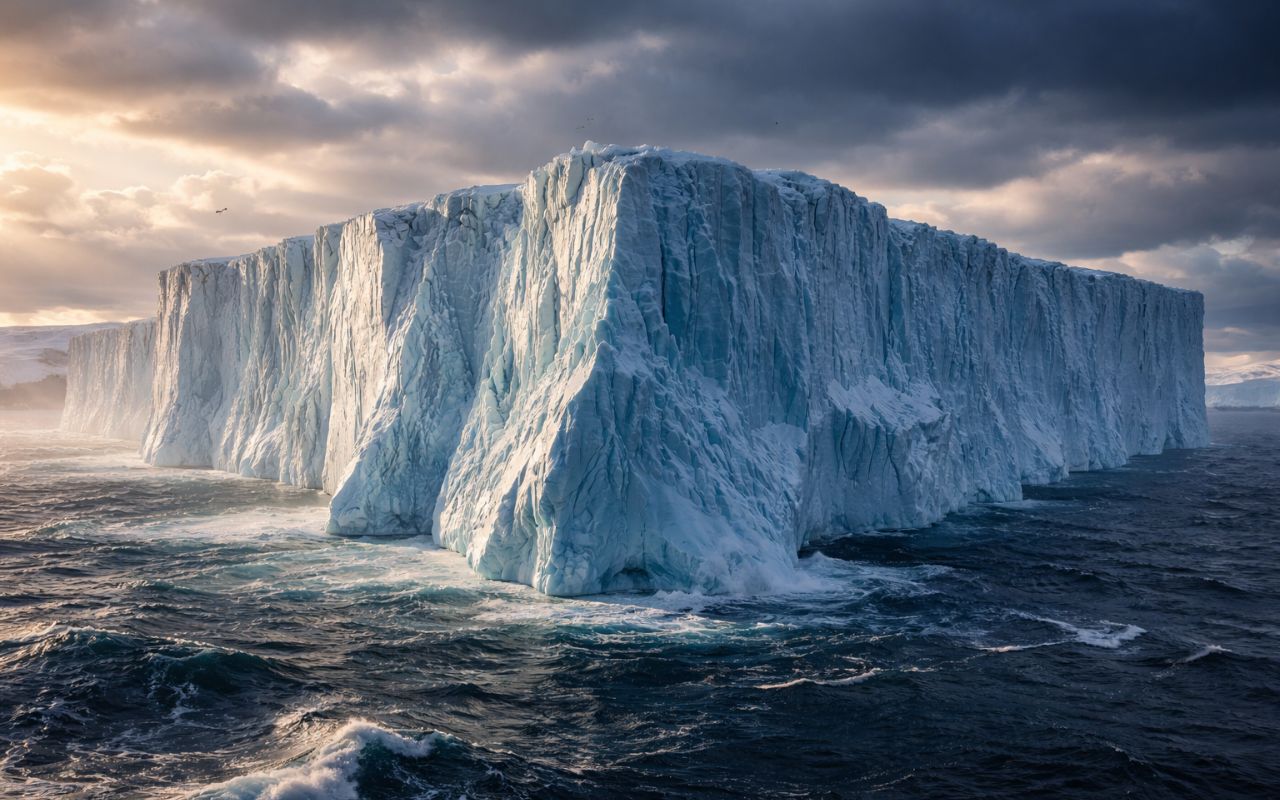
Iceberg A23a, one of the largest in the world, is undergoing accelerated collapse and may disappear: what explains the end of the ice giant?
-
The simplest swap at home can reduce energy consumption by up to 90% without changing habits, using a technology that lasts up to 25 times longer and consumes only a fraction of the electricity.


The sensitive point is that the quotas established in 1922 were based on overestimated flows, and the consequences are felt when Lake Powell and Lake Mead drop below 30% capacity and the average flow of the Colorado River has already decreased by about 20% this century.
The November 11 deadline of the previous year passed without an agreement and was pushed to February, with the prospect of the federal government imposing a plan if the parties do not converge.
In a scenario where water division dominates the spotlight, the collapse of the Glen Canyon Dam becomes an operational variable: without stability in Lake Powell and without discharge redundancy, the governance of the Colorado River may turn into a difficult promise to fulfill.
Lake Powell Near Minimum Power Level and The Trigger of Cavitation
In March 2023, the level of Lake Powell was about 9 meters from the minimum power level, the point at which hydropower generation becomes unsafe.
This minimum level was described as around 1,064 meters above sea level, with about 6 meters of margin above the turbine water intakes, a narrow range for a reservoir subject to prolonged droughts and high evaporation.
The technical risk has a name: cavitation. If the water level drops too low, air can be sucked into the forced pipes, forming bubbles that collapse and can damage internal structures.
To reduce the chance of a chain cavitation event, the turbines need to be shut down, and the collapse of the Glen Canyon Dam begins to signify a loss of capacity to operate safely, not just a decline in generation.
Four 96-Inch Pipes and Why The River Outlet Works Have Become The Weak Link
If generation stops, the sluices of the forced pipes tend to be closed and the passage of water depends on the river outlet works, also called ROWs.
The described design includes two water intakes that feed four 96-inch steel pipes, with a declared maximum combined capacity of 15,000 cubic feet per second, which become the last route for sustained release.
The problem is that the ROWs have been identified as unsafe for prolonged use, with increasing erosion when the reservoir is low.
In 2023, during a high-flow release in the Grand Canyon with low levels in Lake Powell, harmful cavitation occurred, and alerts indicated that the problem is likely to recur if the operation becomes routine.
If safe discharge falls to a fraction of capacity, the legal obligation to deliver water may become a bottleneck, increasing the risk of the Glen Canyon Dam collapse due to operational failure and an inability to sustain continuous releases.
Dead Pool at 3,370 Feet and The Risk of Stagnant and Degraded Water
If Lake Powell drops to 3,370 feet above sea level, it enters the level of “dead pool,” when water only flows over the dam if the flow of the Colorado River exceeds losses due to evaporation.
From that point on, there are no water intakes or spillways below that range and there is no drainage plug to drain the remaining volume, even if downstream demand persists.
This impoundment still retains about 1.7 million acre-feet of water, which can become trapped, stagnant, and heated, posing a risk of algae proliferation and anoxia.
The geometry described as a “martini glass” exacerbates fluctuations, allowing variations of up to 100 feet per season.
In such a scenario, the collapse of the Glen Canyon Dam can happen without physical rupture but with loss of function: less flow control, more degradation of quality, and greater instability in the Colorado River.
The Threat Also Came From Flooding and The Precedent of 1983
The dam is 216 meters tall and was designed for an ideal world, with levels not too high or too low, despite the Colorado River being known for high variability.
In 1983, during a record El Niño winter, the system nearly failed due to overflow, combining mismanagement and design failure, as the spillway capacity was deemed insufficient for extraordinary floods.
In that episode, plywood panels installed over the structure and milder temperatures, which delayed snowmelt, helped to avoid disaster.
The memory serves as a warning in the present: the risk is not only in having too much water but also in having too little, with Lake Powell approaching limits that the original engineering did not prioritize for a prolonged drought.
What Could Change By 2026 and Why The Solution Lies in Engineering and Governance
States in the Lower Basin cited in a letter to Interior Secretary Doug Burgum that ignoring infrastructure limitations in the environmental impact statement for post-2026 operations could violate federal law.
The criticism targets the fact that the public debate focuses on allocation, while the dam itself faces bottlenecks to operate when Lake Powell drops and when the Colorado River needs to be released regularly, a topic that would have only indirectly surfaced in technical documentation for 2024.
One discussed exit is to restructure the dam to allow the Colorado River to flow through or around the blockage at more “normal” levels, transporting sediment to the Grand Canyon.
In 1997, Floyd Dominy sketched the idea of diversion tunnels drilled in the sandstone around the structure, with valves to control water and sediment.
The window of opportunity is narrow, because studying, designing, and executing changes of this magnitude takes years, and the collapse of the Glen Canyon Dam, if it occurs due to operational exhaustion, will likely happen before a major project restores a safety margin.
Between cavitation, the risk of dead pool, and limits on discharge, the discussion regarding the Colorado River has entered a phase where the math of volume meets the physics of infrastructure. The collapse of the Glen Canyon Dam, in this context, does not depend on a single dramatic episode but on a series of postponed decisions and Lake Powell levels that remain compressed.
If you live, work, or follow the Colorado River basin, which measure seems most defensible to prevent the collapse of the Glen Canyon Dam: accepting immediate cuts to consumption to sustain Lake Powell or prioritizing a structural overhaul that changes the release of water and sediment by 2026?





-

Uma pessoa reagiu a isso.