





 Portuguese
  English
  Spanish
  4 min of reading
  0 comments


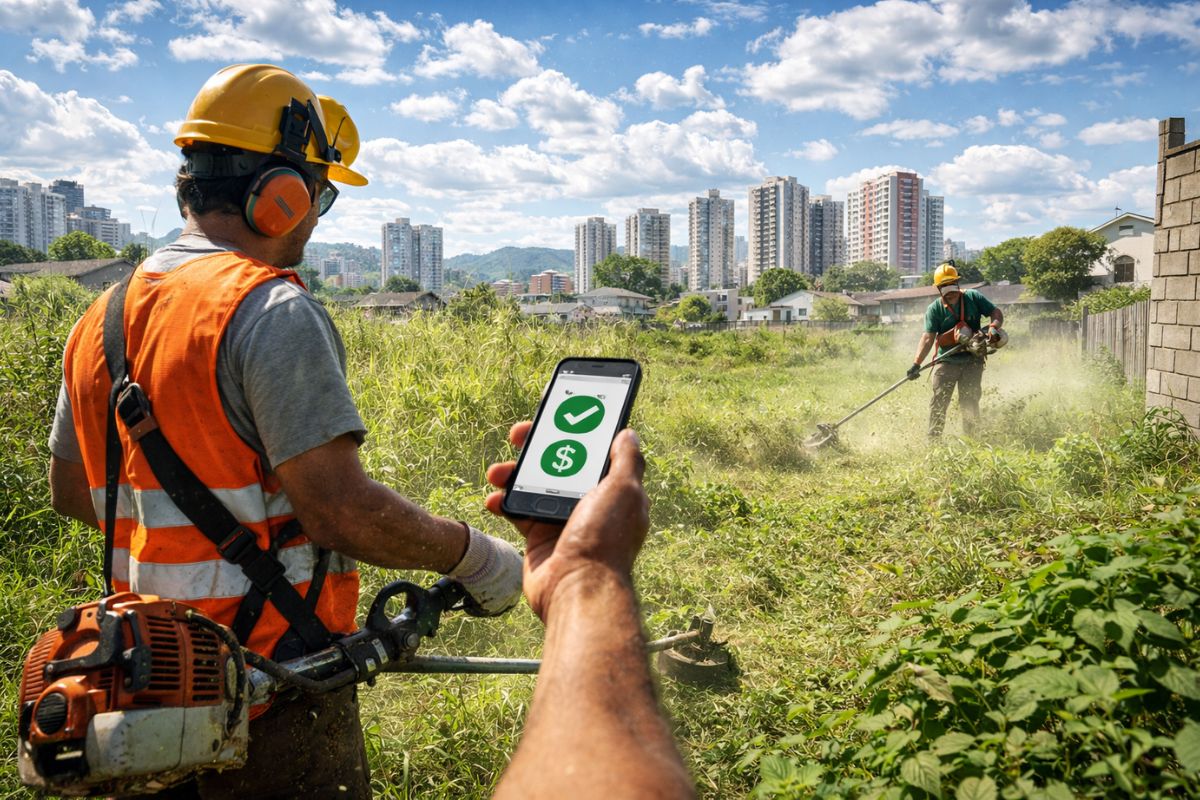
Land Cleaning Now Includes Land Cleaning App That Connects Vacant Lots to Small Workers, Speeds Up Service, and Opens Extra Income.
Land cleaning is at the center of an initiative created by the municipal administration to tackle a recurring problem in cities: unmaintained vacant lots. With 21.8 thousand lots in this condition, the Boscaiolo project uses an app to connect registered workers to spaces that need grass cutting, transforming an urban demand into an opportunity for extra income.
Under the proposal, the notified owner has 20 days to perform the land cleaning. When this does not happen, the lot may be included in the program and made available in the system for service execution. The logic combines oversight, practicality, and income generation, without transferring the final cost to taxpayers.
How the Boscaiolo Project Works
The project is named Boscaiolo, an Italian term meaning grass cutter. In practice, the initiative was created to increase the efficiency of land cleaning and solve a common bottleneck during periods of higher grass growth, especially in summer.
-
In Mexico, a 3,000-year-old Maya site with the dimensions of an entire city may have been built as a colossal map of the cosmos, created to represent the order of the universe and reveal how this people organized space, time, and rituals.

-
Japan wants to build a solar ring of 10,900 kilometers on the Moon to continuously send energy to Earth.

-
Weighing almost 1 ton, with temperatures of up to 3,000°C, the ability to launch 10,000 fragments within a radius of 1 km, capable of penetrating concrete and melting steel, Turkey’s terrifying bomb emerges as one of the most destructive non-nuclear weapons ever presented.

-
After a submarine disappeared beneath the “Doomsday Glacier,” scientists announce a new monstrous machine capable of operating at 3,000 meters depth to return to the heart of the ice and investigate a threat that could raise sea levels worldwide.


Through an app, the system connects registered workers to the lots needing service.
The proposal is simple: to combine an urban need with a source of income for small providers, creating a faster flow for executing the grass cutting.
App Connects Vacant Lots and Small Workers
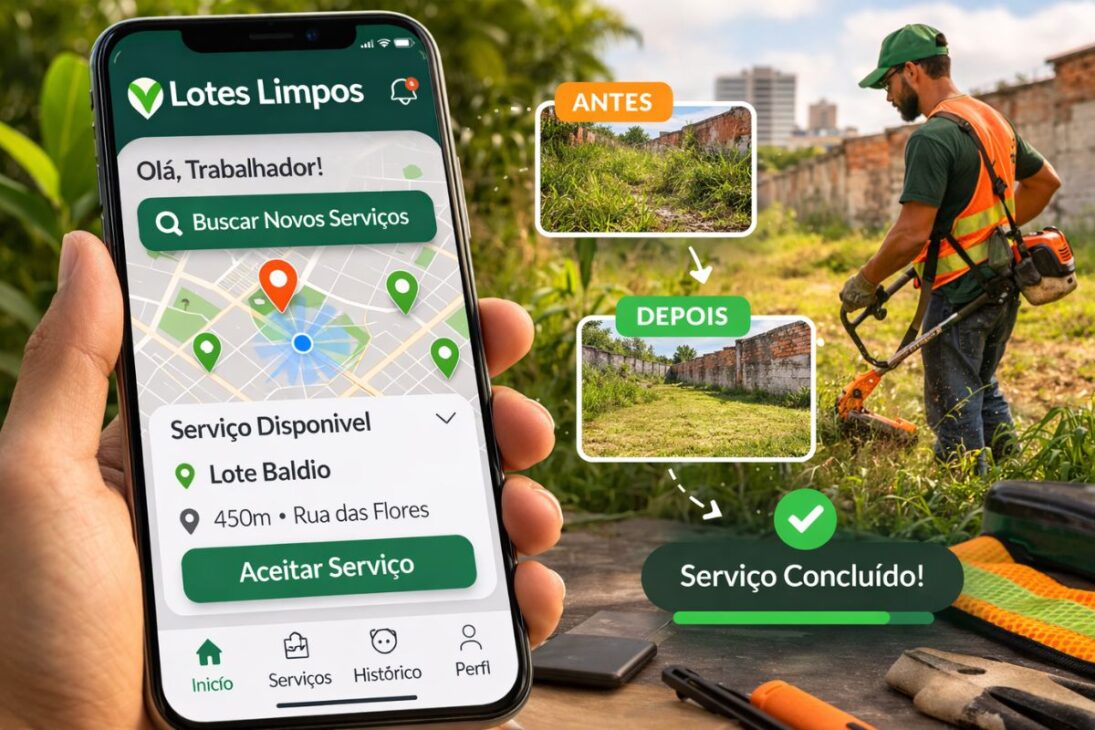
The system allows registration with CPF or MEI, focusing on small entrepreneurs. The idea, according to the material, is that land cleaning does not become concentrated in large companies but reaches those on the ground who can execute the service directly.
The worker selects the lot through the app, follows the indicated location, sends a photo of how the site looked before the grass cutting, and upon completion, sends a new image to prove completion.
After approval, they can select another service. This model gives more control to the process and helps organize the execution of each step.
Negligent Owner is Notified and Then Pays for the Service
The project establishes that the lot owner has the obligation to keep the land clean. When this is not done, the city hall notifies the responsible party and grants a 20-day deadline for land cleaning.
If the deadline expires without a solution, the lot enters the program, and the service may be executed by a credentialed worker.
Subsequently, the cost is charged to the lot owner. This way, the municipal administration ensures cleaning without passing the bill to the general population.
Extra Income at the Center of the Proposal
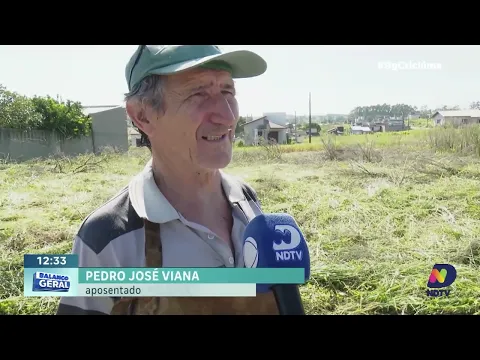

In addition to improving the city, the project seeks to foster income. One of the examples presented is that of a retiree who began working in urban cleaning after his daughter learned about the initiative and showed him how to use the app.
The initiative was designed specifically to expand opportunities for small people. The system releases one lot at a time, avoiding excessive reservations and subcontracting that would distort the original proposal. The goal is to ensure income directly reaches those who execute the service.
Land Cleaning Boosts Local Economy
The material highlights that the city was divided into six regions, and the worker can choose up to two to operate in.
Generally, they tend to work closer to the area where they live, which also favors the circulation of money in nearby commerce.
This dynamic means that land cleaning has effects beyond the grass cutting itself. According to the proposal, the project also helps stimulate the local economy by generating services, short travels, and consumption in neighborhoods within the city. It is an urban solution that aims to produce practical impact on multiple fronts at once.
Model Prevents Concentration and Increases Control
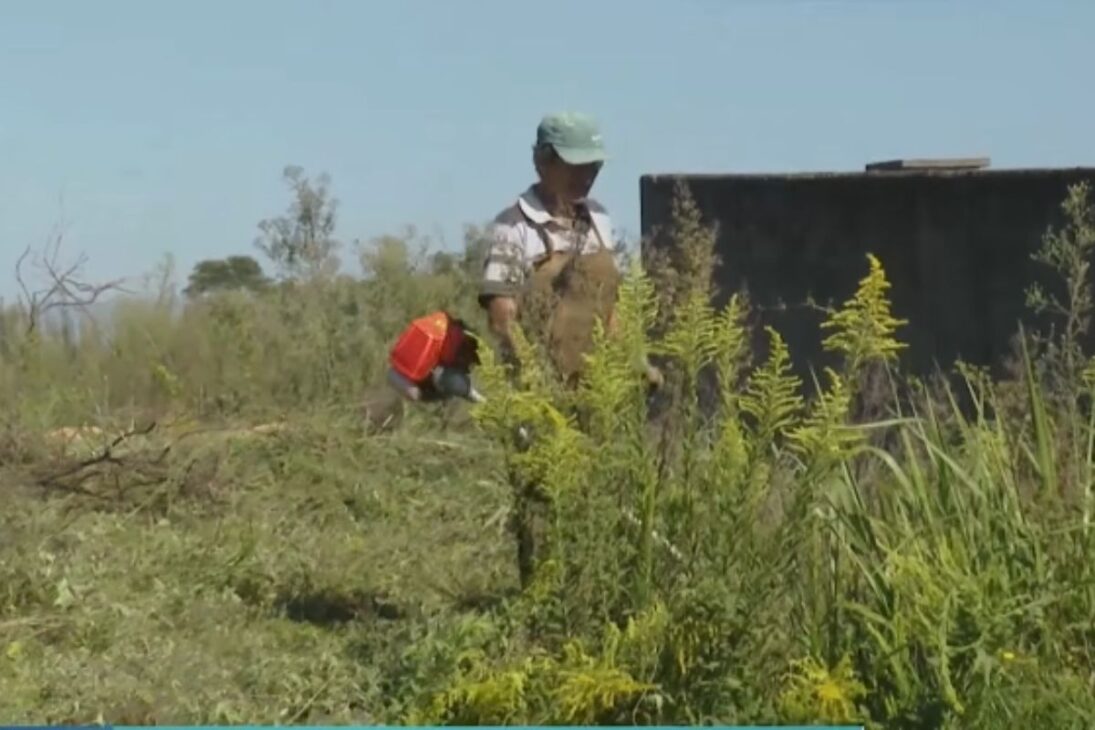
Another important point of the project is the limit of one lot at a time in the app. This measure was created to prevent a single person from concentrating too many services and outsourcing the work to others.
This way, the management attempts to preserve the main purpose of the program, which is to generate income for small workers and maintain land cleaning with closer oversight.
The control through stages, with before and after photos, reinforces this model of organized oversight and execution.
Project Transforms an Urban Problem into a Service with Direct Return
With 21.8 thousand vacant lots, the municipal administration found in the Boscaiolo Project a way to face a recurring problem in a more structured manner.
The app organizes the land cleaning, engages small workers, holds negligent owners accountable, and creates opportunities for extra income.
By uniting simple technology, oversight, and local work, the initiative transforms the grass cutting of lots into a solution that simultaneously meets different interests.
The city wins in maintenance, the worker gains in opportunity, and the negligent owner remains ultimately responsible for the service cost.
Do you think a model like land cleaning would work well in your city too?







-

Uma pessoa reagiu a isso.