





 English
  Francês
  Alemão
  Italiano
  Japonês
  Norueguês
  Portuguese
  Spanish
  4 min of reading
  1 comment


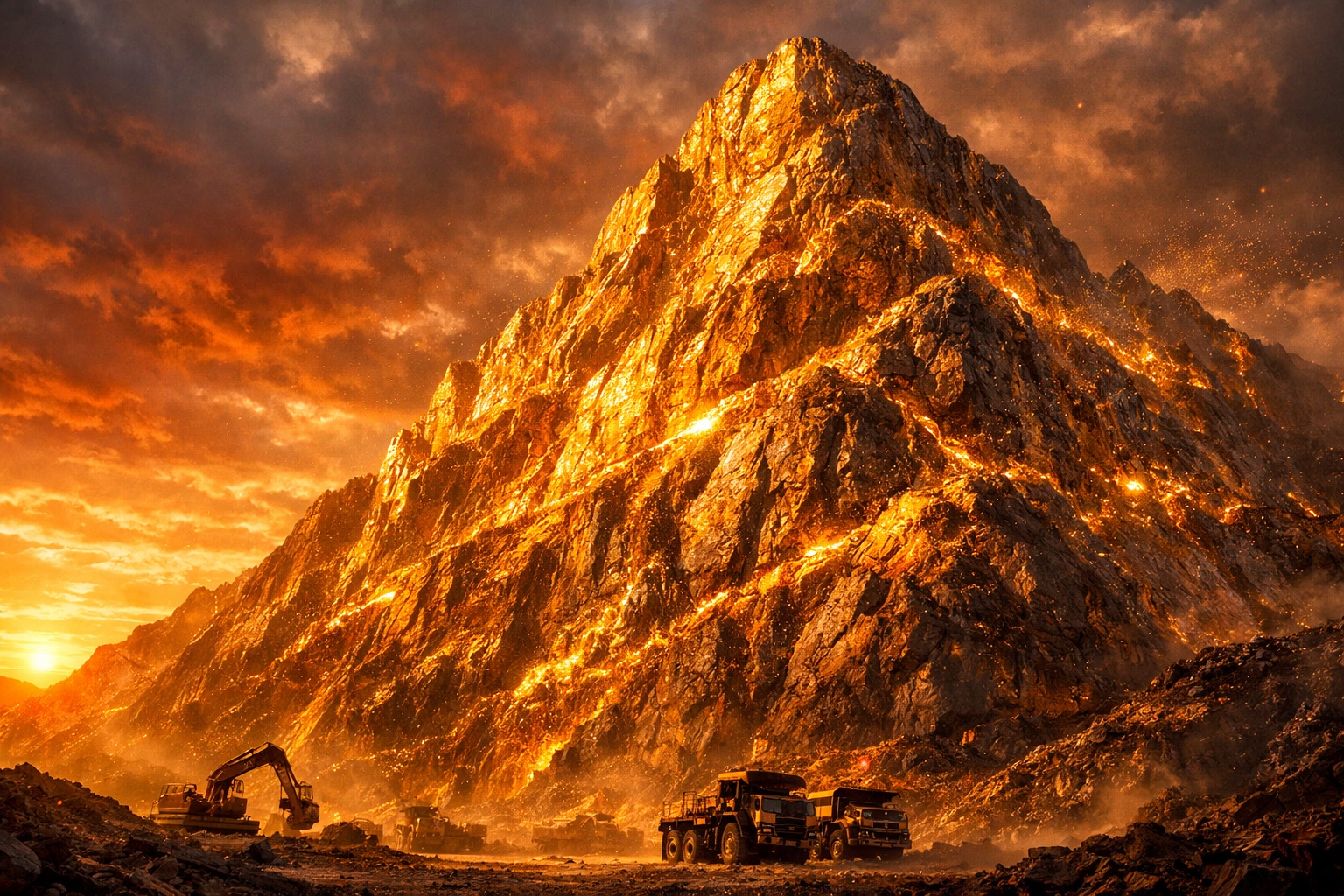


Witwatersrand, In South Africa, Contains About 40% Of All The Gold Ever Extracted In The World And Houses The Largest Gold-Producing Province In The History Of Global Mining.
There are geological formations that shape continents. Others shape entire economies. The Witwatersrand, In South Africa, Belongs To Both Categories. Estimated to be around 2.7 billion years old, this rock formation houses the largest concentration of gold ever recorded in modern mining history. Geological studies and industry surveys indicate that approximately 40% of all the gold ever extracted on the planet originated from this single South African mineral province. No other region has concentrated such production over more than a century of continuous exploration.
The Geological Origin: Gold Trapped For Billions Of Years
The Witwatersrand Formation is not an isolated mountain in the classical sense, but an Archaean sedimentary complex that extends for hundreds of kilometers in the northeastern part of South Africa.
Its origin dates back to the Archaean period when the planet still had a low oxygen atmosphere and intense volcanic activity. During this time, ancient rivers transported eroded gold particles from primitive volcanic formations. These sediments settled in ancient river basins, forming layers rich in gold conglomerates.
-
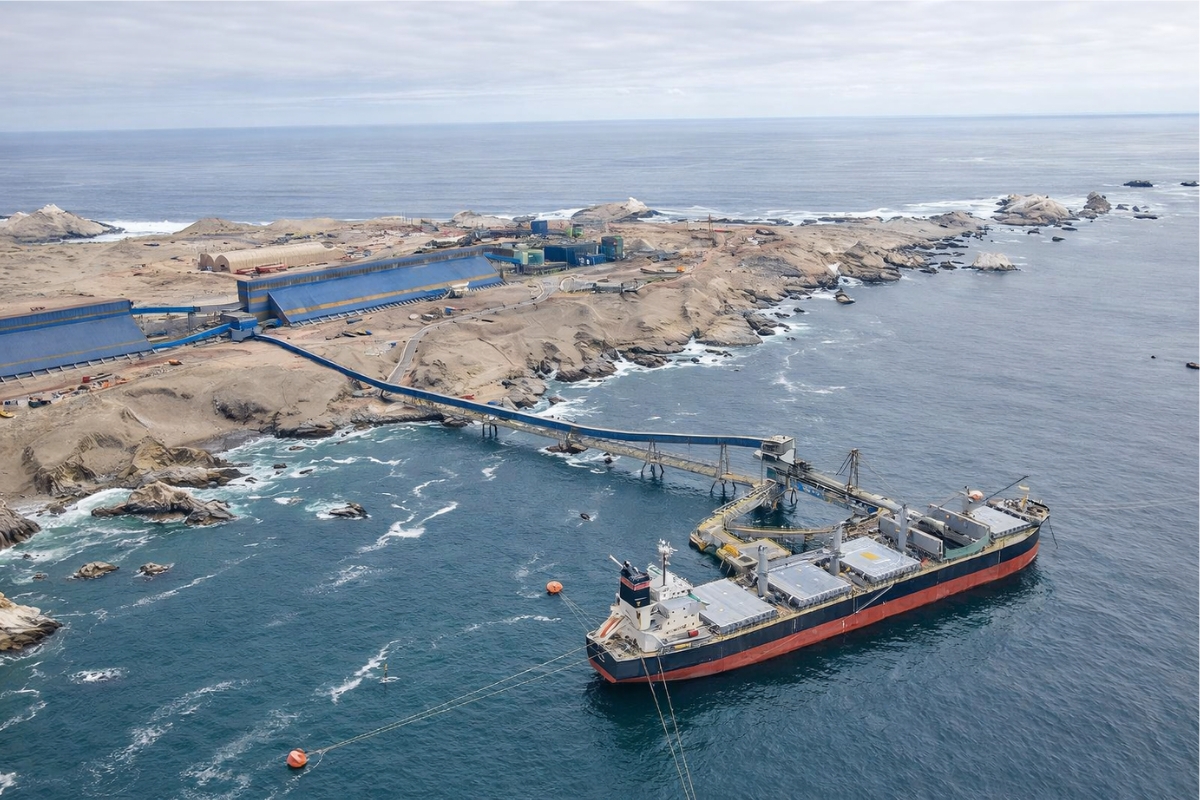
A $3.5 billion megaproject in Latin America pumps desalinated seawater at 1,050 liters per second over 194 km to keep a copper supermine in the Andes operational for another 20 years.
-
A hidden mine in the Andes valued at nearly R$ 1 trillion is starting to attract global attention, containing copper, gold, and silver, and raises an intriguing question: why do Argentina and Chile need to act together to exploit this gigantic wealth?
-
A silent discovery in the interior of Bahia could change the future of energy in Brazil: a uranium reserve in Lagoa Real has an estimated capacity to produce 400 tons per year and is already attracting the attention of energy sector specialists.
-
Gold Miners Descend Into Narrow Holes Up to 48 Meters Deep in the Mauritanian Desert and Spend Up to Two Days Living Inside Tunnels in an Underground City with Over a Thousand Mines
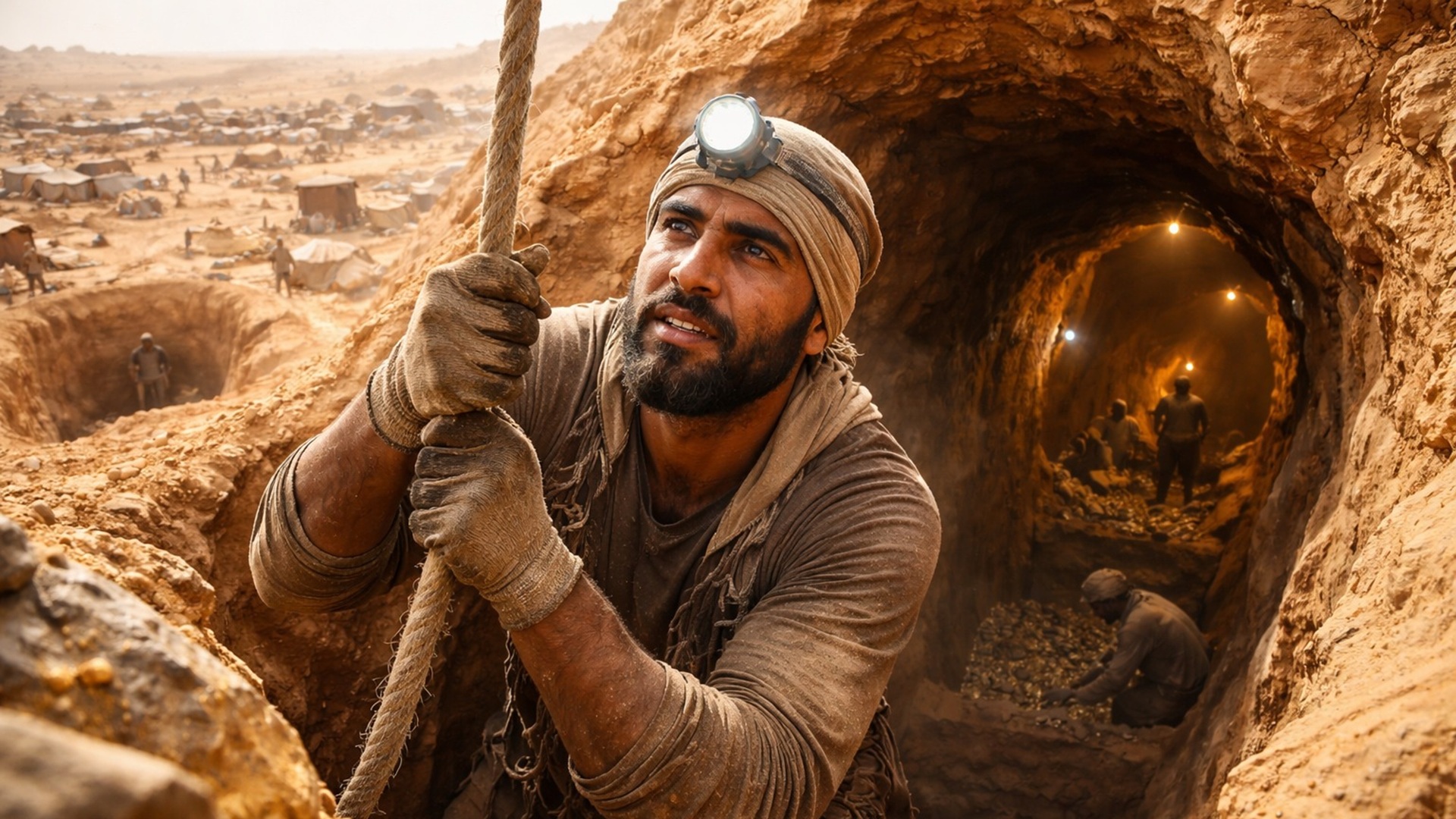

Over billions of years, tectonic processes compressed and solidified these sediments, trapping the gold in deep layers of the Earth’s crust.
The Discovery That Changed South Africa
In 1886, the discovery of gold in the region triggered one of the largest gold rushes in modern history. The find led to the founding and expansion of cities like Johannesburg, which quickly transformed into one of the main economic centers of the African continent.

From that moment on, South Africa established itself as a mineral power. For much of the 20th century, the country was the world’s largest producer of gold.
The South African economy became heavily dependent on mining, with profound impacts on the country’s industrial, urban, and political structure.
40% Of The Gold In History: What Does This Number Mean
The fact that about 40% of all the gold ever extracted in the world came from the Witwatersrand region is based on accumulated estimates of global production since the start of industrial mining.
Considering that the historical total of gold extracted by humanity exceeds 200,000 metric tons, the contribution of the South African province represents tens of thousands of tons.
This geological concentration has no parallel. Other major gold provinces—such as Nevada (USA), Western Australia, or regions of China—have never achieved a similar proportion in accumulated historical production.
Deep Mines And Extreme Engineering
Gold exploration in Witwatersrand led to significant advances in mining engineering. Some mines in the region became:
- The deepest in the world
- The hottest in underground operation
- Among the most complex in terms of ventilation and safety
There are operations that have exceeded 4 kilometers in depth, requiring sophisticated cooling systems due to the high natural temperatures of the Earth’s crust.
This extreme engineering has kept South African mining at the technological forefront for decades.
Economic And Social Impact
The wealth generated by Witwatersrand gold:
- Drove South African industrialization
- Helped finance railway and urban infrastructure
- Attracted international capital
- Shaped national economic policies
At the same time, mining has also been associated with deep social inequalities and difficult working conditions, especially during the apartheid period when much of the workforce consisted of migrant workers subjected to strict regimes.
Why Is There So Much Gold Concentrated There?
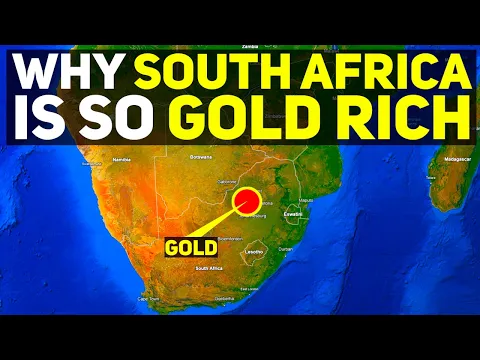
Geologists explain that the exceptional concentration of gold is linked to three main factors:
- Antiquity of the formation, which allowed for long cycles of erosion and deposition.
- Specific sedimentary environment, which favored the accumulation of heavy metal particles.
- Relative tectonic stability, which preserved the deposits over billions of years.
The combination of these factors has made Witwatersrand a practically unique case in the geological history of the planet.
Current Production And Gradual Decline Of Gold
Despite its historical importance, South Africa’s gold production has declined in recent decades. This is happening because:
- The mines have become extremely deep and expensive to operate.
- The average gold content in the extracted rocks has decreased.
- Energy and safety costs have increased.
Still, the region remains relevant on the global stage, even though it no longer leads annual world production.
Gold, Reserves And Future
Although much of the reserves have already been explored, Witwatersrand still contains remaining deposits. The economic viability of extracting them depends on:
- International gold prices
- Technological advancements
- Energy costs
- Environmental regulations
Gold remains a global strategic asset, used not only in jewelry but also in financial reserves, electronics, and industrial applications.
A Formation That Shaped Modern History
Few geological formations have had as broad an impact as Witwatersrand. It:
- Changed the economic position of an entire country
- Influenced global mining policies
- Sustained a significant part of the gold-based financial system in the 20th century
- Became a benchmark in underground engineering
At 2.7 billion years old and responsible for about 40% of all the gold ever extracted by humanity, this South African formation remains one of the greatest geological and economic phenomena in modern history.
The mountain of gold that belongs to South Africa is not just a mineral deposit; it is a landmark that redefined the country’s role in the global arena and left a permanent mark on the history of world mining.









Thats God given treasure…..psalms 24:1…the earth is the Lords, and fullness thereof, and they that dwelleth threin..