Portuguese
  Spanish


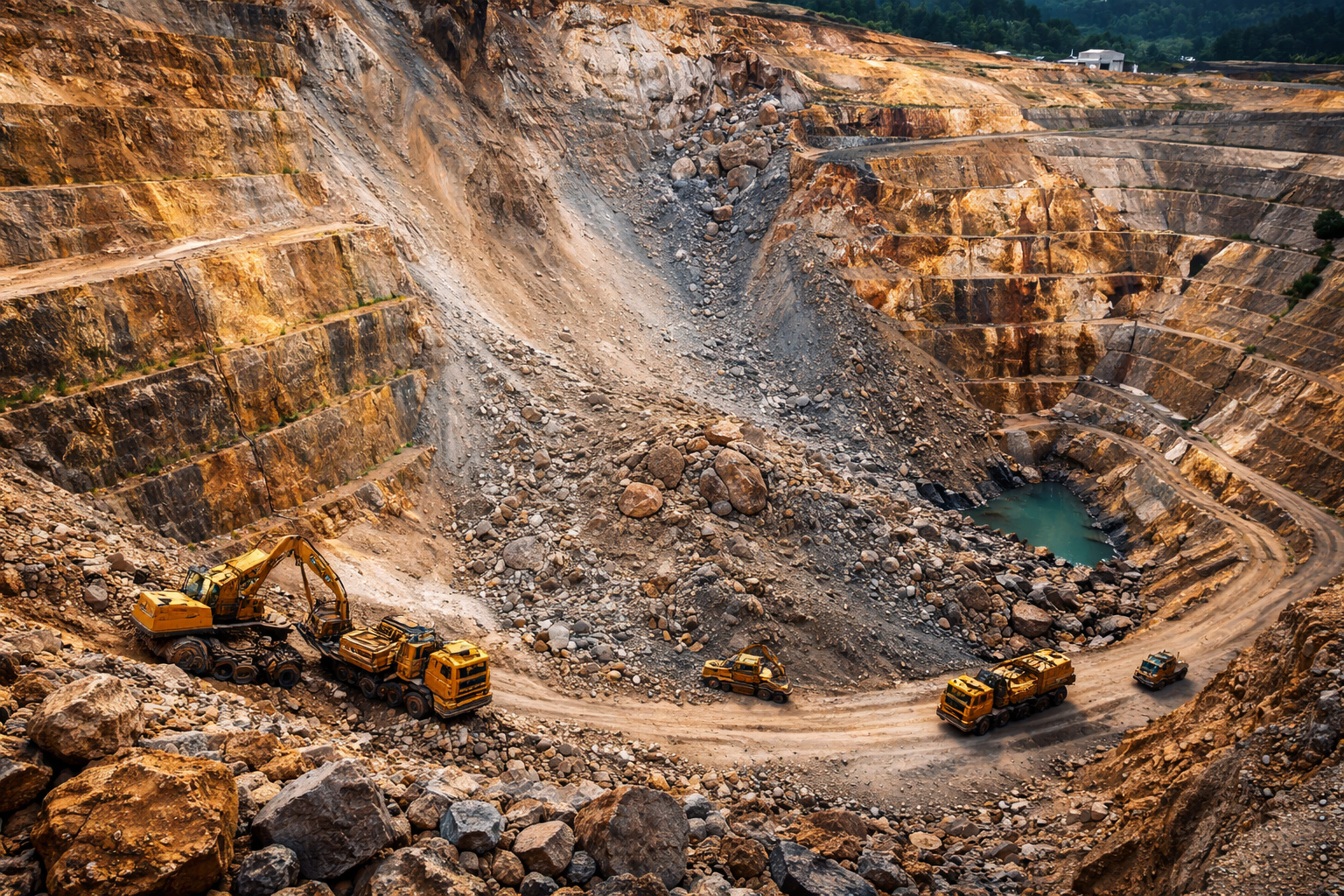

Vicuña Project brings together gigantic mineral reserves and may influence global supply chains for over 40 years
A mineral discovery of great economic impact was recently identified in the Andes Mountains, placing South America in the spotlight of international attention. Furthermore, the find involves copper, gold, and silver, with an estimated value of nearly R$ 1 trillion over decades.
According to mineral sector analyses released in 2025, at the same time, the project requires coordination between Argentina and Chile, which enhances its geopolitical relevance. According to industry experts, the exploration of this deposit could reposition the region as one of the world’s main mineral hubs.
Technical investigation reveals integrated mineral potential
Initially, the deposit is not limited to a single isolated mine. In practice, it is a mineral complex called Vicuña Project, which brings together large metal reserves in the same region.
-
Giant 142 kg Emerald from Brazil’s Bahia Region Auctioned with Starting Bid of Nearly $16 Million

-
Study Reveals 97% of Pregnant Munduruku Women in the Brazilian Amazon Have Mercury Levels Above Safe Limits, 90% of Newborns Contaminated by Gold Mining
-
China could reduce iron ore imports from 80% to 50% of consumption by 2030, while its share in global steel production falls from 52% to 46%, in a shift that could reshape the global market, says CMRG.
-
Brazil is sitting on one of the largest lithium reserves in the world, in the Jequitinhonha Valley, but national mining has almost become an appendage of China: 97% of the metal’s export goes to a single country, which also dominates refining.


Additionally, the project includes two main mineral bodies, Filo del Sol and Josemaría, which are close enough for joint operation. Therefore, this integration allows for logistical gains and cost reduction over time, increasing the economic viability of the project.
According to technical analyses released in 2025, this set positions the deposit among the largest in the Andean region.

Why is the value of the deposit so high
Next, the estimated value close to R$ 1 trillion considers the potential for exploration over decades. Above all, the highlight goes to copper, which is considered essential for various global supply chains.
Moreover, this metal has a growing demand due to technological and energy advancements. Among the main factors driving the project’s value are:
• Production of electric vehicles, as copper is essential for batteries and electrical systems.
• Expansion of renewable energy, as solar panels and turbines require large volumes of the metal.
• Digital and technological infrastructure, as networks, data centers, and electronic devices directly depend on this strategic resource.
Consequently, these factors increase international investors’ interest in the project.
Necessary investment and operational challenges
On the other hand, despite the billion-dollar potential, exploration requires a high initial investment. According to estimates released in 2025 by industry experts, the value may reach US$ 17 billion.
Furthermore, the operation involves relevant technical challenges, mainly due to the mountainous and difficult-to-access location. At the same time, the operational forecast exceeds 40 years, characterizing a long-term project.
Therefore, the financial return depends on economic and political stability over the coming decades.
Main data of the mineral project
The deposit is located in the Andes Mountains, between Argentina and Chile, with an estimated value of nearly R$ 1 trillion over time. The main minerals are copper, gold, and silver, within the Vicuña Project, which integrates Filo del Sol and Josemaría.
Additionally, the strategic importance involves clean energy, electric mobility, and technology, while the initial investment can reach US$ 17 billion, with an estimated duration of over 40 years. At the same time, the relationship between the countries requires logistical and commercial cooperation, as the global impact may influence international supply chains.
Relationship between Argentina and Chile in the project
However, there is no confirmation of a direct dispute between the involved countries. In practice, there is a strategic negotiation between Argentina and Chile, as pointed out by recent geopolitical analyses from 2025.
Meanwhile, most of the reserve is located in Argentine territory, but export depends on Chilean ports, making cooperation essential. Thus, commercial, logistical, and tax agreements need to be defined jointly to enable the project.
Global impact and strategic relevance
Finally, the importance of the project goes beyond the estimated financial value. Mainly, copper is considered one of the most relevant metals for the global energy transition, according to industry experts.
Moreover, large-scale exploration can influence international supply chains and strengthen local economies. At the same time, the discovery reinforces South America’s role as a strategic mineral hub.
In light of this scenario, the region may gain global prominence — but will cooperation between the countries be sufficient to harness all this potential in a balanced way?