





 Portuguese
  English
  Spanish
  5 min of reading
  2 comments


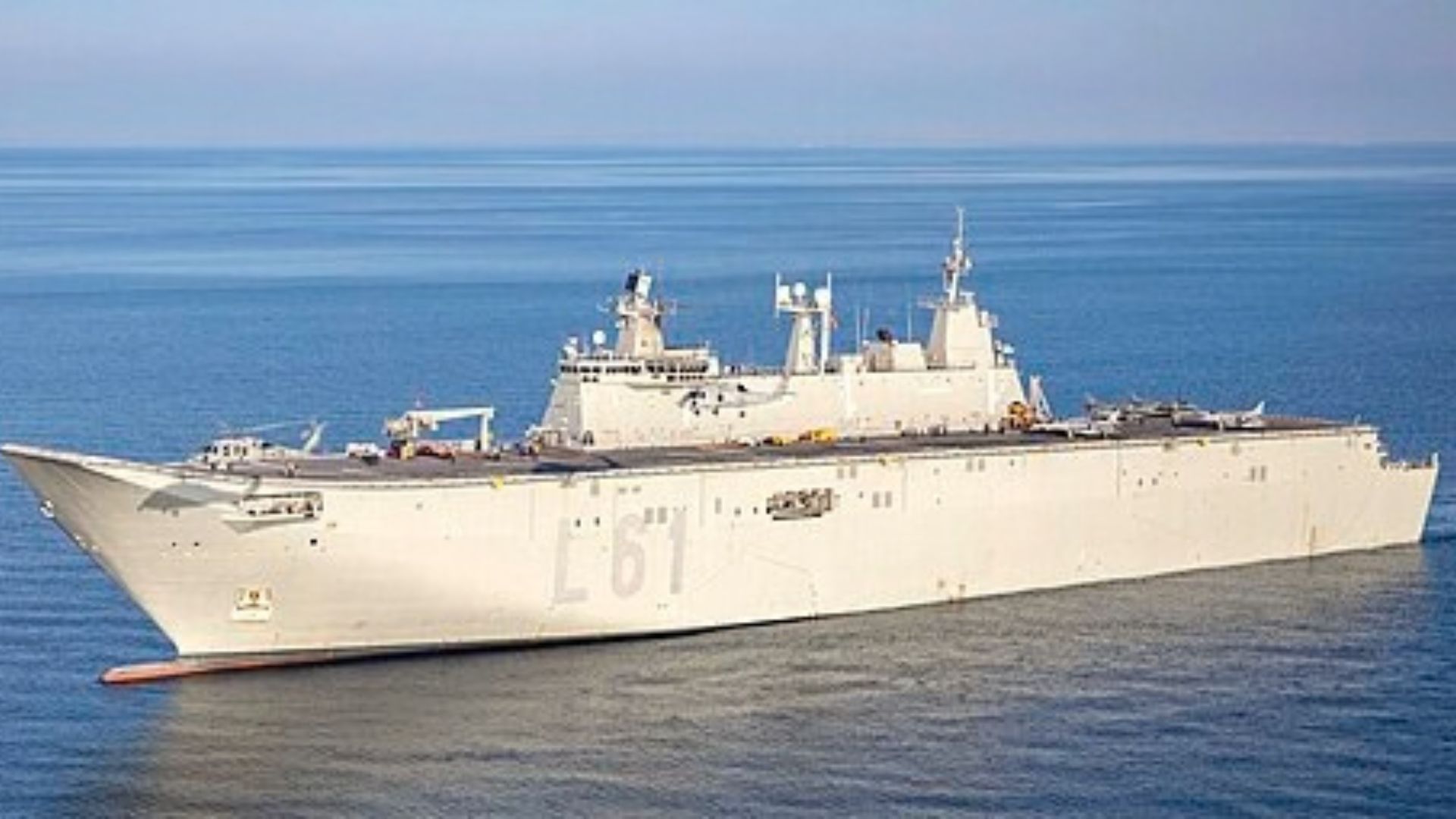


Giant of the Spanish Navy Brings Together Embarked Aviation, Troops, Armored Vehicles, and Command in a Single Structure, a Combination That Transformed the Juan Carlos I into an International Reference for Amphibious Missions, Aerial Operations, and Humanitarian Response, with Impact That Went Beyond Military Use and Reached Exported Projects.
The Juan Carlos I has established itself as the largest warship ever built by Spain by bringing together, in a single platform, the capabilities of light aircraft carrier, amphibious ship, and strategic transport.
At 231 meters long and officially reported displacement around 26,000 tons, the vessel was designed to operate aircraft, embark troops, transport armored vehicles, and serve as a command center for long-distance missions, according to the Spanish Navy and Navantia.
More than its size, what distinguishes the ship is the combination of functions that, in many navies, tend to be distributed among distinct units.
-
How 5,000 Indian dabbawalas manage to deliver around 200,000 lunchboxes a day in Mumbai for over 130 years using bicycles, crowded trains, and a manual system that continues to operate with impressive accuracy.

-
While restoring a historic mansion from 1910, a brick structure with an old turbine that generated energy from the Rio do Testo emerged, along with a hidden door and a rare floor concealed under layers of wax.
-
Italian researchers have detected what appears to be a second Sphinx buried under the sands of Egypt, and satellite scans reveal a gigantic underground megastructure hidden beneath the Giza Plateau for over 3,000 years.

-
There are 4,223 drums and 1,343 metal boxes concreted with 50-centimeter walls that store the radioactive waste from Cesium-137 in the worst radiological accident in Brazil, just 23 kilometers from Goiânia, with environmental monitoring every three months.

Navantia describes the Juan Carlos I as a strategic projection ship with a design aimed at operational versatility, capable of carrying out military, humanitarian, and disaster response tasks, with flight deck, hangars, cargo areas, command systems, and a floodable dock for landing craft.
Juan Carlos I Combines Aircraft Carrier, Amphibious Ship, and Strategic Transport
The ship’s silhouette helps explain why it often appears in reports as a light aircraft carrier.
At the bow, the ski-jump, the inclined ramp that facilitates the operation of short takeoff and vertical landing aircraft, has become one of the most visible elements of the design.
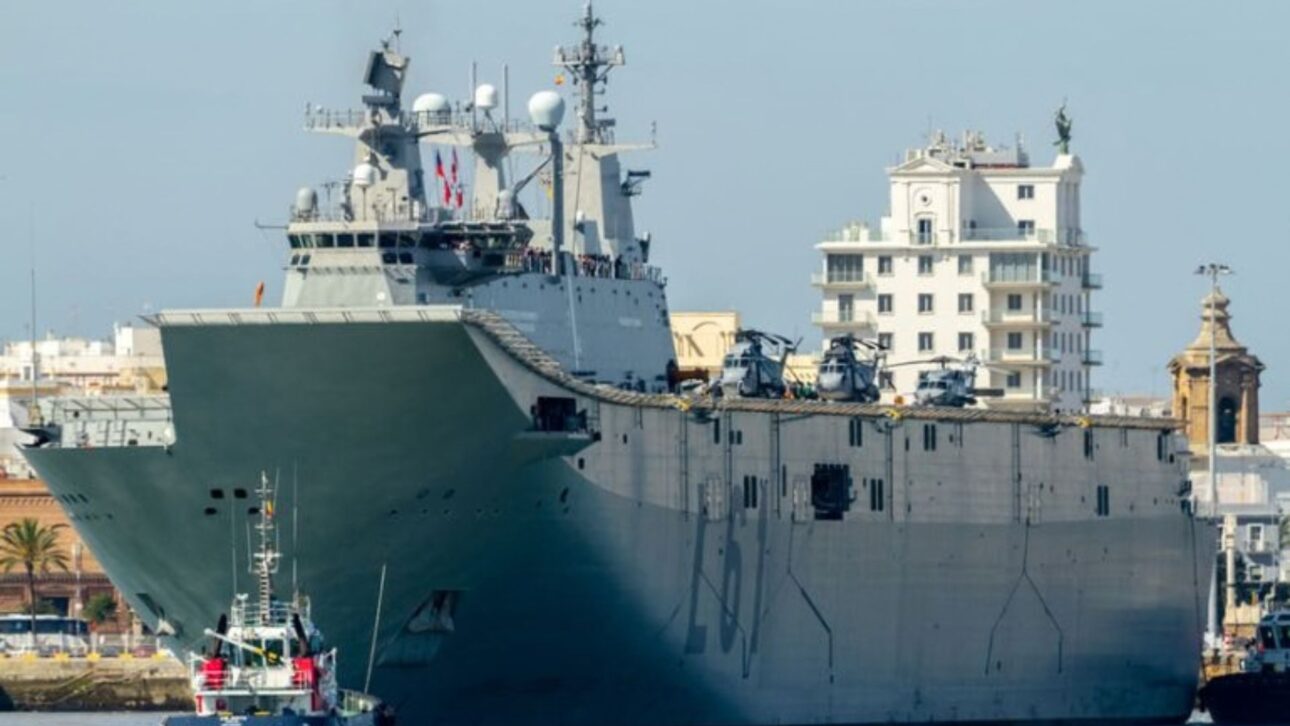
This feature allows the Juan Carlos I to operate both fixed-wing aircraft and helicopters, broadening the range of missions and giving the vessel an unusual naval aviation profile within the Spanish fleet.
In practice, the air configuration was designed to meet distinct scenarios.
The Navy reports capability to operate up to 30 medium and heavy helicopters in amphibious profile.
In aircraft carrier configuration, the ship can embark between 10 and 12 short takeoff and vertical landing aircraft, in addition to helicopters, which increases the reach of a force deployed at sea and reinforces the ship’s role in combined operations.
This flexibility also helps explain the relevance of the Juan Carlos I in Spanish naval planning over the last few decades.
Instead of relying solely on its air wing to justify strategic value, the vessel was designed to fulfill multiple mission profiles, from amphibious projection to logistical support.
As a result, the ship has become a central piece for transporting troops, air assets, and cargo over great distances without initially depending on robust port infrastructure at the destination.
Amphibious Capability Expands the Role of the Spanish Ship
The amphibious dimension of the project is among the most important aspects of the Juan Carlos I.
Navantia highlights that the ship combines a flight deck with a floodable dock, a solution that allows launching landing craft from inside the hull.
This architecture expands the platform’s use in amphibious assault operations, evacuation, transportation of mechanized assets, and humanitarian response in coastal areas or locations without adequate facilities to accommodate large ships.
According to institutional documentation and corporate materials related to the project, the ship can transport hundreds of military personnel, vehicles, and cargo in different operational arrangements.
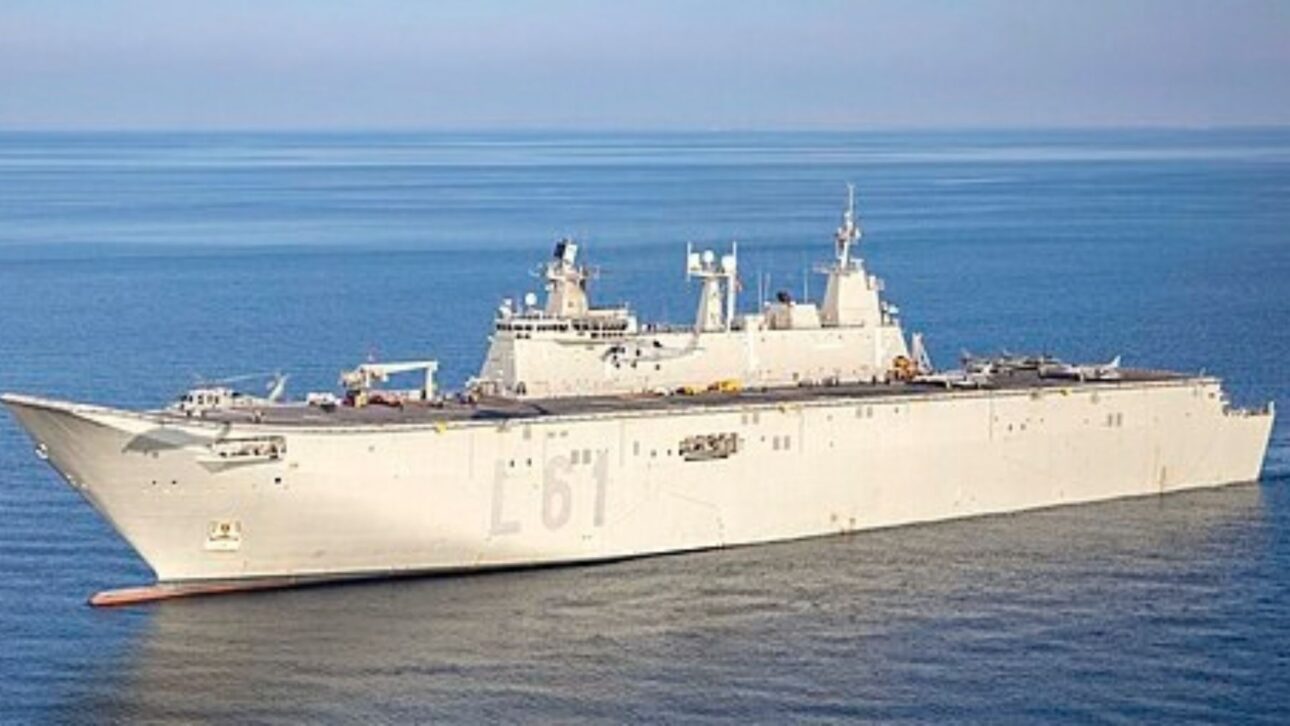
Navantia reports capacity to carry around 900 Marines and up to 46 main battle tanks, while other descriptions of the program highlight the possibility of embarking a force close to one thousand military personnel with vehicles, depending on the configuration adopted for the mission.
This set of characteristics has transformed the Juan Carlos I into an expeditionary entry instrument.
In a crisis scenario, the ship can act as a mobile base for landing, air support, force coordination, and logistical support.
At the same time, in non-combat missions, the same structure allows for transporting aid, teams, and equipment to areas affected by natural disasters or infrastructure collapse, without the need to adapt another vessel for this purpose.
Propulsion and Autonomy Strengthen the Reach of the Juan Carlos I
The strategic reach of the project also depends on the propulsion system.
The Navy reports that the Juan Carlos I uses a electric propulsion arrangement supported by a gas turbine, two diesel generators, and two 11 MW pods.
This combination was designed to provide efficiency, maneuverability, and performance compatible with prolonged missions, including movements between distant theaters.
The reported autonomy is 9,000 nautical miles at 15 knots, with a maximum speed close to 21 knots.
In addition to mobility, the ship has been prepared to function as a command core.
Navantia highlights the Juan Carlos I as a platform capable of leading joint and combined operations, integrating communication, control, and coordination systems that reinforce its flagship condition.
This means that, in certain missions, the vessel not only transports assets and personnel but also centralizes the management of the operation at sea, in the air, and on land.
The origin of the program dates back to the modernization process of Spanish expeditionary capability in the early 2000s.
The concept of the then Buque de Proyección Estratégica was approved in September 2003, and construction began in May 2005 at the Navantia shipyards in Galicia.
The ship entered service on September 30, 2010, assuming a role that began to concentrate capabilities previously dispersed among other means of the Spanish Navy.
Spain’s Project Served as a Basis for Australia and Turkey

The impact of the Juan Carlos I has exceeded its use by Spain itself and gained industrial dimension.
Navantia presents the ship as an international reference in naval engineering, and its design served as the basis for exported programs.
In Australia, the two Canberra-class ships were developed from the Spanish design and now form one of the country’s main amphibious systems, also employed in humanitarian missions and disaster relief.
The influence of the project has also reached Turkey.
Navantia reports that the Anadolu L400 was developed based on the Juan Carlos I and built with technology from the Spanish company, adapted to combine amphibious projection, aerial operations, and humanitarian support.
This case reinforces how the Spanish hull has ceased to be just a national military asset to become a showcase for exporting a concept capable of bringing together command, mobility, and naval power in a single vessel.
Over the past decade and a half, the Juan Carlos I has remained one of the most recognizable images of the Spanish Navy because it synthesizes various functions into a single ship.
Among flight deck with ski-jump, floodable dock, troop transport, armored vehicle loading, and command capability, the vessel has established itself less as a conventional aircraft carrier and more as a multifunctional platform for war, deterrence, evacuation, and humanitarian assistance scenarios.






I have very serious doubts a ship that size weighs in at only 27 tonns
9 miles !