





 Portuguese
  English
  Spanish
  4 min of reading
  4 comments


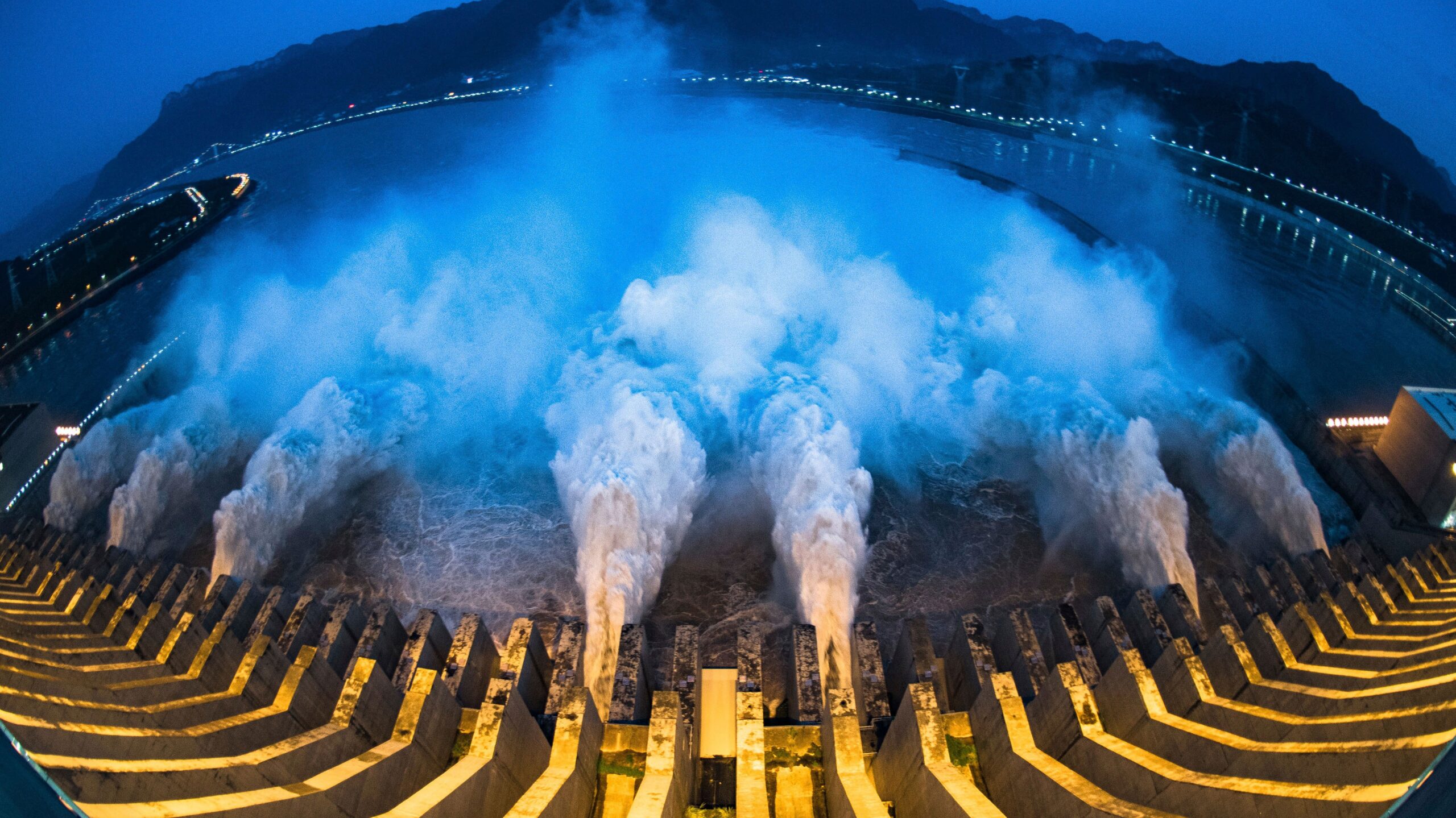


The Three Gorges Dam Consumed 27.2 Million Cubic Meters of Concrete and 463 Thousand Tons of Steel, Becoming the Largest Structural Colossus of Engineering and the Largest Hydroelectric Power Plant in the World.
The construction of the Three Gorges Dam, on the Yangtze River, was not just an energy project: it was a demonstration of sheer power of modern civil engineering. With 27.2 million cubic meters of concrete, 463 thousand tons of steel, 181 meters in height, and 2,335 meters in length, it consolidates itself as one of the largest artificial structures ever erected by man, surpassing Itaipu, Hoover Dam, and Grand Coulee in various technical parameters.
The megastructure, a national endeavor led by China Three Gorges Corporation, was designed to fulfill three strategic objectives: energy generation, flood control, and modernization of the country’s internal navigation. However, the material dimension of the work became so monumental that it itself transformed into a global symbol of construction capability.
27.2 Million Cubic Meters of Concrete: A Volume That Exceeds Any Standard of Megastructure
The amount of concrete used in the Three Gorges Dam exceeds everything that had been seen so far in Asia. For the sake of scale:
-
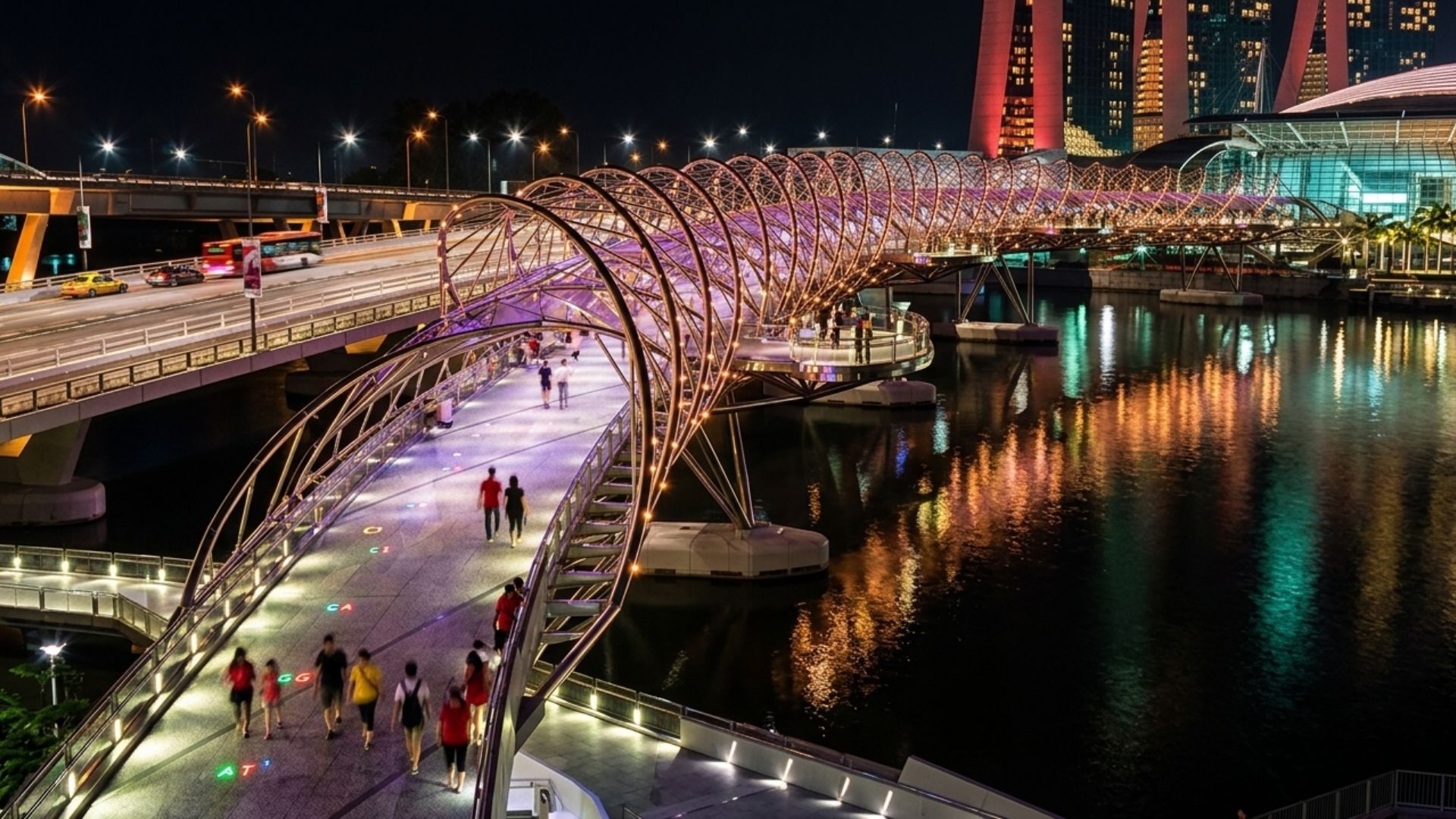
With a DNA shape, this bridge in Singapore draws attention in modern architecture and surprises tourists by transforming a simple crossing into an unforgettable visual experience in the urban heart.
-
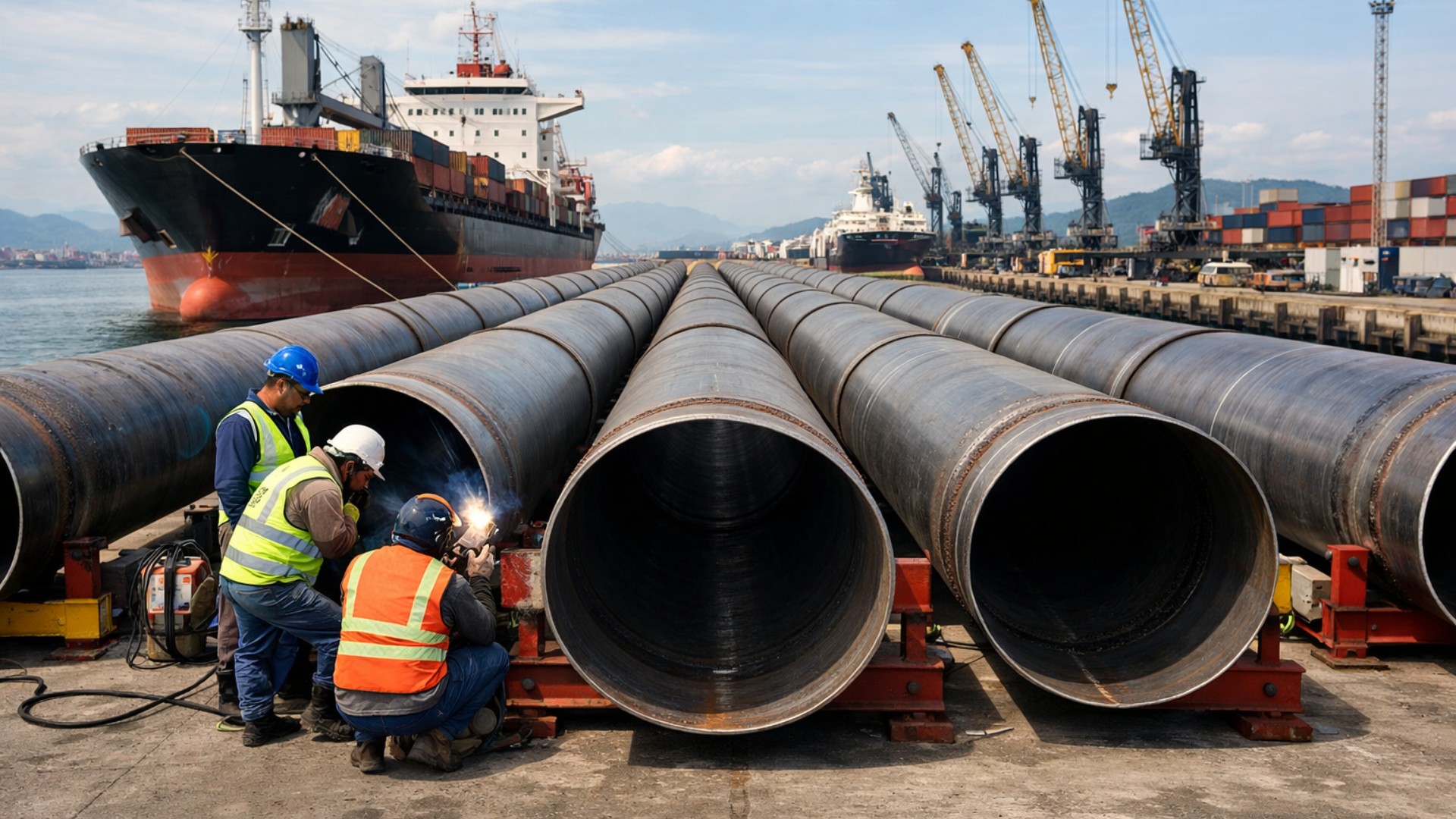
Giant underwater pipeline begins to take shape with a R$ 134.7 million project at the Port of Santos: the 1.7 km structure uses 12-meter and 700 mm pipes to supply water to 450,000 people in Guarujá.
-
A mason reveals a professional plastering technique that uses aligned guides and a 3-meter ruler to plaster an entire wall in up to 3 hours, without visible seams, with uniform thickness, perfect plumb, and a finish ready for painting without rework.

-
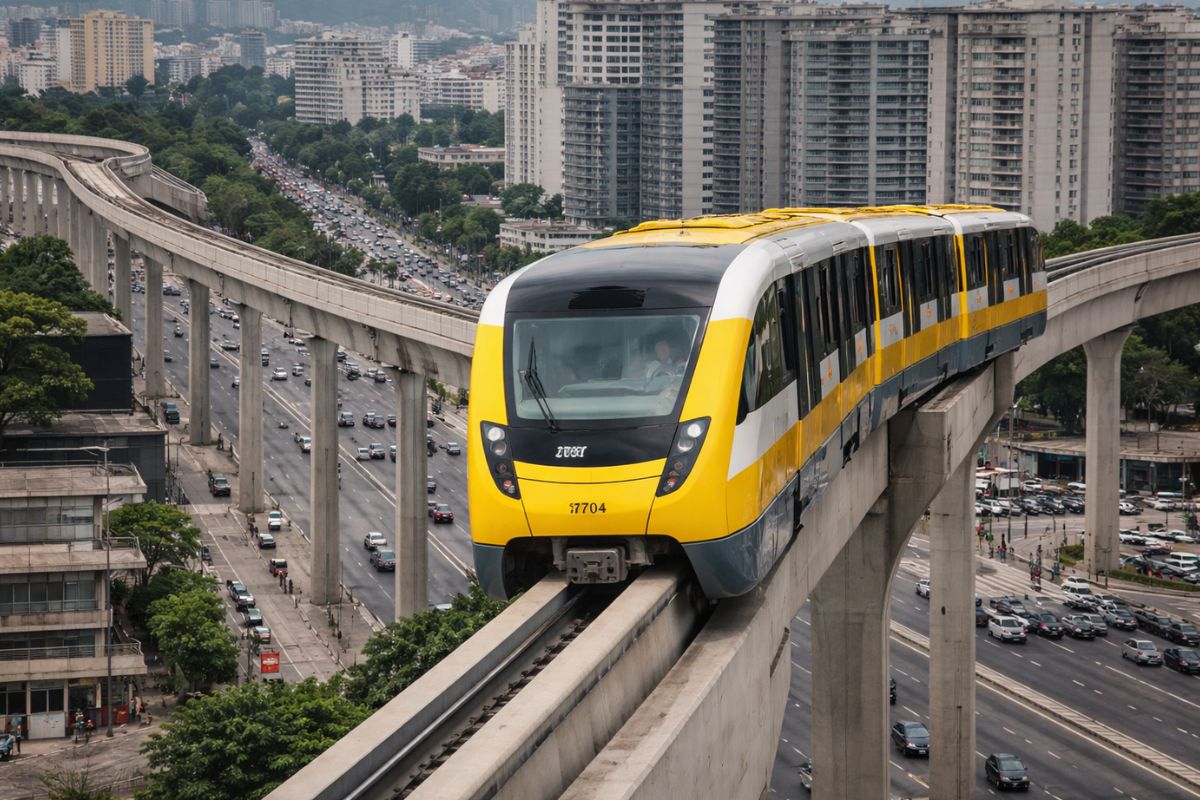
The project that was supposed to be ready for the 2014 World Cup in Brazil debuted with a 12-year delay and nearly R$ 6 billion invested: the Line 17-Gold of the São Paulo monorail opened with reduced hours and is only expected to operate fully in October.

- it is equivalent to about three Grand Coulee Dams,
- or more than 300 Eiffel Towers filled with concrete,
- or even 3,000 km of highways 10 meters wide.


The concrete pouring required dedicated plants set up on site, 24-hour operation, and an internal transport system reminiscent of high-productivity industrial lines.
Additionally, to prevent cracks due to hydration heat, engineers adopted an internal cooling system through pipes, similar to that used in Hoover Dam, but on a significantly larger scale.
This process allows the concrete to cure uniformly, ensuring stability and avoiding structural failures that could compromise a dam of this size.
463 Thousand Tons of Steel: Structure Equivalent to More Than 60 Eiffel Towers
Although the Three Gorges is classified as a concrete gravity dam, it relies on an extraordinary amount of steel. That amounts to 463,000 tons, used in:
- gates,
- turbines and spiral cases,
- tilt guides,
- navigation locks,
- electromechanical reinforcements,
- monitoring and control systems.
This metallic volume surpasses the combined weight of dozens of skyscrapers and represents approximately 10 times the steel used in the original construction of the Empire State Building.
The gates, for example, reach dozens of meters in height and operate under gigantic hydraulic pressures. The steel was essential to withstand this type of dynamic effort while also ensuring durability in a constantly submerged environment.
2,335 Meters in Length: A Monumental Wall Along the Yangtze
With over 2.3 km in length, the dam acts as a true concrete wall.
To give you an idea, it is longer than:
- the largest ship in the world stacked 20 times,
- the runway of Shenzhen International Airport,
- and several skyscrapers placed side by side.

This length allowed for the incorporation not only of the main wall and the powerhouse but also one of the most impressive navigation systems ever built: the double five-level locks, capable of raising 3,000-ton vessels by almost 100 meters of elevation difference.
The project also integrates an even bolder solution: a ship elevator, which transports entire vessels in a mechanical vertical system, something very rare even by international standards.
Energy on a Continental Scale: 22,500 MW of Installed Capacity
The Three Gorges Dam is not just large: it is the largest hydroelectric power plant in the world.
The sum of its turbines — 32 main and 2 auxiliary — results in 22.5 GW of power, surpassing Itaipu, Belo Monte, Tucuruí, and Grand Coulee.
This capacity allows:
- to supply tens of millions of homes,
- to reduce the annual coal burning by millions of tons,
- to stabilize the electrical grid of one of the largest economies on the planet,
- to ensure continuous supply for strategic industrial hubs.
It is an energy generation volume capable of influencing domestic electricity prices, reducing emissions, and increasing the energy security of the country.
The Internal Engineering of the Dam: Tunnels, Galleries, and Systems Invisible to the Public
The outer face of the Three Gorges hides an equally monumental underground infrastructure.
Inside the dam, there are:
- kilometers of inspection galleries,
- control and drainage tunnels,
- seismic instrumentation systems,
- deformation sensors,
- special conduits for electrical and hydraulic cables.
These corridors are essential for monitoring:
- thermal variations,
- microdeformations,
- internal pressures,
- leaks,
- and dynamic loads during turbine operation.
Maintenance is continuous; the dam operates as a living organism, with data being collected 24 hours a day.
A Colossus That Transformed the River, the Territory, and Global Engineering
The impact of the Three Gorges Dam goes beyond its physical structure. The dam:
- reduced historic floods along the Yangtze,
- expanded navigation capacity by hundreds of kilometers,
- enabled irrigation and level stabilization for entire cities,
- strengthened the industrial development of central China,
- and became a global reference in hydro energy megaprojects.
From a technical point of view, it established a new standard for concrete gravity constructions, lock systems, large-scale energy generation, and hydraulic control.
Three Gorges Dam Remains One of the Greatest Structural Achievements in Engineering History
With 27.2 million cubic meters of concrete, 463 thousand tons of steel, 2.3 km in length, and the highest hydropower capacity ever built, the Three Gorges Dam represents the pinnacle of large structure engineering — a work that surpasses logistical, material, and human limits, and remains a definitive reference in the 21st century.








Itaipu (14GW) já ficou como terceira maior do mundo.
A China inaugurou no ano passado a usina hidrelétrica de Baihetan, com 16GW (16 turbinas de 1GW).
E a China também está iniciando um megaprojeto monstruoso de 60 GW na divisa com o Nepal (Projeto “Motuo”).
Está em estudo também outro megaprojeto na República Democrática do CONGO (Projeto Inga), no Rio Congo, com potência instalada de aproximadamente 40GW!
É simplesmente colossal!!!
Só o Brasil, msm atrasado tecnologicamente construiu outra gigante, q é a 2a maior do mundo; a de Iraipu!!!
Itaipu (14GW) já ficou como terceira maior do mundo.
A China inaugurou no ano passado a usina hidrelétrica de Baihetan, com 16GW (16 turbinas de 1GW).
E a China também está iniciando um megaprojeto monstruoso de 60 GW na divisa com o Nepal (Projeto “Motuo”).
Está em estudo também outro megaprojeto(Projeto Inga) na República Democrática do CONGO, no Rio Congo, com potência instalada de aproximadamente 40GW!
Itaipu esta estudiando instalar turbinas de 1GW con lo que con sus 18 turbinas producira 18GW, volviendo a
superar a Baihetan