





 Portuguese
  English
  Spanish
  6 min of reading
  0 comments


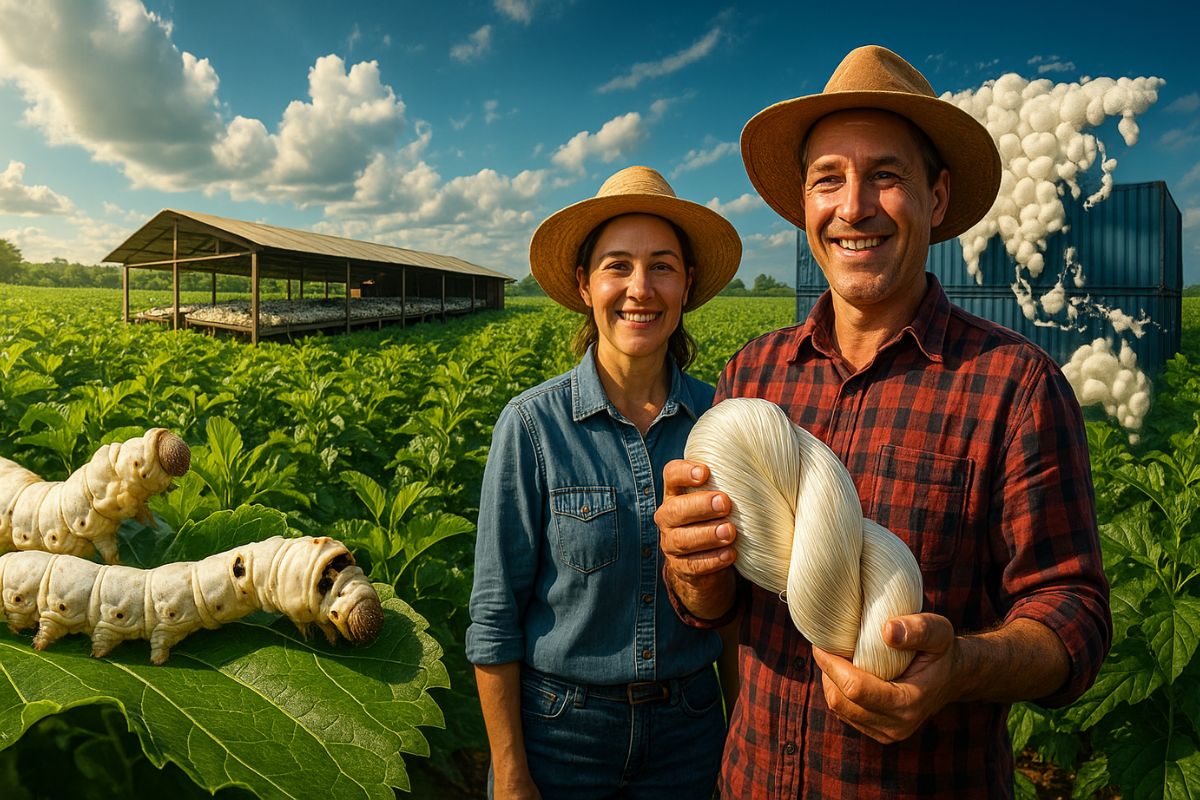
From 36 Thousand M² of Mulberry and Family-Focused Management, Brazilian Silk Gains Strength in 2025 with High-Quality Cocoons, 100% Exported Production, Low Environmental Footprint, Carbon Capture in Farms, and a Discreet Supply Chain that Supports Thousands of Small Producers Across Paraná.
The Brazilian silk that comes from small rural properties in the countryside may seem like a hidden detail on the agricultural map, but it supports a technological chain with five thousand years of history. In simple warehouses, more than 200 thousand caterpillars feed exclusively on mulberry leaves and transform this green into cocoons capable of generating the most valued thread in the global textile industry.
While many still associate the countryside only with soy, corn, or cattle, this same Brazilian silk comes from properties of a little over one and a half acres, with 36 thousand m² of mulberry, and goes straight to export. All the produced thread is sold outside, in contracts with specialized companies, maintaining production 100% directed to the international market and recognized as one of the best silks in the world.
How Brazilian Silk is Born in the Heart of Family Agriculture

The story begins far from large machinery. The foundation of Brazilian silk lies in small family-run properties, often with just a few hectares, where mulberry dominates the land.
-
The rise in oil prices in the Middle East is already affecting Brazilian sugar: mills in the Central-South are seeing their margins shrink just as ethanol gains strength.

-
Rain gains strength in April, potentially exceeding 150 mm, placing the North, Northeast, and the coasts of the South and Southeast at the center of the heaviest forecast of the week.

-
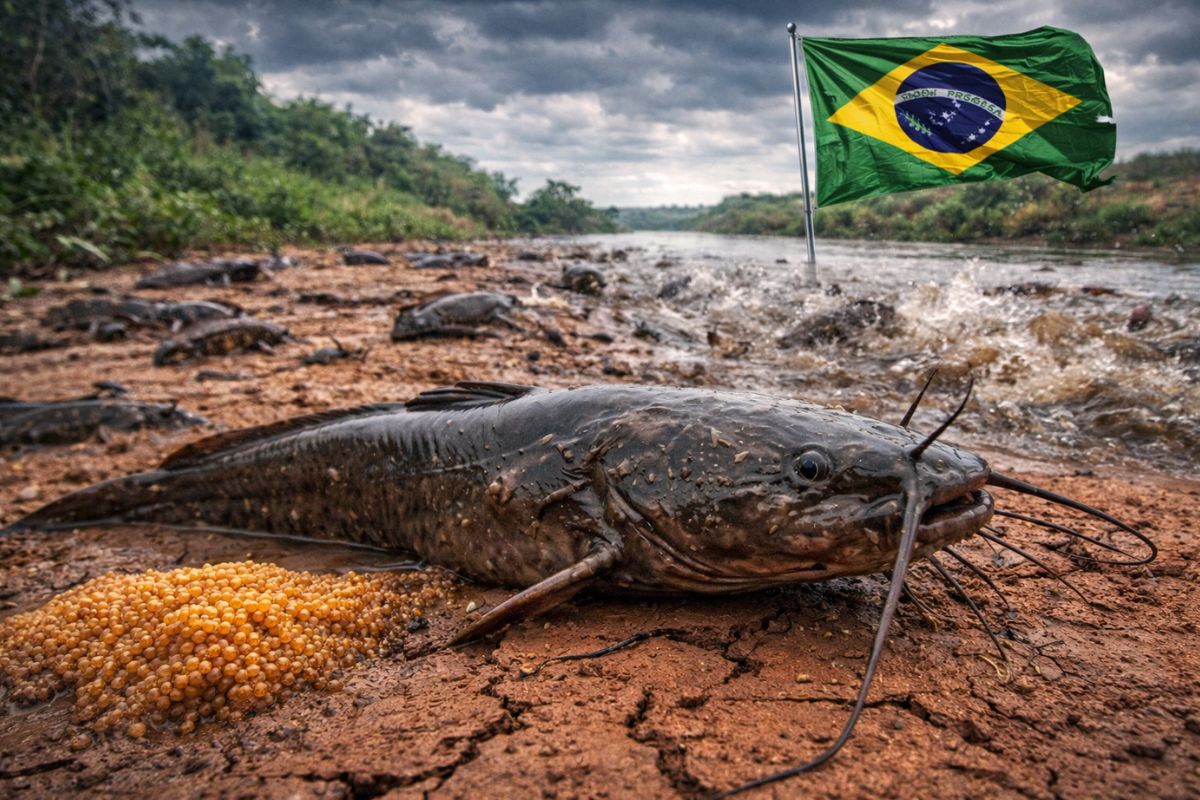
A fish that survives out of water, crawls on land until it finds another river, and whose female lays 80,000 eggs at once is infesting rivers and lakes in Brazil, and no one can stop this invasion.
-
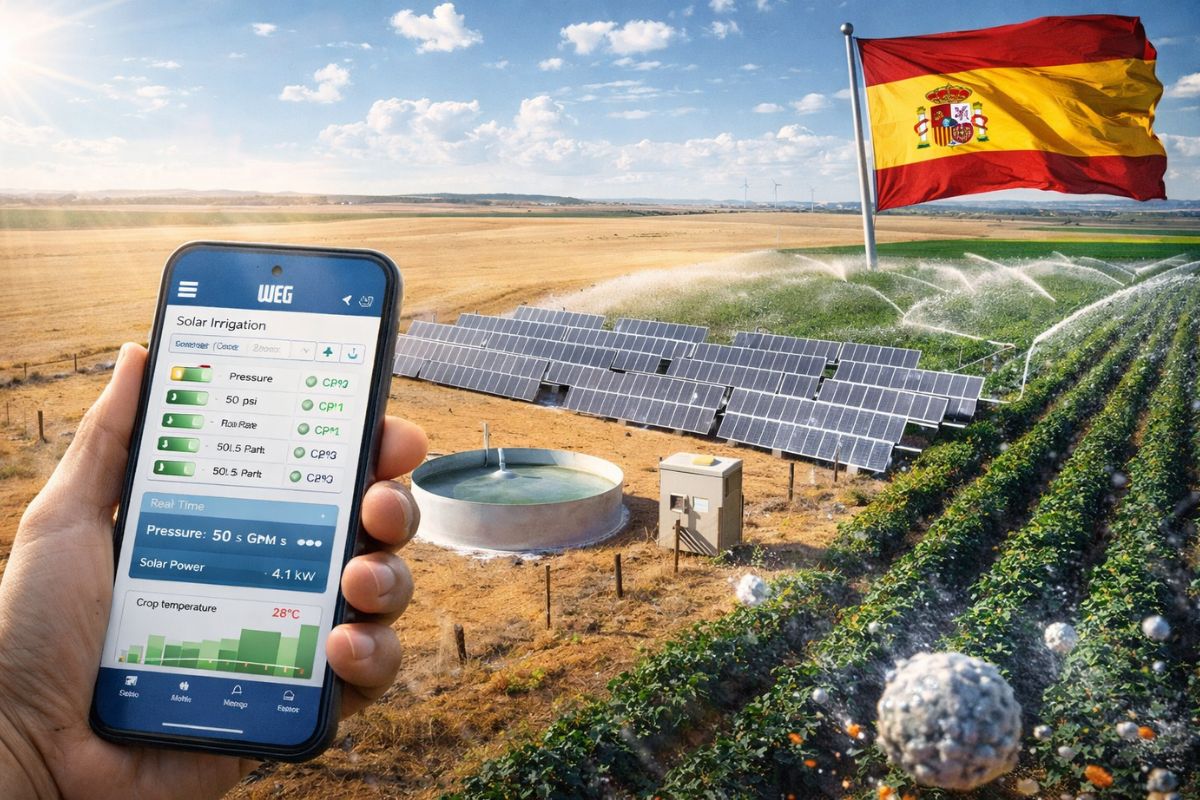
WEG took its technology to Spain to create a solar irrigation system that operates independently without needing an electrical grid, and now farmers control everything remotely via their mobile phones.

This is the case for areas with one and a half acres, totaling 36 thousand m² planted, solely to feed the silkworm.
In these farms, the mulberry is pruned as a shrub. The genetics focus on leaves, not fruit, because the sole goal is to ensure quality food for the caterpillars.
Pruning is constant, the plant regrows, captures carbon, and keeps the area always green, functioning as a continuous “carpet” of sustainability.
Surrounding it, the organization is simple: warehouse, rearing beds, groves for cocoons, and a lot of manual labor.
This routine forms the core of a silent chain that connects family farming, exportation, and cutting-edge textile technology without most of the population even noticing.
From Egg to Caterpillar: The Intensive 28-Day Cycle in the Mulberries

Behind the Brazilian silk lies an insect that has been domesticated for millennia. The species used today is the domestic silkworm, the result of selective breeding over about five thousand years, incapable of flying and completely dependent on humans.
Families receive the larvae via contracts with specialized companies, such as Bratac, which provide the already managed eggs.
The tiny larvae arrive the size of a grain of rice, taking up little space and starting their life on a fresh bed of mulberry leaves.
The cycle is intense and timed:
- The caterpillars go through successive ages, growing quickly and increasing their leaf consumption
- Between one stage and another, they “sleep” for a day without eating while undergoing metamorphosis
- In the fifth stage, they eat voraciously, requiring feeding several times a day
In a single warehouse, five boxes can hold about 40 thousand worms each, totaling over 200 thousand caterpillars in simultaneous production.
The entire process, from receiving the larvae to delivering the cocoons, revolves around 28 days, allowing for 9 to 10 harvests a year in ideal conditions.

The temperature must remain between 22 and 26 degrees. Extreme heat, intense cold, or sudden changes delay development and reduce quality, which shows how Brazilian silk is sensitive to climate variations and depends on careful management within the warehouse.
From Green to Gold: How Cocoons Become High-Value Brazilian Silk

The most critical moment in the chain begins when the caterpillars stop eating and seek to climb. They climb on structures called groves, small frames where they will build the cocoon.
If there is no well-installed grove, the caterpillars cocoon on the bedding itself, stuck to the leaves, which reduces industrial yield.
Inside the grove, each caterpillar works for about two days to build its cocoon. From there, there’s a maturation time so that the shell doesn’t become too thin. Only after this period can the producer deliver the material.
A cocoon alone is a small fiber factory. Each cocoon can yield between 300 to 900 meters of continuous thread, which will later be unwound, assembled, and transformed into industrial skeins.
Globally, around 32 thousand tons of silk are produced annually, requiring approximately 10 billion cocoons.

In this universe, Brazilian silk stands out:
- Production is 100% exported, with no retention in the domestic market
- The thread is recognized as one of the best in the world in quality, thanks to rigorous management
- Concentration in Paraná and inland regions ensures standardization and a consolidated technical history
In many cases, everything is reused. The pupa that remains inside the cocoon can be used in animal feed or other processes, reinforcing the logic of minimal waste within the chain.
ESG in Practice: Extreme Sustainability in Brazilian Silk
While large crops need to justify carbon credits and environmental practices, Brazilian silk is born with an almost ready ESG package.
The mulberry functions as a true carbon sink. Constant pruning causes the plant to regrow continuously, capturing CO₂ continuously and keeping the soil covered.
Additionally:
- The activity is almost entirely based on family farming, involving thousands of small properties
- The work is labor-intensive, generating local income and keeping families in the countryside
- The chain uses little area and adds high value per square meter planted
At the same time, the system is fragile. Improper use of agricultural pesticides in nearby crops can jeopardize everything.
If there’s pesticide drift onto the mulberries, the leaves arrive contaminated at the warehouse, the caterpillars eat them, and production plummets.
Another challenge is the climate. High temperatures and heat waves harm the quality of cocoons, just as harsher winters do, since for two months a year the mulberries stop sprouting, and the worms cannot withstand the cold. This reduces the production window and forces many families to seek other parallel activities.
Future Challenges: Labor, Succession, and Support for the Silk Chain
The average age of Brazilian farmers is around 46 years, and in the Brazilian silk chain, this reality weighs even more. Since work is manual, daily, and requires several feedings throughout the day, young people often migrate to more mechanized activities or to the city, leaving a succession gap in the properties.
Moreover, producers deal with:
- Income tied to specific contracts with the industry
- Dependency on stable climate in the ideal range for the silkworm
- Necessity for constant care of mulberries and warehouse structures
On the other hand, the potential for value is enormous. In a relatively small area, such as the 36 thousand m² of mulberries from a single farm, it is possible to maintain several harvests a year and produce cocoons that enter global fashion, materials technology, and even medical research with fibroin and sericin, silk proteins used in tissue reconstruction.
Producers suggest that public policies and specific incentives could strengthen the chain, assisting in generational renewal, workforce qualification, and protection against climatic and phytosanitary risks.
For an activity that already delivers sustainability, carbon capture, and direct social impact, the space for growth is evident.
The Invisible Wealth of Brazilian Silk in the Country’s Backyard
While most Brazilians have never seen a silkworm up close, thousands of families live this silent routine, feeding caterpillars with mulberry leaves, monitoring temperature and humidity, installing groves, and delivering perfect cocoons.
From this almost artisanal work emerges a Brazilian silk considered the best in the world, 100% exported and crucial for brands and industries that are not always aware of where their raw material comes from.
In a single simple warehouse, with concrete beds and wooden groves, centuries-old science, genetics, phytotechnology, sustainability, and foreign trade circulate.
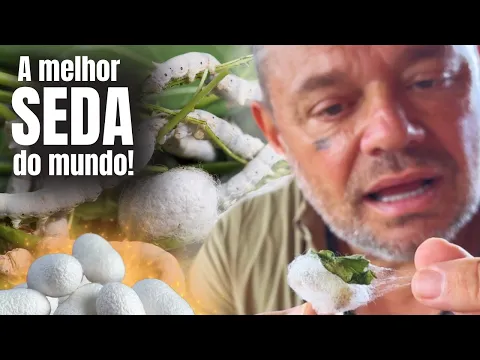

This is Brazilian agriculture showing that it doesn’t solely rely on traditional commodities, but also on highly sophisticated niches, intensive on knowledge and with enormous potential to generate value per square meter of land.
Did you already know that Brazilian silk is 100% exported and produced in small family farms in the countryside, or is this reality still completely surprising to you?






-

-

-

-

-

-

41 pessoas reagiram a isso.