





 Portuguese
  English
  Spanish
  5 min of reading
  6 comments


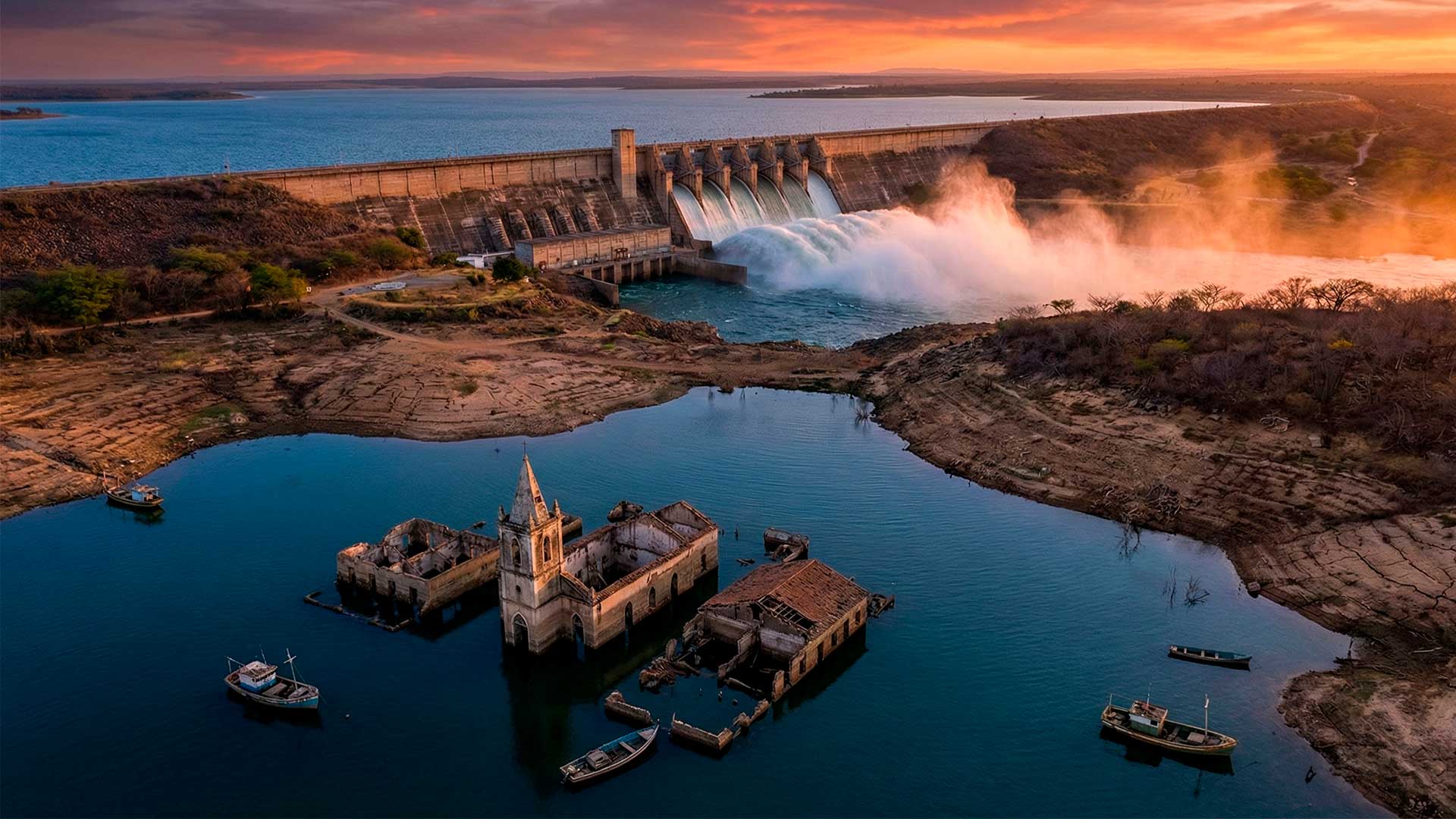


With Almost 50 Years of Operation, the Sobradinho Reservoir Remains a Central Piece of the São Francisco River, Combining Energy Generation and Flow Control. The Scale of the Lake and Its Management Influence Cities, Irrigation, and Water Security in Several States.
The Largest Artificial Lake in Brazil Remains at the Center of the Energy and Water Board of the Northeast. With About 320 km in Length and 4,214 km² of Water Surface, the Sobradinho Reservoir, in Northern Bahia, Was Created to Sustain Electricity Generation and Regulate Flows of the São Francisco River, Reducing Impacts During Both Dry Periods and Flood Moments.
The Plant Associated with the Reservoir Has 1,050.3 MW of Installed Power, with Six Generating Units, and Began Operations in November 1979, According to Data from Chesf’s Own System.
Almost Five Decades Later, Its Relevance Has Not Diminished. The National Water and Basic Sanitation Agency Reported That the Reservoir Recorded 100% Storage on April 1, 2022, Something That Had Not Happened Since May 2009, Reinforcing the Role of the Lake as a Buffer for Hydrological Extremes.
-
A Brazilian millionaire couple restores a farm over 150 years old in the interior of São Paulo and transforms the historic property with Portuguese tiles, antique furniture, and new spaces into a refuge that blends tradition, comfort, and sophistication.
-
Submerged city in a lake in Minas reveals intact streets, preserved vehicles, and houses after more than 60 years, impressing divers.

-
Yellowstone has started to rise again in an area of the caldera, and the movement rekindles fears surrounding the U.S. supervolcano, as scientists monitor the deformation and try to understand what is happening underground.
-
Woman arrested after receiving $1.2 million due to banking error and not returning the amount.


At the Same Time, the History of Sobradinho Is Marked by Social Disputes and Requests for Reparation. The Chamber of Deputies Records Reports of 72,000 People Displaced Compulsorily to Enable the Project, with Ongoing Debates About Compensation and Rights.
Where Is the Sobradinho Lake and Why Does It Seem Like a Sea in the Backlands
The Hydroelectric Exploitation of Sobradinho Is in Bahia, About 40 km Upstream from Juazeiro and Petrolina, in an Area of Caatinga That Gained a New Geography with the Damming of the São Francisco River.

At Nominal Level, the Water Spreads Over Such a Wide Surface That Residents and Visitors Often Describe It as an Inland Sea, with Long Stretches of Calm and Shores That Change According to the Reservoir Level.
This Shape Influences Routes, Access, and Economic Activities in Dozens of Communities. When the Level Recedes, Previously Submerged Points Reappear and Reopen Discussions About Surrounding Use and Occupations in Sensitive Areas.
Energy, Flow Control, and the Domino Effect on Downstream Plants
Besides Producing Electricity, Sobradinho Is Described by Chesf as the Main Source of Regulation of Water Resources in the Region, Coordinating the Amount of Water Flowing Downstream at Different Times of the Year.
In Practice, This Provides Predictability to the Operation of Other Exploitations Along the São Francisco River, Reducing Upsets That Can Affect Generation, Urban Water Withdrawals, and Irrigation Projects.
When There Are Floods, Operation Can Help Reduce Risks Downstream by Managing Releases; When There Are Droughts, Retention and Planned Release Become an Instrument of Water Security. The ANA Reminds That the Operation of the Cascade Involves Coordination with Chesf and the ONS, with Specific Rules During Flood Control Periods.
Operational Rules, Depletion Range, and the Message of 2022
At Nominal Levels, Chesf Reports That Sobradinho Stores 34.1 Billion Cubic Meters, a Volume That Sustains Daily Decisions Between Releasing Water for System Demands and Retaining It to Guarantee Future Supply.
The ANA Details That the Water System of the São Francisco Operates by Ranges Linked to the Volume Stored and the Time of the Year, with Parameters That Guide Minimum Flows and Operating Conditions.
The Incident of April 1, 2022 Became a Recent Milestone. On That Date, Chesf Announced That Sobradinho Reached 100% Capacity, Citing Rainfall in Upper São Francisco and Monitoring of Flows, Pointing Out That the Last Time Was in 2009.
The ANA Added That the Recovery of Useful Volume Combined Rainfall and Operating Rules, Highlighting That the Return to Maximum Level Occurred for the First Time Since May 2009.
For Experts and Users of the Basin, the Message Is Direct. In a Scenario of Greater Climatic Variability, Reservoirs with High Regulatory Capacity Are Likely to Gain Weight in Discussions About Energy, Irrigation, and Supply.
Navigation, Irrigation, and Multiple Uses That Depend on Lake Level
Sobradinho Also Impacts Regional Integration. Chesf Reports That the Project Includes a Lock That Allows Vessels to Overcome the Level Difference Created by the Dam, Maintaining the Continuity of Traditional Navigation in Sections of the São Francisco, According to Operating Conditions.
The Same Document Mentions Water Withdrawal for Irrigation Projects, a Sensitive Point in a Region Where Irrigated Agriculture and Fruit Farming in the São Francisco Valley Have Strong Economic Weight.
This Coexistence Increases the Complexity of Management. Energy, Irrigation, Fishing, Tourism, and Urban Supply Compete for Predictability, and Fluctuations in Levels Can Create Local Conflicts, Especially When Water Recession Exposes Areas Used Irregularly or Affects the Logistics of Riverine Communities.
Submerged Cities and the Controversy That Never Disappeared
The Size of the Lake Has a Historical Cost Recognized in Different Reports. The Chamber of Deputies Recorded That Representatives of 72,000 Displaced People Demand Reparation and Question the Sufficiency of Measures Taken at the Time, Citing Losses Related to Expropriations and Resettlements.
Meanwhile, the São Francisco River Basin Committee Reports That Cities Like Casa Nova, Sento Sé, Pilão Arcado, and Remanso Had Areas Engulfed by Water, Affecting Memories and Heritage, and describes prolonged human impacts.
A Newspaper Report Recalled in Journalistic Archives Points Out That About 12,000 Families Were Transferred to New Settlements Built to Receive the Affected Population, and That, During Drought Phases, Ruins and Old Landmarks Reappear, Reactivating Collective Memory.
This Is the Point Where the Debate Often Heats Up. For Some, Sobradinho Is Proof That Water and Energy Infrastructure Sustains Regional Development; For Others, the Project Consolidated a Social Debt That Still Seeks Reparation and Recognition.
In Your View, What Should Weigh More in the Management of the Sobradinho Lake, Water Security and Energy or the Historical Reparation of Affected Communities, and Why? Leave Your Comment and Tell Which Side of This Discussion You Consider Most Ignored in the Public Debate.




A barragem foi criada e o povo foi prejudicado pela ganância do governo federal em arrecadar fundos com a geração energética na região de sobradinho,sou morador local de sobradinho e minha família foi uma das prejudicadas,o governo federal manteve a venda da energia com a Chesf,que hj nem é mais nacional pq foi privatizada, e o governo arrecadou mais dinheiro para o bolso dos governantes e o povo mais uma vez prejudicado.
Uma obra estratégica onde uma boa engenharia mitigou vários problemas de uma forma que continua atual 50 anos depois. Reparação histórica soa como isca para um filão de dinheiro para advogados e espertalhões.
Faltou mencionar que ela também viabilizou a operação eficiente da transposição do SF, que lamentavelmente vem sendo mal gerida.
Segurança hídrica é uma necessidade e reparação histórica é uma obrigação.