





 Portuguese
  English
  Spanish
  7 min of reading
  0 comments


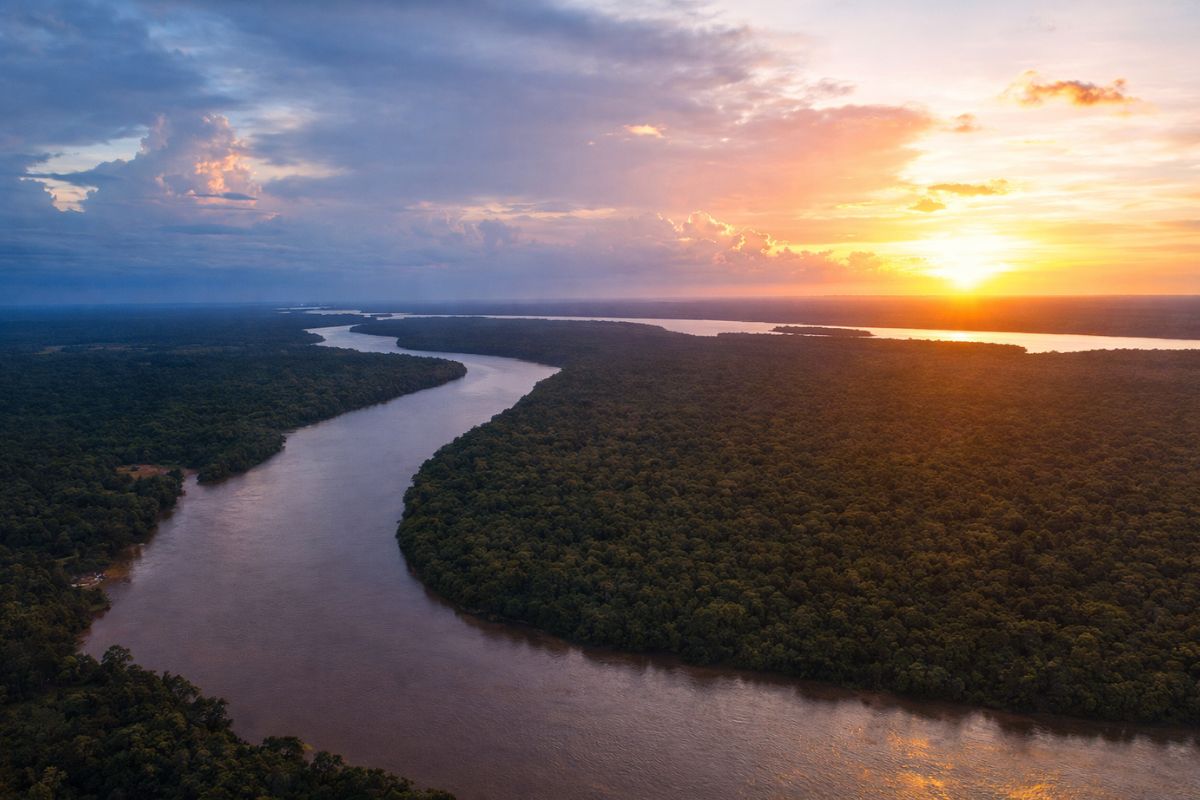
With 4,700 km in length, 220 m in depth, and a flow rate of 41,000 m³/s, the Congo River is the deepest in the world, separating two African capitals and concentrating a hydropower potential that can reach 39,000 MW with the Grand Inga project.
The Congo River is the deepest in the world and, at the same time, the second largest in several other aspects of world geography. It originates in the mountains of the East African Rift system, cuts through the heart of the continent, and flows into the Atlantic, carrying an impressive force of water and energy. Even though it takes “second place” in length, water volume, and the size of the surrounding forest, it leads by far when it comes to riverbed depth.
Along its course, this river, which impresses with its width, speed, and power, still has unique curiosities. The Congo River is the deepest in the world precisely because, in a specific section, the water cannot spread sideways and is forced to carve into the bottom, creating a rare submerged canyon. Additionally, it separates two neighboring capitals, holds violent rapids, and concentrates one of the largest hydropower projects ever conceived for the planet.
Congo River in Giant Numbers
The Congo River stretches for about 4,700 kilometers, from the mountainous region of East Africa to the Atlantic Ocean. It is the second-longest river in Africa, behind only the Nile.
-
With a cost per shot close to zero, the DragonFire laser could change naval warfare in 2027 and provide British ships with nearly unlimited defense against drones.

-
A British startup creates tires that generate electricity in electric vehicles when passing over potholes, speed bumps, and cracks.

-
Scientists have created robots made with living cells that have their own nervous system, swim on their own, explore the environment, and self-organize without any genetic engineering, and now they want to do the same with human cells.

-
Students create a solar-powered ambulance that operates without a plug, without fuel, and still keeps medical equipment running in remote areas.

In other comparisons, it repeats this “runner-up” status: it is second in drainage basin area, in the volume of water it carries, and in the size of the tropical forest that accompanies it, coming right after the Amazon.
Even so, it is in the details of the relief that the Congo River is the deepest in the world. For a large part of its course, it flows as a wide river, with several kilometers between one bank and the other. After passing through the area known as Malebo Pool, however, the scenery changes.
The river enters a narrow rocky gorge, surrounded by rigid walls, and the entire flow rate of approximately 41,000 m³/s has to “fit” inside there.
With no space to spread sideways, the water does what it can: it digs into the bottom. The Congo River is the deepest in the world because it reaches about 220 meters in depth in this section, forming an impressive submerged valley, sculpted over millions of years by the continuous force of the water.
Where the Congo River is the Deepest in the World

The combination of high flow rate, rocky bed, and narrow gorges explains why the Congo River is the deepest in the world.
The point of maximum depth occurs after the widest section, at the exit of the Malebo Pool, when the river is forced to pass through a rigid canyon.
In this section, the width decreases, but the same amount of water continues to flow. The natural solution is to “make room by going down.”
Over time, the Congo River has carved a submerged canyon of about 220 meters, comparable to or even exceeding the height of many multi-story buildings.
This phenomenon makes the Congo River a natural laboratory for scientists studying deep current dynamics, erosion, and aquatic ecosystems in deep freshwater.
Furthermore, it reinforces the image of an extreme river, where depth, current, and volume combine in rare conditions worldwide.
Two Capitals Separated by a River
Another curious aspect is the human geography around the Congo River. In various places around the world, the capitals of neighboring countries are relatively close to each other.
In the case of the Congo, this proximity reaches its limit. Brazzaville and Kinshasa, the capitals of the two countries that bear the name Congo, are separated by only 3.2 kilometers, with the river serving as a natural border between them.
While in other regions of the planet capitals are connected by roads, bridges, and continuous stretches of land, here the Congo River imposes itself as both a barrier and a connection.
The Congo River is the deepest in the world and also one of the most strategic rivers in Africa, linking cities, trade routes, and entire regions through its waters.
Following the course from these capitals, another protagonist in the history of the river emerges: the Inga Falls, a section of about 15 kilometers marked by some of the most violent rapids on the planet.
For a long time, these rapids were considered impossible to conquer, but one lone adventurer managed to kayak through the entire stretch in 2012, defying the extreme force of the river.
Inga Falls and the Raw Energy of the Congo River
The Inga Falls impressively concentrate the water force of the Congo. In just 15 kilometers, the terrain breaks into falls, leaps, and rapids that transform part of the enormous flow into turbulence and speed.
It is in this region that the current Inga dams are located, responsible for harnessing a fraction of the river’s power for electricity generation.
Throughout the entire course of the river, about 40 small hydropower plants have been installed, which help meet local demand.
The Inga dams, in turn, have approximately 1,775 MW of installed capacity, but face serious maintenance challenges.
Over the past decades, part of the infrastructure has fallen into decay, significantly reducing the actual power generated.
Even so, the potential remains, flowing daily in the bed where the Congo River is the deepest in the world.
The idea of expanding this utilization is exactly what lies behind the proposal for Grand Inga, one of the largest hydropower projects ever envisioned.
Grand Inga: When the Congo River Meets Megaengineering
The Grand Inga project aims to leap ahead of the current dams. Instead of capturing only smaller arms and side channels, the proposal is to use almost the entire width of the Congo River, creating a large reservoir upstream and a structure capable of transforming the flow into energy on an unprecedented scale.
Studies indicate that Grand Inga could generate up to 39,000 MW of electricity, which would make this plant the largest hydropower facility in the world, far ahead of any project currently in operation.
By comparison, this project could produce about twice the energy of the largest existing dam and five times that of the largest nuclear power plant on the planet.
In this scenario, the Congo River is the deepest in the world and also the bearer of one of the largest hydropower potentials ever mapped, making the region a point of interest for discussions about infrastructure, clean energy, continental integration, and economic development.
Challenges to Turn Potential into Reality
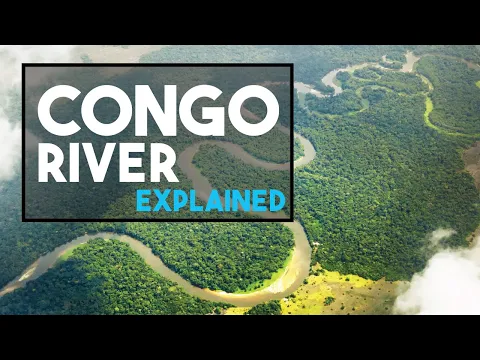

Despite the gigantic potential, turning the Congo River into a stable source of this amount of energy is not simple.
The Grand Inga project involves engineering, financing, governance, and social impact challenges. In 2016, for example, the World Bank itself decided to distance itself from the project, making it clear that the path to realization is still long.
Additionally, a plant of this magnitude raises questions about riverine communities, environmental impact, energy security, and the real distribution of benefits.
The Congo River is the deepest in the world, but the depth of the necessary debates for any mega-project there also needs to be significant, encompassing the local to the continental scale.
Even with so many obstacles, the idea of better harnessing the energy of this river remains alive, precisely because the combination of flow rate, drop, and depth is hard to find elsewhere on the planet.
In parallel, the current reality still includes smaller plants and infrastructure that needs to be restored to deliver what has already been planned.
An Extreme River in Every Sense
The Congo River brings together, in a single watercourse, characteristics that blend geography, history, energy, and curiosities.
The Congo River is the deepest in the world, separates two capitals that almost touch, crosses giant forests, and concentrates an energy potential capable of changing the electricity map in Africa.
Along the way, it passes through deep gorges, violent rapids, power plant projects, and ports with curious names, like the last port of the estuary, called Banana.
Each segment tells a part of a story in which nature shows strength and diversity while society discusses how far it is worth intervening in this raw power to generate energy.
In the end, there is a sense that there is still much to discover, both beneath the dark and deep waters of this river and in the decisions that will be made around it in the coming years.
And you, did you already realize that the Congo River is the deepest in the world and has such gigantic energy potential, or were you surprised by any of this data?






-

-

-

-

9 pessoas reagiram a isso.