





 Portuguese
  English
  Spanish
 6 min of reading
  8 comments


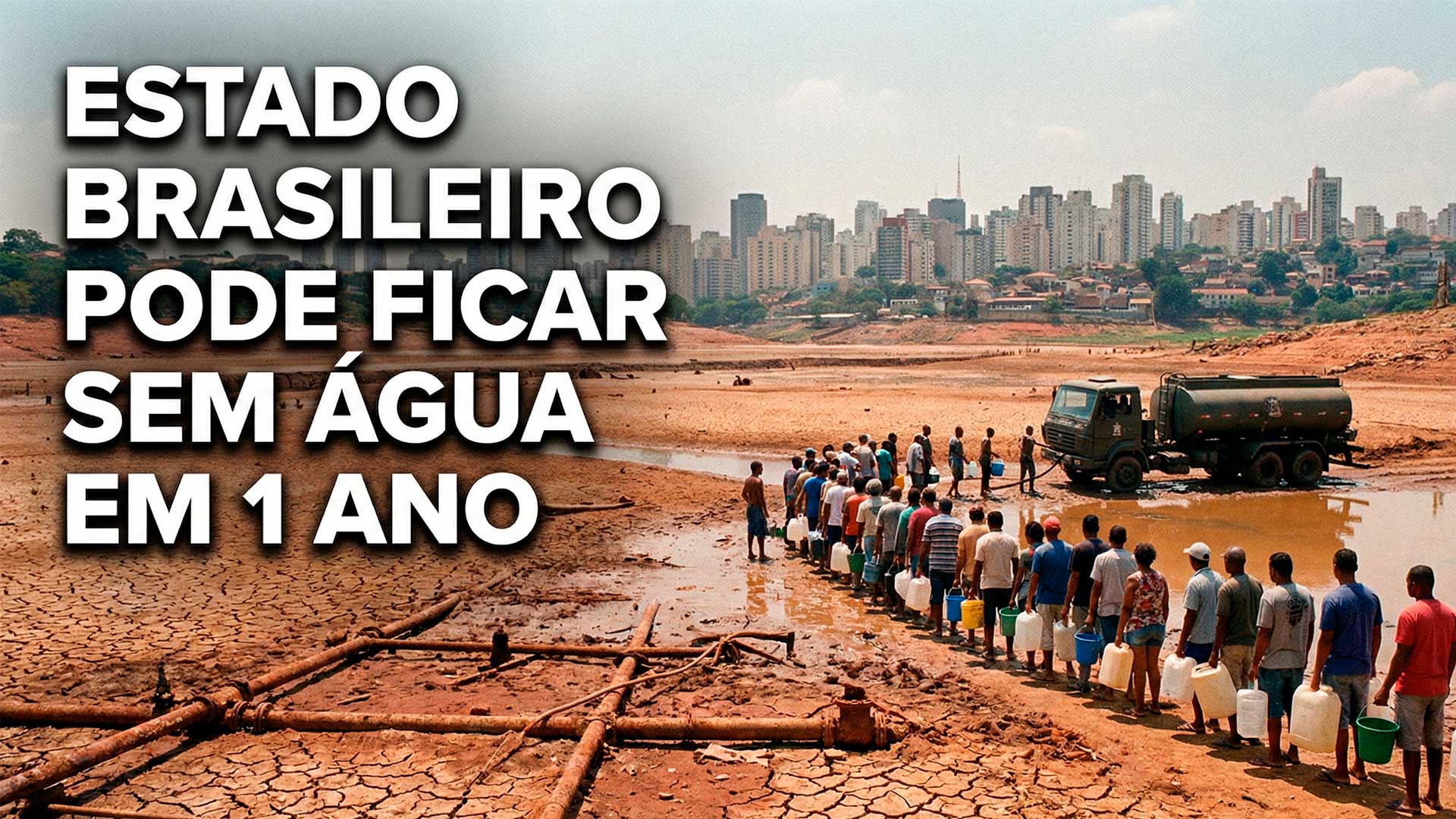


Half of the Population of the State of São Paulo Already Lives Under Restrictions on Water Supply Due to the 2025 Water Crisis. Critical Levels in Reservoirs Such as the Cantareira System and Measures Such as the Reduction of Pressure in the Network Reignite the Ghost of Rationing
São Paulo is experiencing in 2025 the worst water crisis since the episode of 2014, and the impact has already reached residents’ taps. Half of the state’s population now lives with some type of restriction on water supply, either due to reduced pressure or temporary cuts in supply.
In practice, more than 24 million people are on the front lines of the problem, including the Metropolitan Region of São Paulo and cities in the countryside. Among them are the 39 municipalities of Greater São Paulo, including the capital, and at least seven inland cities that have already adopted water rationing or localized restrictions.
The routine of bathing, cleaning, and preparing food has increasingly depended on the times when water arrives in homes.
-
A rare storm transformed part of the Gulf into an unlikely scene of hail, extreme rain, and tornado risk in the middle of the desert, with volumes that exceeded the annual average in a single day.
-
Brazil catches the world’s attention with ships powered by ethanol and biodiesel that have lower emissions, an unprecedented certification with advantages in chartering, and a revolution in cabotage.
-
A couple who only has Sundays free has built a hand-dug pool, a hamburger joint, a dance hall, and a playground in their own home without hiring a mason, and even with breaks due to accidents and the pandemic, the work has never truly stopped.

-
Furniture made with aluminum and glass does not warp and has become an alternative to replace MDF in Brazil.

The situation is a direct result of the drop in the level of the reservoirs that make up the Integrated Metropolitan System, responsible for supplying most of Greater São Paulo. The system operates at about 26.6% of useful volume, while the Cantareira System, which alone accounts for a significant part of the supply, is just above 21%. These are volumes considered critical by experts and monitoring agencies, especially on the eve of summer.
Rains have returned in recent months, but they remain below the historical average in much of the watersheds that feed the Paulista water sources. Monitoring bulletins show that 2025 has accumulated nine consecutive months with precipitation deficits and rivers with lower flow than normal.
In this scenario, governments and sanitation companies are rushing to adopt emergency measures while simultaneously asking the population for rational water use.
Half of the Residents of São Paulo Already Live Under Supply Restrictions
According to a survey published by outlets such as the Terra portal, half of the state’s population is in areas classified as at risk or with effective restrictions on water supply. This includes neighborhoods that face dry taps at certain times as well as regions where pressure has been reduced to a point that compromises daily use.
In many condominiums, smaller water tanks cannot fully replenish during the night.
In the Metropolitan Region of São Paulo, Sabesp operates in 37 of the 39 municipalities, while São Caetano do Sul and Mogi das Cruzes purchase water from the company in bulk and handle local distribution. Together, these municipalities concentrate about 22.9 million residents, all dependent on the same reservoir systems now under pressure. Any fluctuation in water levels spreads quickly throughout the network, affecting entire neighborhoods simultaneously.
In the countryside, cities like Bauru, Americana, Salto, Rio Claro, Birigui, Valinhos, and Tambaú have already reported formal rationing or frequent water rotations.
In some neighborhoods in Bauru, for example, residents report going up to 72 hours without water, depending on the supply group to which they belong. Municipalities declare water emergencies, perform network maneuvers, and rely on water trucks to try to ensure minimum consumption.
Reservoirs at Critical Levels and Cantareira in Hydrological Drought
Recent reports show that the Integrated Metropolitan System dropped from 28.7% of useful volume in October to 26.6% on November 24, even after the start of the rainy season.
The Cantareira System, in turn, is classified by the National Center for Monitoring and Alerts for Natural Disasters as being in hydrological drought, with intensity varying from moderate to extreme at different time scales.
In other words, the water entering the system remains well below what would be expected for this time of year.
SP-Águas, the state agency responsible for water security, approved the Water Scarcity Protocol in 2025, defining operational ranges and triggers for contingency measures in critical basins. Since September, Cantareira has been operating in an alert and restriction range, mandating reduced withdrawals, transfer of water between systems, and stricter daily monitoring.
Technicians warn that without consistent recovery of reservoirs this summer, the risk of explicit rationing in 2026 significantly increases.
Reduction of Pressure, Hidden Rationing, and Impact on Daily Life
To try to balance supply and demand, Arsesp has determined that Sabesp implements the so-called Night Demand Management, reducing pressure in the network for several hours at night. Initially scheduled for eight hours, this window has been extended at times to as much as ten hours, according to bulletins from the regulatory agency itself.
Sabesp maintains that the measure is preventive and temporary and insists that it is not rationing but rather a practice adopted in large cities worldwide to preserve water sources during critical periods.
In the company’s view, by cutting peak night consumption, it is possible to save billions of liters of water without completely interrupting supply. The company also emphasizes campaigns for residents to install conservation equipment and fix internal leaks.
Residents, however, report a different reality, especially in higher or more distant areas from the reservoirs. The drop in pressure means that water does not always reach the water tanks, which in practice leaves entire houses and buildings without supply for long periods. For this reason, consumer protection entities speak of hidden rationing, even if not officially recognized in decrees.
A symbolic example came from São Caetano do Sul, in Greater São Paulo, where the municipality publicly acknowledged that the city is experiencing a water rationing regime, attributing the problem to the reduced volume supplied by Sabesp via the Cantareira System. The situation exposes the conflict of narratives between concessionaires and local managers, who need to respond directly to the population when there is a lack of water and transparency. The episode reinforces the perception that technical adjustments in valves have immediate political effects.
In the face of this scenario, families from different income levels have started to adapt their routines to cope with the uncertainty at the tap. Those who can invest in larger tanks, cisterns, filters, and even retail-bought gallons, while residents of peripheral areas increasingly rely on taps, shallow wells, or sharing with neighbors. Inequality in access to treated water tends to deepen, even in one of the richest states in the country.
Rains Below Average, La Niña, and What May Come Next
In the basin of the Piracicaba, Capivari, and Jundiaí rivers, which helps supply dozens of Paulista cities, the October Hydrological Bulletin from the PCJ Consortium recorded rains 3.4% below the historical average, with 103 millimeters accumulated against 106.6 millimeters expected. October marked the ninth consecutive month of water deficit, with river flows persistently lower than the regional standard.
Climate projections also indicate a high probability of the La Niña phenomenon occurring between November, December, and January, which usually reduces rainfall in parts of the Southeast.
Given these prospects, specialists advocate a combination of emergency actions, such as reducing losses in the network and reallocating flows between basins, along with structural investments in new reservoirs, water reuse, and protection of springs.
The PCJ Consortium, for example, reinforces in its bulletins the importance of continuous monitoring and permanent policies for rational use, and not just ad-hoc campaigns in times of crisis. Without this change in course, the recurrence of critical scenarios like 2014 and 2015 is likely to become increasingly frequent.
In your opinion, is the reduction of pressure during the night and the rotations spread across the state a necessary solution or a disguised rationing that penalizes poorer neighborhoods more? Have you felt the water crisis in your daily life in São Paulo, whether in the capital or the countryside? Share in the comments how the supply is in your region and what measures you believe that governments and companies like Sabesp should adopt to avoid an even greater collapse in 2026.







Que vergonha, hein?? Estamos em cima do Aquífero Guarany, no sul e sudeste, suficiente para matar a sede do planeta inteiro por 2.500 anos. No norte temos o Aquífero Amazônico muito maior, mas esses mente-pequenas já se preparam para escravizar o povo pela água. Em cima do planeta água! E se depender do povo ignorante e preguiçoso, vai dar certo! Alô?? Nem todos estão dormindo aqui!
O estado precisa ouvir e implementar as sugestões do (PCJ)…talento técnico em cidadãos bloqueados pela política do lucro. A água precisa de investimento estatal como uma mãe protege e alimenta seu bebê…precisa de dinheiro,muito dinheiro, todo dinheiro…água e tudo, água e vida.
Verdade olho 👁 vivo no Facebook Brasil RJ etc