





 Portuguese
  English
  Spanish
  6 min of reading
  2 comments





While Tokyo Displays Lights And Skyscrapers, Thousands Of Japanese Squeeze Into 3 By 6-Foot Rooms In Internet Cafes, Using These Cubicles As Improvised Home In The Face Of Low Wages, Prohibitive Rent, Broken Family Ties And An Increasingly Lonely Country Of Youths Without Support Net.
Instead of the futuristic Japan in commercials, a portion of the Japanese survives in tiny cubicles of internet cafes, paying per night to sleep in 3 by 6-foot spaces, sharing bathrooms and showers with strangers. In Karin’s case, every inch counts: it fits a worn mattress, a computer, some clothes, and the constant feeling that any slip-up could cost an entire month.
These cafes, which started as a quick place to work and rest, have become housing for a part of a precarious youth. With more than 5,400 Japanese living this way, hidden in rented cabins, what should be a temporary solution has turned into a forced lifestyle, fueled by low wages, inaccessible rents, broken family ties, and a social environment where talking to strangers is almost taboo.
When The Cost Of Living In Tokyo Pushes Japanese Into A Cubicle

Tokyo is one of the most expensive cities on the planet. The video that inspires Karin’s story shows prices that shock: a taxi ride that can reach 230 dollars, a tiny hotel room for around 190 dollars, simple meals costing over 80 dollars.
-
These living root bridges and ladders are over 700 years old and help indigenous people survive in one of the rainiest regions in the world.

-
From sertanejo star to international investor: Ana Castela invests millions in a mansion in the USA, creates a themed accommodation in Orlando, and shows that the “boiadeira” also wants to grow away from the stage.

-
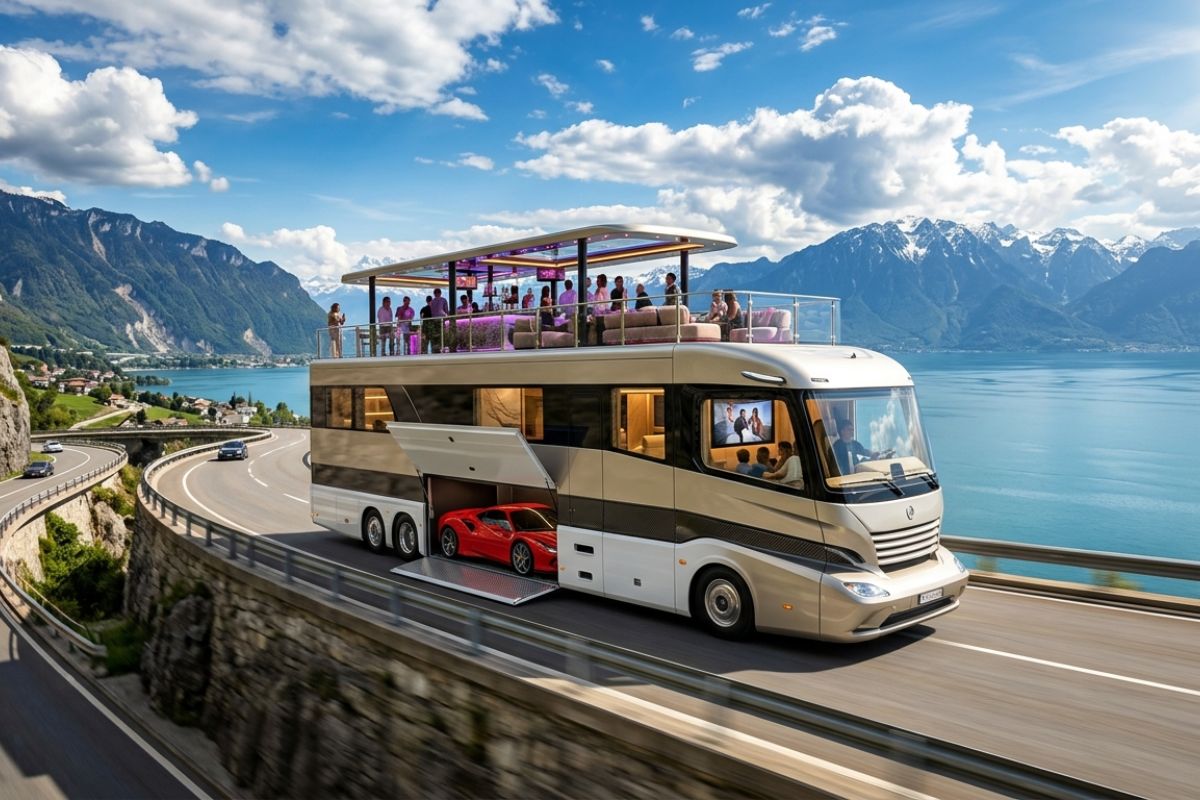
The 10 most stunning motorhomes in the world: a $3 million trailer with a rooftop nightclub and garage for a Ferrari, “palaces on wheels” with Italian marble, private cinema, and five-star hotel luxury for billionaires.
-
Trump wanted to spend $400 million on the White House, but the courts prohibited the million-dollar construction.


With a salary of around 700 dollars a month, many Japanese simply cannot afford a traditional rent.

Faced with this mounting expense, internet cafes have become a form of informal safety net. Instead of an apartment, the Japanese rent a closed box with a curtain, computer, connection, and access to hot drinks, bathroom, and shower. It’s not comfortable, it’s not stable, but it fits the budget. For many, it’s either that or the street.
Internet Cafes As Improvised Housing For A Lost Generation

These spaces were meant to be temporary, something between a cheap hotel and an improvised office. In practice, they have become the hidden address of a generation of Japanese unable to establish a foothold in the formal market.
Local media and researchers associate this phenomenon with the so-called lost decades: the period when Japan went from economic boom to a long cycle of stagnation, weaker jobs, and lower wages.
Instead of stable and well-paid positions, many young Japanese have fallen into temporary, part-time, or informal jobs, which do not cover the cost of living alone.
Karin, for example, works in a hostess bar, welcoming customers, drinking with them, and maintaining long conversations in exchange for tips and consumption.
It’s a type of job that pays just enough to survive, but not enough to leave an internet cafe cubicle.
Hostess Bar, Little Money And Almost No Margin For Error

Karin’s routine helps to understand how other Japanese end up on the same path. She works in a hostess bar, primarily for Japanese customers, from 9 PM until after 1 AM.
The role requires being well-dressed, smiling, willing to listen and handle conversations that range from funny, awkward, to heavy. The more customers consume drinks, the more the salary grows.
Even so, she says her monthly income hovers around 1,300 dollars, a figure that seems high at first glance but dwindles quickly in the reality of Tokyo. Part goes to food, taxes, and transport; another part goes to her own cubicle in the cafe, which costs about 7,000 yen per night, around 46 dollars.
In the end, there’s barely enough left to survive a month, with no cushion for emergencies or conventional rent.
Broken Families, Domestic Violence And Quiet Escape From Home
Karin’s story is also the story of what does not appear in cold statistics. She left home carrying not only a small suitcase but a history of violence from her father, who drank too much and resorted to physical aggression and yelling.
Her mother had to return to the Philippines and could no longer work in Japan. The family, which should have been protection, became a source of fear.
Rather than stay in that environment, Karin decided to flee. She ran to Tokyo, leaving most of her belongings behind and began living with the minimum, stored in boxes inside the cubicle. She studied, even managed to enter university but dropped out after two years.
Like many young Japanese, she carries a mix of shame and affection: she doesn’t tell her friends that she ran away from home but still wishes to reunite with her parents once she manages to save money.
Japanese Isolated In A Society That Functions On Its Own

The surrounding context is even harsher. Japan is often described as one of the most antisocial countries in the world. In Tokyo, it is possible to spend an entire day without talking to anyone: automated tickets, machines in restaurants, silent etiquette on the subway, zero conversation with strangers. For Japanese with little support network, any fall becomes a silent drop.

The phenomenon of internet cafes as housing coexists with other extreme isolation scenarios, such as people who spend years locked in rooms, avoiding any contact with the outside world.
When the cost of living outside home is high, the job market is unstable, and the culture discourages seeking help, many young people give up on trying to fit their lives into the expected pattern. The cubicles, thus, become a kind of social limbo.
From Tiny Room To Mental Collapse: The Invisible Price Of Cubicles
On the outside, internet cafes seem practical: fast internet, drinks, private cubicles, large TV, access to videos and music. Inside, the body and mind pay the price. The cubicles have little ventilation, almost no natural light, and limited space to move the body.
In the long run, this environment can compromise sleep, physical health, and emotional balance of the Japanese living there.
Karin says that in the winter, she needs to sleep with three blankets because the cold comes in strong in the small space.
The bed is actually a thin mattress on the floor, which serves as a chair during the day. Neighbors come and go, almost always men who stay for a night or two. She barely knows who they are, has no one to share concerns with, and the silence of the corridors echoes with the internal silence.
Pandemic, Cafe Closures And Japanese Even More Vulnerable
When the pandemic hit, the scenario worsened. To contain the virus, many internet cafes reduced hours or closed temporarily.
All of a sudden, Japanese who depended on these spaces lost the little they had: a simple roof, but still a roof. Without stable income and without rental contracts, thousands found themselves without a place to sleep.
Karin’s case illustrates something larger: the lack of consistent policies for residents in vulnerable situations and the absence of a public network capable of sheltering those who lose work and housing at the same time.
The health crisis only laid bare a problem that already existed, linked to housing costs, job precariousness, and the isolation of many Japanese.
A Generation Between Cubicles, Odd Jobs And Delayed Dreams

At the end of the day, Karin returns to her cubicle in Shinjuku, one of the most vibrant neighborhoods in Tokyo, full of lights, bars, and tourists. Inside, however, the atmosphere is different: quiet, narrow, cold in winter.
She works, pays taxes, dreams of reuniting with her family, and learning more about finance to escape this life. But for now, everything she can save fits in a box, on top of a thin mattress.
She is not an isolated case. Karin represents more than 5,400 Japanese who have turned internet cafes into home due to lack of alternatives, pushed out of the formal housing market and into a solitude that mixes shame, resistance, and exhaustion.
Her story helps reveal what many streets in Tokyo hide behind colorful signs and illuminated windows.
In light of this reality, do you think the Japanese government and society truly see these cubicle-dwelling Japanese or prefer to pretend they don’t exist while the city keeps shining?








Muito triste essa realidade que confesso não conhecia.
Acredito que é mais fácil fechar os olhos para a realidade do que criar políticas de apoio e ajuda para essas pessoas em situação de vulnerabilidade.
Enquanto lá fora as cores brilham nos espaços da maior cidade do mundo, dentro dos cubículos a dor da escuridão aperta na solidão do mundo.