





 Portuguese
  English
  Spanish
  5 min of reading
  0 comments


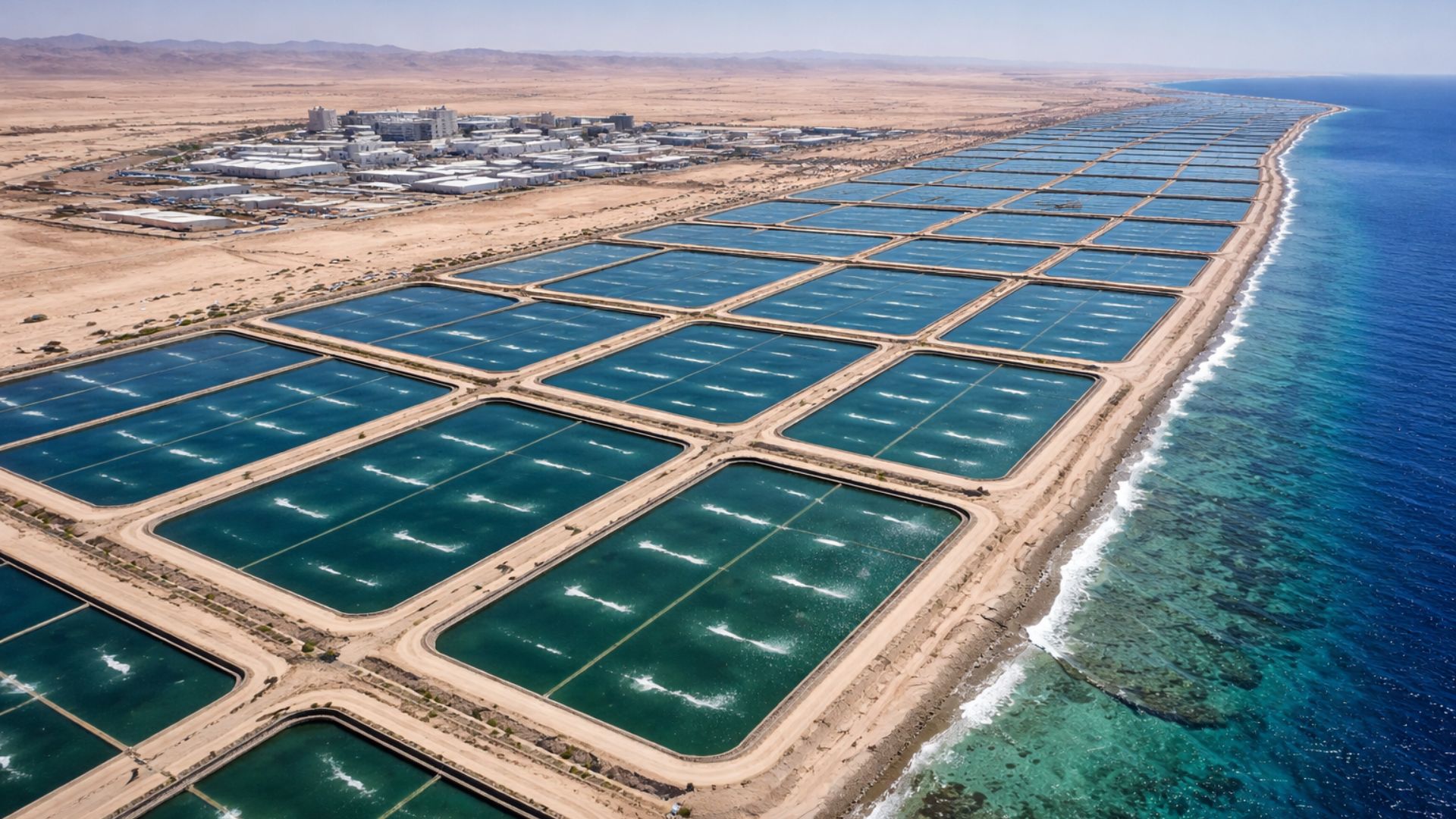
Integrated Complex in the Red Sea Combines Shrimp Production, Fish, Industrial Processing, and In-House Logistics in Desert Area, with Stated Expansion Plans Aligned with Saudi Food Security Strategy and Aquaculture Growth.
The National Aquaculture Group (NAQUA), based in Al Lith on the Red Sea coast, operates one of the largest integrated aquaculture complexes in the region.
The company reports controlling approximately 65 kilometers of coastline and managing a continuous water area of 4,485 hectares, a physical base that supports the industrial-scale production and processing of farmed shrimp and fish.
Currently, the company states an annual production around 60,000 tons of shrimp.
-
The water that almost everyone throws away after cooking potatoes carries nutrients released during the preparation and can be reused to help in the development of plants when used correctly at the base of gardens and pots, at no additional cost and without changing the routine.

-
The sea water temperature rose from 28 to 34 degrees in Santa Catarina and killed up to 90% of the oysters: producers who planted over 1 million seeds lost practically everything and say that if it happens again, production is doomed to end.

-
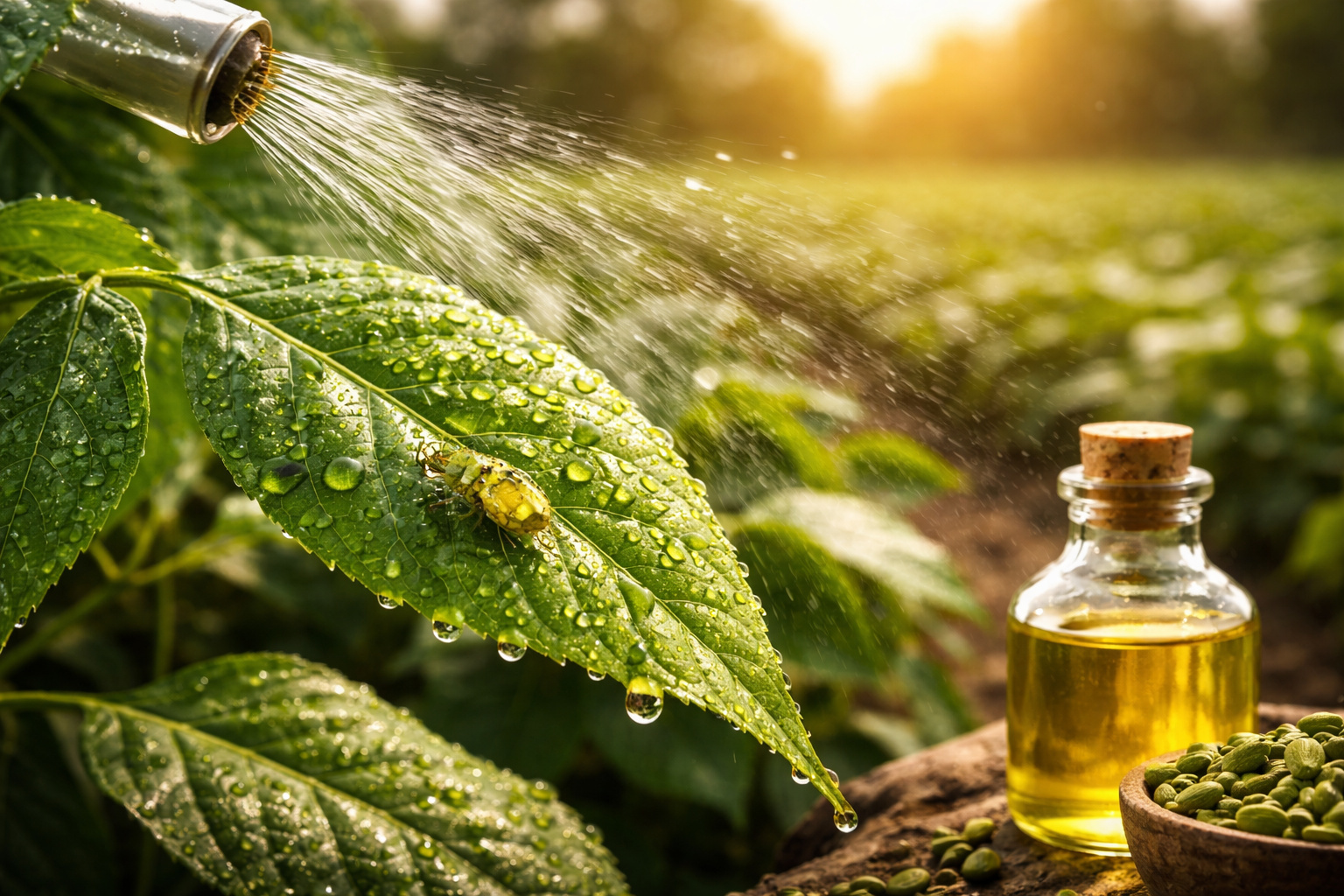
An Indian tree that grows in the Brazilian Northeast produces an oil capable of acting against more than 200 species of pests and interrupting the insect cycle, gaining ground as a natural alternative in soybean, cotton, and vegetable crops.
-
The rise in oil prices in the Middle East is already affecting Brazilian sugar: mills in the Central-South are seeing their margins shrink just as ethanol gains strength.


In institutional announcements and industry reports, NAQUA also reports plans to increase its total production to up to 250,000 tons per year in the coming years.
The move is associated with the Saudi government’s goals for aquaculture expansion and increasing domestic fish supply.
Aquaculture Operation in Desert Area of the Red Sea
The complex is located about 180 kilometers south of Jeddah, in a region characterized by arid climate and low urban occupancy.
According to interviews granted by the company to the specialized sector, the project began as a pilot initiative over four decades ago.

Over time, the operation was progressively scaled up to reach the current industrial format.
The proximity to the Red Sea, whose waters have high salinity, is described by the company as a relevant operational element.
According to institutional information, the company adopts standardized protocols for water intake, treatment, and monitoring.
These protocols include sanitary controls and traceability throughout the entire production chain.
Vertical Integration in Shrimp and Fish Production
One of the main features of the enterprise is the vertical integration of production stages.
Data released by NAQUA indicate the operation of 80 hatcheries, 77 super-intensive nurseries, and 18 land farms, totaling 547 nurseries spread along the coastal strip under the company’s concession.
According to this data, the installed annual capacity for shrimp grow-out is about 90,000 tons.
This volume exceeds the production currently reported.
According to sector analyses, this difference indicates operational margin for increasing production without the immediate need for expanding the existing physical base.
The production of feed is also internalized.
Reports published in 2023 indicate that NAQUA operates a factory capable of producing up to 90,000 tons per year of shrimp feed and 30,000 tons for fish.
The company claims that this structure contributes to nutritional standardization and to reducing reliance on imported inputs.
In processing, the company reports operating a large-scale industrial plant, with inspection, classification, and batch segregation systems.
In institutional materials, NAQUA states that the design of the plant aims to reduce the interval between harvesting and cooling or freezing.
This procedure meets the demands of importing markets.
Shrimp Leads Production and Fish Expand Portfolio
The Pacific white shrimp is the main species cultivated by the company.
It accounts for the majority of the produced volume.

Sector interviews published in 2023 associate NAQUA with an annual production close to 60,000 tons of shrimp.
The majority of this volume is destined for the export market.
In addition to shrimp, the company also operates in the production of marine fish.
The barramundi is highlighted as the central species in this segment.
The farming occurs in cages at sea.
Technical sources from the sector mention annual fish volumes in the tens of thousands of tons.
The numbers, however, vary according to the criteria adopted by each source.
Some consider installed capacity, others actual production, or specific annual cuts.
This divergence is common in large-scale projects.
It reflects methodological differences between institutional disclosures and specialized reports.
Nonetheless, public information converges to indicate that fish production is treated by the company as a complementary front to shrimp.
Certifications and Requirements of the International Market
In the external market, NAQUA’s operation is tied to quality protocols and international certifications.
The company reported achieving the “four-star” level of the Best Aquaculture Practices (BAP) program.
The certification encompasses farms, feed factories, hatchery units, and processing plants.
According to sector specialists, this type of certification is frequently required by large importers and retail chains.
The label serves as a commercial requirement for access to certain markets.
Reports published in 2023 indicate that most of NAQUA’s production is intended for export.
Shipments occur regularly to more than 30 countries.

Entry of SALIC and Saudi Aquaculture Policy
The expansion strategy gained new momentum in 2023.
That year, the Saudi Agricultural and Livestock Investment Company (SALIC) announced the acquisition of 42.4% of NAQUA’s capital.
The operation was presented as part of a broader policy for strengthening food security.
It is also associated with encouraging local protein production.
Official documents from the Saudi government indicate that aquaculture is considered one of the axes to reduce dependence on fish imports.
The national goal announced is to reach 600,000 tons of annual production by the end of the decade.
The objective is part of the Vision 2030 program.
Work Structure and Data-Driven Management
The operational dimension also reflects on the workforce.
In interviews granted to the sector, the company reported having about 4,000 employees.
The professionals represent more than 30 nationalities.
They work in hatcheries, nurseries, laboratories, feed factories, processing, and logistics.
According to the company itself, production management is based on continuous monitoring of zootechnical and environmental parameters.
Among the indicators monitored are density, biomass, feed consumption, and water quality.
These data are used for operational adjustments throughout the production cycle.
This practice is common in intensive aquaculture systems.
With stated plans for significant production expansion and being part of a national growth strategy for the sector, Al Lith’s experience has started to be observed by international market agents.





-

-

-

-

-

-

235 pessoas reagiram a isso.