





 Portuguese
  English
  Spanish
  5 min of reading
  0 comments


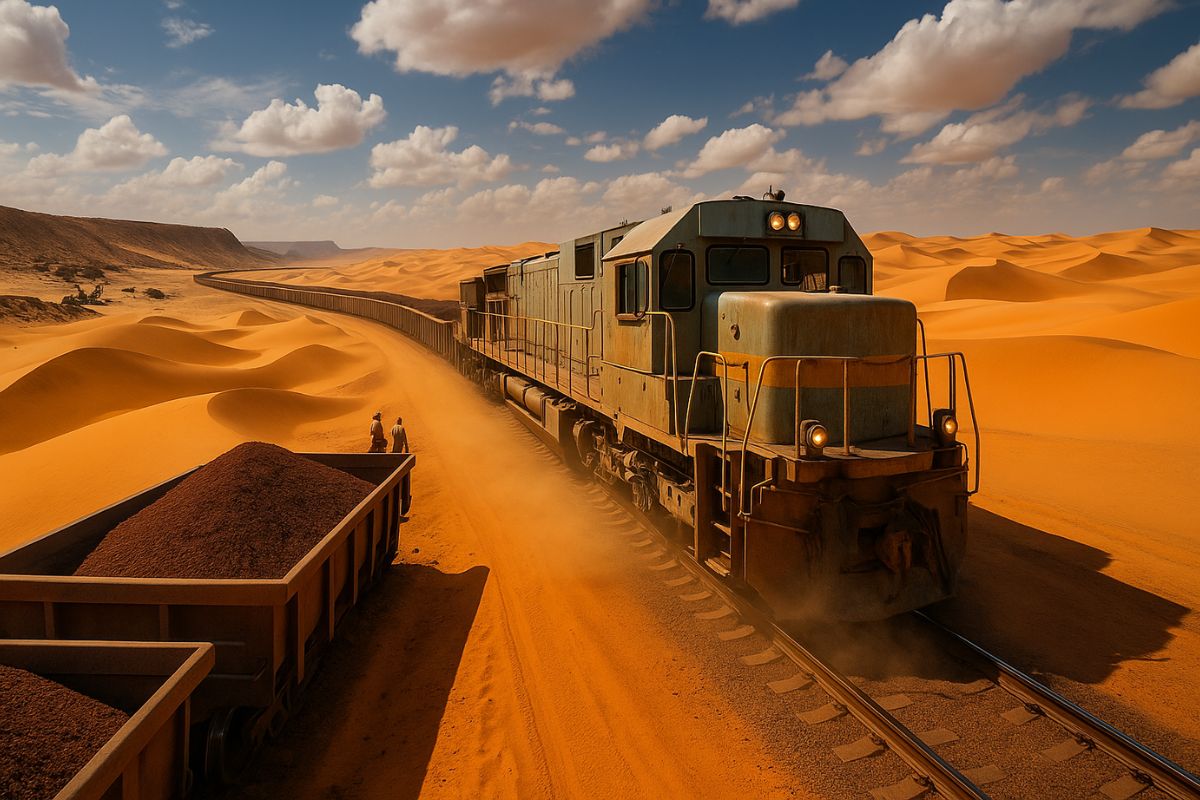
Train Crosses 704 Km of Sand at Temperatures Up to 48 °C, Pulling Over 17,000 Tons on a Unique Railway, Facing Fine Dust, Extreme Heat, Limited Detours, and Desert-Adapted Engineering.
The journey of the train that crosses the Sahara begins at the Zouerate mines, where tons of iron ore are loaded to traverse one of the most hostile regions on the planet. It’s 704 km of fine sand, hot winds, a single track, and a trip that lasts about 20 hours until reaching the port of Nouadhibou. Even by global railway standards, the operation impresses with its total length: the train can reach 2.5 km, with over 200 wagons linked in a continuous line, becoming one of the longest ever operated daily.
The brutality of the environment defines each stage of the journey. The train faces temperatures of up to 48 °C in summer, sand blown by strong winds that can cover entire tracks, and constant pressure on engines, gears, and filtration systems. To ensure that the composition keeps operating, special diesel-electric locomotives have been developed with inverted radiators, giant filters, and compressed air systems capable of expelling particles that would destroy regular engines. Nothing in the Sahara is simple, especially when over 17,000 tons depend on a few machines in a straight line.
How the Train Withstands 48 °C and Fine Sand Covering Tracks

The operation starts in the heart of the desert, where the ambient temperature turns locomotives into metal ovens.
-
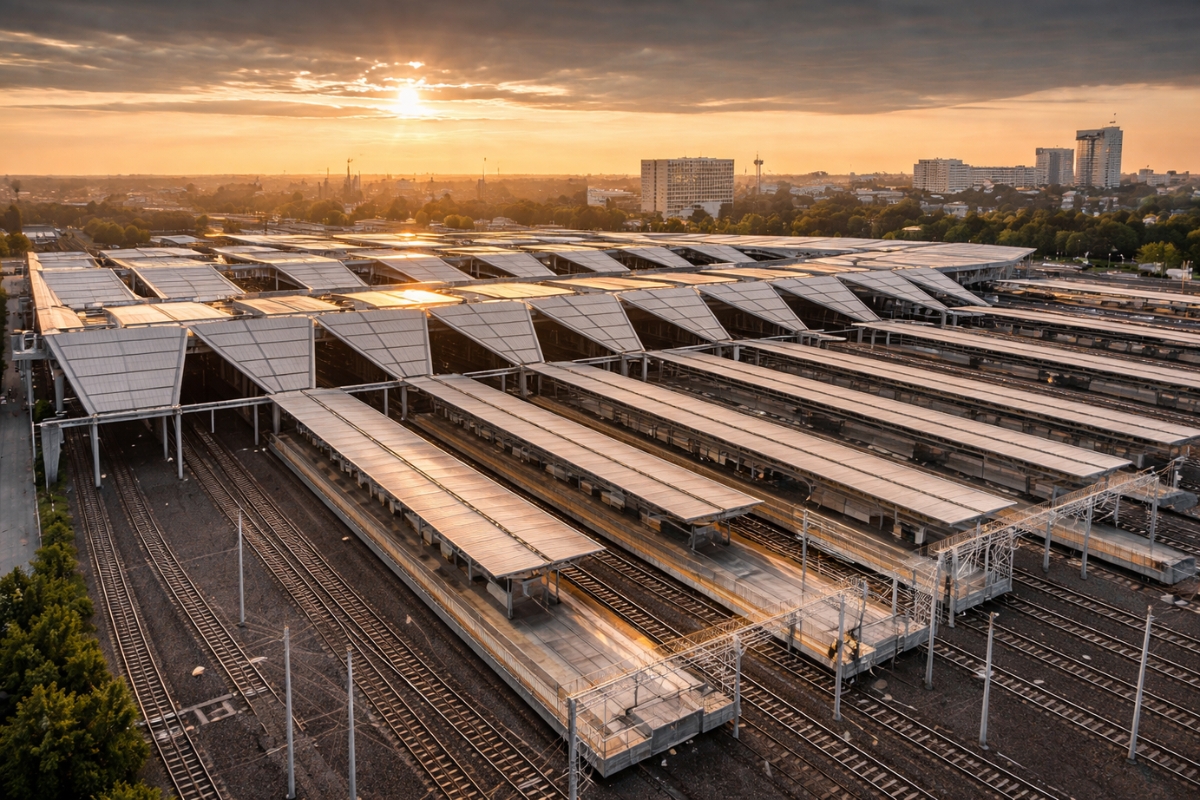
In A European City, The Country’s Largest Railway Junction Was Modernized Without Closing Its Doors, Kept Trains Running During Years Of Construction, Now Serves Up To 60,000 Passengers Per Day, And Installed Solar Panels That Generate About 30% Of Its Energy
-
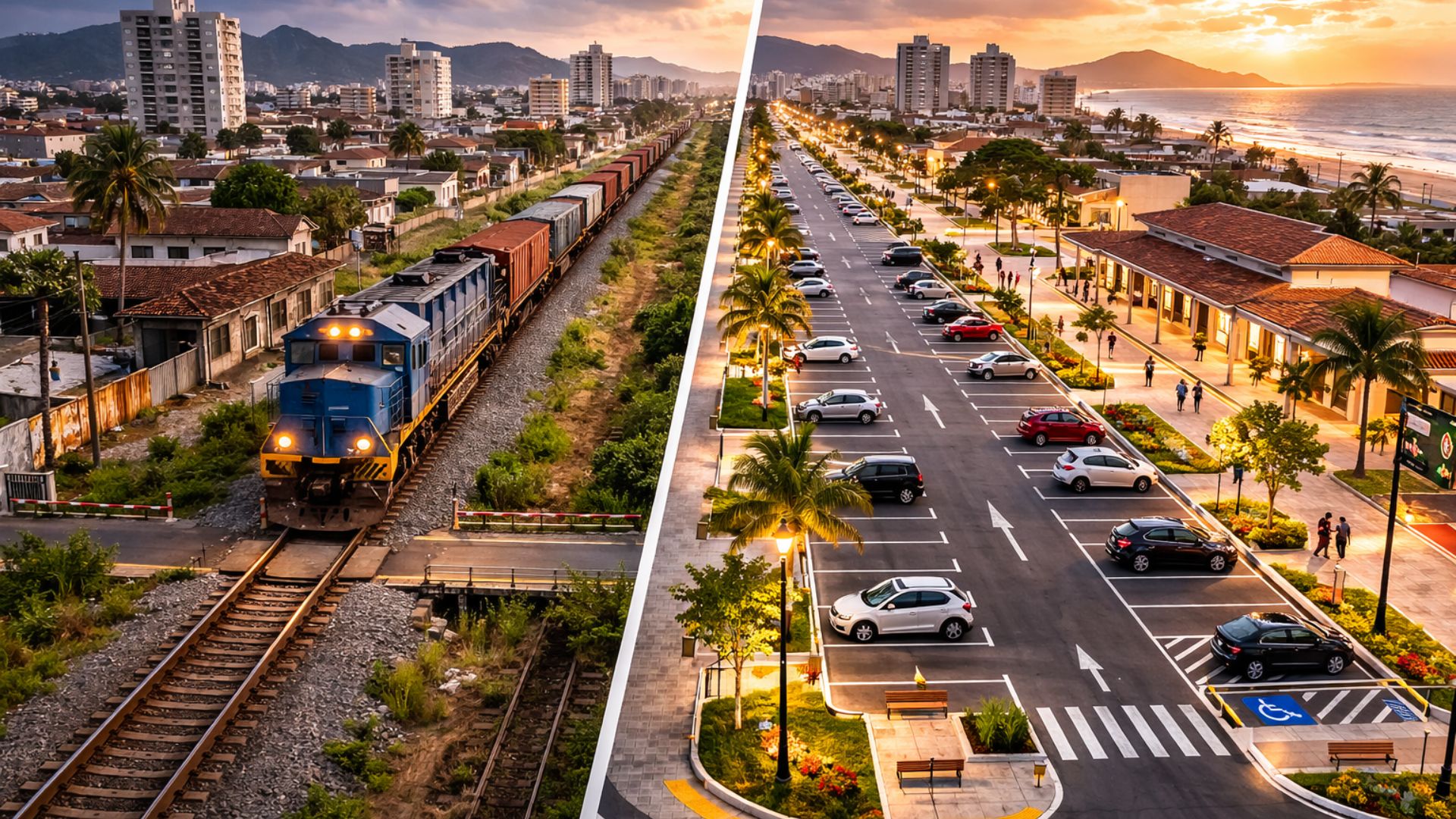
Famous Brazilian Railway May Become a Parking Lot
-
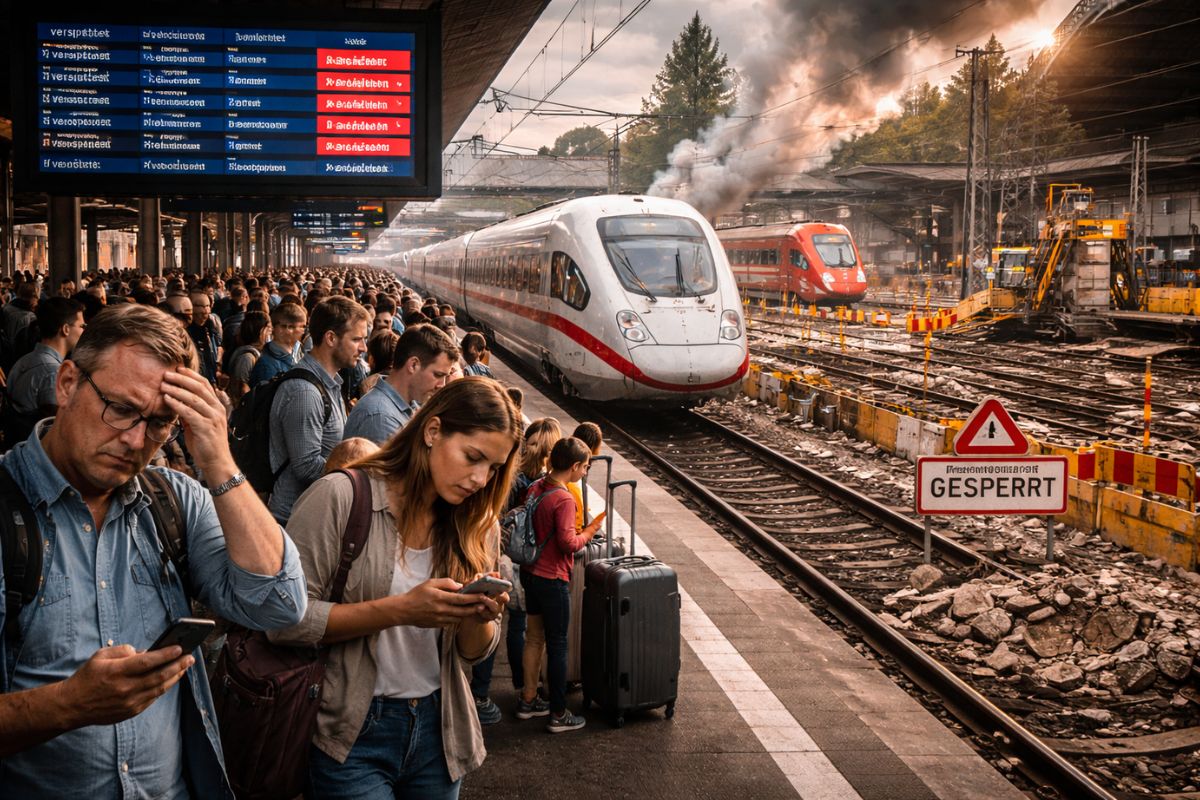
The Country of “Punctual As a Train” Admits It Has Lost Control: High-Speed Trains Delay, Stop, Disappear from the Map and Turn 6-Hour Trips into 10, While Deutsche Bahn Promises Restructuring in 2026 But Faces 19th Century Infrastructure, Staff Shortages and Sections Closed for Months
-
With an Investment of R$ 700 Million in One of the Country’s Main Rail Networks, VLI Reinforces Infrastructure, Receives 8 New Locomotives, and Expands the Corridor Connecting 7 States, Boosting Jobs and the Transportation of Grains, Ore, and Oil Products to the Port of Santos
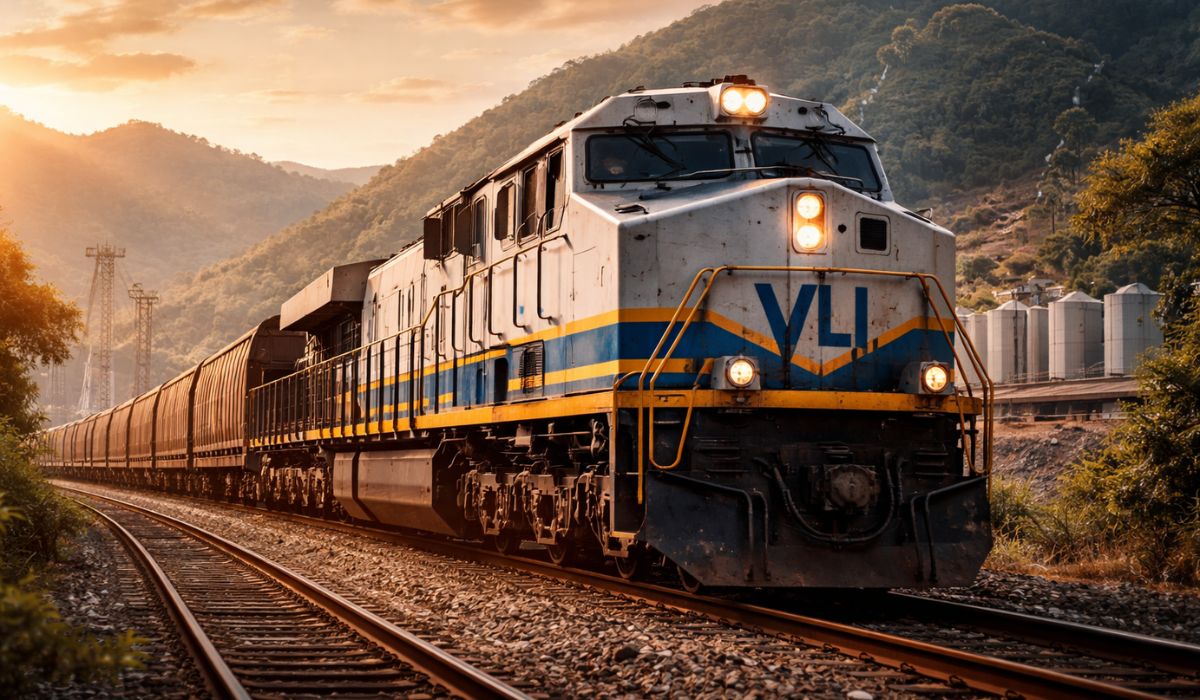

To withstand this, the SD70ACS model received specific adaptations: downward-facing radiators, erosion-resistant painted propellers, two-stage air filters, and sealed compartments with positive pressure.
This system allows the train to keep functioning even when the extremely fine sand tries to invade every mechanical component.
The locomotive removes microscopic particles before they enter the engine, and periodically, blasts of air clean the filters to prevent clogging.
It’s engineering designed to survive where everything conspires to break down.
Extreme Power: 17,000 Tons Pulled by 3,300 to 4,500 Hp Engines
In its typical configuration, the train uses either two 4,500 hp locomotives or up to four 3,300 hp ones, all electrically and pneumatically connected to the main locomotive, where only one engineer and sometimes an assistant work.
The torque of the electric motors coupled to the axles keeps the composition in constant motion even when loaded with over 17,000 tons.
The speed rarely exceeds 50 km/h, but the mission is not to speed.
The mission is to endure. Endure the weight, the heat, the distance, and the continuous effort of crossing a stretch of the Sahara where the tracks may disappear under the sand.
For this scenario, the locomotive carries fixed and movable sand plows, activated when the engineer notices a thick layer accumulated on the track.
Unique Railway and 9 Detours: How the Train Crosses with Others in the Sahara
The railway in Mauritania operates on a single track along its entire length.
This requires millimeter coordination between loaded and empty trains, which meet at only 9 passing points along the 704 km.
Three loaded trains descend daily to the port, while three return empty.
At the sidings, it is always the empty train that waits. The priority is the ore.
In this system, delays are critical, especially because the train relies on strategically distributed maintenance bases along the route.
Logistics is as important as the power of the locomotives.
The Train Also Transports People – and This Changes Everything
On some days, two or three passenger cars are added to the train, shortening the journey by up to 500 km for those coming from the interior to the coast.
But these cars are rarely comfortable.
The majority consist of adapted freight cars, overcrowded, with improvised windows.
For many families, boarding the ore car is the only alternative to avoid the fare of $3 to $10.
The journey, however, is brutal: iron dust, constant vibrations, extreme heat during the day, and intense cold at night.
Death by falling is common, especially when passengers switch cars while the train is in motion.
Trucks Cannot Compete with the Train in the Desert
When compared to trucks, the train becomes even more impressive. In terms of efficiency, it transports 1 ton per 190 km per liter of diesel, compared to just 51.6 km for trucks.
This means that the train is almost four times more efficient.
In power, the contrast is even clearer: two locomotives combined reach over 9,000 hp. A 750 hp truck can pull about 250 tons.
To do the same as the train, at least 70 powerful trucks would need to work simultaneously.
Moreover, tire wear, the risk of being buried by sand, and the maintenance of the roads make road transport practically unfeasible in this stretch of the Sahara.
The Most Extreme Operation in Mauritania
The crossing of the train over two and a half kilometers through the desert is, at the same time, an engineering feat and a portrait of human and economic resilience in Mauritania.
The railway, inaugurated in 1963, sustains a large part of the country’s GDP and connects the inland mines to the only major port capable of exporting iron ore on a large scale.
Under extreme heat, on a single track, with winds blowing sand against everything and everyone, the train continues, day after day, carrying the Mauritanian economy on its back.
It’s a harsh, continuous, and vital operation, shaped by the relentless rhythm of the Sahara.
The 704 km journey of the train through the Sahara is one of the most challenging railway operations on the planet, combining heavy engineering, extreme conditions, and a logistics system that requires absolute precision.
With every trip, it reaffirms why it has become a symbol of economic and operational resilience in Mauritania.
Now I want to know from you: would you endure 20 hours on this train crossing the desert at 48 °C to see up close one of the most extreme routes in the world?









-

-

-

-

11 pessoas reagiram a isso.