






 Portuguese
  Spanish


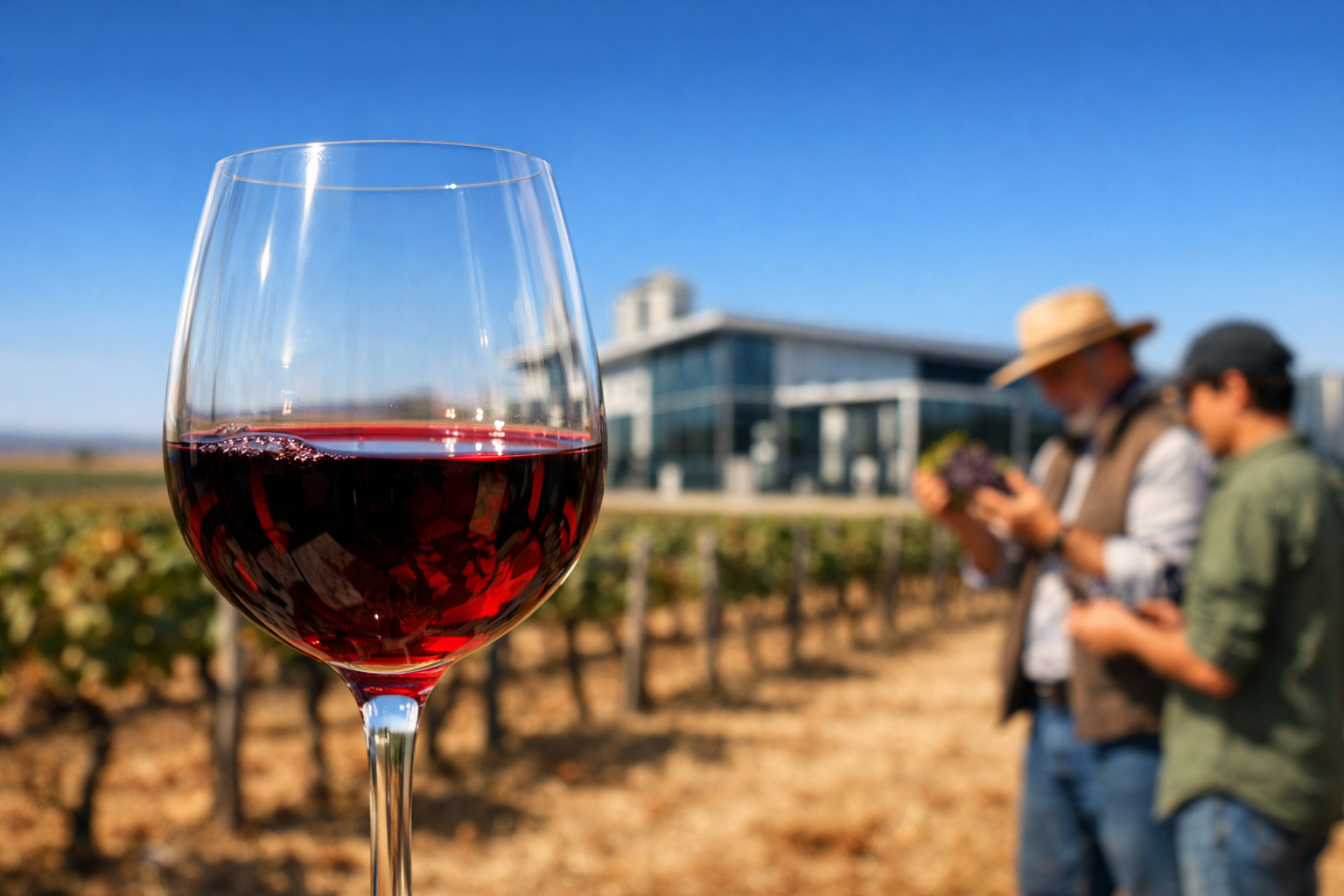

New technological center in Brasília strengthens production outside the traditional axis, expands quality of grapes, and accelerates growth of emerging regions of national winegrowing
The classic image of Brazilian wine has always been linked to the landscapes of Serra Gaúcha, in the south of the country. However, in recent years, this scenario has undergone a significant transformation. Gradually, the map of national winegrowing has expanded to new regions, especially in the Cerrado, where the so-called winter wines are gaining more and more prominence.
In this context of expansion, a new milestone reinforces this trend. In Brasília, a laboratory focused on certification and research will be inaugurated, consolidating the presence of wine production in regions that were previously not associated with the sector, such as the Midwest.
This information was disclosed by “CNN Brasil”, based on sector data and interviews with industry representatives, highlighting the accelerated and strategic growth of this new productive frontier.
-
Brazil’s 2026 Tax Refund: Record 9.58 Million Filers in Largest Payout Ever, But a Key Detail on Priority Recipients Draws Nationwide Attention

-
Itaú Alters Hybrid Work Model, Increasing Office Days from 2028, Prompting Employees to Adjust to New Routine
-
Facing Labor Shortage, Japan Plans to Invest $34 Million to Attract Foreign Workers in Construction, Healthcare, Industry, and Commerce

-
Brazilian City Makes Remarkable Leap, Becomes 4th Wealthiest in the Country with GDP of R$ 134.1 Billion




Moreover, this movement represents not only a geographical change but also a technological advancement that redefines the quality standards of Brazilian wine.

New laboratory strengthens over 55 wineries and bets on technology
With an investment of R$ 3.4 million, the Center for Analysis and Research of Brazilian Winegrowing emerges as a watershed for the sector. Developed in partnership between Anprovin (National Association of Winter Wine Producers) and ABDI (Brazilian Agency for Industrial Development), the space promises to become a technical reference in the country.
The laboratory will serve more than 55 wineries, distributed across the Southeast, Midwest, and also new winegrowing frontiers, such as Chapada Diamantina in Bahia. Thus, it significantly expands technical support for producers seeking to raise the quality standard of their products.
Additionally, the structure will allow for high-precision physicochemical and sensory analyses, something essential to ensure competitiveness in the market. At the same time, courses, training, and qualifications will also be offered, strengthening professional qualification in the sector.
According to Cláudio Góes, president of Anprovin, the establishment of the laboratory in the Federal District symbolizes a strategic advance. This is because, while decentralizing production, it creates a technical-scientific environment focused on excellence, traceability, and innovation.
On the other hand, the president of ABDI, Ricardo Cappelli, emphasizes that the investment also drives the modernization of the sector. Thus, wineries gain more capacity to invest in technology and improve their production processes.
Double pruning technique transforms production and quality of wines

The growth of winter wines is directly linked to a scientific advancement that revolutionized the sector: the double pruning technique, developed by researcher Murillo Regina from Epamig.
Basically, the method alters the natural cycle of the vine, transferring the harvest to the dry period of the year. As a result, the grapes begin to develop in more favorable climatic conditions, with less rainfall and greater temperature variation.
Currently, states such as São Paulo, Minas Gerais, Rio de Janeiro, Bahia, Goiás, Mato Grosso, and the Federal District are already part of this new productive map. In these regions, producers total about 1.2 million vines and an annual production close to 1 million bottles, with projections for growth in the next three years.
The double pruning process involves two main stages throughout the year. First, pruning occurs in August. Then, a second intervention is performed in January. From there, the cycle restarts, with flowering between April and May and harvesting between the end of July and the beginning of August.
During this period, dry and sunny days predominate, combined with cooler nights. Consequently, these conditions favor the formation of grapes with unique characteristics, resulting in fine wines with their own identity.
Therefore, in addition to expanding production to new regions, the technique also contributes to raising the qualitative standard of Brazilian wines, positioning the country more competitively in the international scenario.








