





 Portuguese
  English
  Spanish
  6 min of reading
  2 comments


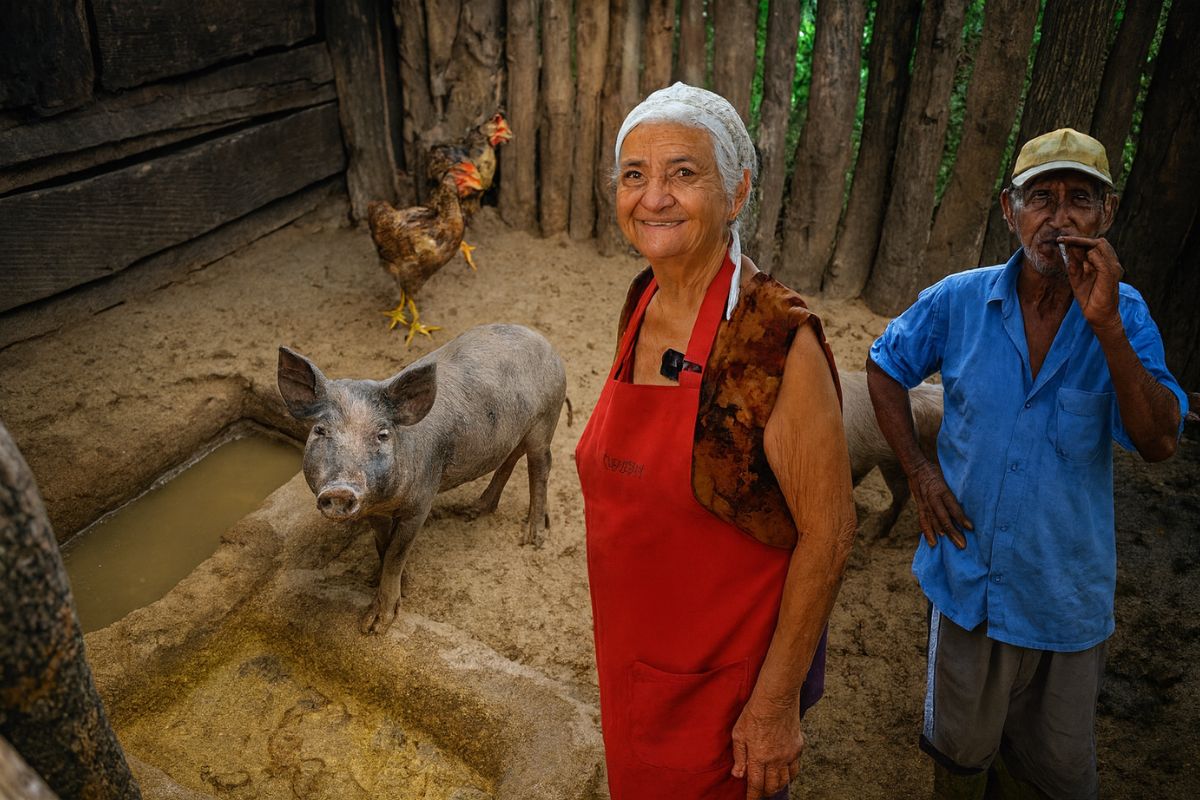


At 71 Years Old, Elderly Dona Antônia Castrates Pigs, Plants Cassava, Makes Flour, Raises Chickens, Wakes Up Before Sunrise, and Alone Maintains a Small Farm that Blends Hard Work, Faith, Family Memory, and a Silent Resistance in the Brazilian Countryside, Among Pigs, Flour, Wood Stove, Cassava, and Community Association.
The routine of elderly Dona Antônia begins long before any city alarm clock. It is still dark when she gets up around five in the morning to take care of the pigs, feed the chickens, light the wood stove, and organize the day. In the same yard where she slaughters pigs, prepares free-range chicken, and works with cassava, she continues doing what she learned in childhood: working tirelessly to keep the farm alive.
While many city folks complain about office work and air conditioning, Dona Antônia faces intense heat, smoke, the weight of cassava, the smell of lard, and the fatigue of someone who has already passed 70. Even so, the elderly continues strong, castrating pigs, grating cassava, roasting flour, and taking care of the house, as if age were merely an additional detail in the story.
Farm Childhood, Early Mourning, and Early Responsibility

Before becoming a symbol of resistance, this elderly woman from the countryside faced losses early. She recounts that she never knew her father. When he died, she was only four months old.
-
The rise in oil prices in the Middle East is already affecting Brazilian sugar: mills in the Central-South are seeing their margins shrink just as ethanol gains strength.

-
Rain gains strength in April, potentially exceeding 150 mm, placing the North, Northeast, and the coasts of the South and Southeast at the center of the heaviest forecast of the week.

-
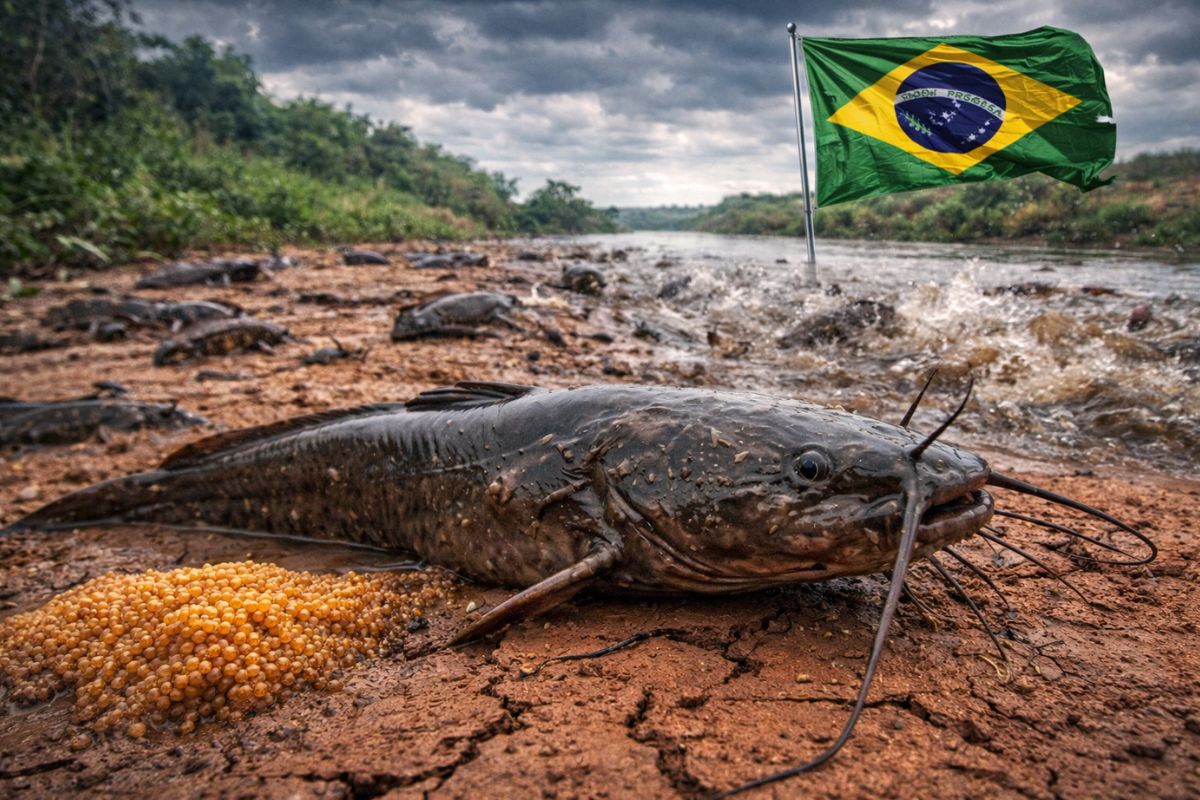
A fish that survives out of water, crawls on land until it finds another river, and whose female lays 80,000 eggs at once is infesting rivers and lakes in Brazil, and no one can stop this invasion.
-
WEG took its technology to Spain to create a solar irrigation system that operates independently without needing an electrical grid, and now farmers control everything remotely via their mobile phones.


Her upbringing fell into the hands of her mother and brothers, almost all women, who had to go to the farm early on.
By the age of seven, the girl was already wielding a hoe, working in the fields, weeding, and helping with anything that was needed.
The elderly woman’s life has always been marked by hard work and few choices, planting rice, beans, corn, taking care of pigs, and milking cows, at a time when almost everything came from the land and little was bought in the city.
The Elderly Woman Who Married Young and Never Left the Farm

Dona Antônia married at around 18 years old, to a husband who also lived off the farm. Soon the couple began working on neighboring farms, dealing with cattle and making cheese for others.
Over time, they managed to build their own house on her mother’s land, first erecting simple grass huts, until they could improve a bit and build a sturdier house.
Today, after decades of marriage, she and her husband have been together for over fifty years. The elderly woman looks back and sees a lifetime of planting, raising, building, tearing down, and rebuilding, always on the same farm ground, never wishing to trade the tranquility of the countryside for the noise of the city.
Elderly Woman’s Routine Starts in the Dark and Ends in the Heat of the Stove

The elderly woman’s day has no rest. She wakes up early, feeds the animals, helps tie the pig that will be slaughtered, and watches the whole process of killing, scalding, cleaning, and preparing the meat.

She also needs to tend to the right fire, sometimes low, sometimes stronger, to cook the cassava dough and roast the flour to perfection.

Between tasks, the elderly woman rushes from pig to cassava, from the wood stove to the area where she dries the flour, without complaining about the amount of work.
When she is not dealing with pigs, she is taking care of the free-range chickens, which lay eggs everywhere and still compete with the dogs for the nest.
When she is not in the yard, she is busy in the kitchen, making free-range chicken, boiled cassava, sausage, and sweets.
Cassava, Flour, and the Knowledge the Elderly Woman Carries in Her Hands
The most delicate part of her routine is handling cassava. Dona Antônia plants, uproots, washes, peels, grates, presses, sieves, and roasts it. All with calm, patience, and skill accumulated over a lifetime.
She knows which cassava is sweet for making flour, which is bitter for starch, which is white, and which is yellow.
In the yard, after pressing, the liquid drains, the dough is sieved, and goes to the oven. The elderly woman positions herself next to the square pan, stirring the hot flour non-stop for over an hour, so that it becomes dry, crispy, and just right.
The secret, according to her, lies in the well-done roasting, making a popping sound, the way people like it. It is no wonder that the flour she produces is highly sought after, sold to people from afar, and often runs out before she can meet the demand.
Pigs, Lard, Meat, and Good Food on the Farm Table
The pigs are also a part of this elderly woman’s work cycle. She personally oversees their raising, buys piglets, fattens them up, and decides which ones will be castrated and which ones will be kept. At slaughter time, she helps hold, feed, and carefully prepare the meat, and afterward, make use of every part of the animal.
From the meat, pieces go for the family, sausage, canned meat, and lard stored in cans. The elderly woman takes pride when she sees the table full of cassava, pork, and free-range chicken, without depending on the market. For her, knowing what she is eating, coming from her own farm, is much better than buying everything ready-made.
Association, Community, and the Collective Strength that Helps the Elderly Woman
Even accustomed to doing almost everything with her own hands, Dona Antônia is not entirely alone. She is part of a community association that helps raise funds and buy agricultural equipment for small producers in the region.
Together, they manage to acquire machines, ovens, and tools that they would not be able to afford on their own.
The elderly woman recognizes the value of this union, because she knows that the work is too hard for just one person. While the association organizes the purchase of equipment, she continues contributing with what she does best: planting, harvesting, transforming cassava into flour, maintaining tradition, and showing that the farm still has a future when the community helps each other.
Memory, Children in the City, and the Fear of Tradition Ending
Dona Antônia has four children, but today only two are alive, all of whom are married and living elsewhere, far from the daily toil of the farm.
Many young people of the new generations no longer want anything to do with weeding, planting cassava, handling pigs, and roasting flour in the heat of the stove.
She herself admits that, in her region, there is very little labor willing to continue the work that the elderly woman has performed since childhood, leaving her practically alone with one or two others handling cassava.
Commenting on the changes over time, she emphasizes that she thinks it is better to have her own things on the farm than to depend on buying everything outside, but she knows that not everyone is willing to face this heavy routine.
Amid Smoke, Birds, and Silence: The Peace that the Elderly Woman Chose
Despite the harshness, Dona Antônia does not trade the silence of the farm for the noise of the streets. Instead of cars and honks, the sounds that fill the day are those of birds, dogs, chickens, and the cracking of wood burning in the stove. Sometimes, the call of the toucan cuts through the air, confused with a frog’s croak for those who are not accustomed.
More recently, the elderly woman even bought a cellphone with internet so she wouldn’t “fall behind”, gradually learning to use the device to communicate and watch videos.
But when the signal drops, what remains is what has always sustained her life: working the land, homemade food, and the feeling of peace of someone who lives far from the confusion of cities.

In light of the story of this elderly woman who plants, works with cassava, castrates pigs, makes flour, and keeps the farm routine alive at 71 years old, do you think the new generations will still have the courage to take on this life on the farm, or does tradition tend to disappear over time?







A reportagem não diz onde eles vivem. É em Minas ?
Apesar da árdua luta, ela se livra dos alimentos industrializados que são perigosos. Uma guerreira!!!