





 Portuguese
  English
  Spanish
  5 min of reading
  11 comments


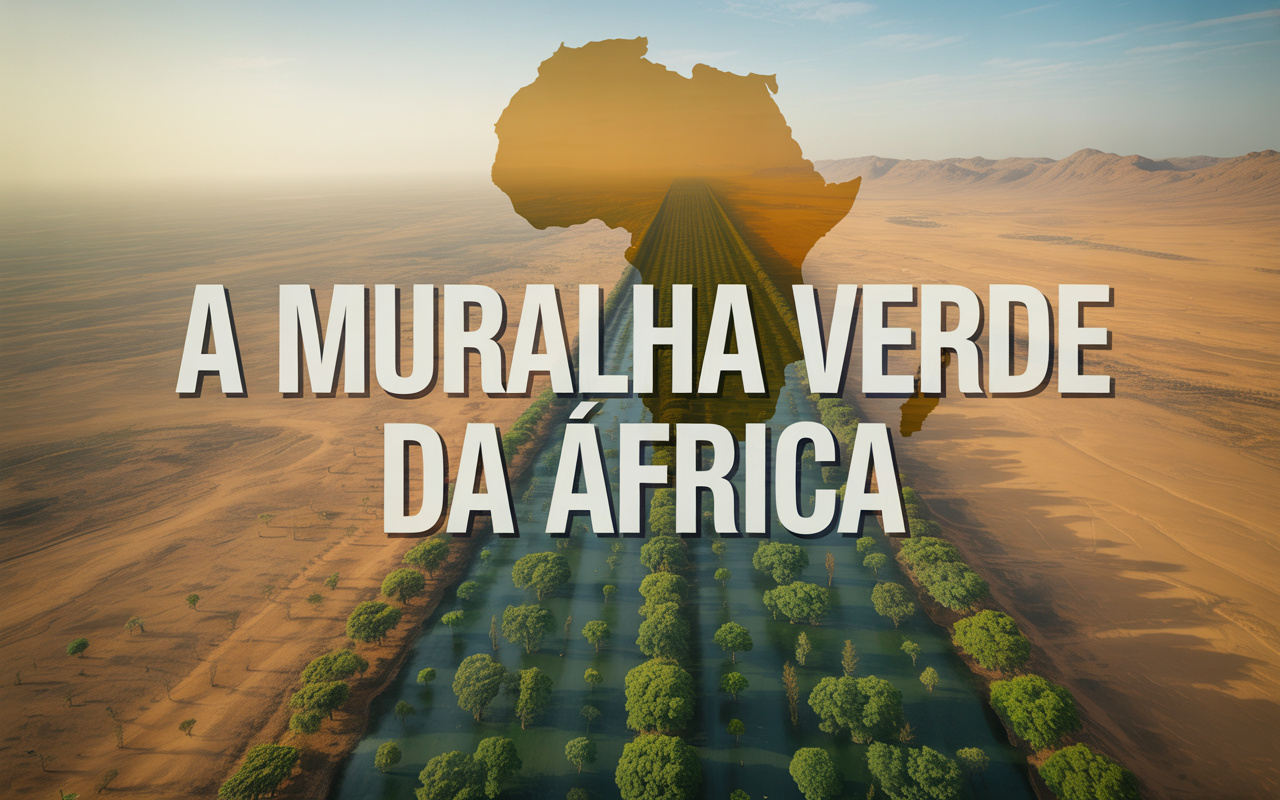


With 8,000 km and Participation from 11 Countries, the Great Green Wall of the Sahel Aims to Halt the Advance of the Sahara and Restore Ecosystems Affected by Drought and Degradation.
The idea seems like something out of a utopian project: to erect a continuous strip of vegetation capable of stopping the largest hot desert on the planet. But the plan exists, is underway, and already mobilizes governments, scientists, farmers, international agencies, and entire communities. Officially called the Great Green Wall of the Sahel, the project brings together 11 African countries with a monumental goal — to restore degraded landscapes, recover soils, enhance food security, and contain the expansion of the Sahara, which has advanced over agricultural and pastoral areas in recent decades.
Conceived by the African Union in 2007 and supported by organizations such as the UN, FAO, World Bank, and Global Environment Facility, the initiative goes beyond symbolism. Its technical scope is gigantic: 8,000 kilometers in length expected, crossing a strip that extends from Senegal to Djibouti, passing through some of the most vulnerable regions to climate change on the planet. The goal is to recover 100 million hectares of land, capture 250 million tons of carbon, and transform livelihoods for 100 million people by 2030.
The Line Between Desert and Life: Why the Sahel is Crucial for Africa
The Sahel is a semi-arid strip that serves as a transition zone between the Sahara and the African savanna. It is a region where rainfall is scarce, soil is fragile, and demographic pressure is rapidly increasing. In the past 50 years, episodes of severe drought have recurred, leading to the loss of fertile land, a drop in agricultural productivity, livestock deaths, and increased food insecurity.
-
How the terraforming of Mars can transform the planet: artificial aerosols can increase the temperature by up to 35°C in 15 years, creating conditions for liquid water.
-
Scientists drilled nearly 8,000 meters into the ocean floor above the fault that caused the 2011 tsunami in Japan and discovered that a layer of clay 130 million years old was responsible for making the wave much worse than any model had predicted.

-
Thousands of years after causing the largest eruption of the Holocene, one of the world’s largest supervolcanoes is rebuilding itself beneath the sea south of Japan, receiving new magma and alarming scientists with its transformation.
-
China has activated a magnet 700,000 times more powerful than the Earth’s magnetic field that operates for over 200 consecutive hours while consuming little energy, and now the world wants to know what Beijing plans to do with this technology in 2026.


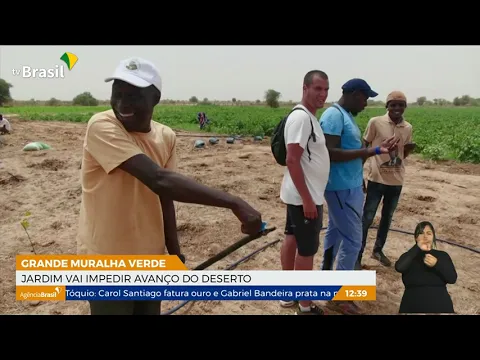

In many areas, where there used to be seasonal pastures, dust, erosion, and dry shrubs now prevail. This deterioration has direct effects on social stability.
Pastoral communities with less space for cattle come into conflict over land and water; young people migrate to northern cities and Europe; and governments face increasing challenges to maintain basic livelihoods.
In this context, the Great Green Wall emerges not only as an environmental project but as a policy for socioeconomic stabilization.
The Fronts of the Project: Restoration, Agriculture, and Climate Adaptation
Contrary to the image of a “continuous wall of trees,” experts explain that the green wall is a set of interventions adapted to each ecosystem.
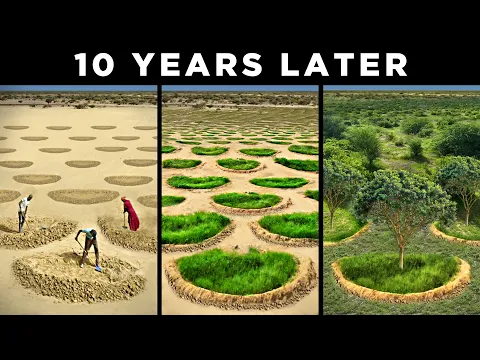
In some areas, it involves planting native drought-resistant species. In others, it encourages traditional soil restoration techniques, such as zaï, dug wells that accumulate nutrients and moisture. There are also regions where the priority is to recover watersheds or expand rotational pastures.
The goal is not simply to reforest but to rebuild productive landscapes.
Some of the techniques applied include:
- Assisted natural regeneration, which preserves shoots that already exist in the soil.
- Stone barriers, used to reduce erosion and retain water.
- Planting Senegal acacia, a species resistant to extreme heat, which is now the basis for gum arabic production.
- Community-managed areas, which distribute responsibility and benefit among local families.
These solutions are accompanied by small-scale irrigation projects, well recovery, nursery construction, and training in resilient agriculture.
What Has Been Achieved: Data Showing Real Progress
Although far from reaching the original goals, the project records significant progress. According to reports from the UN and the African Union:
- More than 20 million hectares have already been restored.
- Senegal has planted over 80,000 hectares of new trees, mostly acacia.
- Ethiopia, one of the most advanced hubs, has regenerated millions of hectares through community management.
- Niger has recovered degraded soils that have since resumed producing millet, sorghum, and legumes.
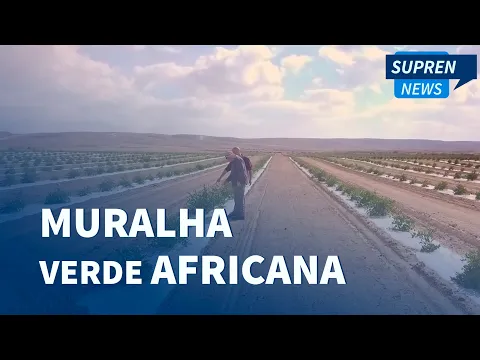
In specific areas, communities report increases in agricultural production of up to 40% after restoration techniques, in addition to financial returns linked to the sale of gum arabic, honey, native fruits, and non-timber forest products.
Challenges That Persist: Conflict, Funding, and Extreme Climate
Despite the progress, the project faces obstacles. The region is marked by political instability, armed group activity, forced migrations, and porous borders. There is also the limitation of resources: the plan is estimated at about US$ 30 billion, of which only part has been secured so far.
Another problem is the acceleration of climate change. Extreme heat waves, irregular rains, and dust storms increase the difficulty of consolidating reforested areas. In some countries, efforts are destroyed by intense droughts lasting several years.
These barriers show that the green wall depends not just on planting but on integrated planning, social stability, and continuous adaptation.
Social Impacts: When Recovering Soil Means Recovering Lives
Environmental restoration in the Sahel has a direct impact on food security and family income. In regions where land had been unproductive for decades, farmers have started cultivating staple foods again. Pastoralists report improvements in livestock health. Women, who were previously forced to walk several kilometers to gather firewood, now find resources closer to home.
By recovering the soil, the Great Green Wall also creates social barriers against economic collapse, reducing rural exodus and expanding local opportunities.
The Largest Environmental Project in Modern Africa Seeks to Rewrite the Future
The greatness of the wall lies not only in the numbers but in the significance. It involves millions of trees, millions of beneficiaries, and the ambitious attempt to reconstruct entire ecosystems in one of the planet’s most challenging environments.
This is one of the largest restoration projects in contemporary history capable of influencing climate, agriculture, economy, and social stability across a vast portion of the continent.
Complete success is still far off, but the movement is already changing the landscape. In various areas where the soil had turned to dust, green shoots are beginning to reemerge. The Sahel is, little by little, trying to be reborn.
The wall may take decades to consolidate, but it represents something rare: a continental, collective, and continuous effort to confront the advance of the desert with life, not walls.










ESSE PROJETO DESSA MURALHA VERDE NÃO SÓ NA ÁFRICA MAS EM OUTRAS REGIÕES ARIDAS E SEMI ÁRIDAS TAMBÉM DO MUNDO INTEIRO JÁ TINHA QUE SER REALIZADO ONTEM E COM FOMENTAÇÃO FINANCEIRA DE TODOS OS PAÍSES DO MUNDO ATÉ MESMO EM OUTROS BIOMAS DEGRADADOS ARTICULANDO DE MINHA IDEALIZAÇÃO CORREDORES INTERCALADOS DE IMPLANTAÇÃO DE FLORESTA ESTREITAS COM AREAS DESTINADAS A AGROPECUÁRIA FLORESTAS ONDE ESSE INTERVALO ENTRE ELAS DEIXARIA UM MICRO CLIMA SUPER HUMIDO HOMOGENEO E HETEROGÊNEO DAS FAUNAS E FLORA EQUILIBRADO NATURALMENTE POR INSETOS UTEIS PREDADORES ESSES ELIMINANDO OS NOCIVOS PRAGAS ONDE ASSOM NÃO HAVERIA NESCESSIDADE DE APLICAÇÃO NOCIVOS DE AGROTÓXICOS ETC, DEIXANDO ESSE UNICO MODELO PADRONIZAÇÃO MUNDIAL PRODUZIRIA TANTAS EFEITOS POSITIVOS COMO : REDUÇÃO DRÁSTICA DO CARBONO NA ATMOSFERA EM MUITO MENOS TEMPO, IDEM % EFEITO ESTUFA NÃO EXISTIRIA MAIS NOS PARÂMETROS ATUAIS REDUZIRIA DRASTICAMENTE TAMBÉM EM MENOS TEMPO O AQUECIMENTO GLOBAL , LOGO O CLIMA GERAL DEIXARIA A TEMPERATURA GLOBAL AMENA E NATURALMENTE CONTROLADA, AS CHUVAS SERIAM TAMBÉM NO VOLUME EXATO EM CADA REGIÃO DO MUNDO, LOGO SEM TEMPESTADES, SEM ENCHENTES, SEM CICLONES, SEM INCÊNDIOS DEVIDO A HUMIDADE EXATA NESSE NOVO ECOSSISTEMA DESSE NOVO MEIO AMBIENTE TOTALMENTE REGENERADO ASSIM TÃO EQUILIBRADO CAPAZ MUITO MAIOR DE REPRODUÇÃO ALIMENTAR AGROPECUÁRIA FLORESTAIS IDEM HÍDRICO O PLANETA TERRA SE TORNARIA UM NOVO PLANETA MUITO MAIS DIGNO DE MANTER A VIDA NA TERRA DE TODOS OS SERES VIVOS HUMANOS E ANIMAIS COM MAIS EFICIÊNCIA E MELHOR PADRÃO DE QUALIDADE DE VIDA GERAL . UM NOVO PARAÍSO A TERRA COMO UM TODO SE TRANSFORMARIA DE CURTO A MEDIO PRAZO DE TEMPO PARA AS ATUAIS E FUTURAS GERAÇÕES. DEUS SEJA LOUVADO E ABENÇOE A TODOS.🙏🌷🍀🖖👍
Que iniciativa sensacional dos países africanos regenerar uma área de deserto em uma área verde.
Pode demorar mais com esforço vão chegar ao resultado esperado e vai ajudar a milhares de famílias com alimentos, ar puro e tantos outros benefícios
Se outros países ajudassem nessa iniciativa com mão de obra especializada, recursos financeiros ou até mesmo com tecnologia seria ótimo.
Quem realmente querer fazer, vai lá e faz. 22 anos de PT. Construíram o quê? Recuperaram o que? Quantos empregos sem bolsa família, quantos alfabetizados até a 4° série em adultos sem condições mínimas de trabalhar? KD a Marina Silva e seus discursos vazios, que há mais de 20 anos vive do esforço e história de outros? Podem ter certeza, alguns irão presos, outros defenestrado e pior que isso, o ostracismo. Aproveitem
Faltam só 13 meses para a **** ser expulsa do Estado e da convivência do brasileiro honesto
Nada haver com a reportagem
E o que os outros fizeram? Ah sim,mataram milhões pra economizar…