





 Portuguese
  English
  Spanish
  6 min of reading
  83 comments


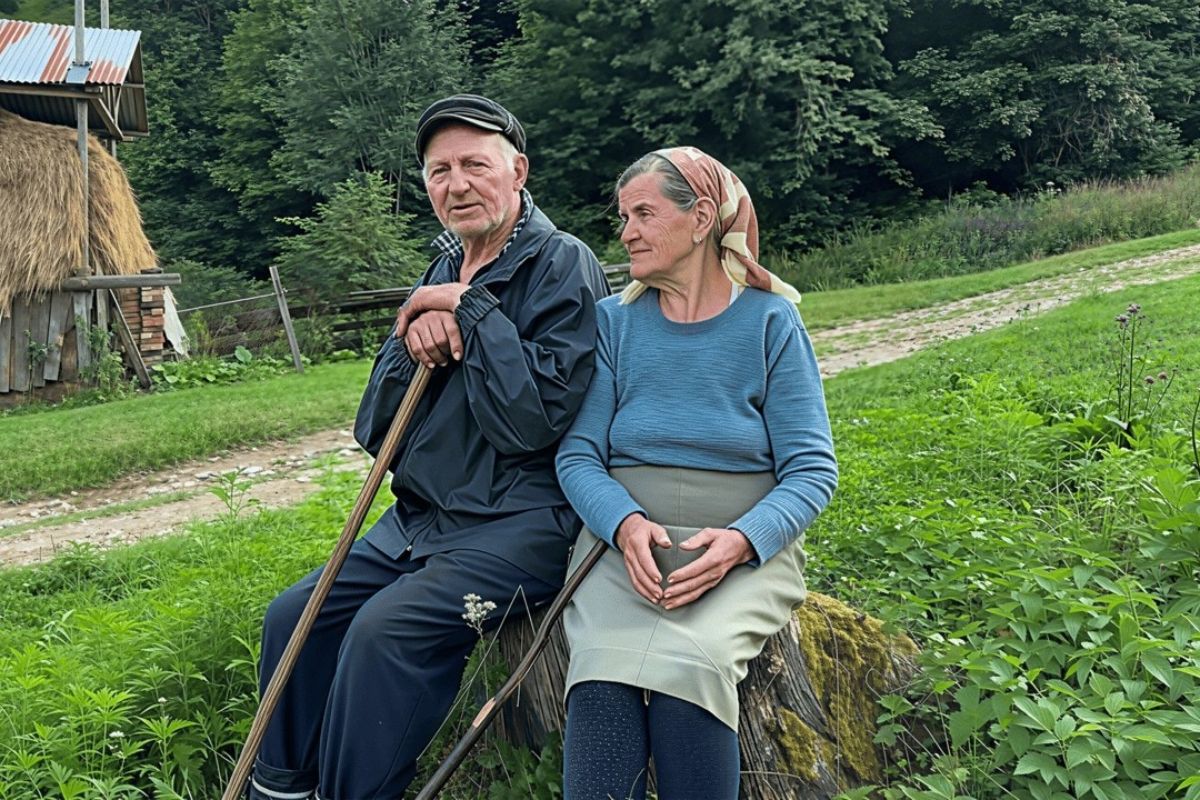


In A Forgotten Valley Between Mountains, The Couple Living In Isolation Keeps A Cow, A Garden, And Chickens, Climbs The Hill In Pain, Prays At Night, And Learns To Deal With Distant Children, Two Bereavements, And A House That Ages Along With Them, Amid Memories Of The Forest, Tireless Work, Longing, And Silent Faith
At 87 and 84 years old, a couple living in isolation in the mountain village continues to wake up early, prepare food for the cow, grate zucchini for the pig, feed chickens and cats, even after a stroke, constant leg pain, and the loss of two children. Far from the city, with almost all seven living children having emigrated, their small house on the hillside has become a place where old age is not synonymous with immobility, but with silent resilience. They live in the village of Kolodne, a mountain village in the Transcarpathia (Zakarpattia) region of western Ukraine, near the border with Romania.
In the same kitchen where the soup boils, the stove is lit with firewood cut little by little and the radio breaks the sporadic silence, the couple living in isolation prays together, thanks for a good night’s sleep, and repeats a hard routine that has become a form of love. Among prayers, memories of the mother who built the house alone, and the recollection of the son crushed by a tree in the forest and the youngest who died after eating too much halva, life goes on slowly, but with a very clear sense: to continue as long as there is strength to climb the mountain and care for the animals.
A Lifetime Between Mountains And Successive Losses

Petro devoted 49 years of work to the tractor, clearing paths through forests and fields.
-
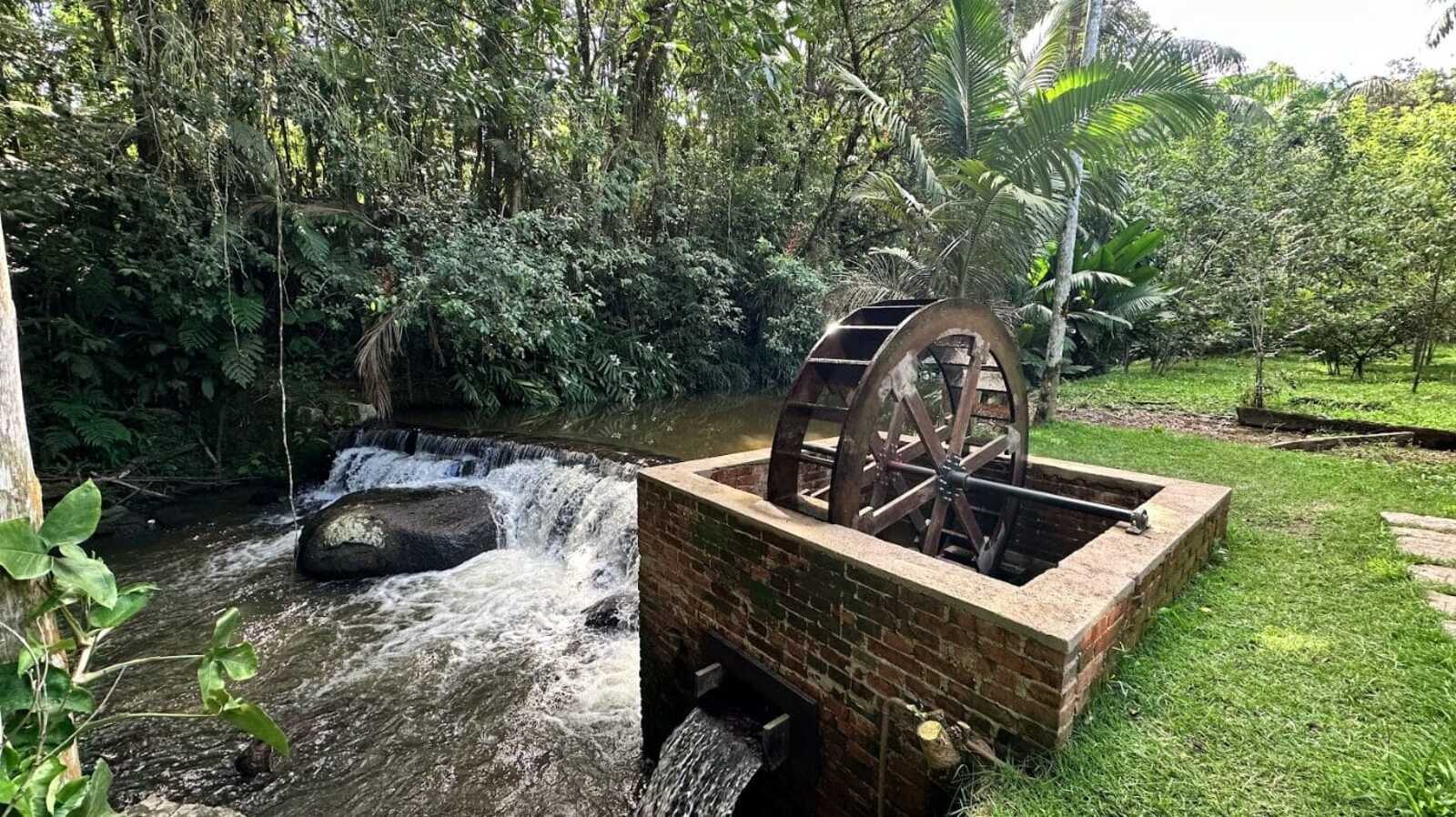
While restoring a historic mansion from 1910, a brick structure with an old turbine that generated energy from the Rio do Testo emerged, along with a hidden door and a rare floor concealed under layers of wax.
-
Italian researchers have detected what appears to be a second Sphinx buried under the sands of Egypt, and satellite scans reveal a gigantic underground megastructure hidden beneath the Giza Plateau for over 3,000 years.

-
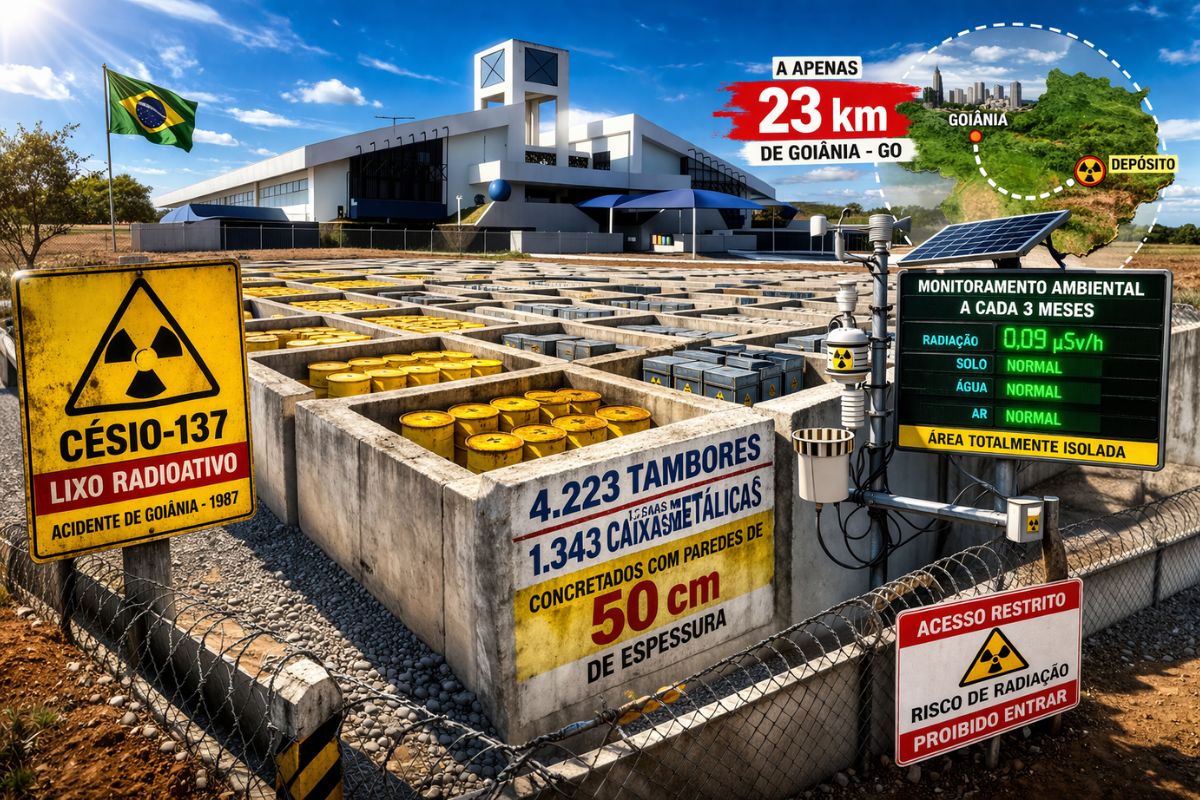
There are 4,223 drums and 1,343 metal boxes concreted with 50-centimeter walls that store the radioactive waste from Cesium-137 in the worst radiological accident in Brazil, just 23 kilometers from Goiânia, with environmental monitoring every three months.
-
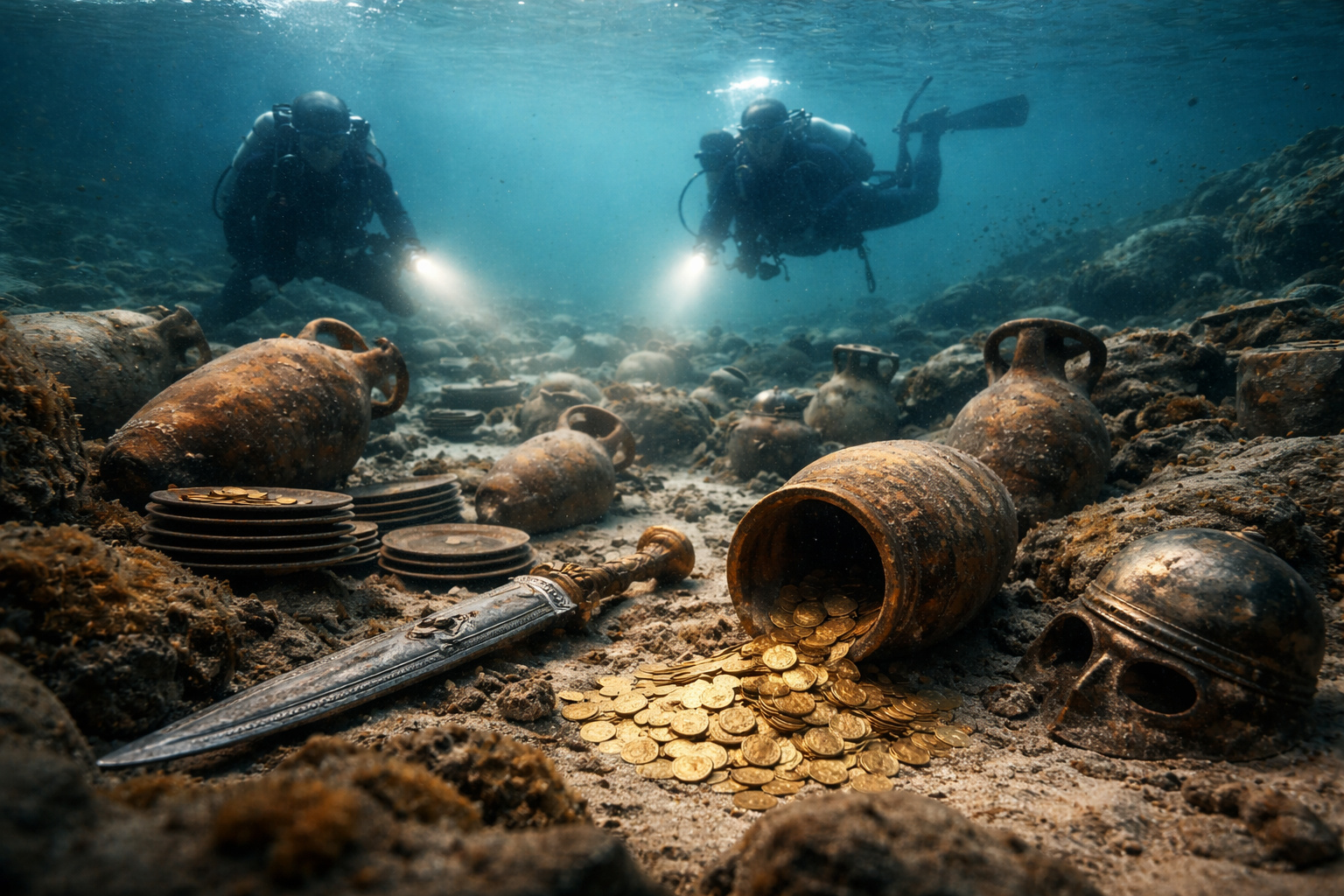
Giant Roman treasure found at the bottom of Lake Neuchâtel in Switzerland reveals an advanced trade system, circulation of goods, and armed escort in the Roman Empire about two thousand years ago.

Now, at almost 88 years old, he speaks calmly about his profession, shortness of breath, and the heart attack that nearly stopped him for good.
Next to him, Olena, at 84, fills in the gaps of his memory, recalling that there were fifteen in the family and that today he is the only survivor among siblings and parents.
The couple living in isolation had nine children.
Two died: one crushed by a tree in the forest, another while still young, after eating halva to the point of poisoning his stomach.
Seven remain alive, but all have gone abroad. One child is still relatively close and shows up from time to time, just enough to break the monotony, but not enough to change the central fact: the mountain village ages along with them, almost empty.
While talking about the children, Olena does not dramatize, she simply states.
Life, for her, “passes slowly, what can be done.” Old age enters the house like another inevitable guest, among pots, bags of flour, jars of halva, and tools resting against the wall.
Stroke, Shortness Of Breath, And The Body That No Longer Keeps Up

Last spring, Petro suffered a severe stroke.
The family and the village itself thought his heart would not hold out.
He recounts that “he couldn’t walk,” that the shortness of breath forced him to stop any effort.
Today, he walks slowly, does small tasks, takes food to the cow, and transports hay in limited amounts.
Olena insists that “it’s good that he helps at least a little.”
In this tacit agreement of fragilities, the couple living in isolation reorganized their economy of body and time: he does what he can in the barn, and she takes care of the rest of the house, the garden, and the mountain.
Her legs hurt to the point that on certain days she can barely return home.
There is a wound on her toe that has lasted four years, always treated with ointment, always present.
She recalls that when her grandmother said her legs hurt, she didn’t believe it. Now, she understands in her own skin.
Aging there is not abstract; it is a collection of very concrete pains, accumulated with every climb up the hill and every load of hay.
Hard Routine: Cow, Pig, Chickens, And Hay At The Top Of The Mountain
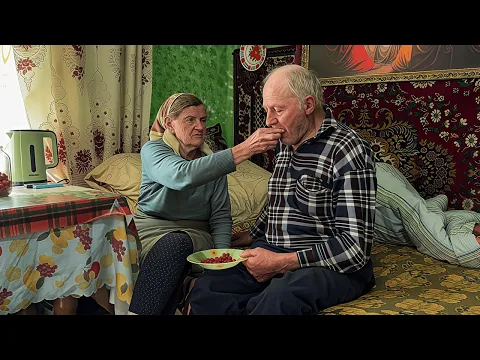

Every morning, Olena organizes the day around the cow, the pig, and the chickens. Petro grates zucchini for the pig, checks for cucumbers, and observes if the cow is eating well.
The yard is a sequence of tasks: gathering hay, feeding animals, fetching water, lighting the stove, weeding the raspberries and onions scattered throughout the yard.
At 84 years old, Olena still climbs the mountain to dry hay. She says that the “big garden” is up there and that there is no alternative; she needs to go because it’s necessary.
On the way, she stops to catch her breath, sits in the shade, talks to God asking for strength, and endures the strong sun overhead.
On the high slope is also her mother’s house, built by her own hands. Everything there is falling apart, and Olena needs to clean, move away what is collapsing, and preserve the minimum of what remains.
She points to the hole her mother dug to store potatoes and remembers that the earth removed was placed there beside it, as if the simple technique were still alive.
With each ascent, the couple living in isolation measures the distance between the past and the present, between the generation that built houses by hand and the generation trying only to prevent everything from collapsing at once.
Emigrated Children, Empty House, And Conversations With Animals
Inside the house, silence is mainly interrupted by the animals.
The cow Mushka, the cat that “purrs” next to the grandmother, the hungry chickens, and the dog that follows every step through the yard.
Olena talks to them all, distributes food and small phrases of affection, as if a part of the family that has not left were there.
The couple living in isolation replaces many human dialogues with dialogues with animals, not by choice, but by lack of alternatives.
The seven living children “went abroad,” as she repeats, and the sporadic visits do not compensate for the daily emptiness.
When she is not in the garden or the barn, Olena enjoys reading about “human life,” about other elderly grandmothers expelled from their homes, about people trying to survive under difficult conditions.
She says that the soul is filled by knowing “how other people live,” as if reflecting in others’ pain a way to normalize her own.
Shared Faith And Resistant Love As The Last Pillar
Before sleeping and upon waking, Petro and Olena pray. They give thanks for having managed to get through the night, repeat protection formulas, and make the sign of the cross.
The name of God appears as a constant reference, not as a complaint.
She insists that there is no reason to be offended with God after living so long and reaching an old age.
In practice, faith serves as the emotional cement of the house, an axis that keeps the couple aligned in the face of losses, a body that relinquishes, and distant children.
Between one prayer and another, the domestic routine continues precisely: lighting the stove, boiling potatoes, chopping firewood, feeding chickens, gathering raspberries, drying hay, treating the wound on her foot, checking the old belt of the cow that needs to be replaced.
In this chain of small gestures, the couple living in isolation transforms the hard routine into a form of resistant love.
With every stirred pot, with every divided plate, every time he still manages to take food to the cow or grate zucchini for the pig, a partnership that began decades ago is renewed.
Even with two deceased children, seven emigrated, buried siblings, and a house that needs repairs in every direction, Petro and Olena maintain a simple yet powerful pact: to stay side by side as long as it is possible to climb the mountain, light the stove, and give thanks for another day.
And you, do you know any story of a couple living in isolation or elderly people in the countryside that deserves to be told with the same care?








Misericórdia de Deus pra esse casal, os filhos são ingratos, não reconhece os que os pais fizeram por eles. Como pode 7 filhos e nenhum deles não procuram os pais. Dói em ver essa situação. Eles não tem coração. O que os pais fizeram para eles esquecerem ? Não há alguma autoridade que tire eles dessa montanha e se dirija a um abrigo, para eles ter um final em paz. Deus tome a direção desse casal.
Uau! Superação a cada dia ! Que história linda e triste ao mesmo tempo, que essa história cheguei até os filhos.
É memorável como a amizade,o amor que foi transformado em companheirismo consegue sobreviver
Mas o isolamento não é geográfico,mas também,físico de pessoas mais próximas que só podem ir de vez em quando.E qdo vc tem pessoas ao teu redor e mesmo assim sofre uma alienação parental,um isolamento com muitas pessoas por perto.Envelhecer é um ato de coragem, muita coragem e não é para todos mundo.