





 Portuguese
  English
  Spanish
  3 min of reading
  0 comments


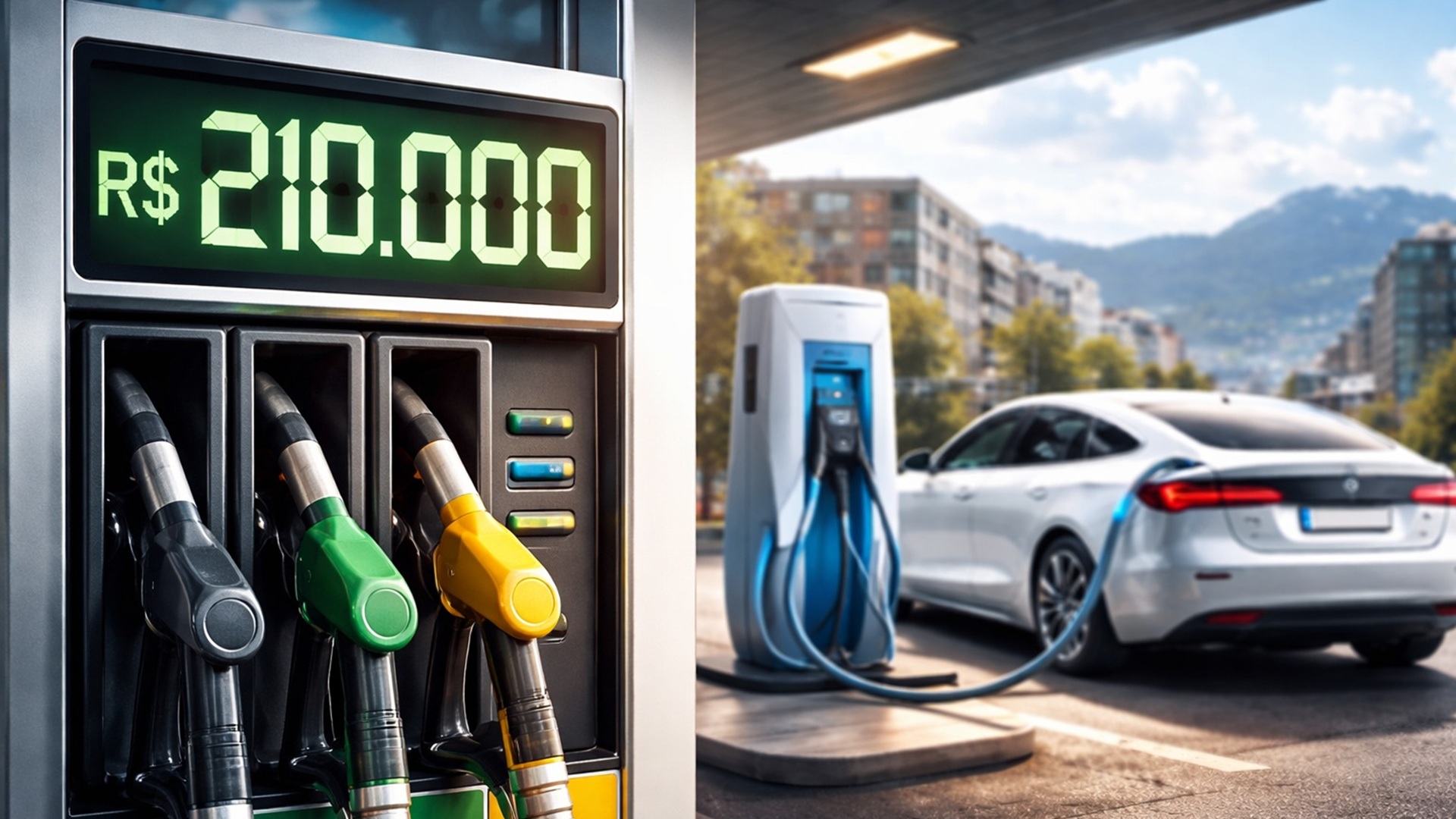
With 98% of Sales Focused on Electric Models, the Norwegian Capital Combines Aggressive Tax Exemptions, a Robust Charging Network, and Urban Planning to Eliminate Fossil Fuels, Creating a Sustainable Mobility Scenario that Serves as a Direct Reference for Transportation Challenges in Brazilian Cities.
Oslo Achieves 98% Electric Vehicle Sales by 2025 and Consolidates Energy Matrix Transformation with 27,000 Charging Points and Tax Exemptions of Up to 25%
In 2025, Oslo reached the milestone of 98% of new car sales being fully electric models. The Norwegian capital combined infrastructure of 27,000 charging points and robust tax incentives to eliminate fossil fuels, becoming a global reference in urban sustainability and efficient public planning.
The Dominance of Electric Vehicles in the Norwegian Market
The capital of Norway has established itself as the world’s largest laboratory for electric mobility. In a country with 5.5 million inhabitants, the energy transition is occurring rapidly. By January 2024, 89% of new cars sold were already electric.
-
Oldest tree on the planet reappears after 130 years of searches: Wattieza, 385 million years old, was 10 meters tall and had no leaves or seeds; Gilboa fossils in New York solved the mystery in 2007.

-
A 48-square-meter house assembled in hours with 4,000 bricks made of recycled plastic that does not absorb moisture, has natural thermal insulation, and costs less than 90,000 reais in a complete kit.

-
Luciano Hang revealed that Havan’s air fleet has already accumulated more than 20,000 landings, 10,000 flight hours, and 6 million kilometers traveled, and he says that without the planes, the company would never have grown so quickly.

-
A historical discovery in the Andes Mountains reveals a gold deposit valued at 770 billion reais hidden over 4,000 meters above sea level on the border between Chile and Argentina, and the whole world is watching.

Now, in 2025, this figure has risen to 98%, setting a global record. The advancement has practically eliminated the sale of gasoline and diesel vehicles. Currently, no other place in the world has as many electric cars per capita as the Nordic nation.
Even as one of the coldest countries in Europe with an economy historically linked to oil, Norway prioritized the shift.
Since the 1990s, the government has implemented clear incentive policies to change consumer behavior and reduce emissions.
Fiscal Strategies and Charging Infrastructure
The applied logic is to make electric cars the most economical and practical option. Fossil fuel-powered vehicles face high taxation, around 25%. In contrast, electric vehicles benefit from exemptions on import taxes, purchase taxes, and VAT waivers.
The benefits include discounts on tolls, ferries, and facilitated public parking. Owners also use exclusive lanes and are exempt from the annual property tax. The financial impact is direct: an entry-level electric model costs on average R$ 175,000, while the gasoline equivalent exceeds R$ 210,000.
To support the fleet, the country invested in a national network with nearly 27,000 charging points. Fast stations cover all major highways, ensuring a maximum distance of about 50 km between refueling points.
The system allows more than 5,600 vehicles to be charged simultaneously. This capacity reduces queues and eliminates range anxiety for drivers.
The energy used is primarily renewable, keeping operating costs low for the population.
Impacts on Urbanism and Public Transport
The electric predominance has transformed the sound environment of Oslo. Even during peak hours, traffic noise is significantly lower than in major global metropolises.
Electrification has expanded beyond private cars, encompassing ferries, trucks, and construction equipment.
Public transport follows the same guideline, with the bus fleet scheduled to be 100% electric by early 2026. Neighborhoods like Aker Brygge have been redesigned to reduce car use, prioritizing pedestrians and cyclists in areas that were once industrial docks.
Comparison with Brazilian Reality
The Oslo model serves as inspiration for Brazilian cities, although the challenges are distinct.
Brazilian tourists notice the efficiency of the system, where public transport meets the demand without excessive crowding, integrating different electric modes fluently.
Comparatively, cities like Campinas, with a population greater than Oslo, still do not offer the same breadth of public transport. Point projects in Brazil, like electric buses in São Paulo, are already moving in this direction but lack the same systemic integration.
The Norwegian experience demonstrates that the transition depends on a robust alliance between government, research, and users. Success lies not only in technology but in urban planning that translates investments into real improvements in quality of life.









-

2 pessoas reagiram a isso.