





 Portuguese
  English
  Spanish
  5 min of reading
  4 comments


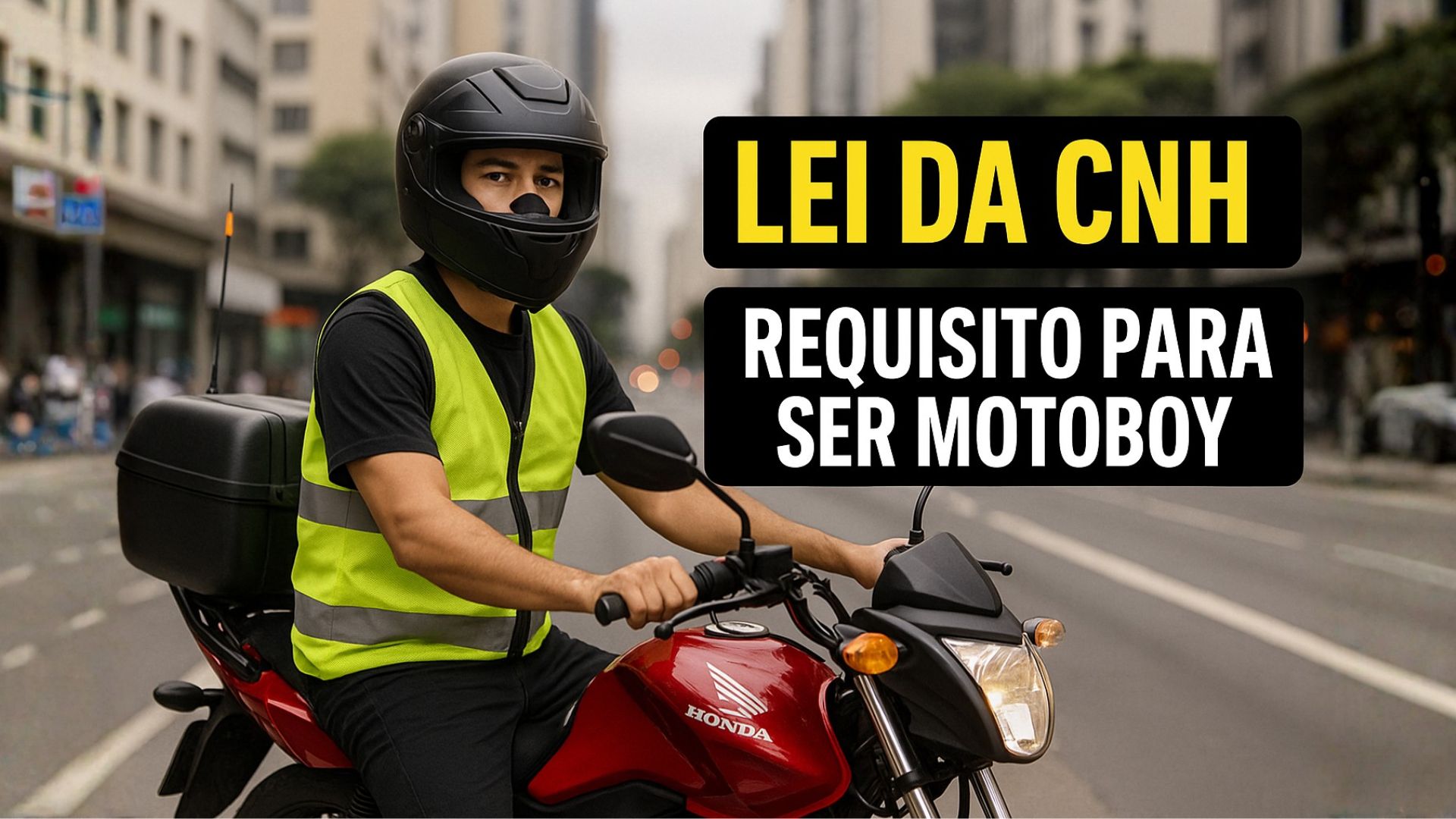


Little-Known Rules and Increasing Oversight Rekindle Debate on Legal Requirements for Those Professionally Working with Motorcycles in Brazil.
Anyone looking to work today as a delivery person, motorcycle taxi driver, or professional motorcycle delivery agent in Brazil must comply with a set of rules already established in legislation.
The Law 12.009/2009 stipulates that the driver must be at least 21 years old, have held a category A driver’s license for at least two years, pass a specialized course, and use a motorcycle equipped with kite-cutting antenna, regulated box, engine and leg protectors, helmet, and reflective vest.
These requirements, which have existed for more than a decade, have gained new relevance with the rise of app delivery services and increased oversight in different regions of the country.
-
The Argentine government celebrates the lowest poverty rate in 7 years, but experts warn that the methodology has changed, real wages have fallen, unemployment has risen, and the number of people on the streets of Buenos Aires has increased by 57% since Milei took office.

-
7.8 magnitude earthquake in Indonesia frightens the population, triggers tsunami alert, and hits an island with over 200,000 inhabitants this Thursday.

-
Google will finally let you change that embarrassing Gmail address you created in your teenage years without losing any accounts, logins, or old emails: the feature is already available in the United States.

-
Heading to Brazil in a Bonanza F33 single-engine aircraft: a couple departs from Florida on a visual flight, makes technical stops in the Caribbean to refuel and organize paperwork, and begins the staged crossing until they reach the country.

In recent years, the number of motorcycles in circulation has increased, driven by lower costs compared to cars and the expansion of delivery and transport platforms.
In this scenario, the minimum age to work professionally with motorcycles has returned to public debate, especially among young people who start working in deliveries at a very early age.
Despite the feeling of novelty, the requirement is not recent: the age limit for professional practice has been written in law since 2009; what is changing now is the effort of traffic authorities to enforce more rigorously what was already stipulated.

It is important to distinguish between two different situations.
To drive a motorcycle as a private vehicle, it is sufficient to comply with the general rules of the Brazilian Traffic Code, which allow obtaining a category A driver’s license from the age of 18.
However, to use the bike as a work tool, transporting goods or passengers for remuneration, the specific conditions established in Law 12.009 apply, which are more demanding than those for regular driving.
Specialized Course and Training Required by Contran
Federal legislation establishes three basic pillars for professional motorcyclists: minimum age, experience at the handlebars, and formal training.
The worker needs to be at least 21 years old, have held a category A license for at least two years, and successfully complete a specialized course regulated by Contran.
This course, offered by state Detrans or authorized institutions, covers topics such as defensive driving, traffic rules, proper cargo transport, passenger relations, and basic first aid.
Recertification must be done periodically, at intervals defined by the national traffic system regulations, to keep the professional updated.
Mandatory Equipment and Conditions of the Motorcycle
In addition to the driver’s training, the law addresses in detail the condition of the motorcycle when used for motor freight or motor taxi.
The vehicle must be registered in the rental category, subject to periodic safety inspections and compliance with mandatory equipment requirements.
Among the requirements are the installation of engine and leg protectors, the presence of a kite-cutting antenna, and the use of load transport devices compatible with Contran regulations.
The box or mounting structure cannot be improvised and must adhere to weight limits and dimensions.
The motorcyclist must also wear a safety vest with reflective strips, in addition to a helmet that conforms to the Traffic Code regulations.
In some cities, the identification of the professional is reinforced with numbers or inscriptions on the vest or the box, according to local rules.

Failures in Municipal Oversight and Impact of Apps
Although Law 12.009 is national, the organization of the service on a day-to-day basis depends on local governments.
It is the responsibility of states and municipalities to define registration processes, authorizations, fleet limits, and complementary urban planning rules.
For many years, some municipalities did not effectively regulate this activity, hindering oversight and increasing informality.
Meanwhile, the expansion of apps brought thousands of motorcyclists closer to paid work without requiring proof of minimum age, course completion, or full compliance of the motorcycle.
Platforms began to act as intermediaries and, in many cases, shifted the responsibility for regularization entirely to the driver.
In practice, this meant that a large part of the fleet servicing restaurants, pharmacies, and markets operated without fulfilling all legal requirements.
Recent Operations and Pressures on Platforms and Professionals
In recent years, state traffic authorities, national departments, and municipalities have started announcing specific operations aimed at compensated transport on motorcycles.
The intensification of oversight has translated into more frequent checks in areas with a high concentration of delivery workers.
In these operations, agents verify the driver’s age, license tenure, completion of the specialized course, use of a reflective vest, vehicle status in the rental category, and the presence of items such as kite-cutting antenna, protectors, and regulated box.


When there are irregularities, the driver can be fined, have their vehicle detained for regularization, or face other penalties prescribed by the Traffic Code.
Contracting companies and platforms are also beginning to adopt stricter policies favoring motorcyclists in regular situations.
Debates in Congress on Changing the Minimum Age
While the current law remains in effect, Congress is discussing possible changes.
One of the bills under consideration proposes reducing the minimum age from 21 to 18 years for the practice of the motorcycle taxi profession and relaxing the minimum license tenure.
Proponents argue that the measure would widen young people’s access to the formal market.
Critics warn of the risk of increasing accidents by allowing inexperienced motorcyclists to work professionally.
Until changes are approved and sanctioned, the existing requirements remain valid.
For those under 21, it is possible to obtain a license and use a motorcycle for personal travel, but not for paid activities.
Young people looking to enter the profession can plan by monitoring the availability of specialized courses, the costs of adapting the motorcycle, and the rules of their city.
Amid growing requirements and political discussions, work on two wheels remains essential for urban functioning.








A grande **** disso é culpa daqueles lixos q entregam empinando a **** da moto. Fazendo **** no trânsito. Causando acidentes. Etc . Se vc conhece um filho de **** do **** desse agradeça a ele e o mande toma no ****. Vc que trabalha corretamente tem família e quer voltar pra casa no fim do dia todo lascado com as costas saindo do corpo. Agora fudeu pra todo mundo. Pagamos por este miseráveis **** de favela q além de fazer o q já falei tbm usam a moto pra roubar se passando por motorista de app… Eu quero é q esses moleques saiam msm dos apps e deixem trabalhar quem tem responsabilidade com família. Sua própria segurança e de quem tá na rua.
Que ****
Mais é a lei já está em vigor