





 Portuguese
  English
  Spanish
  5 min of reading
  0 comments


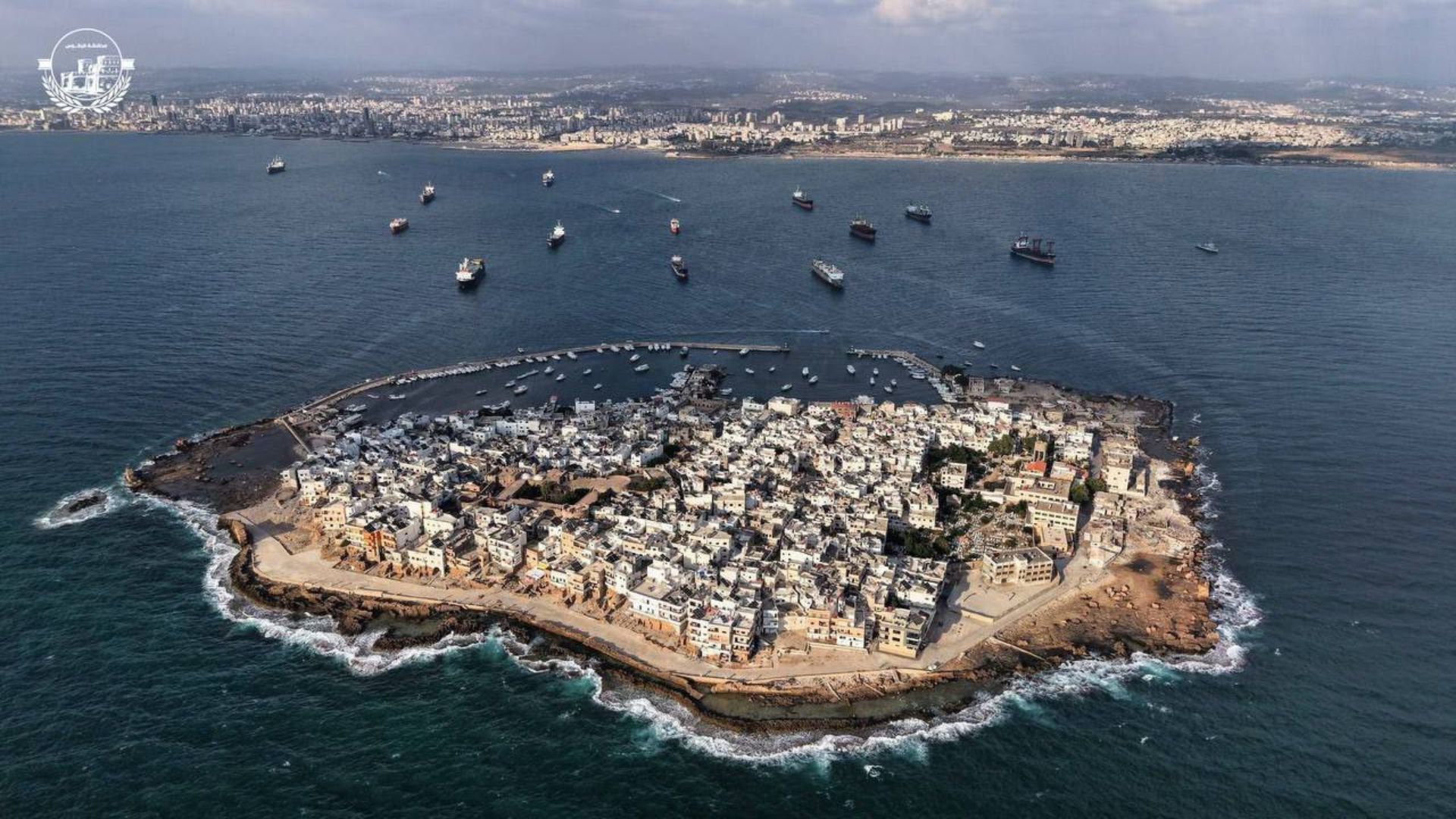
Syrian City Occupies Minimal Territory in the Mediterranean, Gathers Thousands of Residents in Compressed Space and Maintains Economy Tied to the Sea, Fishing, and Shipbuilding, Coexisting with Historical Structures and Intense Traffic in Narrow Streets, Just Minutes from the Mainland Coast.
Arwad is such a small island that it can be crossed on foot in just a few minutes, yet it is home to an entire city squeezed between the sea and adjacent buildings.
With about 0.2 km², this piece of land in the Mediterranean functions as a compact urban nucleus, where streets transform into narrow passages and daily life revolves around the port, vessels, and work related to the sea.
The Only Inhabited Island of Syria in the Mediterranean
The uniqueness of Arwad begins with what it represents on the country’s map. It is the only inhabited island of Syria.
-
The Argentine government celebrates the lowest poverty rate in 7 years, but experts warn that the methodology has changed, real wages have fallen, unemployment has risen, and the number of people on the streets of Buenos Aires has increased by 57% since Milei took office.

-
7.8 magnitude earthquake in Indonesia frightens the population, triggers tsunami alert, and hits an island with over 200,000 inhabitants this Thursday.
-
Google will finally let you change that embarrassing Gmail address you created in your teenage years without losing any accounts, logins, or old emails: the feature is already available in the United States.

-
Heading to Brazil in a Bonanza F33 single-engine aircraft: a couple departs from Florida on a visual flight, makes technical stops in the Caribbean to refuel and organize paperwork, and begins the staged crossing until they reach the country.

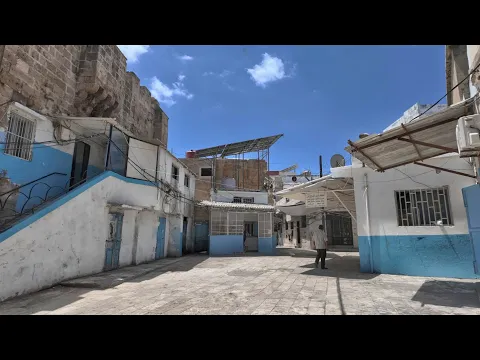
Located just off the coast, in front of the city of Tartus, Arwad brings together housing, commerce, and basic infrastructure in a minimal space, which makes density a visible characteristic in the landscape, with facades glued together and an urban grid with no gaps.

Population Density in Just 0.2 km²
The available official data reinforces this dimension.
According to the 2004 census by the Syria Central Bureau of Statistics, Arwad had 4,403 inhabitants at that time.
Practically, this means that thousands of people live in an area smaller than many blocks in medium-sized cities, creating a continuous occupation where everyday life occurs just steps from the sea.
Port, Transport, and Connection to the Continent
The proximity to the Syrian coast gives Arwad its own dynamics of supply and movement.
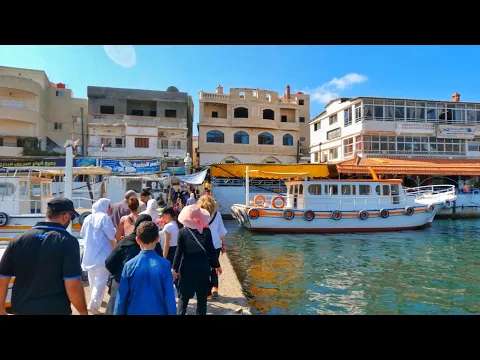
Connection to the mainland is made by small boats and local maritime transport services, which makes the port the main entry and exit point for people and goods.
This movement organizes the rhythm of the day, concentrating the circulation of workers, fishermen, buyers, and residents around the boarding areas.
Ancient Walls and Historical Heritage

The urban landscape also draws attention for the presence of historical structures that coexist with the current city.
Arwad is mentioned in historical records as an ancient settlement linked to the Phoenicians, a maritime people that transformed the Levant coast into a trade route.
The Encyclopedia Britannica describes the island as a significant base for commercial operations in the eastern Mediterranean, and the tradition of fortifications appears as a constant part of its trajectory, reinforcing the strategic nature of the place.
On the island, remains and defense elements mix with everyday life in cramped spaces.
One of the most mentioned points in historical and journalistic accounts is the existence of ancient walls and fortifications that enclose areas of the city, creating a contrast between the military past and present routine.
In historical outreach texts, Arwad is presented as a kind of “fortress at sea,” with layers of occupation that have crossed Phoenician, Hellenistic, Roman, and medieval periods.
Compressed City and Limited Circulation
This heritage is not just an archaeological detail. It influences urban design and the experience of movement.
Narrow streets and buildings adapted to the terrain reduce free space and reinforce the impression of a compressed city.
In many stretches, the landscape is dominated by walls, alleys, and continuous facades, composing a residential and commercial area that seems built upon itself.
Fishing and Shipbuilding as Economic Base
If history gives identity to Arwad, the local economy keeps the island running. The activity most associated with the place’s present is fishing.
Arwad is described by regional outlets and records as a community that primarily lives off the sea, with small boats, daily landings, and commerce related to fish products.
The relationship with Tartus, which is one of the main ports in the country, expands the reach of this chain and reinforces the role of the coastline as an economic corridor.
Aside from fishing, Arwad is noted for an artisanal practice that still occupies an important space: the construction and maintenance of vessels.
Recent reports about daily life on the island describe the persistence of shipyards and workshops linked to naval carpentry, maintaining a tradition of manual labor focused on wooden boats and small coastal vessels.
The Syrian state agency SANA has also described shipbuilding in Arwad as a craft passed down through generations, associated with local identity and family livelihoods.
Everyday Life in a Space with No Leeway

This type of economy, based on maritime resources and services, fits into the logic of a densely occupied island.
Activities that depend on the port and the immediate surroundings tend to prevail, while large industrial or agricultural areas are unfeasible due to the lack of space.
The result is an urban model where work focuses on the coast, housing densifies in the available interior territory, and commerce fits into small points of circulation.
Life in Arwad is also organized by what the island cannot accommodate.
Internal circulation is done on short paths, without large avenues or open areas, and daily life depends on routes that pass through passages between buildings.
In cities like this, infrastructure and services must adapt to the limited space, with solutions that work on a smaller scale, from supply to food and material logistics.
The Sea as a Permanent Boundary
Another hallmark of Arwad is the visibility of the sea as a permanent boundary.
On an island of just 0.2 km², almost everything is close to the water, and the maritime horizon appears in different spots of the city within just a few meters of walking.
For residents and workers, this means that the natural environment is not a distant scene, but part of their routine, influencing work, movement, and commerce.
Arwad also attracts attention for being a little-known place outside the region, despite its historical weight and rare configuration.
In a country with a relatively short coastline on the Mediterranean, the existence of a single inhabited island makes Arwad a geographical exception.
At the same time, the fact that this exception concentrates thousands of people in such a reduced territory creates a direct contrast between scale and density, making the island a unique case of urbanization in microspace.
Among ancient walls, boat workshops, and a compressed urban grid, Arwad continues to function as a seaside city, where density is not an abstract statistic, but a visible element in how the houses are pushed up against each other and how the port sustains local life.








Seja o primeiro a reagir!